Ahead-Of-Time God

I was reading the well-known story of the prophet Elijah this morning, while still thinking about a life in limbo. Elijah has the audacity to say to the king of Israel, “As the LORD, the God of Israel, lives, Whom I serve, there will be neither dew nor rain in the next few years except at my word” (1 Kings 17:1).

That’s it. We just sort of jump right into this story. We don’t read about God instructing Elijah to say this to King Ahab. And more importantly, we don’t see God saying, “Elijah, even though the land will go through a severe drought, here’s how I’m going to take care of you.” Elijah’s life was in limbo. But I’m struck by God’s ahead-of-time provision for Elijah.

At the time of this story, the land of Israel is now under its sixth evil king; each one getting more and more sinful than the one before him. The current king, Ahab is called the most evil of all the kings yet. Israel had lived under sinful kings—which the Bible says were causing all of the people to sin, too—for over 70 years! Yet at least one family still faithfully clung to their belief in Yahweh, the true God. These parents named their son Elijah, which means “Yahweh is the one true God.” Although it might have seemed everyone was sinning and turning their back on God, at least one set of parents raised their son in a counter-cultural way, at least one set of parents trained their son to rely only on God, at least one set of parents equipped their son to stand firm in the face of overwhelming evil.

The ahead-of-time God provided God-fearing parents for Elijah to train him to fear God too.

As the famine began, God directed Elijah to a brook that continued to flow. This was also the place ravens would bring him food.

The ahead-of-time God provided food and water for Elijah.

The drought eventually dried up the brook that Elijah was using for water, and the ravens eventually stopped coming to that dried-up creek bed with food. So God sent Elijah to a widow in Zarephath with this promise, “I have commanded a widow in that place to supply you with food” (1 Kings 17:9). After Elijah entered this widow’s home, her supply of oil and flour never ran out throughout the entire three years of drought, giving all of them food to eat.

The ahead-of-time God provided oil and flour for a widow so that she could make food for Elijah.

My life may be in limbo, but I am confident that my ahead-of-time God has already provided for me. You and I have this promise: “And my God will liberally supply (fill to the full) your every need according to His riches in glory in Christ Jesus” (Philippians 4:19).

This story is in the Bible to reassure you and me that God supplies for us.

Cheap Trade-Off

During the reign of King Rehoboam in Judah, God’s judgment fell on the land. Because of their sin against Him, God allowed Shishak, the king of Egypt, to plunder Jerusalem. Shishak carried off all of the valuable furnishings of the temple in Jerusalem.

To replace what had been plundered Rehoboam commissioned the casting of shields made of bronze (1 Kings 14:27). Whenever the king went to the temple, all the guards would carry these shiny shields with them, but then immediately after the king left the temple the guards returned their shields to the armory.

It looked good, but it was all a cheat … an imitation … a cheap trade-off.

Looking back a few chapters we read that not only did Rehoboam’s father, King Solomon, make the original shields out of gold, but he made almost everything out of gold. In fact, the Bible says, “Nothing was made of silver, because silver was considered of little value in Solomon’s days.” If silver was of little value, can you imagine how cheap bronze was?!

The temple is plundered. The gold shields—along with anything else of value—are gone, but there is no outcry from Rehoboam or the people, no repentance for their crimes against God, no anger at their sin that allowed Shishak’s raid.

Instead, Rehoboam wanted to try to keep up appearances.

He made bronze shields to look like the stolen gold shields.
He made his trip to the temple a spectacle of pomp and circumstance.
He hid the bronze shields away after he left the temple.

Isn’t this how many people deal with the plundering of their lives? I know I have at times. It seemed so much easier to try to cover up what was lost because of my sin, than to simply admit I sinned, repent of that sin, and ask for God’s merciful forgiveness.

Sure, Rehoboam still looked like he had his act together. But he knew—every time he was on this way to the temple and saw those bronze shields—that he was living a lie. He accepted a cheap trade-off for the real deal.

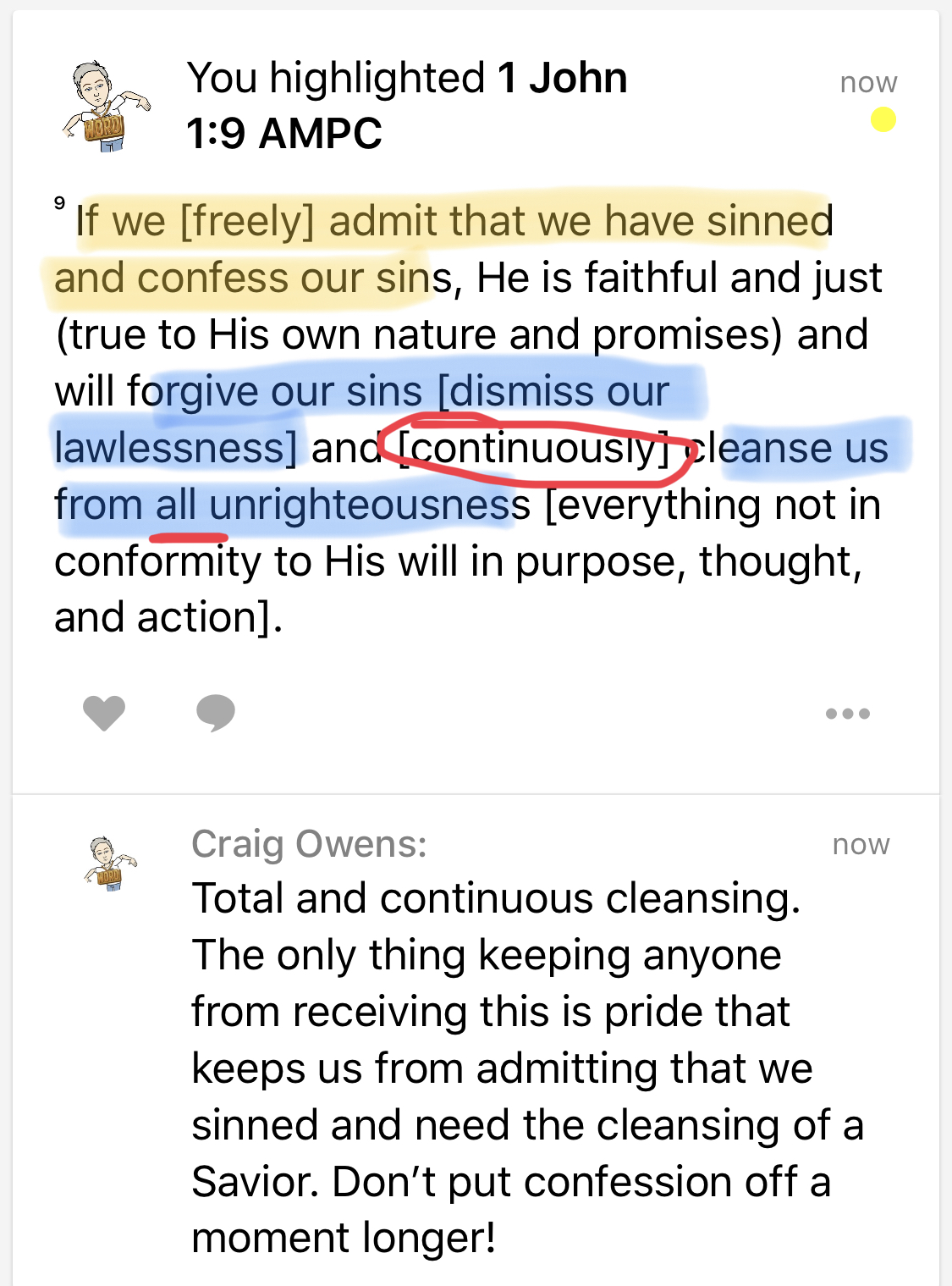
I am so grateful that, “If we confess our sins, He is faithful and just and will forgive us our sins and purify us from all unrighteousness” (1 John 1:9).

I’m not going to settle for cheap trade-offs anymore. How about you?

Moderate Back Thrusts

How would you like to have this written on your tombstone—

Appointed by God to be king
Caused all Israel to sin against God
Doomed my family line to extinction

That is exactly the epitaph of King Jeroboam (see 1 Kings 13-14). In God’s indictment of Jeroboam He says, “Because of the sins you have committed, and the sins you have caused Israel to commit, you have provoked Me to anger and thrust Me behind your back.”

I find that phrase—thrust Me behind your back—intriguing. The word thrust means to throw something away. How exactly does one go about throwing God away? Can you crumple Him up like a piece of paper and toss Him in a garbage can? Can you grab Him and shove Him behind you? Is He like a stack of old newspapers thrown in a recycling bin? Clearly not!

One only thrusts God behind one’s back little by little. Just moderate back thrusts.

John Maxwell was exactly right when he said that whatever good things a leader does in excess, those following will do in moderation. Whatever poor things the leader does in moderation, those following will do in excess. The “moderate” ways in which Jeroboam thrust God behind his back caused all of Israel to sin excessively. And that became Jeroboam’s eternal legacy!

People are watching me—my kids, my neighbors, my friends, the baristas at Starbucks—what example am I setting for them? There are only two examples I can set: (1) Pursue God with all my heart, all my soul, all my mind, and all my strength; in other words, love God to excess. Or (2) Moderately thrust God behind my back little by little by little.

Search me, O God, see if there is ANY moderate back thrusting in me and lead me in the way everlasting (see Psalm 139:23-24).