The Parable Of The Lifeguard

Listen to the podcast of this post by clicking on the player below, and you can also subscribe on Apple or Spotify.

The waters looked choppy, the waves seemed so strong, and the rocks where the surf crashed on the shore seemed like cruel, dull, black teeth. And who knew what was under the surface of the water that I couldn’t see? Just the thought of swimming in those murky gray-green waters made my stomach twist into knots! But my friend announced, “I’m going for a swim.”

I tried to talk him out of it, “You’re joking, right? Do you realize how dangerous that is?”

“Relax,” my friend tried to reassure me with an unconvincing smile, “I know what I’m doing. I’ve swum in waters like these before, lots of times. I can handle it.” He headed off toward that pounding, angry sea with what seemed to be a swagger of confidence, but there was something in his eyes that seemed to be silently imploring me, “Please, save me!”

My friend had been going through a rough patch. His business which started out so well was now on the brink of closing in this crummy economy. Instead of realizing there was not much he could do in this downturn, my friend began to think that he was the failure. Recently at church—where turning from one’s sordid past is supposed to be celebrated—some scoundrels dredged up his past and used it as a cruel weapon against him. These mean-spirited, unforgiving people were jealous of my friend’s success in allowing Jesus to help him turn his life around. My friend did nothing wrong, but the spiteful words of these hypocritical church-attendees made him relive his forgiven past. Although he didn’t say it, I knew these hurtful words caused him to second-guess his value to God. And now, just last week, my friend happened to be in the wrong place at the wrong time and was charged by the police with a minor misdemeanor. No jail time nor fines were going to be imposed on him, just a few hours of community service. But yet again my friend’s self-esteem took a hit as he walked through this embarrassing process.

So now here he is feeling beat up, thinking to himself, “I’m a worthless failure,” walking toward something dangerous. I can’t understand why. Is he trying to escape reality? Does he really feel that poorly about himself? Doesn’t he see how much his wife and his friends love him? Does he feel so dead inside that this dangerous behavior makes him feel something again? Or does he feel too much and this dive into risky waters is merely an attempt to numb the pain, to self-medicate away the accusing thoughts?

While I was contemplating all of this, I didn’t realize what my friend had done. He had not only reached the shore and waded into the swirling waters, but he was now bobbing quite far from shore. All I could see was his head and shoulders. And his blank, lifeless, passionless face.

He seemed to be bobbing further and further away from me, and closer and closer to those vicious teeth-like rocks.

I ran down to the shore, as close to that angry ocean as I could get, and yelled. I don’t know whether he was ignoring me or couldn’t hear me, but he didn’t respond. He bobbed farther away and I yelled louder and waved my arms. I pointed at the rocks looming closer and closer with every swell of the sea. I screamed until my throat was raw. He drifted farther from me. He waved. And I heard just two distinguishable syllables above the pounding surf and howling wind, “…okay….”

“Okay?! Do you think it’s okay?! You’re killing yourself! It’s not okay!” My friend’s face changed. No longer was it a blank stare, there was emotion there now. I blinked my eyes against the spray of the ocean; I looked intently at my friend’s face. Then I saw it etched in the lines on his forehead. I saw it in his eyes. Panic!

I stared at him, my mind racing what to do. And then I heard it: two more syllables distinguishable above the roar. Two syllables that shot me into action: “Help me!”

I frantically looked around and spotted a tattered, faded orange life vest. It was really only half a life vest, but at least it still floated. It was tangled in seaweed and stained with muddy sand. I grabbed it, ran toward the shore, and flung the life vest toward my friend. It wasn’t a very good throw. Whether it was the wind or my weak attempt, the orange vest didn’t get very close to him. But even so, what was more disturbing was that my friend didn’t even make a movement toward it.

I got frustrated and stomped my foot in anger. Angry at my poor first attempt at a rescue, and angry that my friend made no attempt to reach out for what I had thrown him. I looked around again. I spotted an unattended lifeguard station 75 yards away. I raced to it and found an intact white life ring with a bright red cross emblazoned on it. I grabbed the life ring, sprinted back as close to my friend as I could get, and heaved the life ring as far as I could. It flew through the air. It seemed unimpeded by the wind, and landed within a few feet of my friend! The white and red ring stood out clearly in the dark waters!

I almost let out a shout of victory! Salvation for my friend was within arm’s reach of him! Yet my friend didn’t move. He wouldn’t reach for the help that was right there.

“Does your friend need help?” a strong voice behind me asked.

I wheeled around to see a tall, athletic man. A Lifeguard! “Yes! Yes, he needs help!”

The Lifeguard looked out across the churning waves and saw my friend getting closer and closer to those jagged rocks. It seemed like the next swell of the sea would dash him on those black sea-teeth. “Yes,” the Man said, “I can help him.”

My heart leaped and then seemed to stop in the very next heartbeat. The Lifeguard wasn’t moving. He just stood there looking at my friend.

“I can help him,” he repeated, “If he will simply ask for My help.”

“He did ask for help,” I argued. “I’ve been trying to help him.”

“No, he really doesn’t want help,” the Lifeguard said. “I can save him, but he has to ask Me to do it. And,” he added turning to look at me, “you have to leave.”

“What? He’s my friend! I’m not leaving him!”

“If he is your friend, you have to. You have to love him enough to leave him to Me. He’s been here before, and I have rescued him before. But as long as you’re here throwing flotation devices to him he will keep the rescue attempts alive without ever actually allowing himself to be rescued. The most loving thing you can do for your friend is leave him to Me.”

“How long?” I asked quietly, knowing in my heart that noble Lifeguard was right.

“That all depends on him,” the Lifeguard said. “As soon as you leave, that may get his attention and he may call out for My help immediately. Or he may wait until things get even more desperate. It’s his choice. I am the only One who can save him from this surf now. But he must call on Me before he is smashed on the rocks. I will not leave this spot. I will not sleep or become distracted. I will never leave your friend because I love him. I love him even more than you love him. So the sooner you leave him to Me, the sooner he can cry out for My help.”

I stood there weighing the Lifeguard’s words. I knew He was right, yet I didn’t want to leave my friend. And then He repeated, “The most loving thing you can do for your friend is leave him to Me.”

So I walked away.

That was last night. No word from the Lifeguard or my friend yet. I’m still waiting—and praying—that my friend will cry out for help to the only Lifeguard that can save him now.

I did the most loving thing I could have done. I left my friend to Him.

►► Would you please prayerfully consider supporting this ministry? ◀︎◀︎

Thursdays With Oswald—Pray Early, Pray Often

This is a weekly series with things I’m reading and pondering from Oswald Chambers. You can read the original seed thought here, or type “Thursdays With Oswald” in the search box to read more entries.

Pray Early, Pray Often

     The only way to find God is through prayer. In the religious life of the Pharisee, prayer becomes a rite, a ceremony. In all religion based on sound principles prayer is an exercise, a ceremony, it is not blood or passion, not actual from the whole manhood. In such prayers there is magnificently beautiful diction which one needs to be in a calm, quiet state of mind to appreciate. The most beautiful prayers are prayers that are rites, but they are apt to be mere repetition, and not of the nature of Reality….

      We do not pray at all until we are at out wits’ end. ‘Their soul fainted in them. Then they cried unto the Lord in their trouble’ (Psalm 107:5-6). … When a man is at his wits’ end it is not a cowardly thing to pray, it is the only way he can get in touch with Reality.

From Baffled To Fight Better

Why do I wait until I’m at my wits’ end to pray?

Why don’t I just pray early and pray often?

One more from Oswald Chambers:

“The man who prays ceases to be a fool, while the man who refuses to pray nourishes a blind life within his own brain and he will find no way out that road.”

I don’t want to be a fool, so I guess I need to pray more.

Hard Times

Have you ever asked yourself, “Why do I have to go through these difficulties?” Or maybe: “What is being accomplished through this pain and heartache?” I know I’ve asked these questions of myself—and of God—numerous times. I have come to three conclusions why Christians must go through hard times:

  1. So that I know that I can trust God to help me pass this test.
  2. So that God will be glorified in helping me pass this test.
  3. So that others will know that God can help them pass their test.

These trials will show that your faith is genuine. It is being tested as fire tests and purifies gold—though your faith is far more precious than mere gold. So when [not “if”] your faith remains strong through many trials, it will bring you much praise and glory and honor on the day when Jesus Christ is revealed to the whole world. (1 Peter 1:7)

Others will see this and be encouraged to trust God too! Look what Thomas Paine wrote in The Crisis:

“I love the man that can smile in trouble, that can gather strength from distress, and grow brave by reflection. ‘Tis the business of little minds to shrink; but he whose heart is firm, and whose conscience approves his conduct, will pursue his principles unto death.”

So to help in your hard times, may this prayer from Charles Spurgeon encourage you:

The graces of the Christian character must not resemble the rainbow in its transitory beauty, but, on the contrary, must be established, settled, abiding.
 
May your character not be a writing upon the sand, but an inscription upon the rock!
 
May your faith be no baseless fabric of a vision.
 
But may it be built of material able to endure that awful fire which shall consume the wood, hay, and stubble of the hypocrite.
 
May you be rooted and grounded in love.
 
May your convictions be deep, your love real, your desires earnest.
 
May your whole life be so settled and established, that all the blasts of Hell, and all the storms of earth shall never be able to remove you.

UPDATE: I shared a series of messages on this topic called Where’s God? You can check them out by clicking here.

Uh Oh! God’s Calling Me

Back in the pre-cell phone days, my parents had to develop another system to communicate with me. Many times it was simply an agreement before I left the house like, “Be home at 6 o’clock for dinner.” Or maybe something like, “Come inside when the streetlight turns on.”

I was usually pretty good about following through on this. But occasionally I would get so caught up in what I was doing with my friends that time just sort of got away from me. That’s when I would hear the distinct voice of my Mom calling me. Not on the phone, but with her hands cupped to her mouth, yelling, “Craaaiiig! Time to come home!”

If she was calling me, that meant I missed the deadline. I wasn’t where I was supposed to be.

Uh oh!

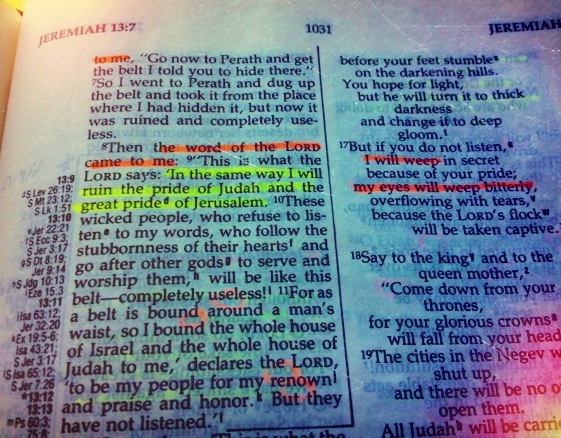
I spoke to them, but they did not listen; I called to them, but they did not answer. (Jeremiah 35:17)

God spoke to His people at first because they were close to Him. But then He had to call to them because they had gotten farther away from Him.

If God is calling me, perhaps it’s because I’ve gotten too far away. Maybe not on purpose. Maybe I just got caught up in what I was doing. Maybe I allowed something else to capture my attention.

I don’t want God to have to call me. I don’t even want to be close enough that He has to speak to me. I want to be so close to Him that just His whisper gets my undivided attention.

What about you: How close do you want to be?

Receive Reject Redeem

At Calvary Assembly of God, we talked about the culture of media in our series In It Not Of It.

The main point I made yesterday is that we need to be aware of the messages the media is sending out, but not pre-occupied by those media messages.

Then we need to decide what part(s) of media we can receive, what part(s) we must reject, and what part(s) we can attempt to redeem.

The final point I would add for Christians who want to biblically engage their culture, is a point I made yesterday—

Instead of criticizing media … critique it. That means skillfully and artfully addressing it.

Instead of condoning media … challenge it by asking “Is this the best message” questions.

When deciding to receive, reject or redeem—or critique and challenge—use this filter from Philippians 4:8.

Does this pass the filter of being true … noble … right … pure … lovely … admirable … excellent … praiseworthy? If so, I can defintiely receive it. However, if it doesn’t meet ALL of these criteria, then I must decide if I can redeem it. If can’t redeem it, then it must be rejected.

Smith Wigglesworth On Faith (book review)

He may have a funny-sounding name, but—wow—can this man ever preach!

Smith Wigglesworth didn’t sit down to write a book, he just preached this book. In fact, Smith didn’t even read other books; he only read the Bible. So to read a Smith Wigglesworth book is really to “listen” to his power-packed sermons.

From 1900 to 1940, Smith traveled around the United States, speaking at various locations. His sermons are a heavy dose of Scripture, accented with frequent interpretations of a message in tongues from the Holy Spirit. So Smith Wigglesworth On Faith is a collection of faith-building sermons preached over a four decade time span.

If you want to have your faith (re)ignited, you can’t go wrong by listening (I mean: reading) these sermons. Highly, highly recommended!

Thursdays With Oswald—A Religious Poser

This is a weekly series with things I’m reading and pondering from Oswald Chambers. You can read the original seed thought here, or type “Thursdays With Oswald” in the search box to read more entries.

A Religious Poser

     It is difficult to evade pose in religious life. … If you have the idea that your duty is to catch other people, it puts you on a superior platform at once and your whole attitude takes on the guise of a prig….

     The religious pose is based, not on a personal relationship to God, but on adherence to a creed. Immediately we mistake God for a creed, or Jesus Christ for a form of belief, we begin to patronize what we do not understand. When anyone is in pain the thing that hurts more than anything else is pose….

From Baffled To Fight Better

How do I avoid religious posing?

  • Develop a deeply intimate, highly personalized relationship with Jesus Christ.
  • Allow everyone around me to have their own deeply intimate, highly personalized relationship with Jesus Christ.

I cannot fake it, nor can I ask someone to be just like me or believe just like me. I need to let God be as original with everyone else as He is with me.

Leadership Is & Isn’t

“Does it make you a king to have more and more cedar? … [Your father] defended the cause of the poor and needy, and so all went well. Is that not what it means to know Me?” declares the Lord. (Jeremiah 22:15-16)

Leadership has both an IS and ISN’T component.

Leadership isn’t about me.
Leadership isn’t about getting comfortable.
Leadership isn’t about getting.
Leadership isn’t about a title or perks.
 
Leadership is about others.
Leadership is about being uncomfortable with the discomfort of others.
Leadership is about giving.
Leadership is about serving.

True leaders know God and show God to others.

UPDATE: So many of these thoughts were the seed thoughts for topics I elaborate on in my book Shepherd Leadership: The Metrics That Really Matter.

Radical Together (book review)

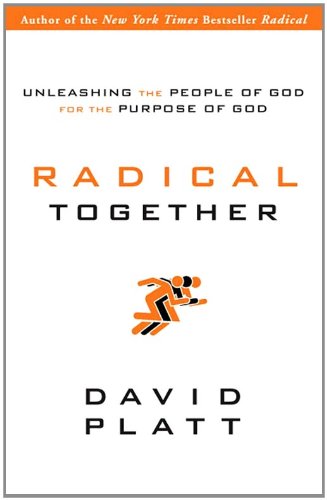
In Radical Together, David Platt follows up on his book Radical by focusing on how followers of Jesus need to rethink the purpose of the church.

Throughout the book, David continually challenges the age-old paradigms of “church,” and he calls on Christians to return to a more biblical approach to living out their faith. Some of my favorite wake-up calls come in these quotes:

“So we decided to stop planning, creating and managing outreach programs and to start unleashing people to maximize the ministry opportunities God had already planned and created for them.”

“Be careful not to let programs in the church keep you from engaging people in the world with the Gospel.”

“Discussions in the church more often revolve around what we want than what [God] wills. Almost unknowingly, the church becomes a means of self-entertainment and a monument to self-sufficiency.”

And he also addresses pastors specifically in the way they lead their churches. One quote from David really caused me to pause—

“The Bible is not in a church leader’s hands so he or she can give people answers to every question they have and guidance for every situation they face. Instead, the Bible is in a church leader’s hands to transform people into the image of Christ and to get people in touch with the Holy Spirit of God, who will not only give them counsel for every situation they face but will also walk with them through those situations. And when church leaders use God’s Word for this purpose, then church members develop a healthy dependence on God’s Spirit and a healthy admiration of God’s glory.”

Although Radical Together was really written as a sequel to Radical, I didn’t read the first book. With that being said, I didn’t feel like I was only getting part of the story, as Radical Together clearly stands alone.

If you are tired of same-old-same-old church, Radical Together just might be the wake-up call that you need.

I am a Multnomah book reviewer.

An Unabashed Appeal To Join Religion And Government

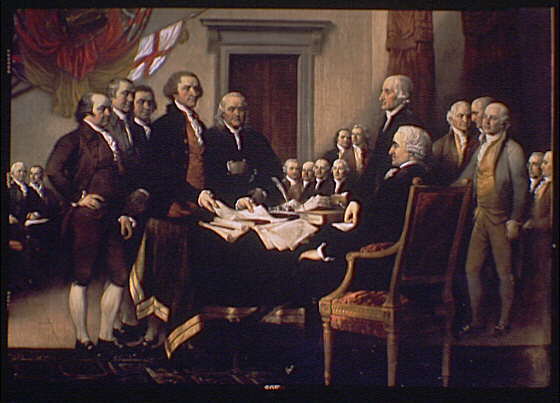
Talk about taking a passing remark out of context! In a personal letter, Thomas Jefferson mentions how church and state should be separate. But I’m convinced where we’ve ended up is no where close to what he intended! I’m so tired of historical revisionists trying to convince us that biblical values and Judeo-Christian ethics had no place in the founding of our nation. Or—worse yet—that they have no place now. Consider these founding remarks…

“…Having undertaken, for the Glory of God, and advancements of the Christian faith and honor of our King and Country, a voyage to plant the first colony in the Northern parts of Virginia….” —Mayflower Compact

“And for the support of this Declaration, with a firm reliance on the protection of Divine Providence….” —Declaration Of Independence

“I have lived, Sir, a long time; and the longer I live the more convincing Proofs I see of this Truth, That God governs in the Affairs of Men!—And if a Sparrow cannot fall to the Ground without His Notice, is it probable than an Empire can rise without His Aid? — We have been assured, Sir, in the Sacred Writings, that ‘except the Lord build the House, they labor in vain that build it.’ I firmly believe this; and I also believe that without His concurring Aid we shall succeed in this political Building no better than the Builders of Babel…. I therefore beg leave to move, That henceforth Prayers, imploring the Assistance of Heaven, and its Blessing on our Deliberations, be held in this Assembly every Morning before we proceed to Business.” —Benjamin Franklin, Constitutional Convention

It is impossible to rightly govern a nation without God and the Bible.” —George Washington

“Suppose a nation in some distant Region should take the Bible for their only law Book and every member should regulate his conduct by the precepts there exhibited! What a Utopia, what aParadise would this region be.” —John Adams

And, of course, the quotes could go on and on and on. But one of my favorites:

“Yes, if our religion had more to do with our politics; if, in the pride of our citizenship, we had not forgotten our Christianity; if we had prayed more and wrangled less about the affairs of our country, it would have been infinitely better for us at this day.” —John Mitchell Mason (1770-1829), in his book published in 1800

Happy Birthday, America! May GOD bless you!