No Apologies Needed

Listen to the podcast of this post by clicking on the player below, and you can also subscribe on AppleSpotify, or Audible. 

Jesus spoke.
A lot.
In fact,
He’s called the Word.
He told stories,
He quoted Scripture,
He used nursery rhymes.
He laughed,
He cried,
He thundered.
He spoke to the religious,
And the irreligious;
To Jews,
To Gentiles,
To Samaritans.
His words excited,
And angered,
Healed,
And restored.
But…
Not once did He misspeak,
Or stumble,
Or apologize.
How could He do this?
“I did not speak of My own accord,
But the Father who sent Me
Commanded Me what to say
And how to say it …
So whatever I say
Is just what the Father
Has told Me to say” (John 12:49-50)
You and I can speak like this too:
We, too, can slow down, listen, and then speak only those Holy Spirit-directed words. If we can do that, we won’t ever need to apologize.

Check out my video called Time To Check The Mirror where I talk about so-called Freudian slips, and my blog post A Leader’s Sincere Apology.

►► Would you please prayerfully consider supporting this ministry? My Patreon supporters get behind-the-scenes access to exclusive materials. ◀︎◀︎
Outliers (book review)

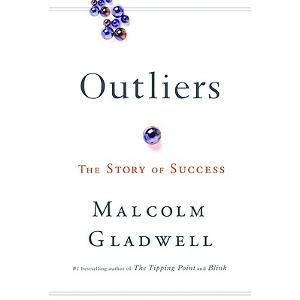
OutliersOutliers by Malcolm Gladwell is, hands-down, one of the most fascinating books I’ve read in quite awhile.

I’ve read all sorts of books about success: what it looks like, how one attains it, and even how the arguments of nature versus nurture bring about success. But Malcolm Gladwell tells stories about successful and unsuccessful people—supported by loads of “hard data”—that turn all of those fine theories about success on their head.

As it turns out, success is not about the right family, or a strong work ethic, or an outstanding education, or a lucky break, or being born in the right culture or in the right decade. It is all of these things. Success people are successful because of innumerable factors, but the stories that Gladwell uncovers that reveal these fact are astounding.

I recommend you add Outliers to your reading list as soon as you can.

Lifewalk 2013 = Huge Success

Lifewalk for Alpha Family Center was a huge success this year! Over 160 walkers representing 18 area churches raised $12,000 for this vital ministry! 

Huge thanks to Lorrie Shelton (Alpha’s director), the army of volunteers who helped with all the behind-the-scenes work, and our sponsors and underwriters for boldly making a stand for life.

Below are a few pictures from our day together, but you can see my full collection on Flickr by clicking here.

This slideshow requires JavaScript.

God Chooses Dads

God chooses DadsThis is an amazing thing God says to Abraham:

When the men got up to leave, they looked down toward Sodom, and Abraham walked along with them to see them on their way. Then the Lord said, “Shall I hide from Abraham what I am about to do? Abraham will surely become a great and powerful nation, and all nations on earth will be blessed through him. For I have chosen him, so that he will direct his children and his household after him to keep the way of the Lord by doing what is right and just, so that the Lord will bring about for Abraham what He has promised him.” (Genesis 18:16-18)

Notice some very important aspects in this passage especially for Dads.

(1) God chose Abraham to be a father. 

God doesn’t haphazardly give children to fathers; He places children in homes on purpose. God chooses Dads!

(2) God chose Abraham for a specific paternal responsibility. 

God chooses a Dad today for the same reason He chose Abraham: So that he will direct his children and his household after him to keep the way of the Lord by doing what is right and just. 

(3) Because God gave Abraham this responsibility, He revealed intimate details to him about Abraham’s household. 

God asks, “Should I hide this from Abraham?” And then answers His own question with a resounding “No!” by telling Abraham specifically what is about to happen that will affect Abraham’s household (vv. 20-21). God wants to tell you, too, what’s happening in our culture that will affect your children.

(4) Abraham used this insight wisely. 

Verse 22 tells us, “Abraham remained standing before the Lord.” Dads, there is no better place for you to be than in God’s presence. If God chose you to be your children’s Dad, and if He specifically gave those children to you, He is your best resource for help in raising God-loving children!

Billy Graham said, “Parenting is the most important responsibility most of us will ever face, and none of us does it perfectly.” But rest assured, God wants to help us do it better!

God-Devoted Fathers

Here are a couple of great quotes from Andrew Murray that I shared with our Dads (and future Dads!) at Calvary Assembly of God this morning.

God-devoted father“God seeks a people on earth to do His will. The family is the great institution for this object; a believing and God-devoted father is one of the mightiest means of grace.”

“O God, teach me to realize fully what this parental faithfulness involves that You ask of me. I would make this the one object of my family life, to train my child to serve You. By my life, by my words, by my prayers, by gentleness and love, by authority and instruction, I would lead them in the way of the Lord. Be my helper, Lord. Above all, help me to remember that You have appointed this parental training for the fulfillment of Your purposes and that You have made provision for the grace to enable me to perform it. Let my faith envision Your undertaking for me in all that I must do to raise my children to love you. I ask all this in the name of Your Son. Amen.”

Politics In The Pulpit

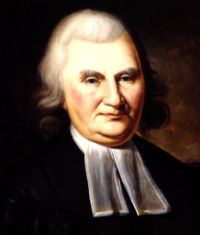
John Witherspoon

John Witherspoon

Is there right time to address politicized topics from the pulpit? I believe there is, but I believe we must make sure we’re not promoting our opinion but standing up for biblical principles.

Pastors were pivotal in swaying public opinion prior to the American Revolution and in the abolition of slavery in the United States. One pastor that spoke forcefully and biblically about the independence of the thirteen colonies was John Witherspoon—

“If your cause is just—you may look with confidence to the Lord and intreat [sic] Him to plead it as His own. You are all my witnesses, that this is the first time of my introducing any political subject into the pulpit. At this season however, it is not only lawful but necessary, and I willingly embrace the opportunity of declaring my opinion without hesitation, that the cause in which America is now in arms, is the cause of justice, of liberty, and of human nature.”

Commenting on the decision of Rev. Witherspoon to address this topic from the pulpit, theologian T.M. Moore wrote—

“Preachers tend to stay away from sticky moral and political issues, simply because they know it riles up certain folks for them to do so. Witherspoon spoke out in his day because the cause of the nation was just. But so many unjust causes are afoot in our nation at the moment, that for pastors not to speak up and equip their people to understand the times and know what we as communities should do, is not only a betrayal of our Founders, but a betrayal of their calling and of the Word of God (Ezekiel 33).”

That’s a strong statement: Pastors that don’t speak out on the immoral issues of our time are betraying their calling. I tend to agree with him. What do you think? Is there a time and place for politics in the pulpit?

You may also want to check out my videos How Christians can live biblically in an election season and The Church should be pre-political

Thursdays With Oswald—Contemptible Unbelief

This is a weekly series with things I’m reading and pondering from Oswald Chambers. You can read the original seed thought here, or type “Thursdays With Oswald” in the search box to read more entries.

Oswald Chambers

Contemptible Unbelief 

     “All power is given unto Me in heaven and in earth” (Matthew 28:18). All power is given—unto whom? To the Being who lived a humble, obscure life in Nazareth; the One who says, “Come unto Me, all ye that labor and are heavy laden, and I will give you rest.” If all power is given to Jesus Christ, what right have I to insult Him by worrying? If we will let these words of Jesus come into our heart, we shall soon see how contemptible our unbelief is. 

     … Will I say skeptically, “What does Jesus Christ know about my circumstances? Is His power and understanding sufficient to manage things for me?” To talk like that is the way to realize the size of our unbelief, and to see why Jesus Christ was so stern in condemning it.

From Bringing Sons Unto Glory 

I love the phrase from the old hymn—

Oh, what peace we often forfeit
Oh, what needless pain we bear
All because we do not carry
Everything to God in prayer! 

When I think how All-powerful and All-loving He is, I begin to see how utterly contemptible is my unbelief and my unwillingness to take everything to Him. If all power is given to Jesus Christ, what right have I to insult Him by worrying?

Dads Are The Foundation

Dads Are The FoundationIt’s been said (and I believe it’s absolutely correct), “As the family goes, so goes the society.” But I think it’s even more important to specify, “As the father goes, so goes the family.”

Dads are vital to the success of a family.

I know that’s a lot of responsibility to place on a father. God knows it too, so He has provided unique help for Dads to help them be the solid foundation for their families and for our societies.

Please join me at Calvary Assembly of God at 10:30am this Sunday for Father’s Day 2013 as we look at the help God has given to fathers to be successful as the godly foundation for their families.

10 Quotes From “Plastic Donuts”

Plastic DonutsPlastic Donuts is a fresh look at the biblical concepts of tithing and giving offerings. You can read my full book review by clicking here. These are some of the quotes that caught my eye—

“What I didn’t realize was that my lifestyle had frozen my giving at the 10 percent level. When it came to my finances, my lifestyle had all the influence. The issue is not about my needing to sacrifice my lifestyle. The issue is about my giving a gift that is connected to my heart.”

“In His Sermon on the Mount, Jesus provided instructions on giving, praying, and fasting. For each, He focused on the heart standard but did not provide an amount standard (see Matthew 6:1-18).”

“David praised God seven times a day. Daniel prayed to God three times a day. Moses fasted from food and water twice, for forty days straight. Daniel fasted twenty-one days from rich foods and wine. Where did these faith heroes get their standards? They determined them. It’s human nature to seek something that is concrete, an inviolable guideline, clear marching orders. … But let’s be honest. Are we looking for a rule to follow so we can check it off the list? Or does a strict rule help to soothe a sense of guilt and confusion? It’s always easier to follow rules than to follow a living God. The absence of rules can cause tension in determining the amount of our gifts. Shouldn’t there at least be a minimum? If not, suddenly it’s wide open. Multiple options appear.”

“God is not looking for the same gift from all His children. He wants a personal gift.”

“You may not think you have the ability to give. But if you pay attention, you’ll be surprised at just what abilities you really do have.”

“Tapping your true giving ability will require countercultural lifestyle choices—such as debt-free living or a reduction in your spending.”

“If you want to grow your faith, grow your gratitude. To grow your gratitude, take time to count your blessings.”

“No matter what your ability or inability, God can be pleased with your gift.”

“Could it be that a giving lifestyle apart from love and obedience to God is simply philanthropy?”

“In the end, it is the condition of the giver’s heart that makes the gift pleasing to God.”

Plastic Donuts (book review)

Plastic DonutsEvery once in awhile a book comes along that addresses a topic in such an innovative way, that I get an insight I had never considered before. Plastic Donuts by Jeff Anderson is just such a book.

Tithes. Offerings. Missions support. Building funds. It seems pastors cringe when they think about addressing these subjects, and congregants squirm when they hear their pastor addressing these subjects! “After all,” many think, “every church-attending Christian knows they should give, right? We know it and the pastor knows it, so why do we need to talk about it?”

But Plastic Donuts will give you a take on church giving that you probably haven’t considered before. It all comes from an insight Jeff Anderson got when his young daughter served him some plastic donuts.

The book is short, but powerfully-packed. I would say that its size would make you think it could be read quite quickly, but the content is so thought-provoking and eye-opening, you may find yourself taking time to rethink what you thought you knew on this subject.

Here’s my final word: Get this book. Get it for yourself and get it for your pastor. Everyone will be grateful that you did.

I am a Waterbrook Multnomah book reviewer.

UPDATE: 

  • To read some of my favorite quotes from this book, click here.
  • To watch a video review I did of this book for Waterbrook Multnomah, click here.