Be An Intrusive Friend

Yesterday I talked about how to defeat depression in our personal lives. Maybe you’re not battling depression yourself, but since anti-depressants are one of the most prescribed medications, there’s a good chance that someone you know is dealing with depression. Beyond medicine or counseling, one of the greatest antidotes for depression is a friend: an intrusive friend.

In 1 Kings 19 when Elijah was running scared and slipping into depression, there is an important verse at the beginning of the story—Elijah was afraid and ran for his life. When he came to Beersheba in Judah, he left his servant there (v. 3).

One of our most natural reactions when we’re battling depression is to withdraw from others. It’s natural to want to be alone, but it is one of the worst things to do. Throughout Scripture, powerful people became vulnerable to attack when they left their friends behind—Samson, David, and Peter are prime examples. Even Jesus was tempted by the devil when He was alone in the wilderness.

So if it’s natural to want to be alone when depression is raining on our souls, a true friend will have to be an intrusive friend … a tenacious friend … a persistent friend. I love the lines in the Toby Mac song “Face Of The Earth” that say—

Now Hope Road is calling
Let’s pack you up and move
‘Cause real friends are willing to intrude
So I’m gonna push you in because I wanna love you well
Let the ghosts of your past rest

If you have a friend who is starting to become distant, dropping out of activities, or spending more time alone, these may be the warning signs of depression. Don’t let him be like Elijah and leave you behind, but love him or her enough to intrude in his or her life. Your encouragement just may be the best anti-depressant he/she will ever receive.

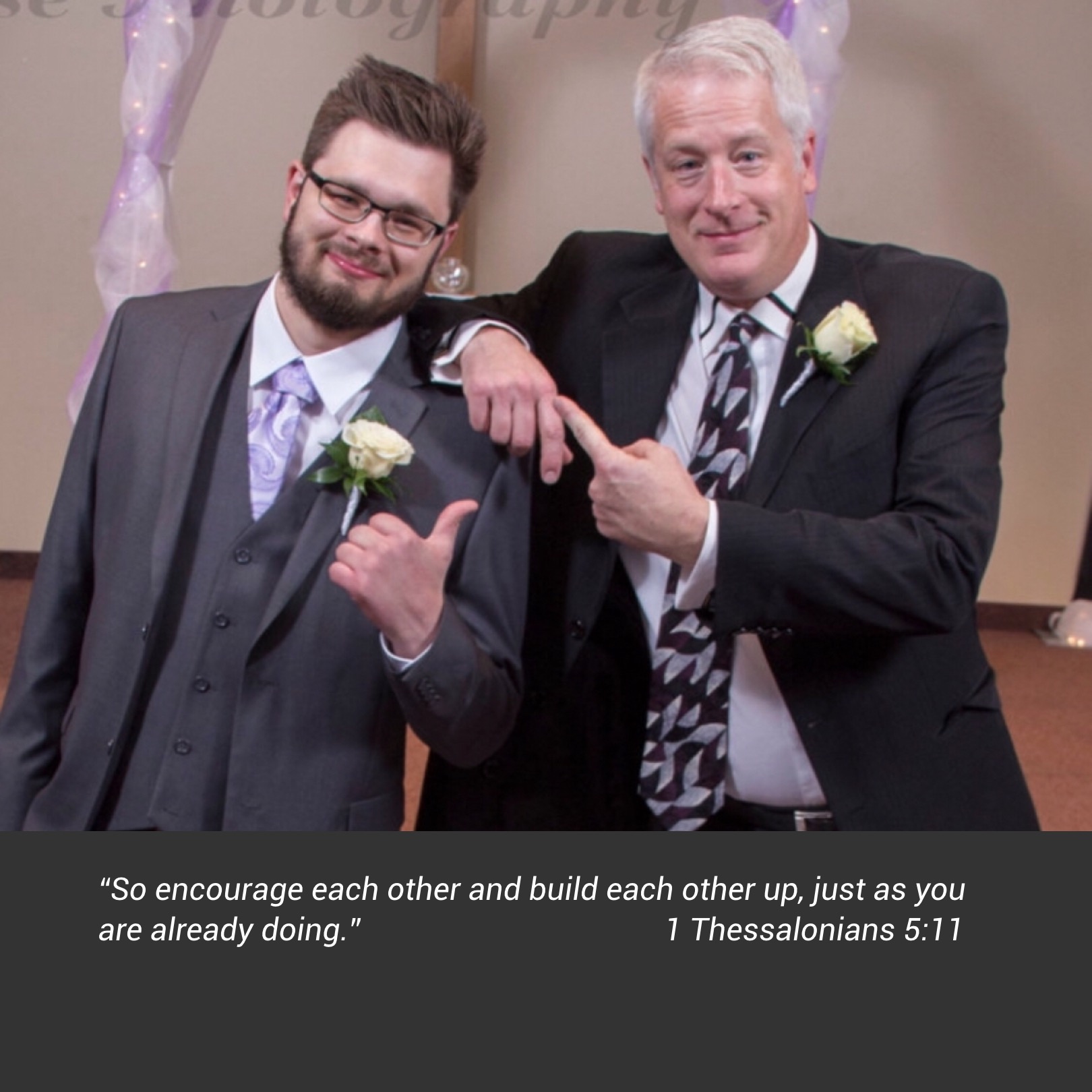
So speak encouraging words to one another. Build up hope so you’ll all be together in this, no one left out, no one left behind. I know you’re already doing this; just keep on doing it. (1 Thessalonians 5:11, The Message)

Jonathan went to find David and encouraged him to stay strong in his faith in God. (1 Samuel 23:16, New Living Translation)

Defeating Depression

In 1 Kings 19, Elijah hears that Queen Jezebel wants to kill him, so he “ran for his life.” Just four verses earlier Elijah “ran in the power of the Lord” (18:46) but now he is running scared. After 42 days of despondent wandering, Elijah ends up in a cave and God asks Elijah, “Why are you here?” (v. 9).

Elijah’s answer seems unresponsive. He tells God—as though He didn’t already know!—all about the spiritual conditions in Israel, but he never really answers the “why” question. God reveals Himself to Elijah more intimately (as “a gentle whisper”) and asks him again, “Why are you here?” Elijah gives the same, word-for-word answer.

During difficult times—when my “enemies” seem too numerous to count or too big to defeat—the eyes of my soul become cloudy. It becomes harder to look out and so I naturally tend to look inward. As a result, I become the center of my entire universe: “Now they are trying to kill me!”

In Psalms 42 and 43, the psalmist is clearly depressed. Look at his inward, me-focused questions—

  • When can I go and meet with God? (42:2)
  • My enemies continually taunt me, saying, “Where is this God of yours?” (42:3)
  • Why are you so downcast, O my soul? Why so disturbed within me? (42:5, 11; 43:5)
  • Why have You forgotten me? (42:9)
  • Why have You rejected me? (43:2)

Just as God’s question to Elijah was supposed to get him to look outward, the psalmist does begin to turn his gaze from himself. But notice how he does it—

  • My soul is downcast within me; therefore I will remember You (42:6)
  • Put your hope in God, for I will yet praise Him, my Savior and my God (42:11; 43:5)

When I’m battling depression, it takes an act of my will to praise God, to look outward and upward. Feelings follow actions. I don’t feel like praising Him because my problems feel so overwhelming, but when I will to praise Him, the feelings will follow.

Look how David did it—

I will extol the LORD at all times; His praise will always be on my lips.
My soul will boast in the LORD; let the afflicted hear and rejoice.
Glorify the LORD with me; let us exalt His name together.
(Psalm 34:1-3)

My friend, if you are depressed—if you have become inward-focused—only an act of your will can lift you out of this funk.

Use your willpower to act—look out, look up, praise God—and the cloud over your soul will begin to lift!

More Than Okay

Most mornings when I wake up there is a song echoing in my mind. This morning it was Switchfoot’s song “More Than Fine” (lyrics here).

Lately, I’ve been noticing some clichés in our culture that are survival-oriented—

  • “I’m just trying to make a living.”
  • “Another day, another dollar.”
  • “Ugh, another Monday!”
  • “I just need to make it until the weekend.”
  • “If we can just survive today.”
  • “How are you?” “I’m fine… okay, I guess.”

I suppose for some, this is how they view life. But this should never be the mindset for followers of Jesus Christ.

Jesus didn’t die on a Cross for us, conquer death and rise again so we could have an okay life. He came to give us overflowing life. Of all people, those who are in a personal relationship with Jesus should be the most more-than-okay people of anyone!

You prepare a feast for me in the presence of my enemies. You honor me by anointing my head with oil. My cup overflows with blessings. (Psalm 23:5 NLT)

The thief comes only in order to steal and kill and destroy. I came that they may have and enjoy life, and have it in abundance (to the full, till it overflows). (John 10:10 AMP)

Because of the sacrifice of the Messiah, His blood poured out on the altar of the Cross, we’re a free people—free of penalties and punishments chalked up by all our misdeeds. And not just barely free, either. Abundantly free! (Ephesians 1:7-8 MSG)

Now to Him who is able to do immeasurably more than all we ask or imagine, according to His power that is at work within us, to Him be glory in the church and in Christ Jesus throughout all generations, for ever and ever! Amen. (Ephesians 3:20-21 NIV)

Today is the only today you will ever get. You don’t have to just survive today, you don’t have to just make it through this day, you don’t have to settle for just okay. You can live for more than okay today, you can experience God’s abundance, and you can revel in the overflowing life Jesus’ resurrection purchased for you!

Be Like Craig

What Jesus Didn’t Say

All throughout the first four books of the New Testament—Matthew, Mark, Luke, and John—there are lots of “red letters” (words spoken by Jesus). But as each of these gospel writers begins to recount the arrest and sham trial of Jesus, I’m struck by how many “black letters” there are. This fulfilled an Old Testament prophesy—

He was oppressed and treated harshly, yet He never said a word. He was led like a lamb to the slaughter. And as a sheep is silent before the shearers, He did not open His mouth (Isaiah 53:7).

The chief priests and the Sanhedrin brought out a string of witnesses to falsely accuse Jesus, but even then these witnesses couldn’t get their stories to jive, so Jesus remained silent. In exasperation the chief priest Caiaphas lashed out at Jesus, “Aren’t You going to answer these charges? Don’t You hear what they’re saying about You? Why won’t You defend Yourself?”

So here’s how Jesus responded to His accusers: But Jesus remained silent (Matthew 26:63). His silence resonated louder than any words could have!

How could Jesus do this? How could He stand silently when all of these nasty things were being said about Him?

He looked back—”…He had done no violence, nor was any deceit in His mouth…” (Isaiah 53:9). All four Gospels record Jesus saying, “You heard Me speaking in public all the time. My life has been on display for You. If I had said or done anything wrong, you could have arrested Me earlier, but the facts are: I haven’t said or done anything sinful.”

He looked forward—”…Because of the joy awaiting Him, He endured the Cross, disregarding its shame…” (Hebrews 12:2). He knew that one wrong word could undo all of the good words which He previously spoke, so He looked forward to the joy that would come after this was over.

I just went through a period of my life where people threw incredibly hurtful lies at me, but what was that compared to the horrific abuse heaped upon Jesus? If He could remain silent, how much more should I?

While I was in the midst of this difficult time, a prayerful friend handed me a notecard which I have kept close to me. Perhaps these words will be helpful to you, too—

May kindness be the response in you
where such a response is not expected.
May gentleness have the power
to overrule an offense and the power to heal. (David Teems)

May this Good Friday be a time of reflection in what Jesus didn’t say. And may I, along with you, learn this power of silence when falsely accused.

Ahead-Of-Time God

I was reading the well-known story of the prophet Elijah this morning, while still thinking about a life in limbo. Elijah has the audacity to say to the king of Israel, “As the LORD, the God of Israel, lives, Whom I serve, there will be neither dew nor rain in the next few years except at my word” (1 Kings 17:1).

That’s it. We just sort of jump right into this story. We don’t read about God instructing Elijah to say this to King Ahab. And more importantly, we don’t see God saying, “Elijah, even though the land will go through a severe drought, here’s how I’m going to take care of you.” Elijah’s life was in limbo. But I’m struck by God’s ahead-of-time provision for Elijah.

At the time of this story, the land of Israel is now under its sixth evil king; each one getting more and more sinful than the one before him. The current king, Ahab is called the most evil of all the kings yet. Israel had lived under sinful kings—which the Bible says were causing all of the people to sin, too—for over 70 years! Yet at least one family still faithfully clung to their belief in Yahweh, the true God. These parents named their son Elijah, which means “Yahweh is the one true God.” Although it might have seemed everyone was sinning and turning their back on God, at least one set of parents raised their son in a counter-cultural way, at least one set of parents trained their son to rely only on God, at least one set of parents equipped their son to stand firm in the face of overwhelming evil.

The ahead-of-time God provided God-fearing parents for Elijah to train him to fear God too.

As the famine began, God directed Elijah to a brook that continued to flow. This was also the place ravens would bring him food.

The ahead-of-time God provided food and water for Elijah.

The drought eventually dried up the brook that Elijah was using for water, and the ravens eventually stopped coming to that dried-up creek bed with food. So God sent Elijah to a widow in Zarephath with this promise, “I have commanded a widow in that place to supply you with food” (1 Kings 17:9). After Elijah entered this widow’s home, her supply of oil and flour never ran out throughout the entire three years of drought, giving all of them food to eat.

The ahead-of-time God provided oil and flour for a widow so that she could make food for Elijah.

My life may be in limbo, but I am confident that my ahead-of-time God has already provided for me. You and I have this promise: “And my God will liberally supply (fill to the full) your every need according to His riches in glory in Christ Jesus” (Philippians 4:19).

This story is in the Bible to reassure you and me that God supplies for us.

Limbo

According to the dictionary, limbo has some unusual definitions:

  • a region on the border of hell or heaven;
  • an intermediate, transitional, or midway state or place;
  • a place or state of imprisonment or confinement.

Have you ever felt you were in limbo? I have, and it does sometimes feel like a place of imprisonment. As a follower of Jesus Christ, I’ve been wondering why I should ever be in limbo. And I have come to the conclusion that it’s because I’m in such a hurry to arrive someplace.

We get so anxious to get somewhere—anywhere—and while we are between two points we feel the transitional state very acutely, and it often feels like a prison.

But I think God is more interested in our development process than He is in our destination. There is Bible verse quoted often when people are in limbo: “And we know that in all things God works for the good of those who love Him…” (Romans 8:28). But the verb tense here is not a destination verb but a process verb. It’s better stated, “And we know that in all things God is working for the good of those who love Him.”

Look at the differences—

  • “I really thought I was supposed to get that job” [destination focus] versus “Here’s what God taught me while I was pursuing that job” [process focus].
  • “What am I supposed to do next, God?” [destination focus] versus “What are you teaching me while I wait on You?” [process focus]
  • “Why did it turn out this way?” [destination focus] versus “Here’s how I am growing through this time” [process focus]

Limbo isn’t fun (or as one of my friends said on Facebook this morning, “A life in limbo sucks!”). But it is in the limbo times—the times of process—that we learn the most about all of the good that God is working in us and through us.

If you feel like you’re in limbo today, take your eyes off a destination, and look at the process. Believe me, this is a lesson I am learning right now—big time! What limbo lessons have you learned—or should I say, what limbo lessons are you learning right now? 

Destinations

“Lord, make me a channel of Thy peace, that
where there is hatred, I may bring love;
where there is wrong, I may bring the spirit of forgiveness;
where there is discord, I may bring harmony;
where there is error, I may bring truth;
where there is doubt, I may bring faith;
where there is despair, I may bring hope;
were there are shadows, I may bring light;
where there is sadness, I may bring joy.” —Francis of Assisi

There are times when I go through a difficult spot in my life and I can see the areas where I am growing as a result of successfully navigating the challenge. However, the tough time I just went through wasn’t one of those times.

The quote above resonates with me. I want to be someone who brings out love, forgiveness, harmony, truth, faith, hope, light, and joy in other people. So although this challenging time I’ve gone through hasn’t been pleasant for me, it has been such a joy to see others “step up,” mature, stretch, and grow as they have been alongside me.

One more quote—”It is a serious thing to live in a society of possible gods and goddesses, to remember that the dullest and most uninteresting person you talk to may one day be a creature which, if you saw it now, you would be strongly tempted to worship, or else a horror and a corruption such as you now meet, if at all, only in a nightmare. All day long we are, in some degree, helping each other to one of these destinations.” —C.S. Lewis

To which destination are you helping those around you? What characteristics are you bringing out in those alongside you?

Shining Like Stars

Do everything without complaining and arguing, so that no one can criticize you. Live clean, innocent lives as children of God, shining like bright stars in a world full of crooked and perverse people. (Philippians 2:14-15)

Those who follow Jesus are supposed to be different.

The word holy means different; it means “set apart from everything else for a special purpose.” But holy shouldn’t be a repelling different, but a winsome, appealing, attractive different. Instead, our holy lives should shine like bright stars.

When we first had kids, people began to talk to Betsy and me about where our kids would go to school, and their first assumption was that we would send them to a “Christian” school. But we felt differently about this. We have been called by Jesus to let our light shine before men that they may see our good deeds and praise our Father in heaven. So our desire is that our kids may let their light shine in their public schools.

While I am grateful for the A’s and B’s on all of their third-quarter report cards, there are other statements on my kids’ report cards that make me even prouder—

  • “You are a pleasure to have in class.”
  • “I am so blessed to have him in class.”
  • “You have proven yourself to be a responsible, respectful, and hard working student.”
  • “She does a fantastic job of helping out other students in class.”
  • “He is extremely respectful towards others and a pleasure to have in class!”
  • “He is always willing to lend a helping hand to others if needed.”
  • “You are a joy to be around, and I look forward to your smile every morning!”

These comments reflect lifestyles that are different—a winsome, appealing, attractive different.

This light shining out from our kids has opened the door for us to share our faith in Jesus with both teachers and students. In fact, my daughter has been able to lead one of her classmates to faith in Christ, and she and her family are now attending our church!

My kids challenge me to do everything in a way that shines. I want to be different … I want to shine … I want to live in a way that attracts others to Jesus Christ. What about you?

Cheap Trade-Off

During the reign of King Rehoboam in Judah, God’s judgment fell on the land. Because of their sin against Him, God allowed Shishak, the king of Egypt, to plunder Jerusalem. Shishak carried off all of the valuable furnishings of the temple in Jerusalem.

To replace what had been plundered Rehoboam commissioned the casting of shields made of bronze (1 Kings 14:27). Whenever the king went to the temple, all the guards would carry these shiny shields with them, but then immediately after the king left the temple the guards returned their shields to the armory.

It looked good, but it was all a cheat … an imitation … a cheap trade-off.

Looking back a few chapters we read that not only did Rehoboam’s father, King Solomon, make the original shields out of gold, but he made almost everything out of gold. In fact, the Bible says, “Nothing was made of silver, because silver was considered of little value in Solomon’s days.” If silver was of little value, can you imagine how cheap bronze was?!

The temple is plundered. The gold shields—along with anything else of value—are gone, but there is no outcry from Rehoboam or the people, no repentance for their crimes against God, no anger at their sin that allowed Shishak’s raid.

Instead, Rehoboam wanted to try to keep up appearances.

He made bronze shields to look like the stolen gold shields.
He made his trip to the temple a spectacle of pomp and circumstance.
He hid the bronze shields away after he left the temple.

Isn’t this how many people deal with the plundering of their lives? I know I have at times. It seemed so much easier to try to cover up what was lost because of my sin, than to simply admit I sinned, repent of that sin, and ask for God’s merciful forgiveness.

Sure, Rehoboam still looked like he had his act together. But he knew—every time he was on this way to the temple and saw those bronze shields—that he was living a lie. He accepted a cheap trade-off for the real deal.

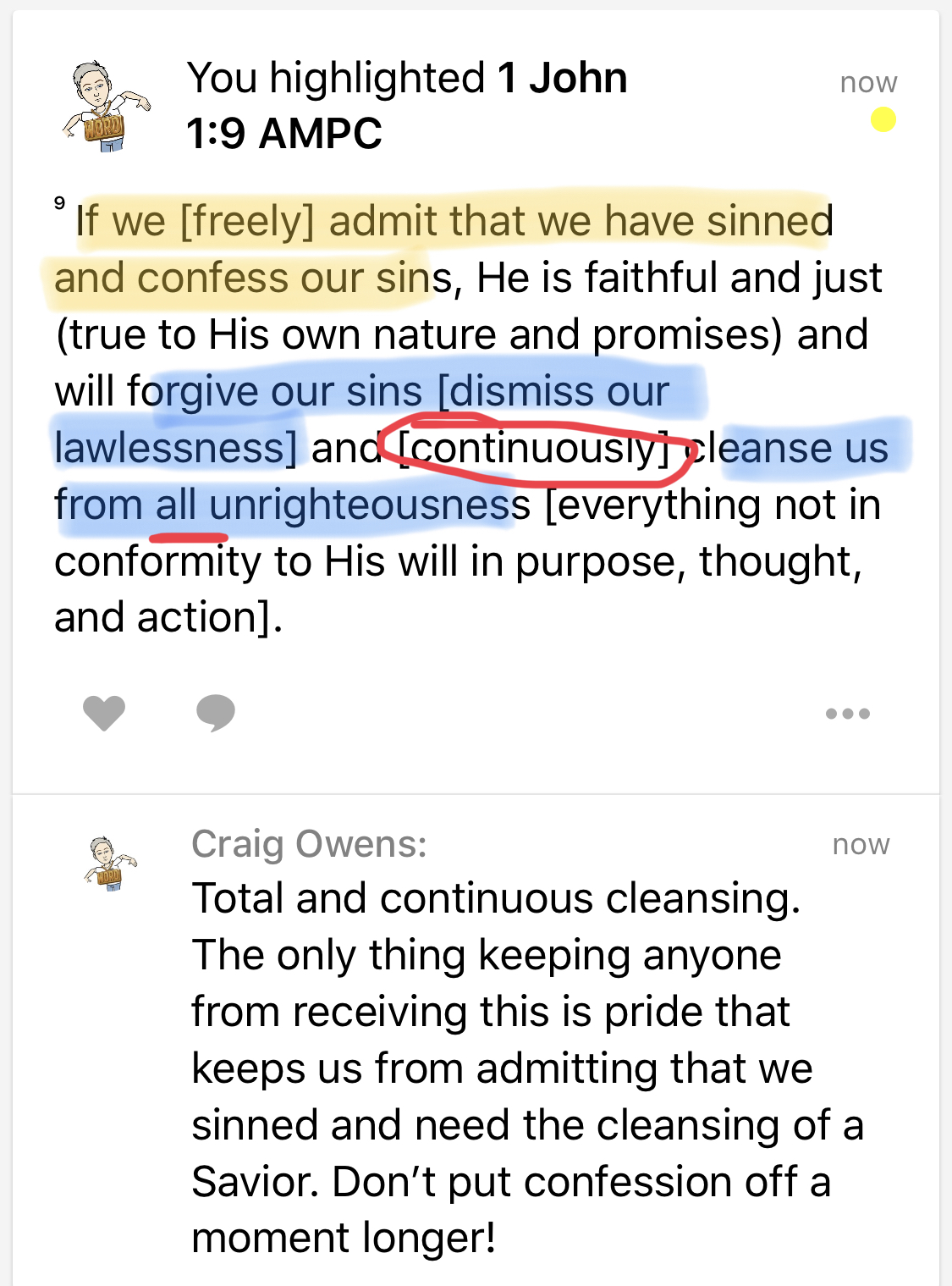
I am so grateful that, “If we confess our sins, He is faithful and just and will forgive us our sins and purify us from all unrighteousness” (1 John 1:9).

I’m not going to settle for cheap trade-offs anymore. How about you?