Ho Hum, It’s Election Day

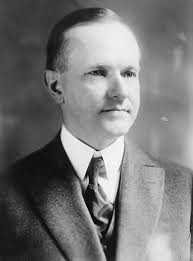
Calvin CoolidgeSadly, that’s the attitude of far too many people in the United States of America. And it’s flat-out wrong! 

If America is to stay true to the designs of our brilliant Founding Fathers, we must vote intelligently. In this age of easy internet access, there is no excuse for you not to find out where each candidate stands. So get informed and go vote!

Almost 90 years ago President Calvin Coolidge had some challenging words for Americans which should still grab our attention today—

“All the opportunity for self-government through the rule of the people depends upon one single factor. That is the ballot box…. The people of our country are sovereign. If they do not vote they abdicate that sovereignty, and they may be entirely sure that if they relinquish it other forces will seize it, and if they fail to govern themselves some other power will rise up to govern them. The choice is always before them, whether they will be slaves or whether they will be free. The only way to be free is to exercise actively and energetically the privileges, and discharge faithfully the duties which make freedom. It is not to be secured by passive resistance. It is the result of energy and action. … Persons who have the right to vote are trustees for the benefit of their country and their countrymen. They have no right to say they do not care. They must care! They have no right to say that whatever the result of the election they can get along. They must remember that their country and their countrymen cannot get along, cannot remain sound, cannot preserve its institutions, cannot protect its citizens, cannot maintain its place in the world, unless those who have the right to vote do sustain and do guide the course of public affairs by the thoughtful exercise of that right on election day.” (emphasis added)

In Name Only

Brennan ManningPhiladelphia, as most people know is “The City of Brotherly Love.” The original Philadelphia in Asia Minor was founded in the second century BC by a man named Attalus who, quite the contrary to cultural norms, kept his brother in a position of power and influence alongside him.

Where many leaders were suspicious of anyone who could make a claim on the throne, Attalus loved (the Greek word is phileo) his brother (Greek adelphos meaning “from the same womb”), so the city took on this name and attitude as well. After the city was leveled by an earthquake in 17 AD, Emperor Tiberius sent the funds needed to rebuild. Out of gratitude to the emperor’s generosity there was a movement to rename the city Neocaesarea in his honor. But the people liked being known for their brotherly kindness, so the name Philadelphia stuck.

At least it stuck in name only. As the first century progressed, Philadelphians bowed more and more to Rome’s influence and this city once known for kindness to all began to persecute Christians.

This reminds me of the United States of America today. Our pledge of allegiance still includes “one nation under God,” and “in God we trust” is still on our currency, and we haven’t repealed the First Amendment which gives us freedom of religion. It appears that we are a “Christian nation,” but in name only.

Many cast the blame far and wide, but as Jesus addressed the people in the first city of Philadelphia (see Revelation 3:7-13), we see the blame is on those self-professing Christians who didn’t live Christ-like lives. They were Christians in name only.

For those who “have kept My Word and not denied My name” Jesus promises a list of rewards longer than the list for any of the other seven churches addressed in the book of Revelation! Those promises are still in effect for those who will not deny Christ. More specifically for those who by their words and their lifestyle hold true to Jesus Christ.

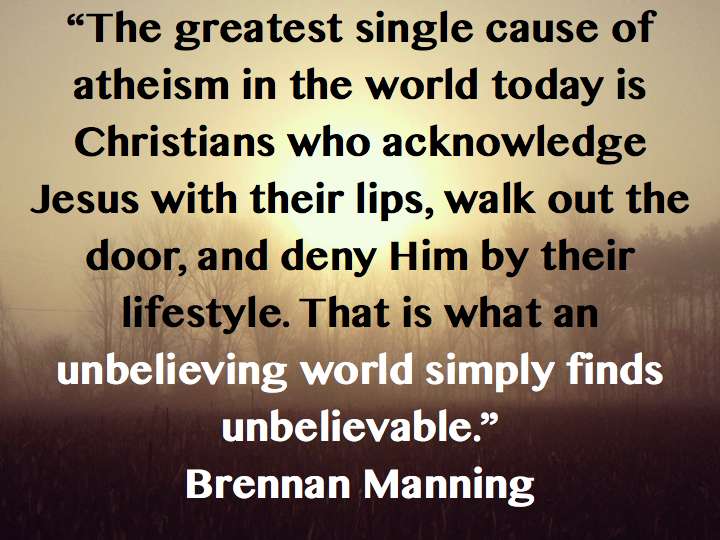
Brennan Manning was exactly right when he said, “The greatest single cause of atheism in the world today is Christians: who acknowledge Jesus with their lips, walk out the door, and deny Him by their lifestyle. That is what an unbelieving world simply finds unbelievable.”

My prayer is that Christians everywhere would be known not just by the name Christian, but by the way they hold true to Christ and His Word!

Please join me next Sunday as we look at the last of the churches in our series The 7-Star Church.

What Do You Remember about 9/11?

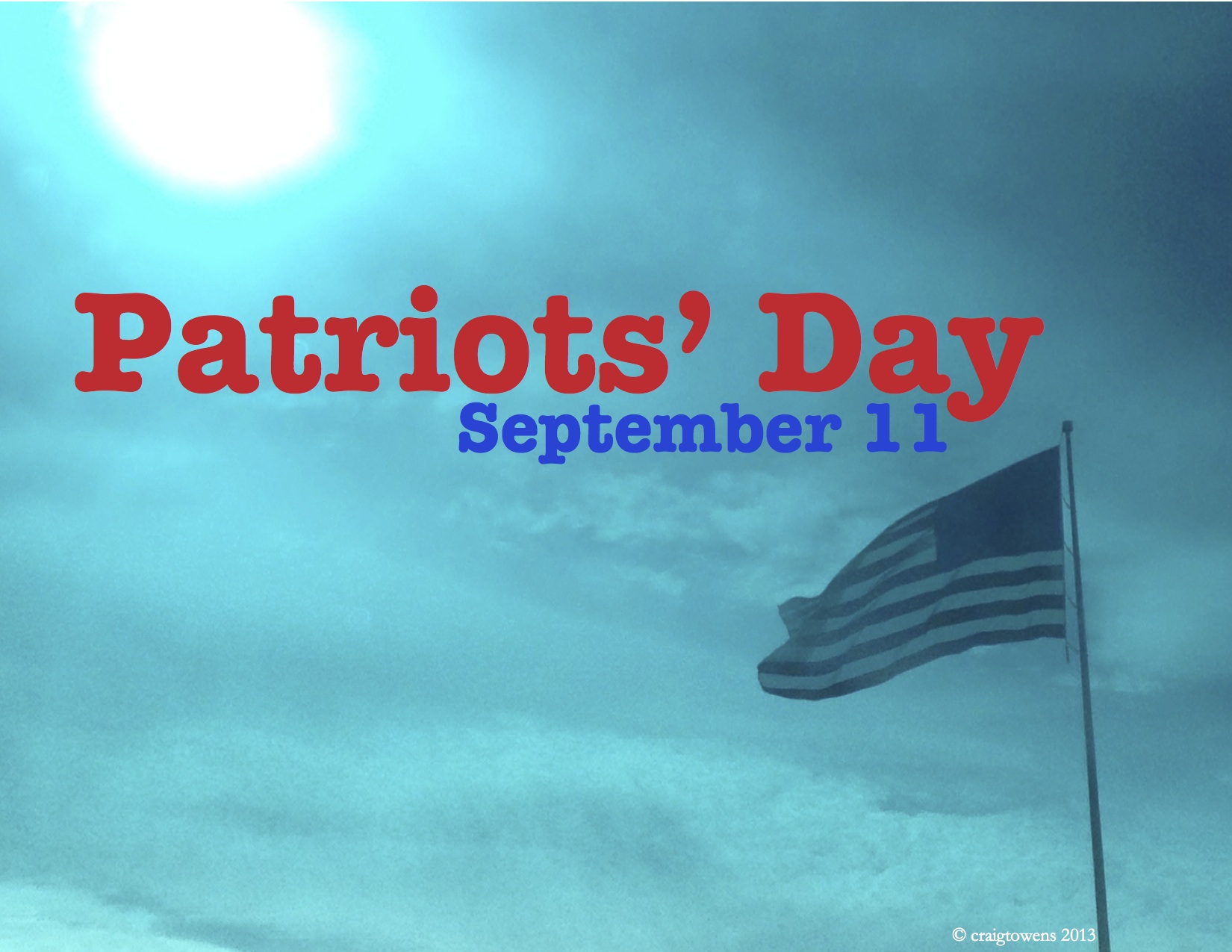
Patriots' DaySeptember 11, 2001, was a momentous, historical day. What do you remember about it?

You could choose to remember the acts of cowards—men who didn’t care whether they killed innocent people.

Or…

You could choose remember the acts of heroes—men and women who rushed into harm’s way to save lives … men and women who volunteered to serve in the US armed forces, police, and fire departments …. men and women who lined up to donate blood to help the wounded … men and women who spent countless hours sifting through rubble to find any who might have survived … men and women who gladly made personal sacrifices for the safety of fellow citizens … men and women who define the word PATRIOT.

September 11 is rightly called Patriots’ Day. It’s a day to remember heroes, not cowards.

Americanism

Americanism

“Americanism means the virtues of courage, honor, justice, truth, sincerity, and hardihood – the virtues that made America. The things that will destroy America are prosperity-at-any-price, peace-at-any-price, safety-first instead of duty-first, the love of soft living and the get-rich-quick theory of life.” —Teddy Roosevelt

The Reagan Diaries (book review)

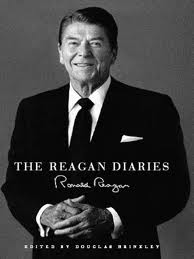
The Reagan DiariesPresident Ronald Reagan was the first president I was old enough to vote for, so he’s always held a special place in my own personal history. After reading several books about President Reagan, I wanted to read something in his own words. I’m so glad I did! The Reagan Diaries is a forthright look at an amazing man.

If you have studied American history during the Reagan presidency—or maybe you lived through that era of our history—you will gain a greater appreciation for the tough decisions that were made during this time. Reagan came into office on a platform that brought a sense of encouragement to an American people who were feeling a bit beat up, and then he tirelessly worked to follow through on the promises he had made, despite a Congress that was initially very antagonistic toward his policies.

Several things really stood out in these diaries. First is Reagan’s reliance on God. Time and again he writes about the wisdom he found in the Scriptures, or the strength he received in prayer. His faith is inseparable from his success in the White House. His faith was one that came to the forefront especially in dark times. Laying in the emergency room after being shot by a would-be assassin, he wrote:

“I focused on that tiled ceiling and prayer. But I realized I couldn’t ask for God’s help while at the same time I felt hatred for the mixed up young man who had shot me. Isn’t that the meaning of the lost sheep? We are all God’s children & therefore equally beloved by Him. I began to pray for his soul and that he would find his way back to the fold. …Whatever happens now I owe my life to God and will try to serve Him in every way I can.”

Another thing that appears in page after page is his love for Nancy. He writes frequently about how lonely the White House seemed when she was gone, he counted down the days until they would be reunited, and he looked forward to the all-too-short times when they could vacation together or take a break on the weekend just to be alone. On the first wedding anniversary they celebrated in the White House, he wrote, “more happiness than any man could rightly deserve.” And back at George Washington Hospital after the assassination attempt he said,

“I opened my eyes to find Nancy there. I pray I’ll never face a day when she isn’t there. Of all the ways God has blessed me giving her to me is the greatest and beyond anything I can ever hope to deserve.”

Finally, I love Reagan’s “realness.” He never took himself too seriously. He remained accessible to as many people in the White House as he could, and spent a lot of time calling and mailing United States’ citizens he read about in the newspapers or saw on the news reports. He was also brutally honest about his own shortcomings. After one press conference he wrote, “I wasn’t very scintillating.”

This is an excellent book to read for both a study in leadership, and as a companion to other U.S. history books of that period. At 700+ pages, it’s a hefty read, but well worth your time.

8 Quotes From “I Never Thought I’d See The Day”

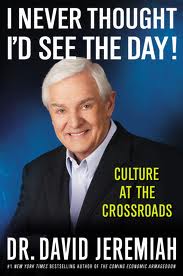
I Never Thought I'd See The DayYou can read my book review of Dr. David Jeremiah’s I Never Thought I’d See The Day by clicking here. These are eight quotes that especially caught my attention in this book. Unless the quotes are otherwise attributed, they are from Dr. Jeremiah.

“I’ve shaken my fist in anger at stalled cars, storm clouds, and incompetent meteorologists. I’ve even, on one terrible day, that included a dead alternator, a blaring tornado-warning siren, and a horribly wrong weather forecast, cursed all three at once. I’ve fumed at furniture, cursed at crossing guards, and held a grudge against Gun Barrel City, Texas. I’ve been mad at just about anything you can imagine.

“Except unicorns. I’ve never been angry at unicorns.

“It’s unlikely you’ve ever been angry at unicorns either. We can become incensed by objects and creations both animate and inanimate. We can even, in a limited sense, be bothered by the fanciful characters in books and dreams. But creatures like unicorns that don’t exist—that we truly believe not to exist—tend not to raise our ire. We certainly don’t blame the one-horned creatures for our problems.

“The one social group that takes exception to this rule is atheists. They claim to believe that God does not exist and yet, according to empirical studies, tend to be the people most angry at Him.” —Joe Carter

“While the atheist arrogantly persists in the delusion that his reason is fully capable of figuring out all that there is, the religious believer lives in the humble acknowledgment of the limits of human knowledge, knowing that there is a reality greater than, and beyond, that which our senses and minds can ever apprehend.” —Dinesh D’Souza

“God brought two perfect, sinless people together in the Garden of Eden, a man and a woman who knew the perfect love of God. They did not get married to find love but to walk together in the unity and purpose God created them to fulfill: the primary task of birthing and raising the next generation. And in the process, love happened.”

“It is significant that while Adam was single, satan did not approach him or tempt him to disobey God. He waited until after Adam’s marriage to launch his attack. You would think it easier to attack one person instead of two, but by waiting he was able to attack not just an individual, but also God’s foundational building block for harmony and stability—marriage. By attacking marriage, he was able to create division and disharmony between humans themselves as well as between humans and God.”

“The oneness found in marriage is the same kind of oneness found in the Trinity.”

“We can be lulled into complacency by adopting uncritically the principle of submission to government on the assumption that the Christian history of our nation makes it safe to let our leaders do our thinking for us. But we cannot do this in our post-Christian nation where God’s Word is being marginalized. Nothing could be more dangerous for Christians and churches than to wander thoughtlessly down this path of increasing biblical indifference—a path that could well lead to a place where the Bible is not merely marginalized, but banned outrightly.”

“If the Church is being ignored because we preach the message of ‘Jesus Christ and Him crucified’ (1 Corinthians 2:2), or because the Gospel has become ‘a stumbling stone and rock of offense’ (Romans 9:33) to the world, that’s one thing. But if we are deemed irrelevant because we’re an anemic version of the world’s entertainment options or because we aren’t playing the world’s game nearly as well as the world does, then that’s another thing. That’s a tragedy.”

“William Tyndale wisely sought to avoid the confusion between ‘Church” and ‘church’ by translating ekklesia as ‘congregation’ instead of ‘church.’ …We must maintain a clean understanding of the difference between Church and church—and the priority of the former over the latter. Church buildings can necessitate huge investments of resources for construction and maintenance, and they are only temporary. Keeping the focus on people is the biblical priority and will result in the Church’s remaining relevant.”

Happy Birthday, Mr. Lincoln

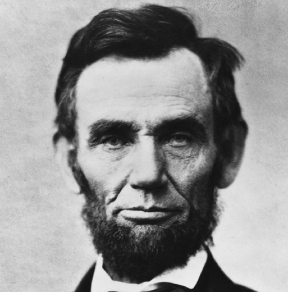
Abraham LincolnToday is Abraham Lincoln’s birthday. What an amazing man he was! Long before he became president of the United States, he had prepared himself to be a first-rate man at whatever he was going to do. How blessed we as a nation are to have a man worthy to be called “the savior of the Union” come into office at the time he did!

In honor of President Abraham Lincoln’s birthday, here are a few quotes and anecdotes from my files.

When he was a boy in Indiana, Lincoln borrowed a book about George Washington from a neighbor, Josiah Crawford. After rainwater ruined it, he went straight to Crawford, owned up to what had happened, and spent three days in Crawford’s cornfield working to pay for the book.

“I’ll prepare myself and be ready for opportunities as they come.” —Abraham Lincoln

When Lincoln was a young storekeeper in New Salem, Illinois, he accidentally shortchanged a customer by six and a quarter cents. As soon as he discovered the error, he closed the shop and walked six miles to pay the money back. Lincoln’s store was not a success. He and his partner, William Berry, went into debt trying to make a go of it. The store “winked out” anyway, as Lincoln put it, and left him owing a great deal of money, especially after Berry died. He could have done what so many others in similar situations did—simply head west for new frontiers and leave the debt behind. But he resolved to stay. For a young man of his means, it was a large burden. He called it, with grim humor, his “national debt.” It took him several years, but he paid it all back. 

“I have been driven many times upon my knees by the overwhelming conviction that I had nowhere else to go. My own wisdom and that of all about me seemed insufficient for that day.” —Abraham Lincoln

“That the Almighty does make use of human agencies and directly intervenes in human affairs is one of the plainest statements in the Bible. I have had so many evidences of His direction, so many instances when I have been controlled by some other power than my own will, that I cannot doubt that this power comes from above.” —Abraham Lincoln 

“The possibility that we may fail in the struggle ought not to deter us from the support of a cause we believe to be just.” —Abraham Lincoln

Horace Greeley, writing in the New York Tribune, wrote: “Never before did one so constantly and visibly grow under the disciplines of incessant cares, anxieties, and trials. The Lincoln of 1862 was plainly a larger, broader, and better man than he had been in ’61, while ’63 and ’64 worked his continued and unabated growth in mental and moral stature.” 

“It is more pleasing to God to see His people study Him and His will directly than to spend the first and chief of their efforts attaining comfort for themselves.” —Abraham Lincoln

“I destroy my enemies when I make them my friends.” —Abraham Lincoln 

“Surely God would not have created such a being as man to exist only for a day! No, no, man was made for immortality.” —Abraham Lincoln

Abraham Lincoln once turned down a job applicant citing, “I don’t like his face.” One of his Cabinet members let the President know that he didn’t think this was an adequate reason for turning down an applicant. To which Lincoln replied, “Every man over forty is responsible for his face.” 

“If often requires more courage to dare to do right than to fear to do wrong.” —Abraham Lincoln

“I remember my mother’s prayers and they have always followed me. They have clung to me all my life.” —Abraham Lincoln

“Die when I may, I would like it to be said of me, that I always pulled up a weed and planted a flower where I thought a flower would grow.” —Abraham Lincoln

Why I Didn’t Participate In Pulpit Freedom Sunday

In order to challenge the IRS regulation that non-profit 501(c)3 organizations (such as a church) not endorse a political candidate, a group called Pulpit Freedom encouraged pastors to publicly endorse a candidate in their Sunday sermons.

This is what I shared with my congregation this morning. We are not participating in the “pulpit freedom Sunday” for the following reasons—

  1. The IRS 501(c)3 regulations are not immoral. The Bill of Rights states that “Congress shall make no law respecting an establishment of religion, or prohibiting the free exercise thereof.” I don’t believe this is happening.
  2. The church should be apolitical. We don’t see any biblical writers endorsing candidates. Individuals serve in political office, and Paul often greets them. He never tells those individuals to leave their political posts, but neither does he instruct Christians on who they should support/endorse for an office.
  3. If I did what this group is asking, I feel I would doing it to make a statement, but not necessarily a statement that pleases or honors God. “For we speak as messengers approved by God to be entrusted with the Good News. Our purpose is to please God, not people. He alone examines the motives of our hearts” (1 Thessalonians 2:4). My statements must please God and not violate my conscience.
  4. I trust your intelligence. My role as a pastor is to equip people to know and apply biblical principles to every aspect of their lives; including how they make decisions to vote. My role as your pastor is not to tell you who to vote for.

9 Quotes On Political Activity From “The Book Of Man”

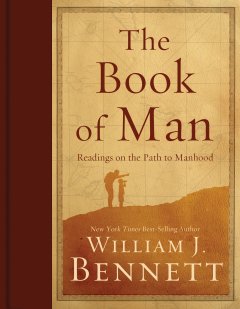
I really enjoyed reading The Book Of Man by William J. Bennett (you can read my book review here). The topics were very broad, so I’ll be sharing some of my favorite quotes on the different sections in this book over the next few days.

Here are nine quotes about political activity…

“Every right implies a responsibility; every opportunity, an obligation; every possession, a duty.” —John D. Rockefeller

Not gold but only men can make

A people great and strong;

Men who for truth and honor’s sake

Stand fast and suffer long.

Brave men who work while others sleep,

Who dare while others fly . . .

They build a nation’s pillars deep

And lift them to the sky. —Ralph Waldo Emerson

“This nation—where the people rule—is governed by the people, for the people, and so long as it is, then the office-holder is but the servant of the people, and the Bible says the servant cannot be greater than the master. The Bible says, ‘He that is sent cannot be greater than Him who sent Him.’ … Greatness consists not in the holding of some future office, but in doing great deeds with little means and the accomplishment of vast purposes from the private ranks of life. To be great at all one must be great here, now….” —Russell Conwell

“Nothing worth gaining is ever gained without effort. You can no more have freedom without striving and suffering for it than you can win success as a banker or a lawyer without labor and effort, without self-denial in youth and the display of a ready and alert intelligence in middle age. The people who say that they have not time to attend to politics are simply saying that they are unfit to live in a free community. …In facing the future and in striving, each according to the measure of his individual capacity, to work out the salvation of our land, we should be neither timid pessimists nor foolish optimists. We should recognize the dangers that exist and that threaten us: we should neither overestimate them nor shrink from them, but steadily fronting them should set to work to overcome and beat them down.” —Theodore Roosevelt

“There can be no government, or nothing worthy of the name, where there is no religion. …What is the value of a well-worded law if there be not virtue enough in the community to enforce it? It is not worth the paper upon which it is written. …Then let us not be afraid, my brethren, to mix a little more religion with politics. …Let us earnestly exhort and entreat them to respect the law of God; and let us try their actions by that law, as revealed in His holy word. And, as in the presence of Jehovah, let us solemnly ‘protest’ against all their wrong doings. …We are profoundly interested in the prosperity and permanency of this government, and all her virtuous institutions; but we know that any government, and especially a Republic, must stand on virtue, if it stands at all.” —Rev. J.S. Smart

“Our government was made by patriotic, unselfish, sober-minded men for the control or protection of a patriotic, unselfish and sober-minded people. It is suited to such a people; but for those who are selfish, corrupt and unpatriotic it is the worst government on earth. It is so constructed that it needs for its successful operation the constant care and guiding hand of the people’s abiding faith and love, and not only is this unremitting guidance necessary to keep our national mechanism true to its work, but the faith and love which prompt it are the best safeguards against selfish citizenship.” —Grover Cleveland

“What then are the qualities in men which can make them able and willing to achieve greatness by way of citizenship? I name first, without the slightest hesitancy, imagination, the power to see beyond, or even through, wickedness into righteousness. No great cause ever moved far until it had taken possession of the imagination of men.” —William Jewett Tucker

“When you become entitled to exercise the right of voting for public officers, let it be impressed on your mind that God commands you to choose for rulers, ‘just men who will rule in the fear of God.’ The preservation of government depends on the faithful discharge of this duty; if the citizens neglect their duty and place unprincipled men in office, the government will soon be corrupted; laws will be made, not for the public good so much as for selfish or local purposes; corrupt or incompetent men will be appointed to execute the laws; the public revenues will be squandered on unworthy men; and the rights of the citizens will be violated or disregarded. If a republican government fails to secure public prosperity and happiness, it must be because the citizens neglect the divine commands, and elect bad men to make and administer the laws.” —Noah Webster

“And yet the same revolutionary beliefs for which our forebears fought are still at issue around the globe—the belief that the rights of man come not from the generosity of the state, but from the hand of God.” —John F. Kennedy

Happy Independence Day

“I am apt to believe that it will be celebrated by succeeding generations as the great anniversary festival. It ought to be commemorated as the day of deliverance, by solemn acts of devotion to God Almighty. It ought to be solemnized with pomp and parade, with shows, games, sports, guns, bells, bonfires, and illuminations, from one end of this continent to the other, from this time forward forever more.”

(John Adams, writing to his wife Abigail about the Declaration of Independence)

I hope you will take time today to celebrate the blessings of liberty that we enjoy in the United States of America. But as you celebrate, do not forget that our freedom relies solely on the grace of God Almighty. If we forget that important fact, we are doomed to lose the precious gift of liberty.