How Christians Can Live Biblically In An Election Season

Listen to the podcast of this post by clicking on the player below, and you can also subscribe on AppleSpotify, or Audible. 

Much like Jude who had a message he wanted to deliver to the saints, but was compelled by the Holy Spirit to address something concerning him (Jude 3-4), I, too, was excited to deliver the next message in our series on discovering your gifts and then living in your gift zone. But I am deeply concerned about the words and actions of Christian saints during these past election cycles. 

(Check out all of the Scriptures I reference in this post by clicking here.)

I recently heard John Stonestreet say, “Currently, politics is carrying far more cultural weight than it is able to bear.” I agree: Christians are putting far too much emphasis on political candidates than the Bible would suggest. 

I frequently quote something from Charles Colson that always makes people smile. He said, “Salvation will never arrive in Air Force One.” The flip side is true as well: Neither will the Apocalypse arrive on Air Force One. 

We have to remember that the Most High is sovereign over all the nations of the earth, and He gives them to whom He choose (Daniel 4:25, 32). When we think that our candidate or our party is the only way our nation can be saved, aren’t we elevating the political process above God’s plan? 

I hope this doesn’t come as a shock to anyone, but there are no perfect candidates, perfect political parties, nor perfect party platforms. We can study our Bibles, pray, study the candidates’ lifestyle and policies, but ultimately we will have to cast a ballot for an imperfect candidate. 

God doesn’t have an “R” or “D” next to His name. He has not endorsed a political candidate. You may be sitting next to someone right now that is going to vote for the opposite political party that you will be voting for. And the way we interact with those people—whether they are fellow Christians or not—is deeply concerning to me. 

Moses saw a couple of fellow Israelites fighting each other, and he asked them, “Why are you hitting your fellow Hebrew” (Exodus 2:13). The Hebrew word rea means a friend who is also a fellow citizen. These Hebrews were citizens of Zion, but they were living in Egypt, and they definitely weren’t treating each other in a way that would be a testimony to the Egyptians. 

When Stephen retold this portion of the story in his sermon, he phrased it this way, “Men, you are brothers” (Acts 7:25-26). Stephen used the Greek word adelphos which literally means “from the same womb.” But the Christians used this word to mean brothers and sister in Christ—people with whom we will spend eternity. 

Let us always remember that others who are participating in the American political process are BOTH fellow US citizens AND brothers and sisters in Christ. 

In J.R.R. Tolkien’s Return of the King, when Gandalf sees fellow citizens and friends at each other’s throats, he exclaims, “Work of the enemy! Such deeds he loves: friend at war with friend, loyalty divided, and confusion of hearts.” Indeed, the enemy of our souls would love to see the chaos of a nation at war with itself; especially to see Christians at odds with each other. 

Paul said, “Therefore, as we have opportunity, let us do good to all people, especially to those who belong to the family of believers” (Galatians 6:10). On the flip side, Jesus said that when we think or speak poorly of a fellow human, we are in danger of judgment (Matthew 5:22). 

Listen to Paul’s appeal to his friends at Philippi—

Therefore if you have any encouragement from being united with Christ, if any comfort from His love, if any common sharing in the Spirit, if any tenderness and compassion, then make my joy complete by being like-minded, having the same love, being one in spirit and of one mind.

And then he specifically addressed a couple of sisters in Christ who were ad odds with each other

I plead with Euodia and I plead with Syntyche to be of the same mind in the Lord. Yes, and I ask you, my true companion, help these women since they have contended at my side in the cause of the gospel, along with Clement and the rest of my co-workers, whose names are in the book of life. (Philippians 2:1-2, 4:2-3) 

The politicians we have are always downstream from culture, which means we have allowed those sorts of politicians to be in place. 

John Stonestreet used a phrase I hadn’t heard before, but I think it’s appropriate: “Christian political engagement should hit its fever pitch not during elections. The only way to relieve the political pressures of our day is to build up the pre-political aspects of our life together, especially the family and the Church. When we care well for our children, our neighbors, and our communities, the state doesn’t have to.”  How true this is! 
I wrote something this summer based on Isaiah 3:4-5. In essence, I wrote that God gives nations the “leaders” they deserve. They are leaders in that they occupy an office, but they don’t lead people nor care for the citizens—they don’t have wisdom to lead nor do they care about anyone but themselves. This is the inevitable result for a nation that turns its back on God! So if we think our political and civic leaders are self-focused, unskilled, and childish, we should look in the mirror. It’s not “them,” it’s us. We have to change—turning wholeheartedly to God—and only then God can change our leadership. 

We need to be praying for our governmental leaders, not vilifying them. We need to be speaking well of our fellow US citizens. We need to be especially treating our fellow brothers and sisters in Christ well. 

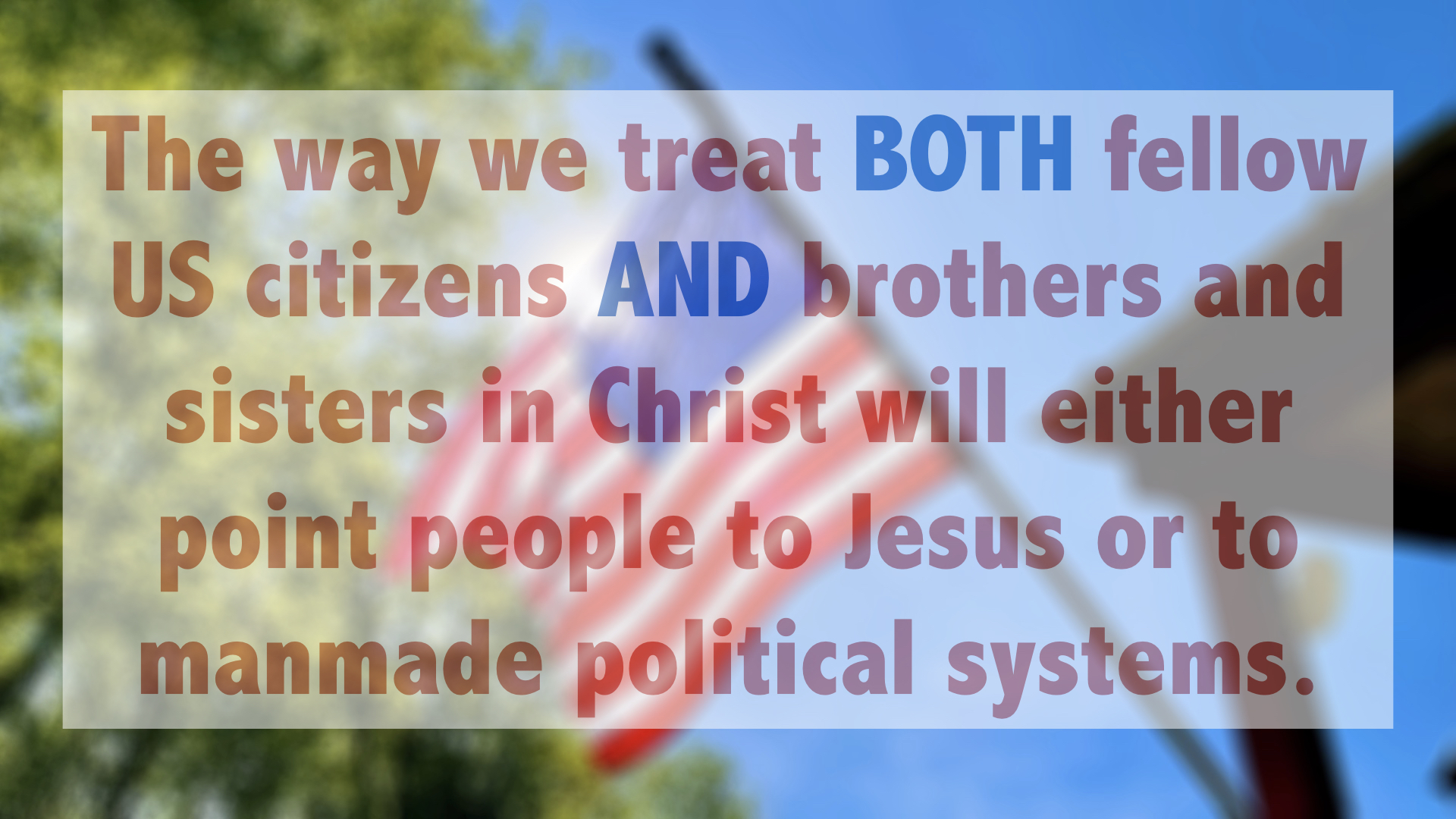
Our hope is not in the results of an election. Our hope is in Jesus. The way we treat BOTH fellow US citizens AND brothers and sisters in Christ will either point people to Jesus or to manmade political systems. 

I pray we can do better at pointing people to Jesus! I pray I can do better! 

►► Would you please prayerfully consider supporting this ministry? My Patreon supporters get behind-the-scenes access to exclusive materials. ◀︎◀︎
Are You Full Of It?

Listen to the podcast of this post by clicking on the player below, and you can also subscribe on AppleSpotify, or Audible. 

Would you like to be known as somebody who’s “full of it”? I know that phrase usually has a negative connotation, but I would like to make the case that this is actually a really good thing. 

Check out this episode of The Podcast. 

The Scriptures I reference in this episode are found in Acts 6:3, 8, 10; 7:54-60; Galatians 5:22-23. We also see this same Greek word for “fullness” used for other New Testament leaders like Peter, Barnabas, and Paul (Acts 4:8; 11:24; 13:9).

I have blogged and talked and written quite a bit about a godly leader’s reactions being a strong indication of what a leader is truly full of. Three notable leadership posts are: 

A godly leader’s reactions is a major theme in both of my books—Shepherd Leadership and When Sheep Bite.

You may also be interested in a post in my series about the life-transforming power of the Holy Spirit in a Christian’s life entitled In > On. 

►► Would you please prayerfully consider supporting this ministry? My Patreon supporters get behind-the-scenes access to exclusive materials. ◀︎◀︎

Letting Go To Hold On

Listen to the podcast of this post by clicking on the player below, and you can also subscribe on AppleSpotify, or Audible.

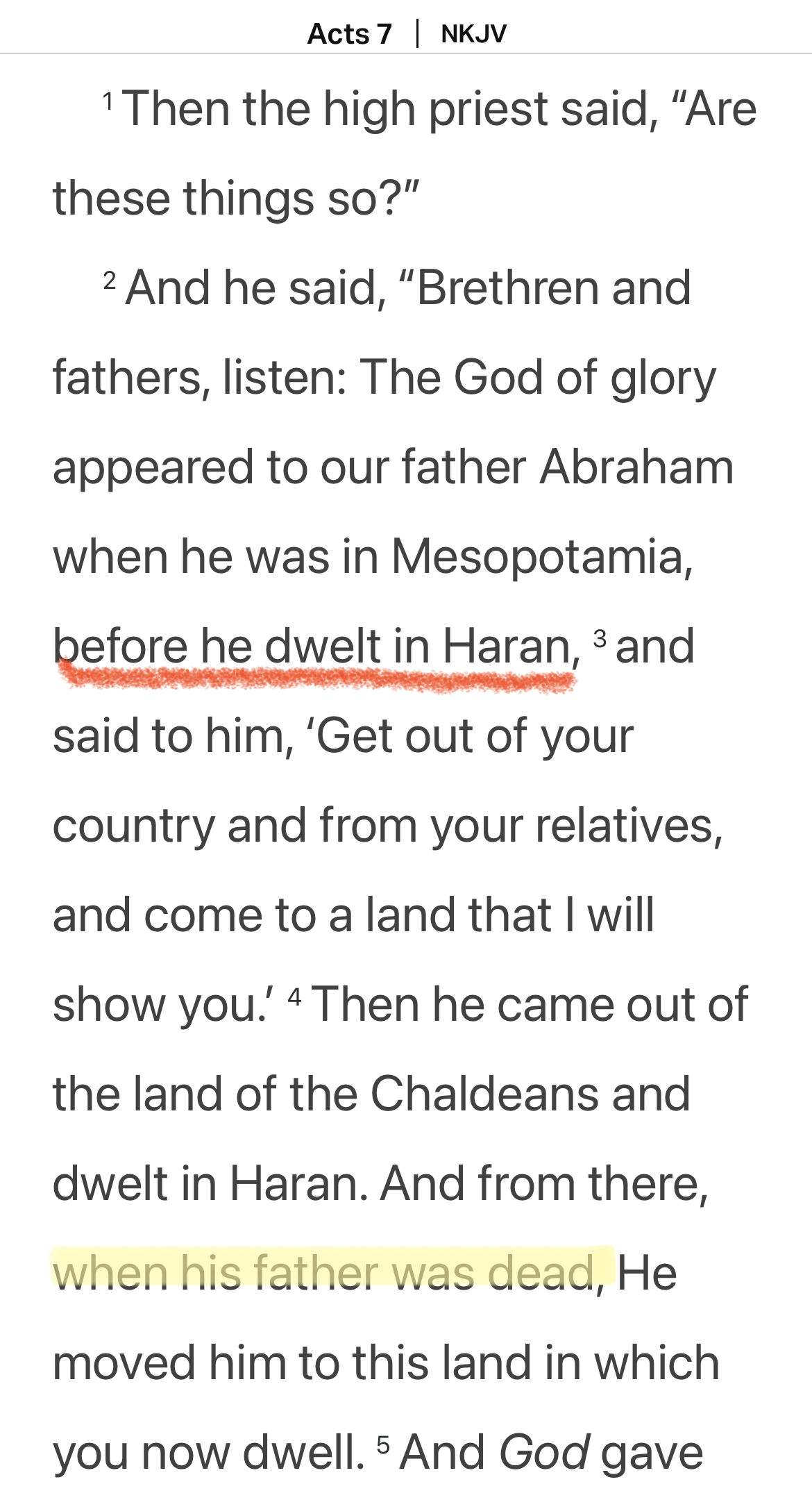
In Stephen’s sermon, he notes something interesting about Abraham: “The God of glory appeared to our father Abraham while he was still living in Mesopotamia, before he lived in Haran. ‘Leave your country and your people,’ God said, ‘and go to the land I will show you’” (Acts 7:2-3). 

That word “before” especially caught my attention—“before he lived in Haran.” 

In Genesis 11:31, we read that Terah (who is Abraham’s father) is the one who takes Abraham and Lot to set out for Canaan, but that they only made it as far as Haran. Could it be that God did speak to Abraham in the land of Ur, and that his influence on his father was so deep that Terah decided to answer the call too? Yet God called Abraham—not Terah—so Terah apparently was not as committed to obey God’s call. 

Terah’s youngest son Haran died before they began the journey. Terah didn’t get very far into their journey toward Canaan until in grief over his dead son, he stopped and he settled. 

Was Terah angry at God? Was he fearful about what may happen to the rest of his family on the long journey? Was he so wrapped up in his grief over his youngest son that he couldn’t move forward? 

Whatever the case, not only did Terah stop, but so did Abraham. 

But God, in His incredible graciousness, spoke to Abraham again, renewing the call to follow Him. 

Stephen said that Abraham left Haran “after the death of his father” (Acts 7:4). But let’s do the math: Terah was 70 years old when Abraham was born and lived to be 205 years old (Genesis 11:26), but Abraham arrived in Canaan when he was 76 years old (Genesis 16:3, 16). That means that Terah was still physically alive when Abraham left him. 

In other words, Abraham had to love God more than his grief-stricken, grief-paralyzed father, to the point that he had to consider his father as dead. He had to do this in order to follow God. 

Jesus says something similar to those who would be His followers today: “If anyone comes to Me and does not hate his father… he cannot be My disciple” (Luke 14:26). 

That’s a sobering word! We have to value obedience to God above all else. We have to believe that God is our supreme reward, and that absolutely nothing on this earth compares to the surpassing greatness of knowing Him. 

Jesus gave us this promise—

Jesus said to them, “Truly I tell you, at the renewal of all things, when the Son of Man sits on His glorious throne, you who have followed Me will also sit on twelve thrones, judging the twelve tribes of Israel. And everyone who has left houses or brothers or sisters or father or mother or wife or children or fields for My sake will receive a hundred times as much and will inherit eternal life. (Matthew 19:28-29)

Abraham shows us the principle that we should all realize: Following the call of God is so worth it! Letting go of this world so that you can hold on to your Savior is the best decision you could ever make! 

►► Would you please prayerfully consider supporting this ministry? My Patreon supporters get behind-the-scenes access to exclusive materials. ◀︎◀︎
Irresistible

Listen to the podcast of this post by clicking on the player below, and you can also subscribe on AppleSpotify, or Audible. 

And they were not able to resist the wisdom and the Spirit by which [Stephen] spoke. (Acts 6:10) 

Luke the historian doesn’t give us very many details about Stephen, but one common thread is the obvious help the Holy Spirit gave him: 

  • Stephen, full of faith and power, did great wonders and signs among the people 
  • they were not able to resist the wisdom and the Spirit by which he spoke 
  • all who sat in the council…saw his face as the face of an angel 
  • when they heard these things they were cut to the heart 
  • being full of the Holy Spirit, [Stephen] gazed into heaven and saw the glory of God, and Jesus standing at the right hand of God 

Jesus lived this way too. Near the end of His public ministry He said, 

“I have never spoken on My own authority or of My own accord or as self-appointed, but the Father Who sent Me has Himself given Me orders concerning what to say and what to tell. And I know that His commandment means eternal life. So whatever I speak, I am saying exactly what My Father has told Me to say and in accordance with His instructions.” (John 12:49-50 AMP) 

Jesus said this same Holy Spirit who directed His vocabulary, and Who gave Stephen his irresistible words, would do the same thing for us too. The apostle Paul asked for the Ephesian Christians to pray for him like this, “Pray also for me, that whenever I speak, words may be given me so that I will fearlessly make known the mystery of the gospel” (Ephesians 6:19). 

When we are yielded to the Holy Spirit we can say with assurance…

A mark of a godly leader is his irresistible, Spirit-led vocabulary. 

This is part 60 in my series on godly leadership. You can check out all of my posts in this series by clicking here.

►► Would you please prayerfully consider supporting this ministry? ◀︎◀︎

A Leader’s Grace And Power

None of them could stand against the wisdom and the Spirit with which Stephen spoke. (Acts 6:10)

Here’s a truth we can all stand on: The man with an experience is never at the mercy of a man with an argument.

A large group of people wanted to debate with Stephen about his belief in Jesus Christ. I’m sure that these debaters had some excellent points. But they couldn’t win the debate with Stephen because he had something they didn’t have: grace and power from God that was irrefutable!

Stephen’s words were backed up and verified by a lifestyle that was undeniable—

Stephen, a man full of God’s grace and power, performed amazing miracles and signs among the people. But one day some men from the Synagogue of Freed Slaves, as it was called, started to debate with him. They were Jews from Cyrene, Alexandria, Cilicia, and the province of Asia. None of them could stand against the wisdom and the Spirit with which Stephen spoke. (Acts 6:8-10)

“Knowing that we have God’s ability in us, should give us the confidence to lead well when others don’t approve of or appreciate our leadership.” —Liz Sarno

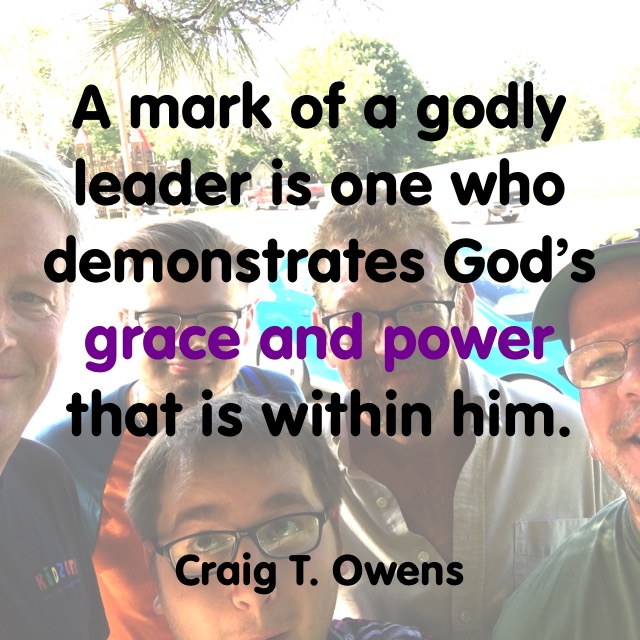
A mark of a godly leader is one who demonstrates God’s grace and power that is within him.

This is Part 8 in my series on godly leadership. To read my other posts, please click here.

The Counselor Makes Us Childlike

ChildlikeJesus loved being around kids! In fact, it still is the childlike nature that Jesus wants to see in all of us, and that’s one of the roles of the Holy Spirit as our Counselor.

There is a huge difference between being childish and childlike. Childish is being aware that what you’re doing is foolish; childlike is being innocently unaware.

Jesus was childlike.

  • He knew the kid’s songs in the street—Luke 7:32.
  • He wanted to have lot of kids around Him—Mark 10:14.
  • Most of His teaching examples were basic—farmers, birds, flowers, wedding parties.
  • Some were downright obvious—Matthew 15:16-17.
  • Some of His interactions with His adversaries were playful—Mark 11:27-33.

And when He described the way to Heaven—

He called a little child to Him, and placed the child among them. And He said: “Truly I tell you, unless you change and become like little children, you will never enter the kingdom of heaven. Therefore, whoever takes the lowly position of this child is the greatest in the kingdom of heaven. (Matthew 18:2-4)

Humbly loving God and innocently serving others. Isn’t that the essence of what Jesus taught us the Kingdom of Heaven was? Loving God and loving others in a childlike way.

Here’s how The Counselor trains us to be childlike:

  • Think of everyone as your friendMatthew 5:9, 44.
  • Laugh more often because you have no burdens weighing you downMatthew 11:28-30.
  • Don’t use double entendrés—…be innocent (harmless, guileless, and without falsity)… (Matthew 10:16, AMP).
  • Be fascinated by natureLuke 12:27.
  • Exercise your imaginationMatthew 18:10; Acts 6:15; 7:55-60.

The Counselor will teach us Christ-like childlikeness; He will reprove us when we are too “adult” in our thinking; He will continually correct us when we cross the line into childishness; and He will train us to love God and love others in a childlike way.