Links & Quotes

Leaders would do well to remember that they lead a group of unique individuals. Let the unique gifts of those unique people be used in unique ways, and watch both the individuals and the organization grow! 

I have a lot of new video content on my YouTube channel every week. Please check it out and subscribe so you don’t miss anything.

“As Tyler Cowen wrote in The Free Press, ‘Whether or not you work in the AI sector, if you put any kind of content on the internet, or perhaps in a book, you are likely helping to train, educate, and yes, morally instruct the next generation of what will be this planet’s smartest entities. You are making them more like you—for better or worse.’ Now, maybe someone thinks, ‘I’ve hardly got any followers, who cares what I post? It probably won’t matter.’ But the principle means we should care. The philosopher Immanuel Kant famously offered his ‘categorical imperative’ as a test for ethical decisions: ‘Act only according to that maxim whereby you can at the same time will that it should become a universal law.’ In other words, we should only do what we think would be good for everyone to do.” —Axis.org
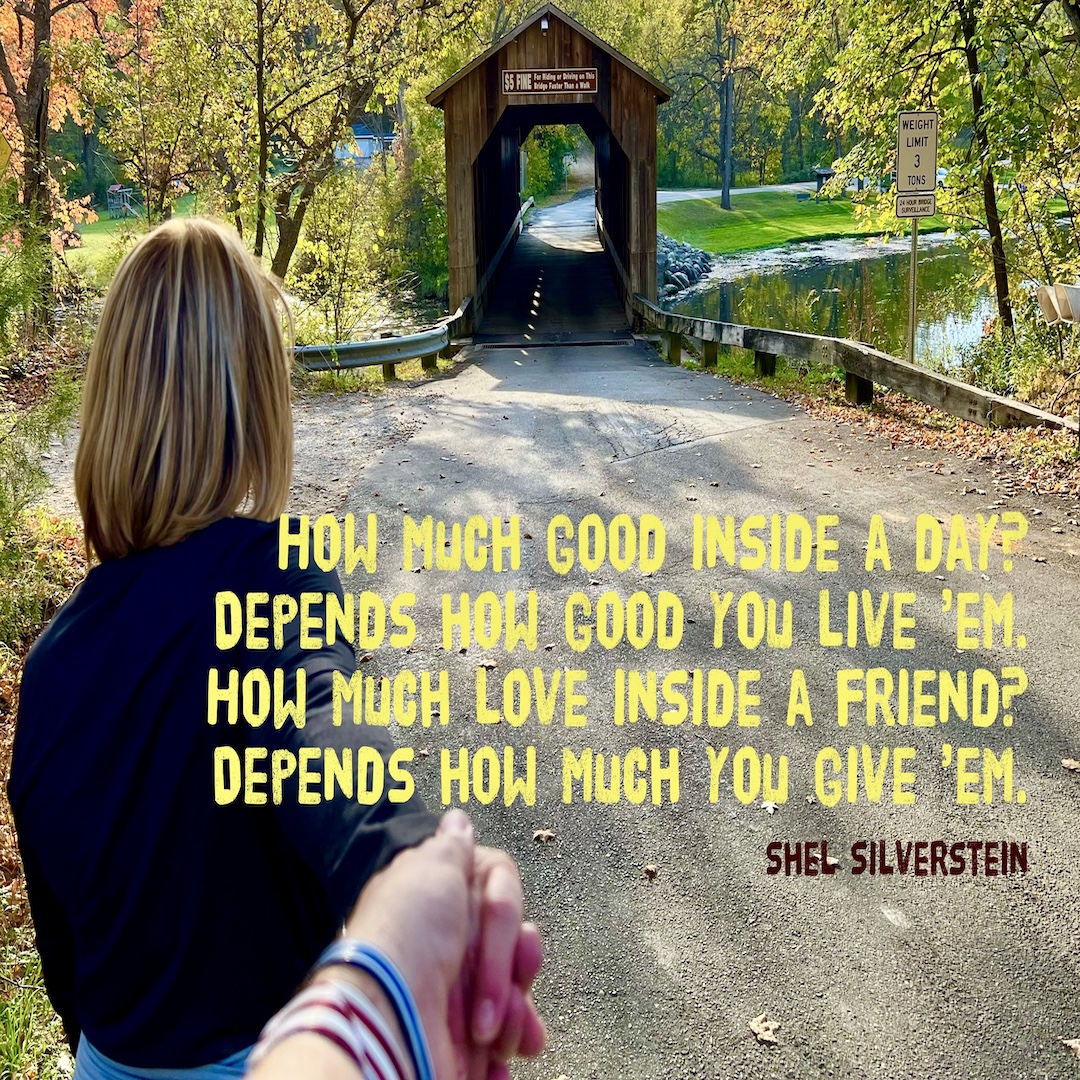
How much good inside a day?
Depends how good you live ’em.
How much love inside a friend?
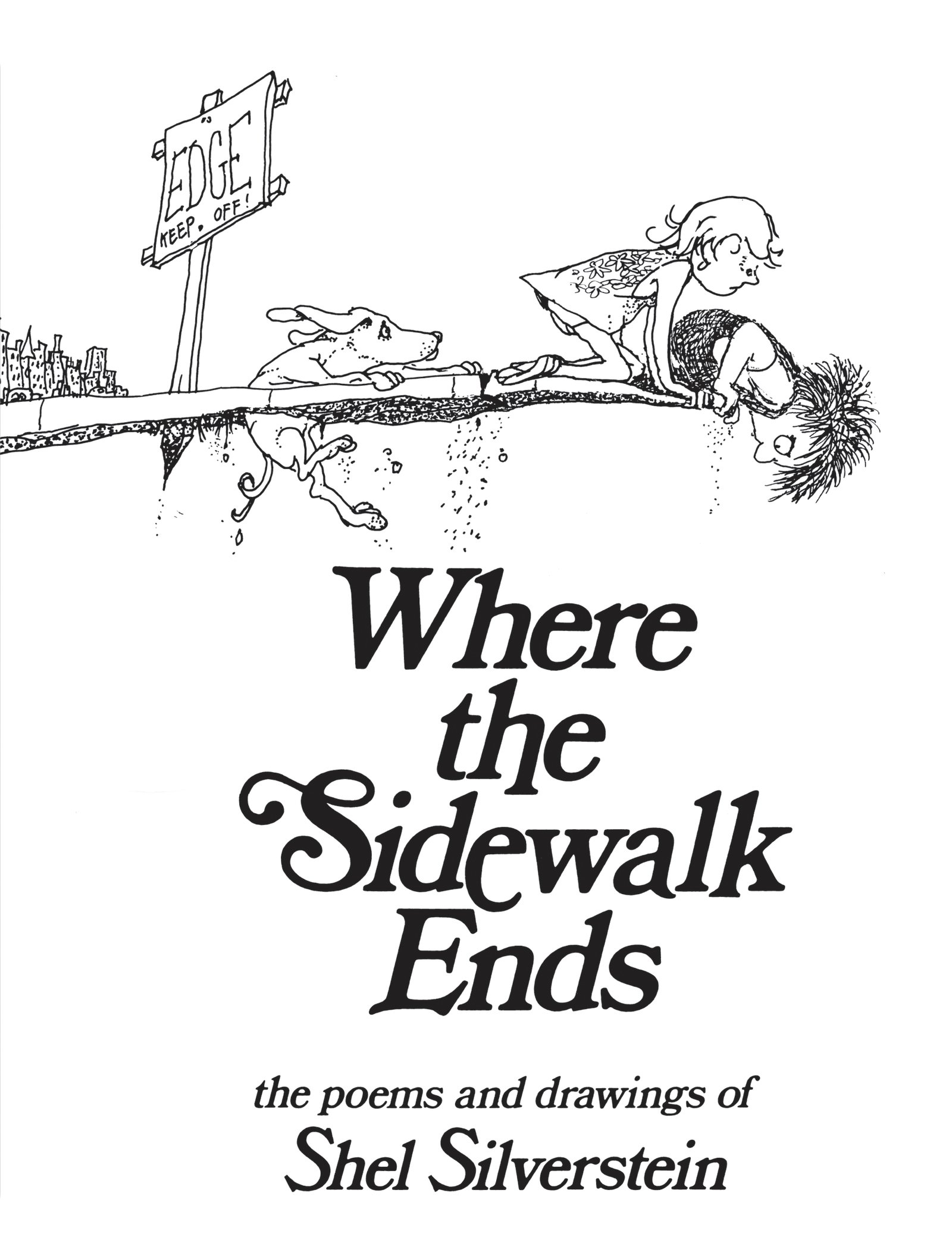
Depends how much you give ’em. —Shel Silverstein

A fantastic mini-biography of Otto J. Klink who went from being a Christian, to an atheist socialist, to failed presidential assassin, to a Pentecostal author and evangelist. Wow!

“My acceptance of the universe is not optimism, it is more like patriotism. It is a matter of primary loyalty. The world is not a lodging-house at Brighton, which we are to leave because it is miserable. It is the fortress of our family, with the flag flying on the turret, and the more miserable it is the less we should leave it. The point is not that this world is too sad to love or too glad not to love; the point is that when you do love a thing, its gladness is a reason for loving it, and its sadness a reason for loving it more.” —G.K. Chesterton 

Marshall Segal said this about our daily Bible reading time, “I want to walk through a five-step prayer you could pray when you sit down with your Bible to meet with God. The five steps are built on an acronym for FEAST. Focus my mind; Enlighten my eyes; Address my sin; Satisfy my soul; Train my hands.”

“A man of character will make himself worthy of any position he is given.” —Mahatma Gandhi 

“A retentive memory may be a good thing, but the ability to forget is the true token of greatness. Successful people forget. They know the past is irrevocable. They’re running a race. They can’t afford to look behind. Their eye is on the finish line. Magnanimous people forget. They’re too big to let little things disturb them. They forget easily. If anyone does them wrong, they consider the source and keep cool. It’s only the small people who cherish revenge. Be a good forgetter. Business dictates it, and success demands it.” —Elbert Hubbard 

“Leadership is not about being in charge, but about taking care of the people in your charge.” —Simon Sinek 

Flowing Data has a fascinating look at how people spend their time during the day. Their adjustable chart shows activities by age, sex, and time of day. It reminds me of a blog post I shared about time management, where I noted, “You cannot add more Tick, Tocking! time to your day, but you can keep more of your day from Drip, Dropping! away.”

“We might think, ‘Well, hey, if I’m devoting myself all the time to looking out for others’ needs, who’s going to be looking out for mine?’ The Lord, of course, because He knows what you need even before you ask Him, and He has ways of meeting your needs that are more wonderful than you in your cleverness or strength could ever conjure or provide (cf. Matthew 6:25-34).” —T.M. Moore 

“We all know that exercise makes us feel better, but most of us have no idea why. We assume it’s because we’re burning off stress or reducing muscle tension or boosting endorphins, and we leave it at that. But the real reason we feel so good when we get our blood pumping is that it makes the brain function at its best, and in my view, this benefit of physical activity is far more important—and fascinating—than what it does for the body. Building muscles and conditioning the heart and lungs are essentially side effects. I often tell my patients that the point of exercise is to build and condition the brain.” —Dr. John Ratey 

T.M. Moore has a hard but good word for Christians: “If this day, and this expectation and hope [when we heard King Jesus say, ‘Well done, good and faithful servant’], are not the driving force for every aspect of our lives and work, then it is doubtful we have really understood the Good News of the Kingdom or received the salvation freely offered to us by the King. I say this again: If we are not motivated and driven, day by day, by the prospect of hearing ‘Well done, good and faithful servant,’ then we need to examine ourselves, whether we truly know the Lord of glory. That’s pretty hard language, I know, but let’s face the reality: If we have not submitted to Jesus as Lord of every area of our life, all the work we’ve been given to do, then we are still living for ourselves, not Him.” —T.M. Moore

Gratitude Is A Shield

Listen to the podcast of this post by clicking on the player below, and you can also subscribe on AppleSpotify, or Audible. 

Gratitude is a great attitude. It sets you apart from the crowd of complainers, and it causes people to ask, “What do you know that we don’t know?”      

Wouldn’t you just love to silence the complainers in your life? Maybe you can relate to this poem by Shel Silverstein called Complainin’ Jack

This morning my old jack-in-the-box
Popped out—and wouldn’t get back-in-the-box.
He cried, “Hey, there’s a tack-in-the-box,
And it’s cutting me through and through.
“There also is a crack-in-the-box,
And I never find a snack-in-the-box,
And sometimes I hear a quack-in-the-box,
‘Cause a duck lives in here too.”
Complain, complain is all he did—
I finally had to close the lid.

Since, as Christians, we can’t really “close the lid” on the complaining people around us, maybe there’s something else we can do. I can think of three possibilities. 

  1. We could entirely avoid complaining people. But to do this wouldn’t allow us to live our lives as the salt and light Jesus called us to (Matthew 5:13-16). After all, in order for salt to season or light to drive away darkness, the salt and light have to be in close proximity to those they are helping. 
  1. We could simply ignore the negativity. Be around it, but do nothing about it. But both Paul and Jesus call us to engage with people in a way that points them to the Good News of the Gospel (Philippians 2:14-16; Matthew 28:19). 
  1. If we cannot avoid complainers nor remain apathetic about them, we must find a way to engage them but protect our hearts in the process. 

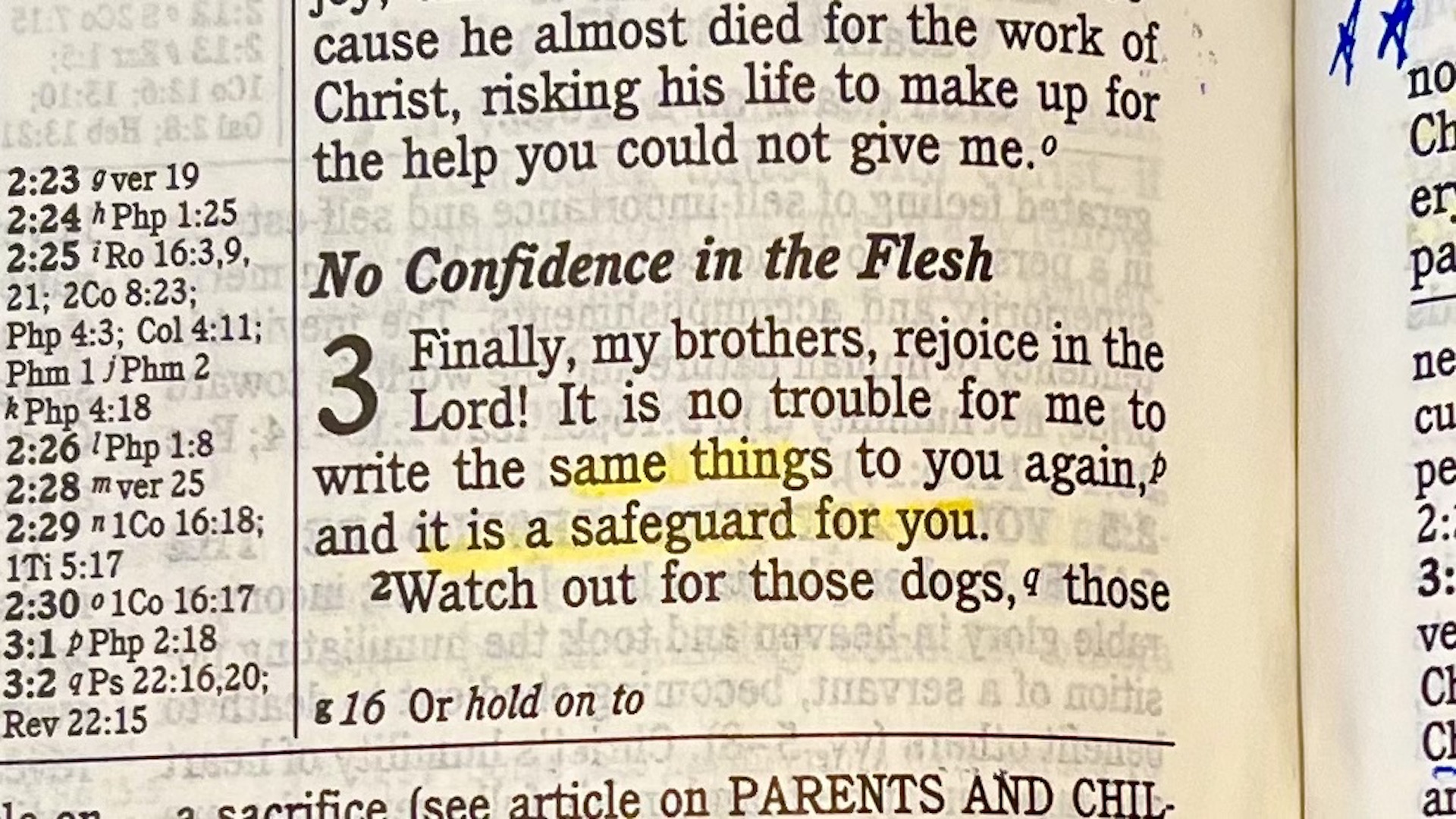
We learn from the apostle Paul’s letter to Philippi that gratitude is our shield against anything that would seek to steal our joy! “Further, my brothers and sisters, rejoice in the Lord! It is no trouble for me to write the same things to you again, and it is a safeguard for you” (Philippians 3:1). 

In the Greek, the root word for “safeguard” means “fail.” But when we add the prefix it becomes cannot fail! So rejoicing makes us secure, firm, reliable.

Quite simply that means that gratitude is our attitude protector because gratitude is our shield against anything that would seek to steal our joy!

Jesus used the same word for rejoicing even when we are facing insults, exclusion, and persecution—

Blessed are you when people hate you, when they exclude you and insult you and reject your name as evil, because of the Son of Man. Rejoice in that day and leap for joy, because great is your reward in heaven. For that is how their ancestors treated the prophets. (Luke 6:22-23) 

Both Jesus in this passage and Paul in Philippians 3:1 remind us that our rejoicing is IN the Lord. We are not expected to rejoice in our circumstances, but in who God is for us. Matthew Henry noted, “The more we rejoice in Christ the more willing we shall be to do and to suffer for Him, and the less danger we shall be in of being drawn away from Him.” 

I also like both the proactive and reactive use of rejoicing that John Henry Jowett identifies when he says, “Gratitude is a vaccine, an antitoxin, and an antiseptic.” Rejoicing is never supposed to be a one-and-done action, but it is an ongoing lifestyle. As Paul wrote to the Christians in Philippi just a few verses later, “Rejoice in the Lord always. I will say it again: Rejoice!” (Philippians 4:4). 

Gratitude is a shield—a vaccine, an antitoxin, and an antiseptic—but it doesn’t protect us unless we use it!

In order to use this shield whenever it’s needed, we have to be constantly reminded to be grateful. This is where we can leverage the power of our brain’s reticular activating system. I shared a short video about how to do this on The Podcast last week—check it out here. 

Gratitude is a great attitude, and grateful people are a winsome testimony of God’s love and provision to those “complainin’ Jacks” we all encounter. Try it and see what a difference it will make with those you are around this week. 

To check out all of the sermons in this series, please click here. 

►► Would you please prayerfully consider supporting this ministry? My Patreon supporters get behind-the-scenes access to exclusive materials, like this exclusive video in which I take my supporters behind the scenes of my thought process in designing my confrontation flowchart. ◀︎◀︎

Poetry Saturday—Smart

Listen to the podcast of this post by clicking on the player below, and you can also subscribe on AppleSpotify, or Audible.

My dad gave me a one dollar bill
‘Cause I’m his smartest son,
And I swapped it for two shiny quarters
‘Cause two is more than one!

And then I took the quarters
And traded them to Lou
For three dimes—I guess he don’t know
That three is more than two!

Just then, along came old blind Bates
And just ‘cause he can’t see
He gave me four nickels for my three dimes,
And four is more than three!

And I took the nickels to Hiram Coombs
Down at the seed-feed store,
And the fool gave me five pennies for them,
And five is more than four!

And then I went and showed my dad,
And he got red in the cheeks
And closed his eyes and shook his head—
Too proud of me to speak! —Shel Silverstein

►► Would you please prayerfully consider supporting this ministry? My Patreon supporters get behind-the-scenes access to exclusive materials. ◀︎◀︎

Poetry Saturday—Growing Down

Listen to the podcast of this post by clicking on the player below, and you can also subscribe on Apple or Spotify.

Mix a grunt and a grumble, a sneer and a frown,
And what do you have? Why old Mr. Brown,
The crabbiest man in our whole darn town.
We all called him Grow-Up Brown:
For years each girl and boy and pup
Heard “Grow up, grow up, oh grow up.”
He’d say, “Why don’t you be polite?
Why must you shout and fuss and fight?
Why can’t you keep dirt off your clothes?
Why can’t you remember to wipe your nose?
Why must you always make such noise?
Why don’t you go pick up your toys?
Why do you hate to wash your hands?
Why are your shoes all filled with sand?
Why must you shout when I’m lying down?
Why don’t you grow up?” grumped Grow-Up Brown.

One day we said to Grow-Up Brown,
“Hey, why don’t you try growing down?
Why don’t you crawl on your knees?
Why don’t you try climbing trees?
Why don’t you bang on a tin-can drum?
Why don’t you chew some bubble gum?
Why don’t you play kick-the-can?
Why don’t you not wash your hands?
Why don’t you join the baseball team?
Why don’t you jump and yell and scream?
Why don’t you try skipping stones?
Why don’t you eat ice cream cones?
Why don’t you cry when you feel sad?
Why don’t you cuddle with your dad?
Why don’t you have weenie roasts?
Why don’t you believe in ghosts?
Why don’t you have pillow fights?
Why don’t you sleep with your teddy at night?
Why don’t you swing from monkey bars?
Why don’t you wish on falling stars?
Why don’t you run in three-legged races?
Why don’t you make weirdie faces?
Why don’t you smile, Grow-Up Brown?
Why don’t you try growing down?”
Then Grow-Up Brown, he scrunched and frowned
And scratched his head and walked around,
And finally he said with a helpless sound,
“Maybe I will try growing down.”

So Grow-Up Brown began to sing
And started doing silly things:
He started making weirdie faces
And came in first in the three-legged races.
All day he swung from monkey bars,
All night he’d lie and count the stars.
He tooted horns, he banged on drums,
He spent twenty bucks on bubble gum,
He went to all the weenie roasts,
And once he thought he saw a ghost.
He got to be great at pillow fights
And went to sleep with his teddy at night.
He flew a kite, he kick a can,
He rubbed some dirt upon his hands.
He drew some pictures, threw some stones,
He ate forty-seven ice cream cones.
He got some sand between his toes,
Got a loose tooth and a bloody nose.
He got a dog, they rolled in the mud.
He imitated Elmer Fudd.
He climbed a roof (though no one asked),
He broke his wrist—he wore a cast.
He rolled down hills, he climbed up trees,
He scuffed his elbows, skinned his knees,
He tried to join the baseball team;
When they said no, he spit and screamed.
He cried when he was feeling sad
And went and cuddled with his dad.
He wore a hat that didn’t fit,
He learned just how far he could spit,
He learned to wrestle and get tickled,
Sucked his thumb, he belched and giggled.
He got his trousers torn and stained,
He ran out barefoot in the rain,
Shouting to all the folks in town,
“It’s much more fun, this growin’ down.” —Shel Silverstein

Would you please prayerfully consider supporting this ministry? 

Poetry Saturday—Yesees and Noees

Listen to the podcast of this post by clicking on the player below, and you can also subscribe on Apple or Spotify.

The Yesees said yes to anything
That anyone suggested.
The Noees said no to everything
Unless it was proven and tested.
So the Yesees all died of much too much
And the Noees all died of fright,
But somehow I think the Thinkforyourselfees
All came out all right. —Shel Silverstein

Would you please prayerfully consider supporting this ministry? 

Poetry Saturday—The Lovetobutcants

Listen to this post as a podcast by clicking here:

I have a disease called
The “lovetobutcants”—
I think it’s time I told it.
I’d love to help with that garbage can
But my fingers just can’t hold it.
Hand me a bag of groceries and
My wrists just turned to jelly.
Cuttin’ grass and hedges
Gives me flutters of the belly.
The smell of paint will make me faint,
Sweat makes my eyes start itchin’.
Dishwater on my little hands
Will start ‘em shaky-twitchin’.
Pickin’ clothes up off the floor
Would paralyze my shoulder.
I must not try to close the door,
At least not till I’m older.
So though I’d love to join the work—
Till this disease is done,
I’ll have to lie here in the shade
While you have all the fun. —Shel Silverstein

Poetry Saturday—Merry…

No one’s hangin’ stockin’s up,
No one’s bakin’ pie,
No one’s lookin’ up to see
A new star in the sky.
No one’s talkin’ brotherhood,
No one’s givin’ gifts,
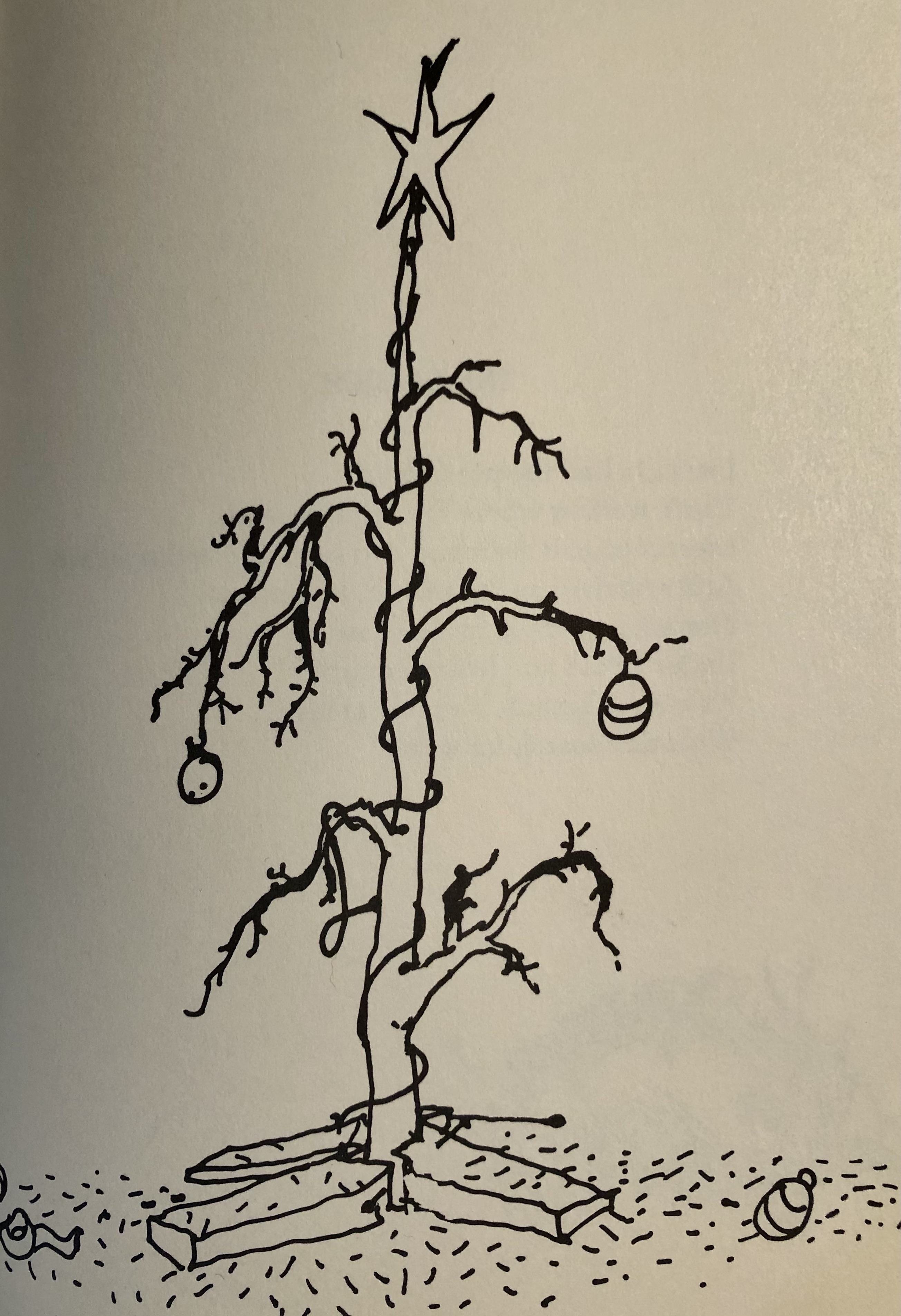
And no one loves a Christmas tree
On March the twenty-fifth. —Shel Silverstein

Poetry Saturday—Lester

Lester was given a magic wish 
By the goblin who lived in the banyan tree, 
And with his wish he wished for two more wishes—
So now instead of just one wish, he cleverly had three.
And with each one of these 
He simply wished for three more wishes,
Which gave him three old wishes, plus nine new.
And with each of these twelve 
He slyly wished for three more wishes, 
Which added up to forty-six—or is it fifty-two? 
Well anyway, he used each wish 
To wish for more wishes ’til he had
Five billion, seven million, eighteen thousand thirty-four. 
And then he spread them on the ground 
And clapped his hands and danced around 
And skipped and sang, and then sat down 
And wished for more.
And more … and more … they multiplied 
While other people smiled and cried 
And loved and reached and touched and felt.
Lester sat amid his wealth 
Stacked mountain-high like stacks of gold, 
Sat and counted—and grew old.
And then one Thursday night they found him
Dead—with his wishes piled around him.
And they counted the lot and found that not 
A single one was missing.
All shiny and new—here, take a few 
And think of Lester as you do.
In a world of apples and kisses and shoes
He wasted his wishes on wishing. —Shel Silverstein

Poetry Saturday—Everything On It

Too good to share just one, here are five from a collection of Shel Silverstein poems printed after his death in the book Everything On It.

MasksMasks
She had blue skin,
And so did he.
He kept it hid
And so did she.
They searched for blue
Their whole life through,
Then passed right by—
And never knew.

Losing Pieces
Talked my head off
Worked my tail off
Cried my eyes out
Walked my feet off
Sang my heart out
So you see,
There’s really not much left of me.

I Didn’t
I didn’t do it
That’s a lie
I didn’t do it
No, not I
I didn’t do it
Hear me cry
I didn’t do it
Hope to die
I didn’t do it
I’m not that bad
But if I did
Would you be mad?

New Job
Just two hours workin’ in the candy store
And I don’t like candy anymore.

The Problem
Jim copied the answer from Nancy
Sue copied the answer from Jim
Tim copied the answer from Sue, and then
Anne copied the answer from him
And Fran copied Anne and Jan copied Fran
The answer kept passing along
And no one got caught, but the problem was—
Nancy had it wrong. —Shel Silverstein