Links & Quotes

link quote

Some good reading from today…

“The hunger for love is much more difficult to remove than the hunger for bread.” —Mother Teresa

A challenging word from John Stonestreet: The Pornification Of The Church.

“Here is no need to expound fuller what the Christian Scripture teaches on this point of feelings. It subjects the whole mind to God’s governance and assistance, and all the passions unto it, in such manner that they are all made to serve the increase of justice.” —Augustine

“…For we are not under law in Christ’s church, but under grace, and grace will prompt you to do more than law might suggest….” —Charles Spurgeon

A great story about Pittsburg Pirate star Andrew McCutchen and his parents.

Ryan Anderson has 7 reasons why the current homosexual “marriage” debate is nothing like the debate on interracial marriage.

Apparently we cannot win: the change from CFCs to HFCs in our spray cans is repairing the ozone but raising the earth’s temperature. Oh, wait a minute: this isn’t settled science, but merely someone’s “model” based on “what the data suggests.” Sounds a lot like faith to me!

Links & Quotes

link quote

Some good reading from today…

“Spread love everywhere you go; first of all in your house. Give love to your children, to your wife or husband, to a next door neighbor. Let no one ever come to you without leaving better and happier.” —Mother Teresa

“Many people don’t achieve their dream because it’s out of reach, but because they quit.” —John Maxwell

Good things as well as bad, you know, are caught by a kind of infection. If you want to get warm you must stand near the fire: if you want to be wet you must get into the water. If you want joy, power, peace, eternal life, you must get close to, or even into, the thing that has them. They are not a sort of prize which God could, if He chose, just hand out to anyone. They are a great fountain of energy and beauty spurting up at the very centre of reality. If you are close to it, the spray will wet you: if you are not, you will remain dry.” —C.S. Lewis

Want some free music from U2? They released a new album free on iTunes.

More reasons to be skeptical of so-called “global warming” alarmists.

Links & Quotes

link quote

Some good reading & watching from this weekend…

“Our mistake is that we want God to send revival on our terms. We want to get the power of God into our hands, to call it to us that it may work for us in promoting and furthering our kind of Christianity. We want still to be in charge, guiding the chariot through the religious sky in the direction we want it to go, shouting ‘Glory to God,’ it is true, but modestly accepting a share of the glory for ourselves in a nice inoffensive sort of way. We are calling on God to send fire on our altars, completely ignoring the fact that they are our altars and not God’s.” —A.W. Tozer

Eric Metaxas has a great take on depression in his post Depression And Black Dog Beliefs.

[VIDEO] I’m not a huge Duck Dynasty fan, but this short quote from Phil Robertson is pure gold!

Paleontologists has found the bones of a huge dinosaur called Dreadnoughtus, that was bigger than a 737 airplane! It sounds a lot like what God described to Job.

Earth has a new address. Our home supercluster is called Laniakea (for the Hawaiian word meaning immeasurable heaven).

Whether you are a Detroit Tigers fan or not, this is a great story about teammates and friends.

“We are atheists in this matter of prayer compared to the early church. Many today look upon secret prayer as hard work and boring, so they do it only occasionally. Can you imagine a husband and wife living in the same house, hardly ever speaking and yet in public speaking as if they were intimate? So some treat our blessed Lord! Prayer, hidden secret prayer, is the mightiest weapon God has given His people; yet it is neglected, disdained, and seldom used.” —David Wilkerson

“Kindness is an inner desire that makes us want to do good things even if we do not get anything in return.” —Emmanuel Swedenborg

“Now if God be wisdom, as truth and Scripture testify, then a true philosopher is a lover of God.” —Augustine

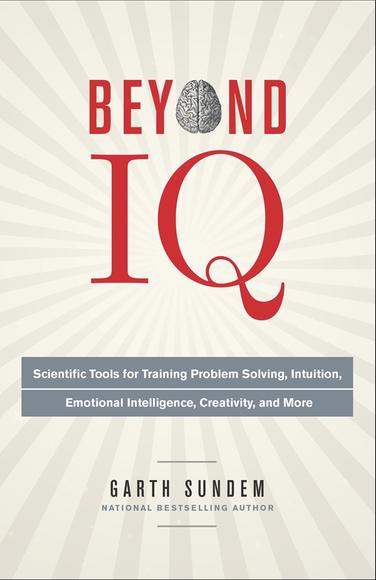
14 Quotes From “Beyond IQ”

Beyond IQI found Beyond IQ by Garth Sundem to be engaging because of both the research he presents, and the engaging exercises he incorporates to make the research applicable to us. You can read my full book review by clicking here. Here are some of the quotes I especially appreciated.

“First, here’s why insight can be difficult: it requires a paradoxical mix of experience with openness. Usually, experience leads to set-in-stone ways of doing things. Typically, openness is only present when you’re forced by inexperience to remain available in your search for solutions. Experience mixed with openness is a rare cocktail. … Rather than opening your mind to insight, [John] Kounios and [Mark] Jung-Beeman show that if you want insight, the best thing you can do is to close it. A closed mind shows up on an fMRI as activation of the anterior cingulate cortex, your brain’s home of inhibiting distraction. It’s as if your ACC is a pair of noise-canceling headphones, and with these headphones in place you’re more able to hear your brain’s quiet, insightful whispers.” 

“Science has known that during sleep the brain’s hippocampus—the structure responsible for encoding new memories—replays the day’s experiences from short-term storage and filters them into the neocortex, where experiences are integrated into… ‘pre-existing knowledge representations.’ Insight is the novel connection of knowledge, and sleep knocks knowledge into new configurations.”

“[Robert] Sternberg and his frequent collaborator, Richard Wagner, showed that situational judgment tests…designed to measure practical intelligence are a much better predictor then IQ of job performance in business managers, bank managers, and graduate students. IQ doesn’t lead to success. Practical intelligence does.” 

“The language of problem-solving is: initial state, constraints, operations, and goal state. … [Richard] Mayer says that the most striking feature of people who successfully solve real-world problems is the time they spend studying the initial state and the constraints—the extra time they spend clarifying the problem.”

“University of California-San Bernardino researcher James Kaufman knows the recipe for creativity. It’s equal parts intrinsic motivation, experience, and something he calls low personal inhibition. Intrinsic motivation is pretty self-explanatory, but beware of the danger of ‘replacing intrinsic motivation and a natural curiosity with external rewards,’ says Kaufman. If a parent wants a child to become a creative pianist, the parent should encourage interest in the piano but not incentivize this interest with ice cream. Creativity blooms in fields you’re drawn to, not in fields into which you’re pushed. … Kaufman’s research has shown that creative people are hard workers with background knowledge and expertise in their creative domains. ‘It’s the “learn the rules so you can break them” approach,’ he says.” 

“Dean Keith Simonton of UC Davis found that the nineteenth-century scientists who wrote the most-cited papers also wrote the least-cited papers. … The more scientific papers or sonatas or sonnets a person writes, the greater chance that one or more will be especially creative.”

“In any kind of cognitive activity you have two kinds of things going on. You have intelligence, but there’s also learning and skill and knowledge based on practice. The more the second develops, the less important the first becomes. … Even more importantly, we’ve shown that with enough practice and hard work, you can actually change the neurophysiology of the brain. For example, practice can encourage the brain to grow greater myelin coating on neurons. Thus our behaviors become literally hard-wired. Developing expertise literally makes certain thought patterns more efficient than others.” —Paul Feltovich 

“Florida State researcher K. Anders Ericcson shows that it’s not only experience that creates expertise but a step-by-step method of sculpting experience that he calls deliberate practice. To Ericsson, famous for his theory that 10,000 hours of practice creates expertise in any field, the four-step path to expertise includes performing your skill, monitoring your performance, evaluating your success, and figuring out how to do it better next time. Completing only the first step—performing the skill itself—leads to automated, low-level, rote performance in which you perform the skill the same way every time. Monitoring, evaluating, and adjusting your skill allows you to modify it after every pass, helping skill evolved toward expertise.”

“The more you use your brain, the longer you’ll be able to use it. … People with ‘cognitively protected’ brains were those who challenge themselves through a lifestyle that included reading, writing, attending lectures, and doing word puzzles—in other words, they followed a self-imposed regimen of cognitive involvement. … Cognitive involvement is only one tine of a three-pronged approach to brain health in later life. The second tine is a healthy body. … In fact, your cardiovascular health in middle age is even more important for your later brain health than the same risk factors in old age itself. … The third tine: social interaction. … Nothing forces the brain to work like interacting with other brains.” 

“Moral reasoning and wisdom are linked. Specifically (and this is kind of cool albeit technical), for those who possess strong moral reasoning, wisdom increases with age. If you have lower moral reasoning, you gain no wisdom as you get older. So if you want wisdom later, train your moral reasoning now.”

“Wisdom requires thought and action without yourself in mind, and sociologist Monika Ardelt of the University of Florida shows that selflessness is also the best predictor of successful aging. In fact, the wisdom born of selflessness beats out physical health, income, socioeconomic status, physical environment, and even social relationships in predicting life satisfaction in old age.”

“Pressure…sits like a lead weight in your working memory, claiming space that could otherwise hold useful information. And because working memory is a mainline to general intelligence, space claimed by pressure makes you measurably dumber. … Pressure flips a mental switch from implicit to explicit thought, making you apply a layer of analysis to things that should be automatic. … Chronic pressure can make you chronically prioritize the quick rewards of drugs and alcohol while discounting their long-term risk. … So beware. Stress plugs your working memory, analysis paralysis forces you to try to use it anyway, and your dopamine circuits cry for a quick, risky solution.”

“Students with high emotional intelligence (EI) have lower rates of drug use and teachers with high EI get more support from their principals. Employees with high EI have higher job performance, especially when their IQ is low (implying that emotional intelligence can help compensate for low general intelligence—and also that these skills are distinct). EI is even implicated in resilience—the more EI you have, the higher your chances of bouncing back after trauma or negative life events.” 

“If IQ is the strength of the bulb in your lighthouse, willpower is the lens that focuses it into a beam.”

Links & Quotes

link quote

Some great reading & watching from this weekend…

TOMORROW is our annual United Service in Cedar Springs. I have the privilege of sharing the Word this year. Stoked!

“You that have ability, and have talents, devote yourselves to God’s cause. Give yourselves up to his ministry. I would to God there were more of those who are successful in professions, men who either in medicine or law would attain eminence, who would consecrate their talents to the ministry….” —Charles Spurgeon

“There is a reason why Jesus not only calls us to simplicity and brevity, but also to persistence and tenacity [in prayer]. The demand for prevailing prayer exposes those who pray in a passing away, as if they are just trying to cover all their bases. They are not looking to God as their only hope. They are trying God out alongside other resources. Such praying does not prevail.” —John Piper

“Above all, grieve not the Spirit. Quench not the Spirit. Vex not the Spirit. Drive Him not to a distance, by tampering with small bad habits and little sins. Little jarrings between husbands and wives make unhappy homes; and petty inconsistencies, known and allowed, will bring in a strangeness between you and the Spirit. … The man who walks with God in Christ most closely, will generally be kept in the greatest peace. The believer who follows the Lord most fully and aims at the highest degree of holiness will ordinarily enjoy the most assured hope, and have the clearest persuasion of his own salvation.” —J.C. Ryle

Amazing discoveries! Life under Antarctic’s ice.

A great reminder from Steve Lindeman, the newest pastor in Cedar Springs: Rules.

[VIDEO] John Maxwell talks about the advantages of endurance.

I love Sarah Palin’s classy response to Richard Dawkins’ crude and insensitive tweet.

Links & Quotes

link quote

Some great reading from today…

“Time is precious. We are fragile. Life is short. Eternity is long. Should we not then enter on every venture with a vigilance like that of the young Jonathan Edwards when he wrote his fifth resolution: ‘Resolved, Never to lose one moment of time, but to improve it in the most profitable way I possibly can.’” —John Piper

I am so impressed with the love story between Ian and Larissa Murphy. Check out Larissa’s very transparent and vulnerable post Why I Need Him.

A thought-provoking post from Chilly Chilton: Artificial Or Authentic?

Wow! An abortion survivor writers a letter to the doctor who attempted to murder her.

More evidence that so-called global warming is not “settled science.”

Links & Quotes

link quote

Some interesting reading & watching today…

“The treacherous enemy facing the church of Jesus Christ today is the dictatorship of the routine, when the routine becomes ‘lord’ in the life of the church. Programs are organized and the prevailing conditions are accepted as normal. … That would be perfectly all right and proper for a cemetery. Nobody expects a cemetery to do anything but conform.” —A.W. Tozer

John Stonestreet reminds us that even in the scientific community, Macroevolution Has No Clothes.

“Father, we fear our deadly fondness for floating toward the falls when we ought to be swimming against the current. Oh, God, have mercy to waken us again and again to the perils of drifting in the Christian life. Help us heed Hebrews 2:1, ‘We must pay much closer attention to what we have heard, so that we do not drift away from it.’” —John Piper

I love this story: Communion On The Moon.

Hamas are terrorists pure and simple. The Egyptians get it. Why doesn’t the Western media get it? Why don’t Western leaders get it? And why don’t Christian leaders get it?” Read more about the Israeli battle against Hamas in Middle-East Meets Middle-Earth.

[VIDEO] Ken Davis has a hilarious take on airplane restrooms.

The Wall Street Journal rightly sees the situation at Gordon College as The Next Religious Liberty Case.

Dr. Tim Elmore lays out The Messages We Must Send To Millennials About Life After College.

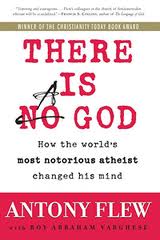
12 Noteworthy Quotes From “There Is A God”

There Is A GodAs I said in my book review of Anthony Flew’s There Is A God, the real value of this book is in the arguments which contributed to Flew’s shift from atheism to theism. You can read my full book review by clicking here.

Frankly, it’s hard to share a lot of the quotes because the context of the full argument would be lacking, but I’ve been sharing a few of them over several posts. To wrap up this series, here are several other noteworthy quotes from this thought-provoking book.

“I would have liked to convince my father that I had found what he had been looking for, the ineffable something he had longed for all his life. I would have liked to persuade him that the search for God does not have to be in vain. But it was hopeless. He had known too many blind Christians, bleak moralists who sucked the joy from life and persuaded their opponents; he would never have been able to see the truth they were hiding.” —Katherine Tait, daughter of Bertrand Russell 

“Nothing can penetrate the loneliness of the human heart except the highest intensity of the sort of love the religious teachers have preached.” —Bertrand Russell

“In sum, to the Being who he considered to be the explanation of the world and its broad form, Aristotle ascribed the following attributes: immutability, immateriality, omnipotence, omniscience, oneness or indivisibility, perfect goodness and necessary existence. There is an impressive correspondence between this set of attributes and those traditionally ascribed to God within the Judaeo-Christian tradition. It is one that fully justifies us in viewing Aristotle as having had the same Divine Being in mind as the cause of the world that is the object of worship of these two religions.” —David Conway

“There can never be any real opposition between religion and science; for the one is the complement of the other. … Religion and natural science are fighting the joint battle in an incessant, never relaxing crusade against skepticism and against dogmatism, against unbelief and superstition … and therefore ‘On to God!’” —Max Planck

“God is a mathematician of a very high order and He used advanced mathematics in constructing the universe.” —Paul A.M. Dirac 

“Reason tells me of the extreme difficulty or rather impossibility of conceiving this immense and wonderful universe, including man with his capability of looking far backwards and far into the futurity, as a result of blind chance or necessity. When thus reflecting I feel compelled to look to a First Cause having an intelligent mind in some degree analogous to that of mine; and I deserve to be called a Theist.” —Charles Darwin

“Science can proceed only if the scientist adopts an essentially theological worldview. … Even the most atheistic scientist accepts as an act of faith the existence of a lawlike order in nature that is at least in part comprehensible to us.” —Paul Davies, Templeton Prize winner 

“It is crazy to postulate a trillion (casually unconnected) universes to explain the features of one universe, when postulating one entity (God) will do the job.” —Richard Swinburne

“The problem of how meaningful or semantic information can emerge spontaneously from a collection of mindless molecules subject to blind and purposeless forces percents a deep conceptual challenge.” —Paul Davies 

“One feature of life, though, remains certain: Life could not have evolved without a genetic mechanism—one able to store, replicate, and transmit to its progeny information that can change with time. … Precisely how the first genetic machinery involved also persists as an unresolved issue.” —Antonia Lazcano

“The world is rational. The order of the world reflects the order of the supreme mind governing it.” —Kurt Gödel

“The reality of rationality cannot be evaded with any appeal to natural selection. Natural selection presupposes the existence of physical entities that interact according to specific laws and of a code that manages the processes of life. And to talk of natural selection is to assume that there is some logic to what is happening in nature (adaptation) and that we are capable of understanding this logic.” —Roy Abraham Varghese

  • You can read some direct quotes from Anthony Flew by clicking here.
  • Some Albert Einstein quotes can be found by clicking here.
  • A fascinating mathematical explanation from Gerald Schroeder is found by clicking here.

5 Quotes From Albert Einstein In “There Is A God”

There Is A GodAs I said in my book review of Anthony Flew’s There Is A God, the real value of this book is in the arguments which contributed to Flew’s shift from atheism to theism. You can read my full book review by clicking here.

Frankly, it’s hard to share a lot of the quotes because the context of the full argument would be lacking, but I’ve begun sharing some of them over several posts. To continue, below are some quotes from Albert Einstein.

“I am not a positivist. Positivism states that what cannot be observed does not exist. This conception is scientifically indefensible, for it is impossible to make valid affirmations of what people ‘can’ or ‘cannot’ observe. One would have to say ‘only what we observe exists,’ which is obviously false.” —Albert Einstein

“The man of science is a poor philosopher.” —Albert Einstein

“I want to know how God created this world. … I want to know His thoughts, the rest are details.” —Albert Einstein

“I’m not an atheist, and I don’t think I can call myself a pantheist. We are in the position of a little child entering a huge library filled with books in many languages. The child knows someone must have written those books. It does not know how. It does not understand the languages in which they are written. The child dimly suspects a mysterious order in the arrangement of the books but doesn’t know what it is. That, it seems to me, is the attitude of even the most intelligent human being toward God. We see the universe marvelously arranged and obeying certain laws but only dimly understand these laws. Our limited minds grasp the mysterious force that moves the constellations.” —Albert Einstein

“Every one who is seriously engaged in the pursuit of science becomes convinced the laws of nature manifest the existence of a spirit vastly superior to that of men, and one in the face of which we with our modest powers must feel humble.” —Albert Einstein

More quotes are forthcoming. You can read some direct quotes from Anthony Flew by clicking here.

5 Quotes From Anthony Flew In “There Is A God”

There Is A GodAs I said in my book review of Anthony Flew’s There Is A God, the real value of this book is in the arguments which contributed to Flew’s shift from atheism to theism. You can read my full book review by clicking here.

Frankly, it’s hard to share a lot of the quotes because the context of the full argument would be lacking, but I’m going to attempt to share some of them in multiple posts. To start with, below are some of the direct quotes from Anthony Flew.

“I have said in some of my later atheist writings that I reached the conclusion about the nonexistence of God much too quickly, much too easily, and for what later seemed to me the wrong reasons. I reconsidered this negative conclusion at length and often, but for nearly seventy years thereafter I never found the grounds sufficient to warrant any fundamental reversal. One of those early reasons for my conversion to atheism was the problem of evil.” 

“The presumption of atheism can be justified by the inescapable demand for grounds. To believe there is a God, we have to have good grounds for the belief. But if no such grounds are provided, there exists no sufficient reason for believing in God, and the only reasonable position is to be a negative atheist or an agnostic (by negative atheist, I meant ‘a-theist,’ parallel to such words as atypical and amoral). … This argument garnered many and varied responses. Writing as an agnostic, the English philosopher Anthony Kenny maintained that there may be a presumption for agnosticism, but not for positive or negative atheism. He suggested that it takes more effort to show that you know something than that you do not (this includes even the claim that the concept of God is not coherent). But he said this does not let agnostics off the hook; a candidate for an examination may be able to justify the claim that he or she does not know the answer to one of the questions, but this does not enable the person to pass the examination. … By far, the heaviest challenge to the argument came from America. The modal logician Alvin Plantinga introduced the idea that theism is a properly basic belief. He asserted that belief in God is similar to belief in other basic truths, such as belief in other minds or perception (seeing a tree) or memory (belief in the past). In all these instances, you trust your cognitive faculties, although you cannot prove the truth of the belief in question. Similarly, people take certain propositions (e.g., the existence of the world) as basic and others as derivative from these basic propositions. Believers, it is argued, take the existence of God as a basic proposition.”

“If there is an infinite series of books about geometry that owe their pattern to copying from earlier books, we still do not have an adequate answer as to why the book is the way it is (e.g., it is about geometry) or why there is a book at all. The entire series needs an explanation.” 

“Science qua science cannot furnish an argument for God’s existence. But the three items of evidence we have considered in this volume—the laws of nature, life with its teleological organization, and the existence of the universe—can only be explained in the light of an Intelligence that explains both its own existence and that of the world.”

“My discovery of the Divine has been a pilgrimage of reason and not of faith.”

Check back soon for some additional quotes from this thought-provoking book.