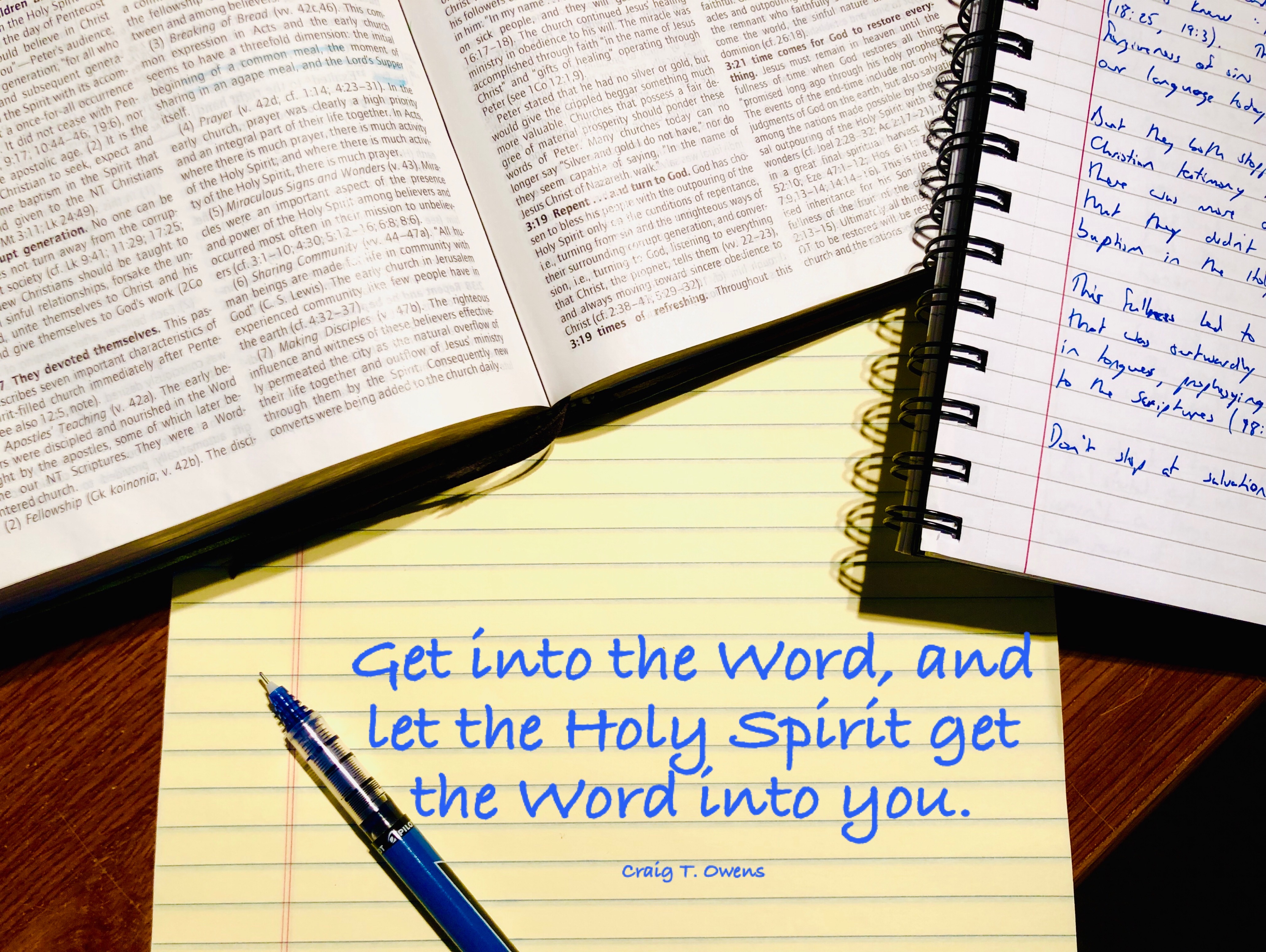
How To Avoid Getting A Big Head

John Wesley said that harsh words spoken to us actually provide a helpful balance:

“Who could bear honor and good report, were it not balanced by dishonor?”

In other words, if the only things said to you are words of praise, it’s awfully hard to keep from getting a big head! So when the painful words come, it is important to evaluate them, but also recognize that they might be just the medicine you need to reduce ego swelling. 

Happy Independence Day

“I am apt to believe that it will be celebrated by succeeding generations as the great anniversary festival. It ought to be commemorated as the day of deliverance, by solemn acts of devotion to God Almighty. It ought to be solemnized with pomp and parade, with shows, games, sports, guns, bells, bonfires, and illuminations, from one end of this continent to the other, from this time forward forever more.”

(John Adams, writing to his wife Abigail about the Declaration of Independence)

I hope you will take time today to celebrate the blessings of liberty that we enjoy in the United States of America. But as you celebrate, do not forget that our freedom relies solely on the grace of God Almighty. If we forget that important fact, we are doomed to lose the precious gift of liberty.

Savoring It

For those of you who asked, here is the quote I shared this morning from John Piper—

“If you don’t read the Word and memorize the Word and meditate on the Word daily and delight in the Word and savor it and have your mind and emotions shaped by the Word, you will be a weak Christian at best. You will be fragile and easily deceived and easily paralyzed by trouble and stuck in many mediocre ruts. But if you read the Word and memorize important parts of it and meditate on it and savor it and steep your mind in it, then you will be like a strong tree planted by streams of water that brings forth fruit. Your leaf won’t wither in the drought and you will be productive in your life for Christ.”

Open Door

Listen to the podcast of this post by clicking on the player below, and you can also subscribe on Apple or Spotify.

The phrase open door shows up several times in the New Testament, and it shows up quite a bit in the present-day vocabulary of many Christians too. But I’m not sure we mean the same thing.

I hear Christians saying things like, “I’m praying for God to open a door for a new job,” or “I’m waiting to see what door God will open for my schooling,” or something to that effect. In other words, the open door seems to be for our personal benefit.

The apostle Paul said this:

A great door for effective work has opened to me, and there are many who oppose me (1 Corinthians 16:9).

Let’s get one thing clear: God opens doors (we don’t), and our job is to obediently walk through those open doors (God won’t shove us through them).

Paul knew that the open door was not for his benefit, but for the benefit of those who were presently outside of the Kingdom of God. God opens doors for His people so that those outside His Kingdom can come inside (see Acts 14:27; 2 Corinthians 2:12; Colossians 4:3).

It might look like God opened a door by providing a job, but that job is His means to help you invite others into His Kingdom. The open door (the job, in this case) isn’t primarily for you; it’s for you to invite others in.

That’s why when God opens doors there will be many who oppose you. They are not really opposing you, but they are opposing the opportunity for the kingdom of darkness to be robbed and the Kingdom of God to be enriched.

So when you pray for open doors, remember:

  • When God opens a door, it’s mainly for the benefit of those outside the Kingdom of Heaven
  • You will be opposed by the kingdom of darkness

If you’re ready for both of those, then by all means pray for open doors!

►► Would you please prayerfully consider supporting this ministry? ◀︎◀︎

Good Memory / Bad Memory

When you look back into your memories, what do you see? Do you recall the good things? The bad things? Which most readily springs to mind?

“I do not find fault with short memories, but with good memories which are treacherous towards divine things. What I complain of is that memory may be very strong concerning self-interest, grievances, and trials, and yet towards God’s mercies it may be very weak.” ―Charles Spurgeon

When one of the psalmists was downcast, his thoughts started to go back to the bad memories, but he chose to remember the good

…my soul is downcast within me; therefore I will remember You… (Psalm 42:6)

Did you catch that therefore?

This psalmist said, “As soon as I realize I am focusing on the bad, I will remember my God!”

This is why I am a big proponent of using a prayer journal: a written record of your prayers, answers to those prayers, revelations the Holy Spirit has shown you in the Scriptures, and other good memories. That way when your soul is downcast, you can remember the good things God has said and done for you.

Don’t let the bad memories trump the good things God has done for you. Remember … remember … remember!

Be Your Sermon

Listen to the podcast of this post by clicking on the player below, and you can also subscribe on AppleSpotify, or Audible.

Pastor, what’s God been speaking to you personally?

How has the Holy Spirit been working your sermon on your heart this week?

What has Scripture shown you about you (not just about your congregation)?

When you tell your congregation how God has been working on you, the Word comes alive. Because now they don’t see you as a perfect person preaching at them, but as a fellow traveler who’s hearing from God and learning on the journey just as they are.

“The preacher must throw his thought into his teaching. He must not weary the people by telling them the truth in a stale and unprofitable manner with nothing fresh from his own soul to give it force. Above all he must put heart work into preaching. He must feel what he preaches. It must be with him. It is never an easy thing. He must feel as if he could preach his very life away before the sermon is done.” ―Charles Spurgeon

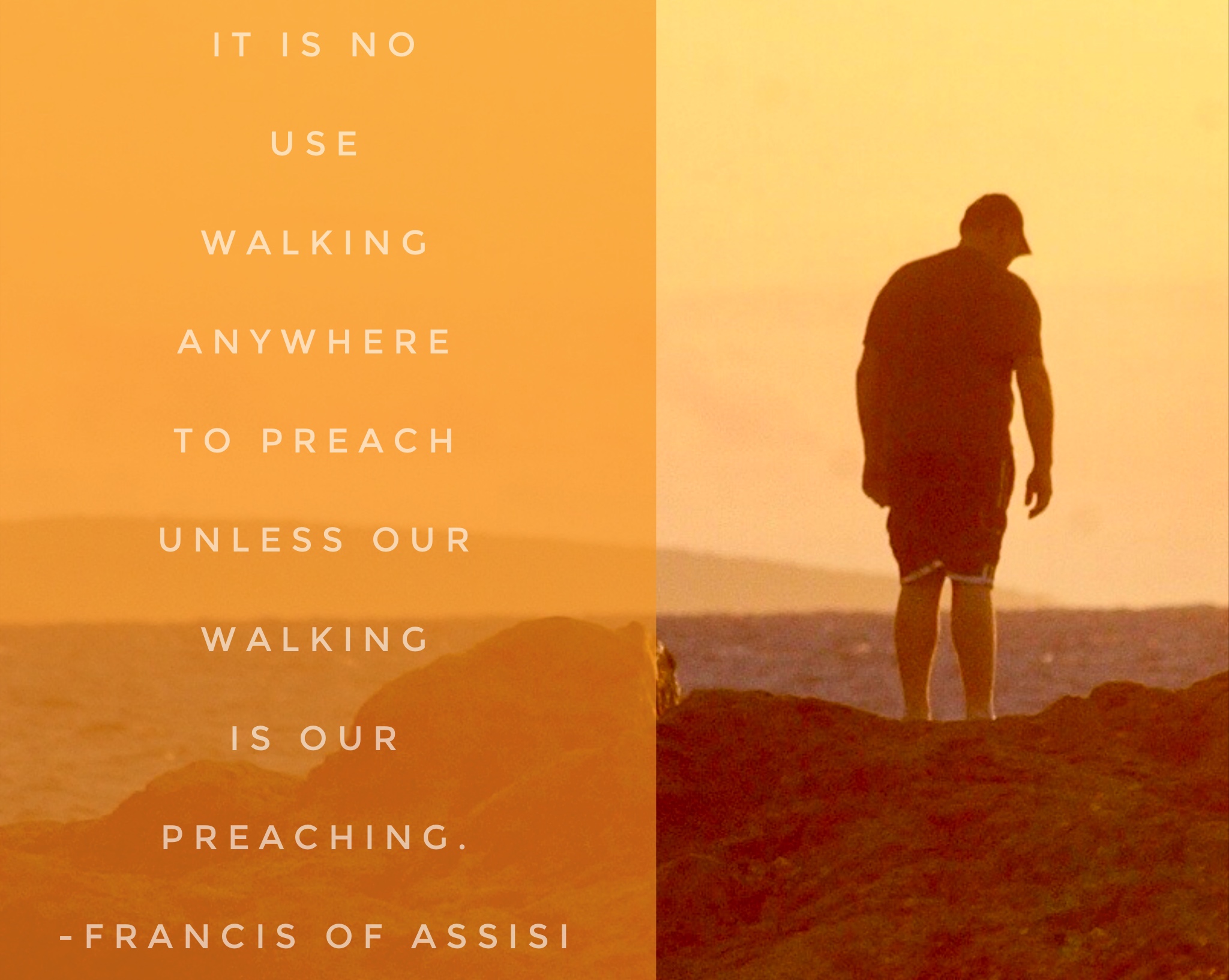
I’d rather see a sermon than hear one any day;
I’d rather one should walk with me than merely show the way.
The eye’s a better pupil and more willing than the ear;
Fine counsel is confusing, but example’s always clear.
And the best of all preachers are the men who live their creeds.
For to see the good in action is what everybody needs.
I can soon learn how to do it if you’ll let me see it done;
I can watch your hands in actions, but your tongue too fast may run.
And the lectures you deliver may be very wise and true,
But I’d rather get my lesson by observing what you do.
For I may misunderstand you and the high advice you give,
But there’s no misunderstanding how you act and how you live. (Edgar A. Guest) 
 

C’mon, pastor, let us SEE your sermon!

►► Would you please prayerfully consider supporting this ministry? My Patreon supporters get behind-the-scenes access to exclusive materials. ◀︎◀︎

Be A Foolish Preacher

Pastor, do you realize how clever we try to be?

  • We come up with a catchy sermon series and add some stylish graphics.
  • Then we labor over sermon titles that sound so compelling.
  • As we write our sermons we try to dream up memorable patterns, like all three of our main points start with “S,” or we spell out the word “P.E.A.C.E.”

When the truth of the matter is, what we’re saying is foolishness.

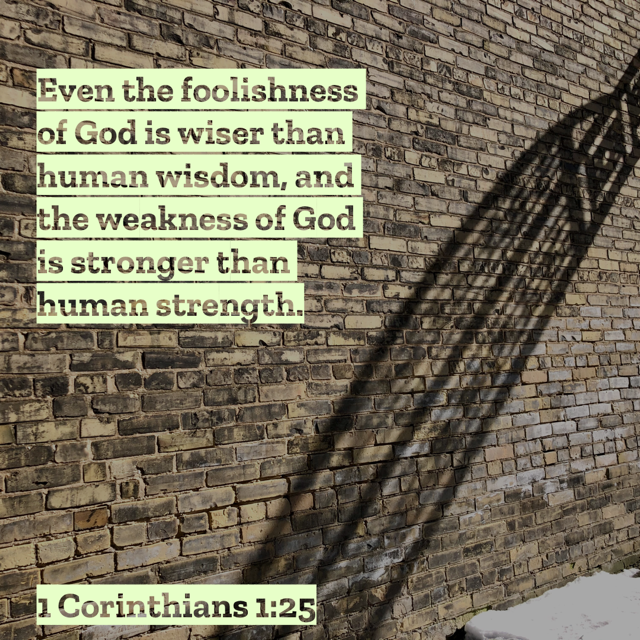
Where is the wise man? Where is the scholar? Where is the philosopher of this age? Has not God made foolish the wisdom of the world? For since in the wisdom of God the world through its wisdom did not know Him, God was pleased through the foolishness of what was preached to save those who believe. Jews demand miraculous signs and Greeks look for wisdom, but we preach Christ crucified: a stumbling block to Jews and foolishness to Gentiles, but to those whom God has called, both Jews and Greeks, Christ the power of God and the wisdom of God. For the foolishness of God is wiser than man’s wisdom, and the weakness of God is stronger than man’s strength. (1 Corinthians 1:20-25)

You don’t have to try to make God’s Word clever. It is already profound!

You don’t have to try to make it memorable. The Holy Spirit makes it memorable (John 14:26)!

You don’t have to make the Bible relevant. It is the most relevant, applicable wisdom that humanity has ever known! 

D.L. Moody said it this way:

“If God has given you a message, go and give it to the people as God has given it to you. It is a stupid thing for a man to try to be eloquent. Make your message, and not yourself, the most prominent thing. Don’t be self-conscious. Set your heart on what God has given you to do, and don’t be so foolish as to let your own difficulties or your own abilities stand in the way.”

Don’t try to be clever. Just be Spirit-led and you will utter the most profound, compelling, and memorable words ever spoken by a preacher!

Scriptural Surprises

Charles Spurgeon wrote:

“Scripture grows upon the student. It is full of surprises. Under the teaching of the Holy Spirit, to the searching eye it glows with splendor of revelation.”

I love this!

I cannot count how many times I read my Bible and do a double-take. I look again and think to myself, “I don’t think that was there the last time I read that passage!” That’s probably because I wasn’t ready for it earlier.

In the comments below, share something surprising you’ve read in the Bible recently.

Filled To Be Emptied

This is a post especially for my pastor friends. 

Dear Friend,

I know you have a lot on your mind. You’re probably reviewing how Sunday went and thinking about what you’re going to share next Sunday. You’ve probably got a pretty full agenda this week: staff meetings, board meetings, maybe a counseling appointment or two, and a hospital visit. There’s lots happening (there always is, right?).

Can I break into your week to ask you a simple question: What did you read in your Bible this morning for you? You know, your personal devotional time—what was God’s Word saying just to you?

Dietrich Bonhoeffer wrote this:

“We are reading the Word of God as God’s Word for us. Therefore, we do not ask what this text has to say to other people. For those of us who are preachers that means we will not ask how we would preach or teach on this text, but what it has to say to us personally.”

Here’s a simple principle: You cannot give to others what you have not received yourself. So you need to be filled up so that you can be emptied out.

Although your week may be busy, please, please, please take the time to read God’s Word for yourself. It will help you and your congregation as well.

May God fill you and then empty you, my friend, for His glory!

Cheering you on, I am your friend,

Craig

Give All Your Concerns To God

Cast your cares on the Lord and He will sustain you; He will never let the righteous fall. (Psalm 55:22)

“Care, even though exercised upon legitimate objects, if carried to excess, has in it the nature of sin. The precept to avoid anxious care is earnestly inculcated by our Savior, again and again; it is reiterated by the apostles; and it is one which cannot be neglected without involving transgression: for the very essence of anxious care is the imagining that we are wiser than God, and the thrusting ourselves into His place to do for Him that which He has undertaken to do for us. We attempt to think of that which we fancy He will forget; we labor to take upon ourselves our weary burden, as if He were unable or unwilling to take it for us. Now this disobedience to His plain precept, this unbelief in His Word, this presumption in intruding upon His province, is all sinful. Yet more than this, anxious care often leads to acts of sin. He who cannot calmly leave his affairs in God’s hand, but will carry his own burden, is very likely to be tempted to use wrong means to help himself. This sin leads to a forsaking of God as our Counselor, and resorting instead to human wisdom. This is going to the broken cistern instead of to the fountain; a sin which was laid against Israel of old. Anxiety makes us doubt God’s lovingkindness, and thus our love to Him grows cold; we feel mistrust, and thus grieve the Spirit of God, so that our prayers become hindered, our consistent example marred, and our life one of self-seeking. Thus want of confidence in God leads us to wander far from Him; but if through simple faith in His promise, we cast each burden as it comes upon Him, and are careful for nothing because He undertakes to care for us, it will keep us close to Him, and strengthen us against much temptation.” —Charles Spurgeon