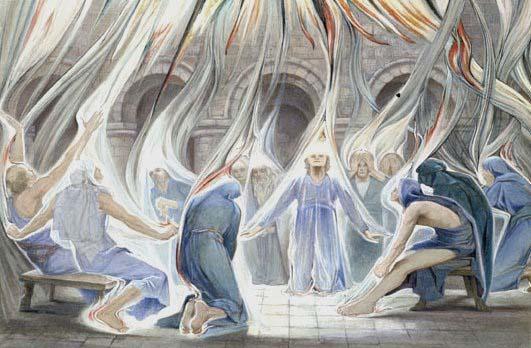
I am loving my time reading Spirit Rising by Jim Cymbala! This passage I just read leapt off the page:
“Many of us want more of God but not to the point of being ridiculed. Our Western minds think, I will serve the Lord, but I will remain in control as I do it. But whether we like it or not, that’s not how the church began. The church began with Spirit-controlled Christians who yielded themselves to God. That’s radical, yes, but that’s the way the Lord did it.
“Some might say, ‘Yeah, but we’ve improved upon the New Testament style of Christianity.’ If that’s true, I want to see the spiritual fruit our improvements have produced. People may have mocked those first, ‘unsophisticated’ Christians, but thousands got saved in the first four chapters of Acts. The Word of God was treasured. The churches were filled with sacrificial love. A holy excitement pervaded the atmosphere. Have we really improved upon that?”
Do you exercise? Why? What’s the purpose of all of your exercises? To get stronger? To last longer? To get or stay healthy? Yes! But to what end? Why do you want to be stronger, have greater endurance, or better health?
I could ask the same question regarding the spiritual realm: Why would you want to do a spiritual workout? To quote more Bible verses? To have more endurance in prayer? But why do you want to know more of the Bible, or pray better or longer?
Our goal should be simply this: To know God more intimately.
We have to be careful about being so focused on the workout that we miss the purpose (or should I say the Person). Andrew Murray wrote this:
“Christian! there is a terrible danger to which you stand exposed in your inner chamber. You are in danger of substituting Prayer and Bible Study for living fellowship with God, the living interchange of giving Him your love, your heart, and your life, and receiving from Him His love, His life, and His spirit. Your needs and their expression, your desire to pray humbly and earnestly and believingly, may so occupy you, that the light of His countenance and the joy of His love cannot enter you. Your Bible Study may so interest you, and so waken pleasing religious sentiment, that—yes—the very Word of God may become a substitute for God Himself, the greatest hindrance to fellowship because it keeps the soul occupied instead of leading it to God Himself.”
Our spiritual workouts should help us integrate God’s presence into our souls. He is not just someone that we know about; He is the One we know. The One we have let into our hearts. The One who is at the very center of our being. He is the CORE of who we are.
So then, just as you received Christ Jesus as Lord, continue to live in Him.Have the roots [of your being] firmly and deeply planted [in Him, fixed and founded in Him], being continually built up in Him, becoming increasingly more confirmed and established in the faith, just as you were taught, and abounding and overflowing in it with thanksgiving. (Colossians 2:6-7 AMP)
Don’t lose sight of WHY you read the Bible, and respond in prayer; of why you glorify God and enjoy Him forever; of why you go through your spiritual workouts. You do all of this because Christ is in you, and you are in Christ, and you want to strengthen this core relationship, and let everything else that you do flow out from this core!
You may be aware of this statement from the Westminster Catechism: The chief end of man is to glorify God and enjoy Him forever.
I love how John Piper elaborates on this in his book Desiring God—
“In view of God’s infinite power and wisdom and beauty, what would His love to a human being involve? Or, to put it another way: What could God give us to enjoy that would prove Him the most loving? There is only one possible answer: Himself! … So if God loves us enough to make our joy full, He must not only give us Himself; He must also win from us the praise of our hearts—not because He needs to shore up some weakness in Himself or compensate for some deficiency, but because He loves us and seeks the fullness of our joy that can be found only in knowing and praising Him, the most magnificent of all Beings.”
The cycle here is similar to the cycle I talked about last week, but it looks something like this: Glorifying God helps us enjoy Him, and enjoying Him helps us glorify Him.
Get wisdom, get understanding; do not forget my words or swerve from them. (Proverbs 4:5)
Wisdom is supreme; therefore get wisdom. Though it cost all you have, get understanding. (Proverbs 4:7)
How much better to get wisdom than gold, to choose understanding rather than silver! (Proverbs 16:16)
Buy the truth and do not sell it; get wisdom, discipline and understanding. (Proverbs 23:23)
I like T.M. Moore’s insight on this…
“Wisdom is that skill in living which comes as Christ is formed in us and lives His Word, in the power of His Spirit, through our lives. The beginning of wisdom is the fear of God (Psalm 111:10). But we’ll have to work hard and in many different ways to bring wisdom to a higher state in our lives. Solomon prayed for wisdom, but he also applied himself diligently to studying and contemplating a good many subjects in order to acquire that which he was trusting the Lord to give him. So we too, if we would increase in wisdom, must devote ourselves to ‘getting’ it by all the ways God makes available to us.”
In other words, we can (and should) pray for wisdom, but then we need to get busy to actually get the wisdom. God won’t simply pour wisdom into our hearts and minds.
Wisdom is earned through experience
Godly wisdom is earned through experiences that the Holy Spirit helps us evaluate and assimilate. The experience might be pleasant, or it might be painful. It might come through reading your Bible, or it might come through prayer. It might come in a pastor’s message, or it might come in a friend’s words. You might get it by going to your job, you might get it while taking a stroll along the beach on your vacation.
God’s wisdom is constantly being revealed to us. Are you getting it?
“Well, let’s now at any rate come clean. Prayer is irksome. An excuse to omit it is never unwelcome. When it is over, this casts a feeling of relief and holiday over the rest of the day. We are reluctant to begin. We are delighted to finish. While we are at prayer, but not while we are reading a novel or solving a crossword puzzle, any trifle is enough to distract us…. Now the disquieting thing is not simply that we skimp and begrudge the duty of prayer. The really disquieting thing is it should be numbered among duties at all. For we believe that we were created ‘to glorify God and enjoy Him forever.’ And if the few, the very few, minutes we now spend on intercourse with God are a burden to us rather than a delight, what then?… The painful effort which prayer involves is not proof that we are doing something we were not created to do. If we were perfected, prayer would not be a duty, it would be a delight. Someday, please God, it will be.”
Why don’t we pray more? Why does it seem like prayer is not a regular part of our lives?
Perhaps… We don’t know what to pray.The Bible is an amazing prayer book! Just use the words of Scripture to form your prayers. You can use the psalms, or go to the New Testament where Jesus or the other New Testament writers say something like, “This is my prayer….” Borrow their words, personalize them, and it will be an incredible prayer.
Maybe… We don’t have time to pray.We always have the Holy Spirit with us, and He reminds us of the Word and helps us pray. So we can pray anytime, anywhere, no matter what we are doing.
It could be… We run out of things to say.The Bible gives us so many things on which to meditate. This word means to mull over, or to even talk to ourselves. Combining Bible reading and prayer helps us continue to talk to God all throughout the day.
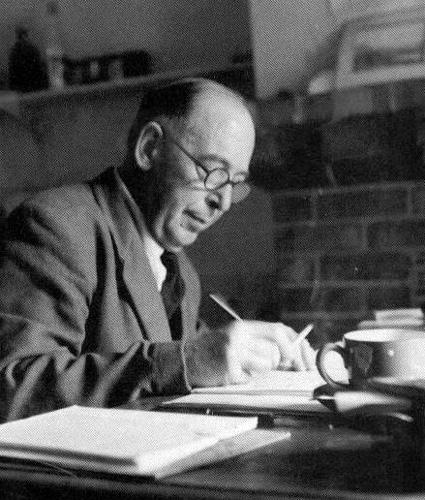
Try these simple steps and you will begin to realize, as C.S. Lewis said: “If we were perfected, prayer would not be a duty, it would be a delight. Someday, please God, it will be.”
This guy was having a bad day (or maybe a bad week, a bad month, a bad year…). The bottom line: he was in a pit, and it appears he had been in it for some time.
Nothing was going right.
And it didn’t appear things would turn around anytime soon.
He cried out, “My tears have been my food day and night, while men say to me all day long, ‘Where is your God?’” (Psalm 42:3)
Ever been there?
Are you there now?
If so, follow the example of this psalmist as he began to talk to himself…
Why am I discouraged? Why is my heart so sad? I will put my hope in God! I will praise Him again—my Savior andmy God! (v. 5)
Why could he put his hope in God at such a dark time in his life? Consider these wise words from Charles Spurgeon—
“Speak to thy soul thus, ‘If I were dealing with a man’s promise, I should carefully consider the ability and the character of the man who had covenanted with me. So with the promise of God; my eye must not be so much fixed upon the greatness of the mercy—that may stagger me; as upon the greatness of the Promiser—that will cheer me. My soul, it is God, even thy God, God that cannot lie, Who speaks to thee. This word of His which thou art now considering is as true as His own existence. He is a God unchangeable. He has not altered the thing which has gone out of His mouth, nor called back one single consolatory sentence. Nor doth He lack any power; it is the God that made the heavens and the earth who has spoken thus. Nor can He fail in wisdom as to the time when He will bestow the favors, for He knoweth when it is best to give and when better to withhold. Therefore, seeing that it is the word of a God so true, so immutable, so powerful, so wise, I will and must believe the promise.’ If we thus meditate upon the promises, and consider the Promiser, we shall experience their sweetness, and obtain their fulfillment.”
If you are in a pit, begin to recall the promises listed in God’s Word.
Pray them.
Meditate on them.
Speak them out loud.
Hang on to them.
“If we thus meditate upon the promises, and consider the Promiser, we shall experience their sweetness, and obtain their fulfillment.”
John Chrysostom was a reluctant pastor. It took him a while to surrender to the call of God on his life to serve as a priest. But once he stepped into that role, his God-given talents were used mightily. He was such an incredible speaker that his sermons often moved his audience to tears or applause. Thus, he was given the nickname “Golden Mouth.”
Here are some great pastoral insights from Golden Mouth which are just as applicable today…
“Thus then must the Priest behave towards those in his charge, as a father would behave to his very young children; and as such are not disturbed either by their insults or their blows, or their lamentations, nor even if they laugh and rejoice with us, do we take much account of it; so should we neither be puffed up by the promises of these persons nor cast down at their censure, when it comes from them unseasonably.”
“Let, therefore, the man who undertakes the strain of teaching never give heed to the good opinion of the outside world, nor be dejected in soul on account of such persons; but laboring at his sermons so that he may please God, (For let this alone be his rule and determination, in discharging this best kind of workmanship, not acclamation, nor good opinions,) if, indeed, he be praised by men, let him not repudiate their applause, and when his hearers do not offer this, let him not seek it, let him not be grieved. For a sufficient consolation in his labors, and one greater than all, is when he is able to be conscious of arranging and ordering his teaching with a view to pleasing God.”
“For the soul of the Priest ought to be purer than the very sunbeams, in order that the Holy Spirit may not leave him desolate, in order that he may be able to say, ‘Now I live; and yet no longer I, but Christ liveth in me….’ For he has need of far greater purity than they; and whoever has need of greater purity, he too is subject to more pressing temptations than they, which are able to defile him, unless by using constant self-denial and much labor, he renders his soul inaccessible to them.”
C.S. Lewis nails me with this quote from Letters To Malcolm—
“Well, let’s now at any rate come clean. Prayer is irksome. An excuse to omit it is never unwelcome. When it is over, this casts a feeling of relief and holiday over the rest of the day. We are reluctant to begin. We are delighted to finish. While we are at prayer, but not while we are reading a novel or solving a crossword puzzle, any trifle is enough to distract us….
Now the disquieting thing is not simply that we skimp and begrudge the duty of prayer. The really disquieting thing is it should be numbered among duties at all. For we believe that we were created ‘to glorify God and enjoy Him forever.’ And if the few, the very few, minutes we now spend on intercourse with God are a burden to us rather than a delight, what then?…
The painful effort which prayer involves is not proof that we are doing something we were not created to do.
If we were perfected, prayer would not be a duty, it would be a delight. Someday, please God, it will be.”
I don’t know about you, but this convicts me.
I want to be delighted for my prayer times. When I think that the Creator of the universe wants me to spend time with Him in prayer, how could this not be a delight?!
Listen to the podcast of this post by clicking on the player below, and you can also subscribe on Apple, Spotify, or Audible.
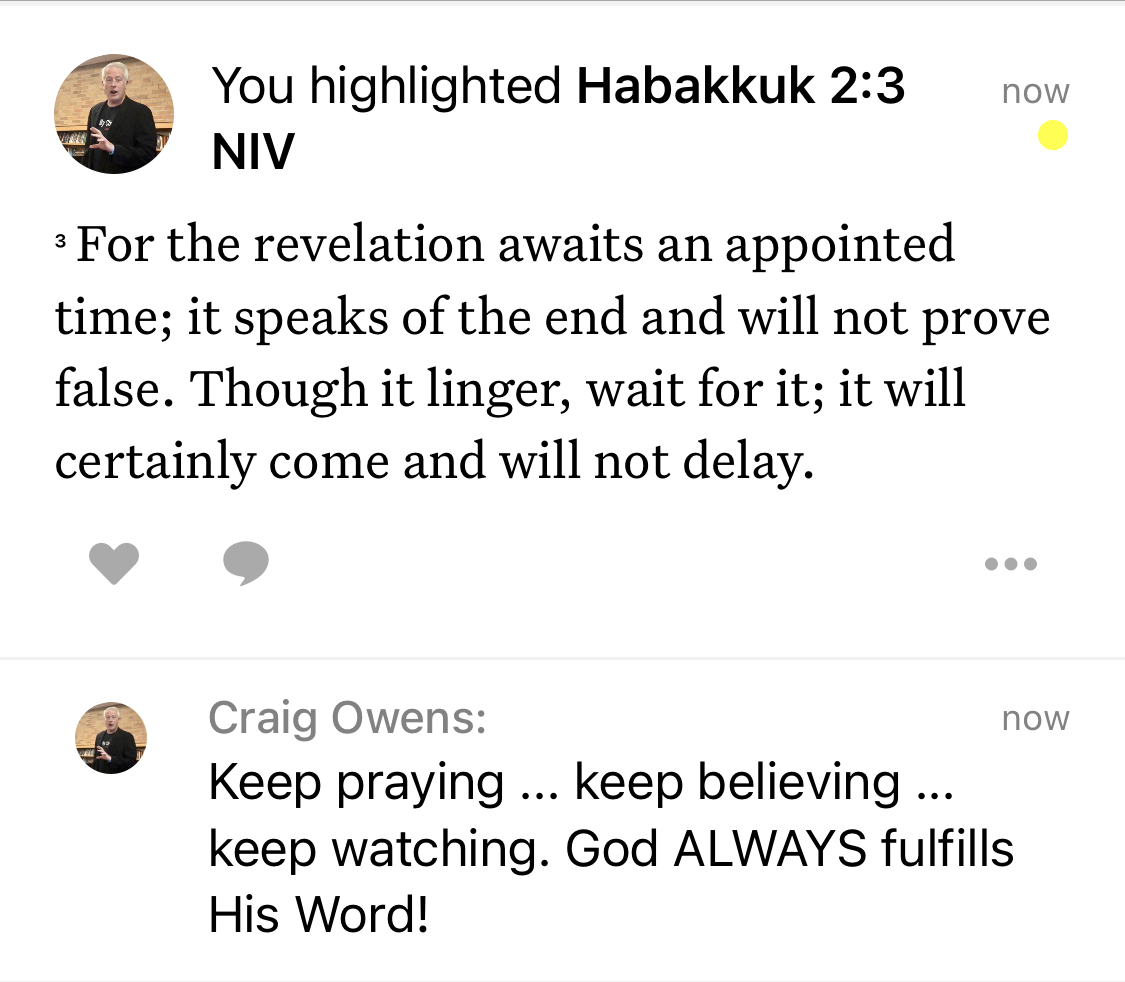
Some time ago, when my wife Betsy and I were waiting for God to bring about something we believed He had promised us, Betsy taped this verse to our bathroom mirror—
At the time I have decided, My words will come true. You can trust what I say about the future. It may take a long time, but keep on waiting—it will happen! (Habakkuk 2:3)
Keep on waiting.
You might be able to relate to that statement. Perhaps you say, “I am waiting. And waiting, and waiting, and WAITING…!”
But let me ask you something: What are you doing while you’re waiting?
Did you know that the Hebrew word for “waiting” here can also mean to ambush? That means you need to be doing everything you can do now to capture God’s promised dream when it arrives. As John Wooden used to say, “When opportunity comes, it’s too late to prepare.”
What do you need to do to ambush and capture your dream?
Learn a skill?
Take a class?
Get a degree?
Forgive someone?
Get out of debt?
Find a partner?
Volunteer your time?
Improve your waiting skills?
How do you improve your waiting skills? Check out this well-known verse—
But they that wait upon the Lord shall renew their strength…. (Isaiah 40:31)
Wait upon the Lord.
This is not a passive activity. This doesn’t mean to put your feet up, take it easy, and just lounge around until God finally decides to show up.
This word for “wait” has a different definition.
Have you ever dined at a really nice restaurant? In those high-priced restaurants, one of the things that makes the dining experience so nice is the staff who serves you. They anticipate your every need, they seem to be there just when you need them. They’re not late in arriving, nor are they rushing you along. They are WAITING on you!
This is what Isaiah is saying: When we wait on the Lord we are actively serving Him. We are trying to anticipate what He wants us to do. We’re not late and we’re not rushing Him along. We just want to give Him our very best service.
So if you are waiting (and waiting, and waiting!), make sure you’re making good use of your waiting time. Serve God with all you’ve got, and then make sure you’re ready to ambush your dream when God brings it to you in His perfect timing. God said it:



 I am loving my time reading Spirit Rising by Jim Cymbala! This passage I just read leapt off the page:








 Craig T. Owens