Lee: A Life Of Virtue (book review)

I’m thoroughly enjoying The Generals series from Thomas Nelson Publishers! The latest installment that kept me turning page after page is Lee: A Life Of Virtue by John Perry. (By the way, my review of the first book in this series is here.)

You probably think you know quite a bit about General Robert E. Lee, commander of the Confederate Army during the Civil War. After all, in our American History classes, we heard all about how Lee went to war to protect slavery, right? At least, that’s what I thought. But did you know that Lee signed the papers to free the slaves his family had inherited? And that Lee was working with other leaders to find the best way to free all of the slaves in the South?

This biography portrayed a side of Lee I had never heard before. John Perry does a remarkable job of showing us a man who quietly and resolutely relied on his faith in God for so many crucial decisions; a man who lovingly cared for his invalid mother; a man who continued to court his wife all throughout their marriage; a man who dearly loved his children; and a man who made his battlefield decisions based on what was best for his men.

The title is so apt: Lee was a man of virtue throughout his life. Always exercising self-control, always considerate of others, never cutting corners nor compromising.

If for no other reason, I recommend that you read Lee just to get a complete picture of a man who was so much more than an outstanding general; he was an outstanding man.

I am a Thomas Nelson book reviewer.

No Ear = No Heart

Israel’s early history goes something like this: King David firmly established Israel’s boundaries, King Solomon built on David’s success, then King Rehoboam split the country in half.

As Rehoboam became king the people asked him to reconsider the working conditions that existed under his father Solomon. Rehoboam consulted with his father’s counselors, who advised him to listen to the people. Then he consulted with his friends, who told him to make the working conditions even harsher. Unfortunately, Rehoboam listened to his friends’ advice.

Here’s what happened:

When all Israel saw that the king refused to listen to them, they answered the king: “What share do we have in David, what part in Jesse’s son? To your tents, Israel! Look after your own house, David!” So all the Israelites went home.

The people didn’t rebel because they didn’t get the answer they wanted; they rebelled because their leader didn’t listen to them. This word for listen means:

  • pay attention
  • carefully consider
  • empathize

The people felt rejected because Rehoboam didn’t listen. In essence, they said,

“We don’t have your ear, so you won’t get our heart!”

A leader doesn’t have to give in, nor does he have to give the people everything they ask for. But he does have to listen—truly listen. He has to put himself in their place and feel what they feel.

People will never give a leader their buy-in or support if they don’t feel they have his ear.

No ear of the leader = No heart of the people

Hey, leaders, are you listening?

Who Are You Talking To?

I love team leadership. I really enjoy getting a group of creative thinkers around me to do some serious brainstorming. I find it so beneficial to seek out the counsel of some wise people who have been around for a while.

But, let’s see, who have I left off this list?

Oh, yeah, I remember now—I didn’t consult God!

Be honest: have you ever done that? Have you ever consulted with a lot of wise—even God-fearing—people, but forgotten to consult with God Himself? If you have (and I certainly have), we’re in good company.

When King David got ready to move the ark of the covenant to Jerusalem, the Bible says,

David conferred with each of his officers….

How’d that work out for him? Not so good.

  • Uzzah died
  • David got mad at God
  • David got scared of God
  • The ark’s arrival in Jerusalem was delayed another three months

Then David had his “Oh yeah!” moment. When he got ready to try again, David said,

We did not inquire of God about how to do it in the prescribed manner….

So here’s my simple reminder to myself (and to you too): It’s fine to consult with others, but consult with God first.

What Do You Know About Leadership…

…and what are you doing with it?

I read an interesting verse about King David:

And David knew that the Lord had established him as king over Israel and that his kingdom had been highly exalted for the sake of His people Israel.

“David knew” reminds me of a line from Jesus’ life: Jesus knew that the Father had put all things under His power (John 13:3).

David and Jesus both knew that their positions of leadership were God-granted. And with that knowledge, they both wanted to further expand God’s Kingdom.

They didn’t keep the power for themselves; they didn’t lord it over others; they didn’t hoard the blessings; they didn’t use their leadership for personal gain; they used their God-granted authority to serve others.

They were confidently humble leaders.

If you are in a position of leadership, it’s not for you nor is it because of you. Leadership is from God, through you, to benefit others and to expand His Kingdom.

What do you know about leadership … and what are you doing with it?

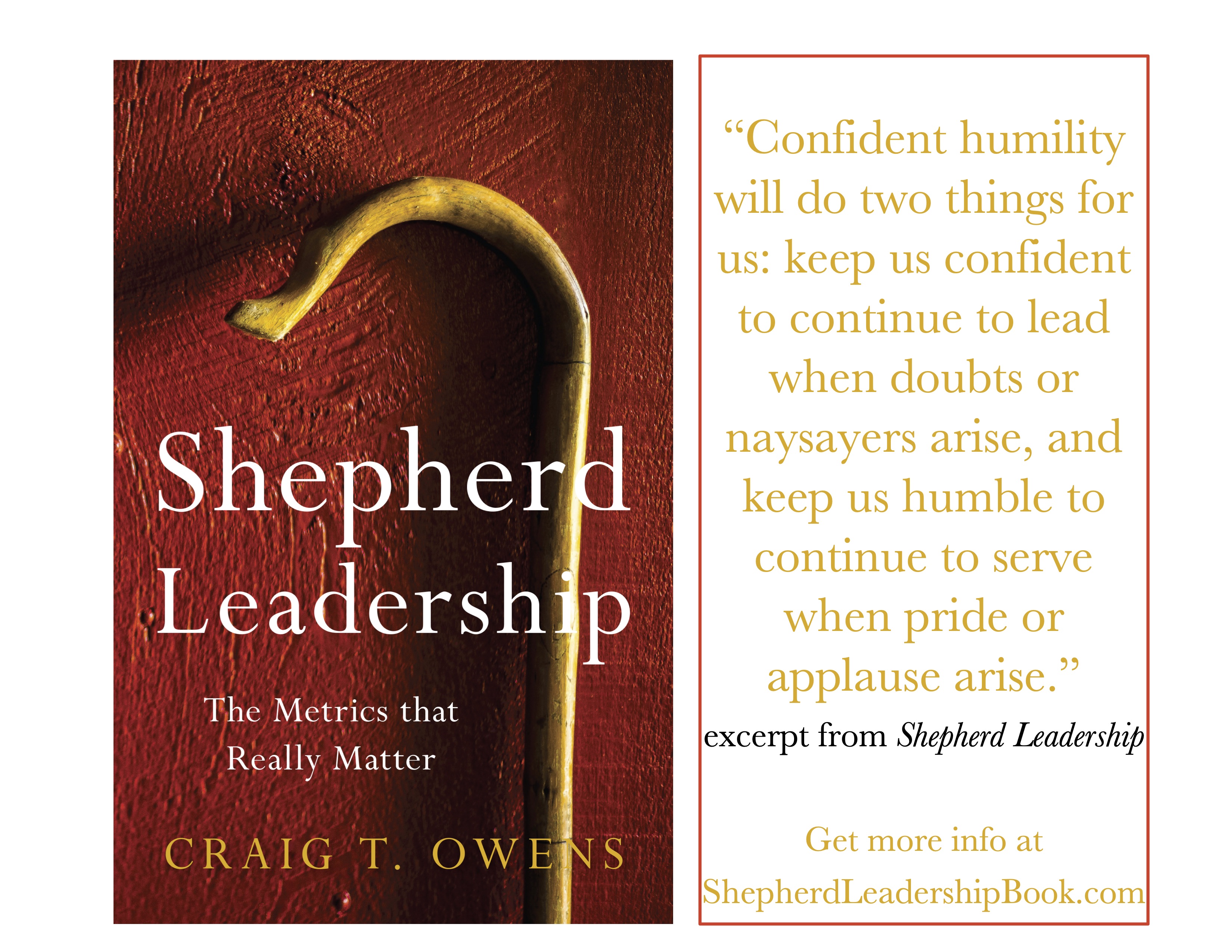
UPDATE: This is one of the seed thoughts that went into my book Shepherd Leadership: The Metrics That Really Matter.

Private Good Deeds

Betsy and I went to school conferences and discovered that our youngest son has been staying after school—by his own choice—to help his teacher tidy up the classroom. Are you kidding me?! This is the first I had heard of this. Wow, am I one proud Dad!

I’m not sure if he knows this verse or not, but Brandon is living out what Jesus said:

Don’t do your good deeds publicly, to be admired by others, for you will lose the reward from your Father in heaven.

He’s serving just because he wants to serve. I didn’t know about it, but his Heavenly Father did. Thank you, Brandon, for giving me this wonderful example of servant leadership!

Serve More To Lead Better

Listen to the podcast of this post by clicking on the player below, and you can also subscribe on AppleSpotify, or Audible. 

As King Solomon’s son Rehoboam was ascending the throne, he received some wise counsel:

If you will be a servant to these people and serve them and give them a favorable answer, they will always be your servants.

I also like the way The Message paraphrases this same verse:

If you will be a servant to this people, be considerate of their needs and respond with compassion, work things out with them, they’ll end up doing anything for you.

In other words: the more you serve, the better you will lead. Unfortunately, Rehoboam chose to reject this counsel, and his leadership disintegrated.

If you will be a servant [position] and serve [attitude] they will serve you.

This Hebrew word for serve is used quite a bit in the Old Testament. Interestingly, the first five times it is used are all in the agricultural sense: farming the land, tending to the plants, working, waiting, and ultimately harvesting. Leadership is never developed quickly. Servant leaders must be in it for the long haul.

Jesus also emphasized servant-leadership

But among you it will be different. Whoever wants to be a leader among you must be your servant, and whoever wants to be first among you must be the slave of everyone else.

Bottom line: The more you serve others, the better you will lead others. 

I take a deep dive into this kind of leadership in my book Shepherd Leadership.

►► Would you please prayerfully consider supporting this ministry? My Patreon supporters get behind-the-scenes access to exclusive materials. ◀︎◀︎

Others First

Listen to the podcast of this post by clicking on the player below, and you can also subscribe on AppleSpotify, or Audible.

I have a friend who has a photo album on Facebook called “Me.” The description says, “Sometimes it is just all about me.” And, sure enough, all of the pictures in that album are just her. I know her well enough to know that this is tongue-in-cheek, because she is not a self-absorbed prima donna.

Sadly, some Christian leaders exhibit the It’s-All-About-Me attitude. This really irks me, especially because we see the exact opposite characteristic in Jesus.

Let me key in on just one example from His public ministry. John the baptizer has just been martyred by King Herod. John was Jesus’ cousin. I’m not sure if you’ve ever had a loved one martyred or even murdered, but I’m sure we’ve all lost a loved one at some point. It might be a little easier to take if we saw it coming, but the sudden deaths always jar us the most. We have to have time to grieve our loss.

Jesus had all of the same emotional responses that you and I have, and He wanted some time away to grieve. He got into a boat with His disciples and headed to a remote place on the other side of the lake. Looking for a little time alone to grieve the death of His cousin, Jesus was met by a huge crowd. He would have been perfectly justified in saying, “Not today.” Or even in saying, “I’m going to let My disciples pray with you today.” Instead, Jesus put the needs of others first.

  • Jesus healed all who were sick
  • He taught them
  • Then He provided food for the nearly 10,000 people who were there
  • After the meal, Jesus sent His disciples (who also needed some grieving time) back across the lake without Him
  • Jesus stayed behind and dismissed the entire crowd. I sort of imagine Him hugging people, shaking hands, and continuing to listen to the questions and concerns of everyone

It was only after this that Jesus went up into the hills to spend some time alone in prayer.

Yes, leaders have to take care of themselves and their people. But good leaders take care of others first.

I unpack this idea in even great detail in my book Shepherd Leadership. If you want to be used as a leader, you must allow the Holy Spirit to cultivate this others-first attitude in you.

►► Would you please prayerfully consider supporting this ministry? My Patreon supporters get behind-the-scenes access to exclusive materials. ◀︎◀︎
Andy Stanley & Jim Collins

Lead Like David

I’ve always been fascinated by the leadership of Israel’s second king: David. There are so many leadership lessons to be learned from his life. A few things I’ve noted about his leadership that I am always trying to implement in my life as well.

Respect—David treated everyone (even his enemies) with respect.

Shrewdness—David used his wits exceptionally well. He knew how to shower gifts on the right people, show recognition to those who needed their ego stroked, be gracious to those who were uncertain, and even flex his muscles with show-offs who got out of line.

Prayer—David was a man of prayer. He prayed for direction, he asked God for strategies, he prayed for deliverance. He prayed for everything.

Confident humility—I know it sounds like an oxymoron (how can someone be both confident and humble?), but David really got this. Check out this commentary:

And David became more and more powerful, because the Lord God Almighty was with him. … And David knew that the Lord had established him as king over Israel and had exalted his kingdom for the sake of His people Israel.

Man of the people—David didn’t closet himself away; he lived and led in full sight of everyone.

All the people took note and were pleased; indeed, everything the king did pleased them.

I want to lead like David led!

What about you? Are there other areas of David’s leadership that you admire or want to imitate?

How A Leader Should Bring Correction

Listen to the podcast of this post by clicking on the player below, and you can also subscribe on AppleSpotify, or Audible.

Bringing correction is one of the toughest jobs for those in leadership, but it’s a responsibility that cannot be delegated or ignored. In order for correction to be effective, it must not be too light or too heavy. Unfortunately, many of us have experienced far too many ineffective forms of leadership correction.

I read a great example of how to properly correct in the life of Samuel. In 1 Samuel 12, the people had gotten off track, and Samuel lovingly and effectively brought them back into line. Here’s what his example teaches us on how to correct followers:

1.  Shared history (v. 2). Samuel reminded them of what had happened in their history, and even what they had experienced together. “Newbie” leaders need to be cautious about bringing correction that violates an organization’s established culture.

2. Integrity (v. 3). Samuel’s words and lifestyle lined up. That doesn’t mean he never made a mistake, but it does mean that he was willing to acknowledge and repair his mistakes. Nothing is worse than a leader who says, “Do as I say, not as I do!”

3. Common ground (vv. 6-11). A leader needs to get everyone on the same page. Find something somewhere on which everyone can agree, and then move forward from there.

4. Just say it (vv. 12-13). Don’t beat around the bush; don’t try to bring correction through a parable; don’t soften the blow. Just say it: “This is where I believe you made a mistake.” Far too many leaders talk too much and leave their followers saying, “Huh?” If you are going to bring correction, make sure your followers know exactly what it is you are correcting.

5. Give the remedy (vv. 14-15, 20-21). Samuel pointed out the error, and he just as clearly told them how to get back on track. The remedy should be as clear and simple as possible.

6. Remove the fear (vv. 20, 22). Don’t let the corrected follower be afraid of you! Fear will never re-establish trust. Samuel couldn’t have been more clear on this. He literally said to the Israelites, “Do not be afraid.”

7. Demonstrate servant leadership (v. 23). At the close of the meeting, Samuel said he would do two things: “I will continue to pray for you, and I will continue to teach you.” In telling them this, Samuel was really saying, “Let’s walk through this together.”

If you lead your family, your church, your company, or your team, you are going to have to bring correction at some point. When you need to do this, take some time to review this list and bring correction the way Samuel did: lovingly and effectively.

P.S. You can also check out this post where the apostle Paul gives us another example of how to handle correction properly.

►► Would you please prayerfully consider supporting this ministry? My Patreon supporters get behind-the-scenes access to exclusive materials. ◀︎◀︎