Patton: The Pursuit Of Destiny (book review)

Disclaimer: I am a huge admirer of General George Smith Patton, Jr. So it should come as no surprise that I thoroughly enjoyed Agostino Von Hassell and Ed Breslin’s biography Patton: The Pursuit Of Destiny.

It’s also no surprise that I relished reading about Patton’s military genius and his relentless preparation to be a man of destiny. What did surprise me was the candor with which the authors dealt with the shortcomings of Patton. For all of his military genius, there were areas of his life that always seemed to get the best of this general. On the battlefield, he had few equals, but away from the heat of battle, his insecurities could get the best of him. I appreciated how the authors showed Patton playing to his strengths while still struggling with his weaknesses. While many biographies show great men and women overcoming their struggles, Patton shows the general living with his struggles and still achieving greatness in spite of them.

I also learned more about Patton’s family lineage in this book that helped me understand what drove this military hero. I read about a man who was a voracious learner, highly competitive, and a man who set extraordinarily high standards for himself. His biggest weakness: he couldn’t abide those who didn’t share these same lofty goals for their own lives or profession.

If you enjoy military history, a study of a larger-than-life leadership persona, or a biography with an unflinching look at a great man’s angels and demons, you will enjoy reading Patton: The Pursuit Of Destiny.

I am a Thomas Nelson book reviewer.

Goals & Strategies

I’m in the midst of a fascinating biography about General George S. Patton. As I wrote yesterday, I love borrowing the brains of other great men and women and adding some of their finer attributes to my life.

Years after Patton had died, his son donated his father’s books to the West Point Military Academy. It was then that a notation in Patton’s own hand was discovered on the last page of his Elements Of Strategy textbook. He wrote: “End of last lesson in Engineering. Last lesson as a Cadet, thank God.” But then on the back cover, he had also written—

Qualities of a Great General

1.  Tactically aggressive (loves a fight)

2.  Strength of character

3.  Steadiness of purpose

4.  Acceptance of responsibility

5.  Energy

6.  Good health and strength

George Patton

Cadet

April 29, 1909

Here’s what I love: he wrote these down years before he was ever given the command of anything! He put his goals and strategies in writing and dedicated himself wholeheartedly to achieving them. And achieve he did!

Years ago I took some time to write down a similar challenge for myself. Reading this about Patton reminded me that I haven’t reviewed my list in a while, and it was high time for me to reacquaint myself with those goals and strategies.

What about you?

Do you know where you want to go?

Do you know what it will take to get there?

Have you written down those goals and strategies?

Borrowed Brains

“We should not only use all the brains we have, but all that we can borrow.” —Woodrow Wilson

It’s so important to learn from others—to borrow their brains. I try to take something from other people’s brains every day.

  • Every morning I begin my day by studying the timeless truths found in the Bible.
  • Then I pray to ask God to give me the mind of Christ for my day.
  • Throughout my day I learn from the brains of other business and ministry leaders. People who have been-there-done-that and are willing to share are an invaluable source of wisdom.
  • I also consume a regular diet of biographies and autobiographies of past and present leaders. I try to put myself in their shoes to see why they made the decisions they made.
  • And I have some close friends that can give me their honest insight and critique.

One of the saddest things is to hear someone say, “I’m a self-made man” or “I’m a self-made woman.” Really?! That’s rather limited, isn’t it?

So whose brains are you borrowing? 

Lead Like Ike (book review)

There is so much to like about Lead Like Ike by Geoff Loftus!

If you like military history, you will love the narrative of the strategies and implementation that Dwight D. Eisenhower (or “Ike”) oversaw. It is an amazing retelling of how Ike had to balance so many pressures from not only the Germans but within his own ranks as well, to lead the Allies to victory in Europe during World War II.

If you like business strategies, you will enjoy the way Loftus renames the military build-up in Europe during WWII “D-Day Inc.,” and assigns titles like Board of Directors, CEO, C-level staff, and competitors to the battles in Operation Torch, Operation Overlord, the Battle of the Bulge and others. You will see how Ike functioned as an effective CEO to lead D-Day Inc. in their head-to-head challenges with their German competition.

And if you like biographies about strong leaders, you will see the incredible leadership principles that Ike employed in his personal life and in his military career. You will see a man firmly fixed on his goal, but also a man who felt deeply about the individual soldier, sailor, and airman under his command.

Sprinkled throughout the book (and summed up nicely at the end of each chapter) are strategies for success, implementation plans, and tips for personnel management.

The only thing that disappointed me about this book was that it came to an end! I thoroughly enjoyed it, and I believe you will too. I give it five-out-of-five stars.

I am a Thomas Nelson book reviewer.

Who’s Your Promoter?

Check out this verse where God speaks to Joshua:

Today I will begin to exalt you in the eyes of all Israel, so they may know I am with you as I was with Moses.

Self-promoted leadership requires that I know what the current whims of the people are, and then I cater to those special-interest whims. But people are fickle, so I have to be constantly reinventing myself. I have to wear the right mask for the right group. I have to become a slick politician, giving the right speech to the right special interest group, promising them what they want to hear. I have to pander for votes to stay in leadership.

God-promoted leadership requires that I have faith in God alone. No focus groups to find out what people want. No advisors whispering in my ear. No masks, no special interest speeches, no pandering for votes. God knows the hearts of the people, and if He has called me to be a leader, He will equip me to be His leader.

Joshua was a God-promoted leader. When he was on the eve of his first major campaign as the new leader of Israel, he gave just one speech: “Let’s get ready to go.” A self-promoting leader would have given one motivational speech to the priests, one pep talk to the generals, one persuasive speech to the troops, an encouraging speech to the stay-at-home moms, and possibly one more convincing speech to those who wanted to pursue an alternative strategy.

The results of God-promoted leadership?

  1. So the Israelites did just as Joshua commanded them (Joshua 4:8).
  2. That day the Lord exalted Joshua in the sight of all Israel; and they revered him all the days of his life (Joshua 4:14).

Who’s your promoter?

My prayer is that I always allow God to be my promoter and that the Holy Spirit will convict me anytime I try to promote myself.

4 Leadership Requirements

I love studying leadership—leadership principles, leadership practices, and leadership people. There’s a great leadership case study in the Bible in the life of Joshua that always intrigues me.

Joshua had been through extensive preparation to become Moses’ successor. He was a recognized leader in his tribe, the general of the army, and an aide-de-camp to Moses for a number of years. But his most important leadership qualification: He was called by God.

As the story of his leadership opens in the first chapter of the Book of Joshua, God gives four requirements for Joshua (and you and me) to be effective in our leadership roles.

1.  Be yourself. God didn’t say, “Be like Moses.” In fact, the only time God talks about Moses to Joshua is to reassure him, “I will be with you like I was with Moses.” But never once does God uses a “Moses Grading Scale” for Joshua. God simply says, “You will lead these people.”

2.  Have an objective measuring stick. Feelings may change, but God’s Word never does. So God counsels Joshua to always rely on the Book of the Law.

3.  Guard your thoughts. Leaders have so many people “in their ear” wanting to lobby for their way. So God tells Joshua to not only read the Bible but meditate on it as well. One definition of meditation is to hum God’s Word. In other words, humming God’s Word will help a leader know which lobbying voice is in harmony with God’s Voice, and which lobbying voice is off-key.

4.  Guard your attitude. God repeats this to Joshua, “Do not be afraid; do not be discouraged.” Even doing everything they are supposed to be doing, leaders can become afraid to make a change, or discouraged because people aren’t following along. These feelings must be driven out with one firm declaration: “I know the Lord has called to this leadership position, so I know the Lord is with me. He will enable me to complete what He has called me to do.”

God’s direction to Joshua is still great counsel for leaders today.

Be Careful

In the final instructions before the Israelites were going to enter the Promised Land, the book of Deuteronomy uses the phrase be careful fifteen (15) times:

  • Be careful not to forget
  • Be careful to obey
  • Be careful to avoid making idols
  • Be careful to honor your leadership
  • Be careful of your thoughts

In the dictionary careful is defined as being attentive to potential danger, error, or harm. It implies paying special attention to accuracy and being discerning.

God doesn’t ask this of me to cramp my style but to put me in a place where He can bless me. And not just me: being careful leads to generational blessings. Here’s my favorite be careful verse:

Be careful to obey all these regulations I am giving you today, so that it may always go well with you and your children after you, because you will be doing what is good and right in the eyes of the Lord your God.

Sometimes to be careful we have to slow down. We seem to want everything quickly and with as little effort as possible. Remember the cliché “Haste makes waste”?

What if you slowed down a bit today?

What if you took just a little time to be attentive to potential danger?

What if you paused long enough to discern if you were giving your best to God?

What if you took a moment to simply ask God to give you the wisdom needed to make a godly decision?

Being careful so that it may ALWAYS go well with you and your children after you….

Isn’t that worth it?

Don’t Be That Guy

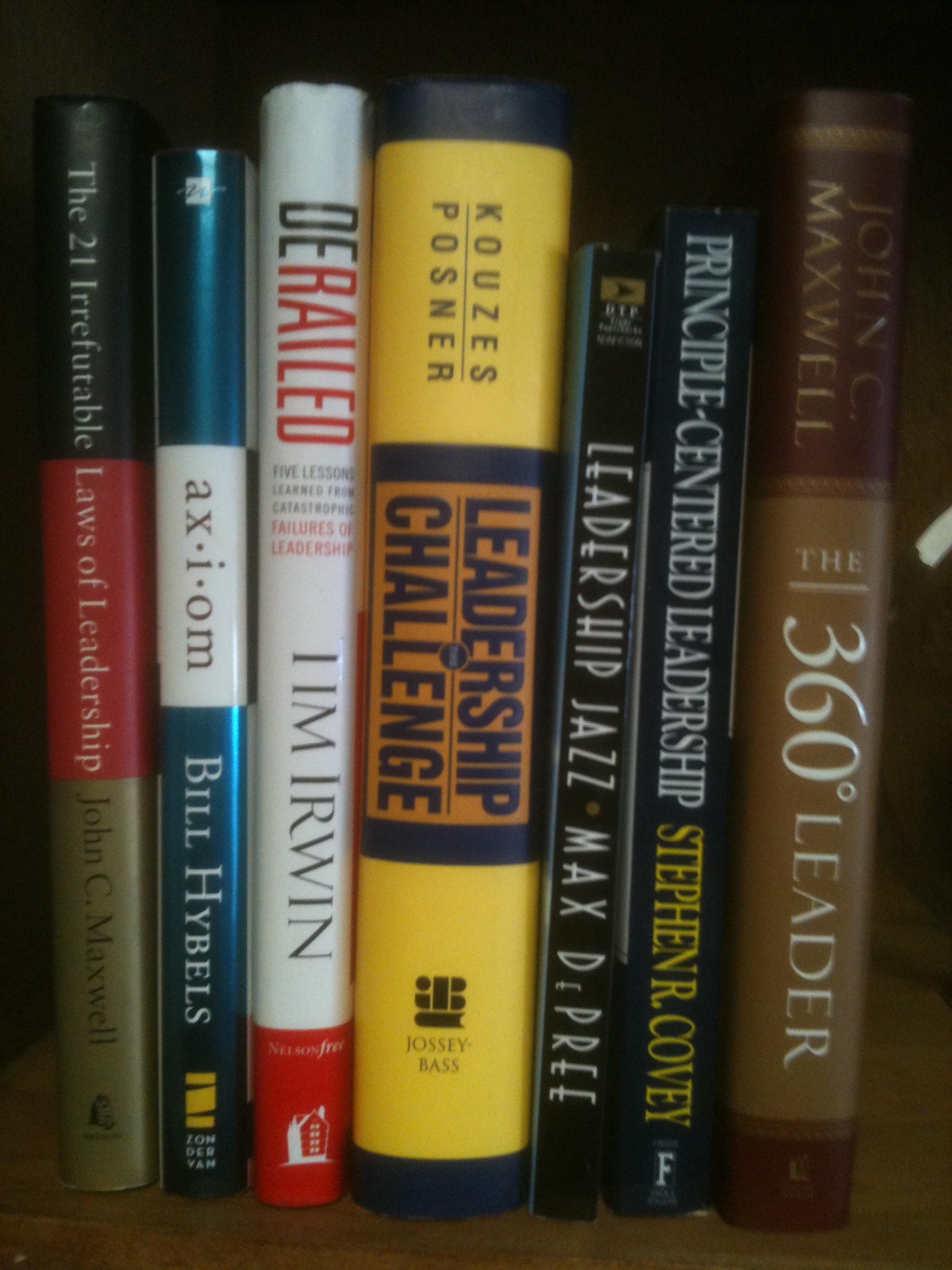
I love studying leadership books and learning from the lives of great men and women of history. The leadership section of my library is only slightly larger than the biography section. One of the saddest things to see is a leader who self-destructs. I was just reviewing some of my notes about leadership failures when Tim Elmore’s latest e-newsletter arrived entitled Self-Destructive Leaders.

Check out a couple of blurbs from this excellent article:

Projecting their self-worth.
There are few things more unappetizing than a leader who has to constantly talk about how important they are. They name drop, they remind others of their busyness, accomplishments, authority, past positions, degrees, or pedigree. It’s like they’re lobbying for attention and affirmation. It’s a sad commentary when so much of a leader’s energy is spent doing this instead of helping their team reach their goals.

Possessing a controlling spirit.
Often, insecure leaders react to their inward desperation with control. They feel if they can control people, they’ll maintain absolute authority. … They resort to more regulations and policies to enforce compliance among staff instead of trusting them and earning their loyalty….

Comparing themselves to others obsessively.
When a leader has a low EQ [emotional intelligence quotient], they naturally tend to look around them; they look outward rather than inward (at their own natural strengths and style) or upward (to their Creator for their sense of identity).  They become consumed with comparing their own traits or achievements to those of other leaders. Soon, their team ceases to operate in a healthy way. They’re driven by comparing and competing with others instead of capitalizing on their own core competencies.

Possessing self-imposed blindness.
This one is huge. All leaders have blind spots. Like in a car, blind spots happen not so much because of stupidity but position. The driver can’t see certain things. Sadly, self-destructive leaders refuse help. They repel any input from colleagues and insist on living in a bubble that makes them feel good. All is well, or so they think. Their insecurity won’t let them face the facts. They prefer a perspective that’s limited, but comfortable. Their narrow view will eventually lead to an accident.

Here’s what wise King Solomon said about the self-destructive leader:

Arrogant know-it-alls stir up discord, but wise men and women listen to each other’s counsel. (Proverbs 13:10)

If you ignore criticism, you will end in poverty and disgrace; if you accept correction, you will be honored. (Proverbs 13:18)

The saddest part is this – the self-destructive leader will read this and then say to himself, “Nope, that’s not me. This is describing someone else.”

Don’t be that guy (or gal)!

  • Look in the mirror of Scripture.
  • Listen to the counsel of others.
  • Listen to the criticism of your teammates. (Hint: if your teammates aren’t telling you anything that you need to improve on, it’s not because you’re perfect. Either you have intimidated them into silence, or you’re deaf to what they’re telling you.)
  • Learn from the lives of great leaders from the past. Read their biographies and autobiographies.

Learning To Distinguish

In Moses’ instructions to the priests, he said, “You must distinguish between the holy and common, between the unclean and the clean.”

Why? Because these men were to be leaders. He went on to say, “You must teach the Israelites all the decrees.”

If I’m going to be a leader, I must be able to distinguish.

Here’s where the Holy Spirit is challenging me. I am working on distinguishing between…

Good and Best

Acceptable and Excellent

Common and Holy

Ordinary and Extraordinary

Want and Need

Present and Participant

Quantity and Quality

I am certain that this list is just a start, and that it’s going to be a lifetime pursuit.

God’s Favor

It’s a well-known story: Moses is on the mountaintop with God while all the Israelites back at camp think he’s dead. They then convince Aaron to make a golden calf to be their god. The True God is ready to bring down His punishment on these idol worshipers when two incredible words stop God’s judgment dead in its tracks…

But Moses.

God was ready to wipe them out and start all over with Moses. Think about it: God offered Moses the opportunity to be on the same level of remembrance with Abraham. Years later people would be saying, “The God of Abraham, Isaac, Israel, and Moses.” What an incredible honor for Moses!

But Moses.

Instead, Moses interceded for his people. Moses sought God’s favor. He knew God to be the compassionate and gracious God, slow to anger, abounding in love and faithfulness, maintaining love to thousands and forgiving wickedness, rebellion and sin. He could have had it all for himself.

But Moses.

He asked God to forgive the people’s idolatry and betrayal. God replied, “I know you by name and you have found favor with Me.” If you had God’s favor, what would you do with it? Would you ask for great things for yourself? Your family? Your friends?

But Moses.

Moses used this favor to ask God to help him stay in His favor. “If You are pleased with me, teach me Your ways so I may know You and continue to find favor with You.” Moses knew that it was God’s favor that distinguishes one man from the crowd, that sets a man apart as a leader.

But Moses

just wanted God to be glorified. And God responded: “My Presence will go with you.”

I want to be a “But Craig” leader… one that stands apart as God’s leader; one who only seeks to bring glory to God.

How about you? Do you want to be that “But ____________” leader too?