Easter is over. Some people may have come to a church yesterday and may have even stepped into a relationship with the Risen Savior Jesus Christ. Wow, what a day!
Now what?
Is it back to church as usual?
What’s different because Jesus arose?
More specifically, what’s different about my life because I encountered Christ?
I don’t think Jesus suffered, died, and arose from the grave so we could maintain the status quo, or so that we could return to our normal humdrum lives, or so that church could become ‘the usual weekend routine.’
Dorothy Sayers said it this way:
“To do them justice, the people who crucified Jesus did not do so because He was a bore. Quite the contrary; He was too dynamic to be safe. It has been left for later generations to muffle up that shattering personality and surround Him with an atmosphere of tedium. We have declawed the Lion of Judah and made Him a housecat for pale priests and pious old ladies.”
Although Easter is over, I pray my life with Christ is never tedious, never boring, never predictable, never as tame as a housecat.
I want to know and see firsthand in my life that the Lion of Judah is not safe, but that He is good (thanks to C.S. Lewis for that wording)!
Jesus conquered death so that you and I could really live. Don’t ever settle for the boring, humdrum, usual routine. Discover the exciting life Jesus has for you!
Listen to the podcast of this post by clicking on the player below, and you can also subscribe on Apple, Spotify, or Audible.
Good Friday is almost too heavy for me to comprehend. It’s only “good” as we view it now, after the resurrection of Christ. Looking at Calvary at the moment is so humbling.
See how the patient Jesus stands,Insulted in His lowest case!Sinners have bound the Almighty hands,And spit in their Creator’s face.With thorns His temple gored and gashedSend streams of blood from every part;His back with knotted scourges lashed,But sharper scourges tear His heart.Nailed naked to the accursed woodExposed to earth and heaven above,A spectacle of wounds and blood,A prodigy of injured love!Hark! how His doleful cries affrightAffected angels, while they view;His friends forsook Him in the night,And now His God forsakes Him too!Behold that pale, that languid face,That drooping head, those languid eyes!Behold in sorrow and disgraceOur conquering Hero hangs, and dies!Ye that assume His sacred name,Now tell me, what can all this mean?What was it bruised God’s harmless Lamb,What was it pierced His soul but sin?Blush, Christian, blush: let shame abound:If sin affects thee not with woe,Whatever life is in thee found,The life of Christ thou doest not know.—Joseph Hart, 1759
“Believer in Jesus, can you gaze upon Him without tears, as He stands before you the mirror of agonizing love? He is at once fair as the lily for innocence, and red as the rose with the crimson of His own blood. As we feel the sure and blessed healing which His stripes have wrought in us, does not our heart melt at once with love and grief? If ever we have loved our Lord Jesus, surely we must feel that affection glowing now within our bosoms.” —Charles Spurgeon
I hope you will join me in soberly and lovingly contemplating the amazing love of our Savior Jesus!
Do you see it on the horizon? Storm clouds building, blowing in fast; wind picking up; something ominous in the air. Here comes trouble!
Jesus certainly did as He talked with His followers just before His arrest and crucifixion. Just before the storm hit, here’s what He said…
I have told you these things, so that in Me you may have peace. In this world you will have trouble. But take heart! I have overcome the world. (John 16:33)
I find something reassuring about Jesus telling me that I will have trouble. Not that trouble is enjoyable (at all!). But what is enjoyable is knowing that He knows. Nothing takes Jesus by surprise!
Jesus said that I would find my peace when I remain IN Him. When I see trouble coming, my natural tendency is to start doing things for myself. I start making plans, giving orders, gathering resources, hunkering down in my foxhole. In reality, all this does nothing but increase my level of anxiety!
Jesus has overcome. So when I stay IN Him, I overcome too.
Here’s what I’ve learned about how to stay IN Him…
Stay in the Wordevery day, but especially when I see trouble coming.
Stay in prayer; in fact, I should increase my prayer times.
Stay in worship because I don’t want to focus on the storm, but on the Overcomer.
Stay in contact with my friends and ask them to join me in prayer.
Check out this prayer David penned when he saw trouble coming. It’s still a great prayer for you and me today:
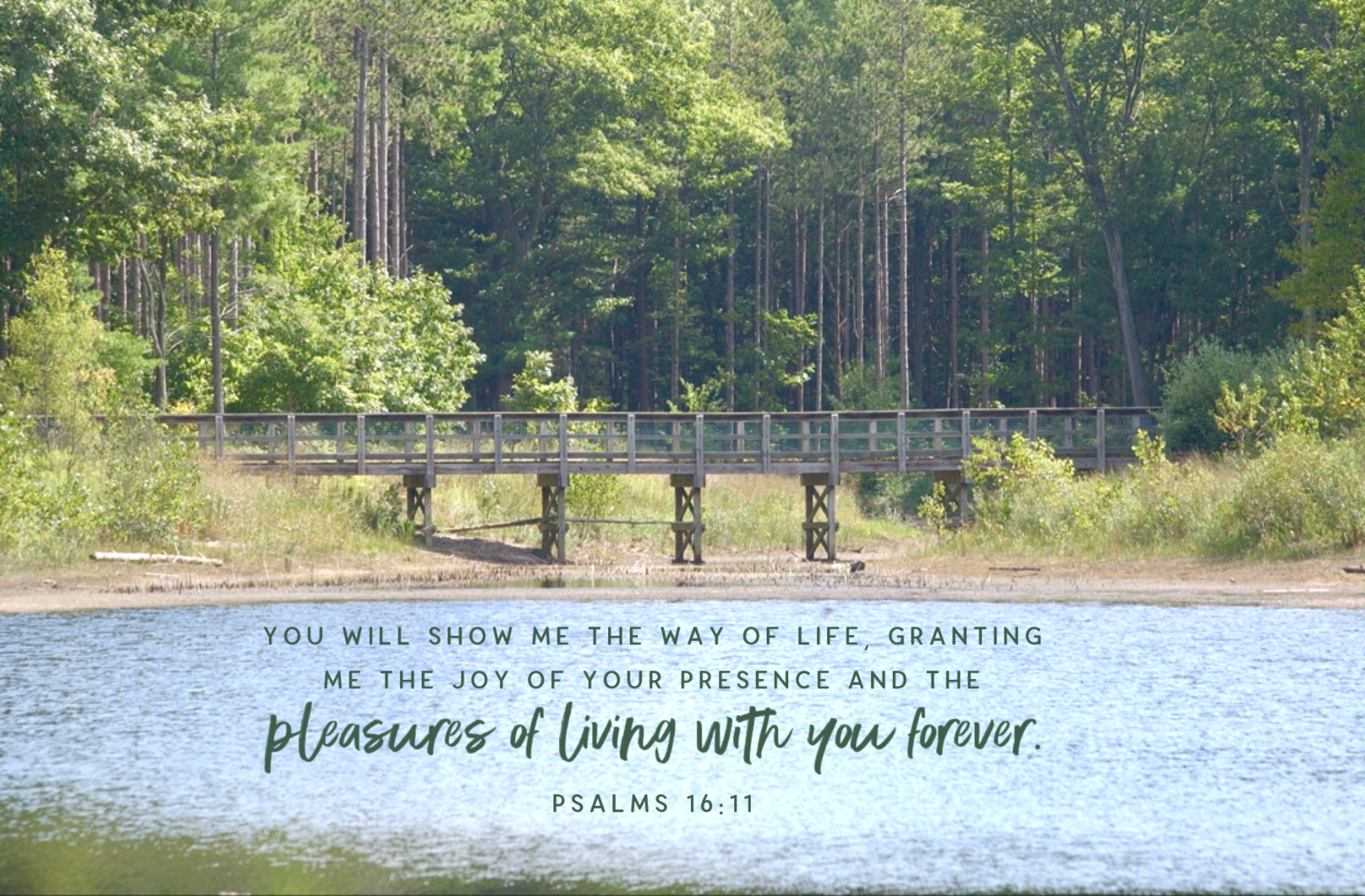
Keep me safe, O God, forIN YouI take refuge. I said to the Lord, “You are my Lord;apart from YouI have no good thing.” Therefore my heart is glad and my tongue rejoices; my body also will rest secure. You have made known to me the path of life; You will fill me with joyIN your presence, with eternal pleasures at Your right hand.(Psalm 16:1, 2, 9, 11)
“As a Man, without using any of His divine powers, Jesus defeated temptation in the same areas where Eve failed and where we fail. … By this He condemned sin in sinful man, that is, He showed we sin, not because we have to sin, but because we choose to sin and because we ignore the help available through the Word and the Spirit.” —Stanley Horton
We don’t have to sin, but we choose to sin.
Ouch!
“In His temptation, Jesus did not use His divine power to defeat the devil. Still identifying Himself with us as Spirit-filled human, He defeated satan by the same means that are available to us — the Word, anointed by the Spirit. Eve, tempted in exactly the same areas—the lust of the flesh (appetite), the lust of the eyes (desire), and the pride of life—failed (Genesis 3:6; 1 John 2:16). In these areas, which John says together comprise the things of the world or worldliness (1 John 2:15). Jesus won a complete victory for us. He has truly overcome the world (John 16:33). We can do the same by our faith (1 John 5:4).” —Stanley Horton
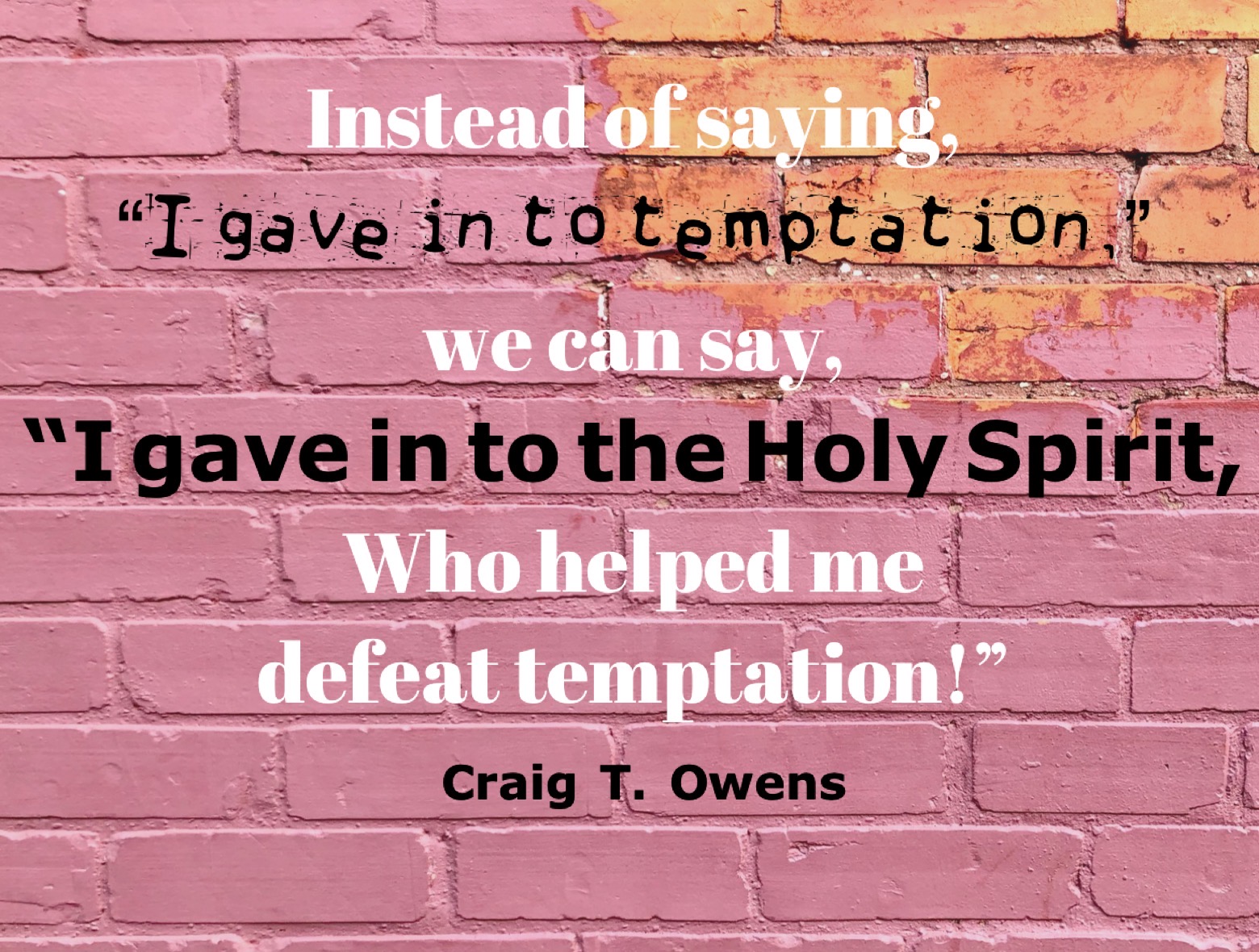
We can do the same thing. Instead of saying, “I gave in to temptation,” we can say, “I gave in to the Holy Spirit, Who helped me defeat temptation!”
Have you ever been depressed? I have. I know all too well how depression robbed me of sleep, sapped joy from my day, kept me from smiling and on the verge of tears all the time, made sunny days seem cloudy, caused me to sigh all the time and lose interest in the things that used to bring me pleasure, and brought such a sense of loneliness and isolation.
Did you know that Jesus felt the crushing load of depression too? As He was praying in the Garden of Gethsemane just before His arrest, listen to these words—
He began to be sorrowful and troubled
He became anguished and distressed
He began to show grief and distress of mind and was deeply depressed
He said to them, “My soul is overwhelmed with sorrow to the point of death”
He prayed more fervently, and He was in such agony of spirit that His sweat fell to the ground like great drops of blood
“Abba, Father,” He cried out, “everything is possible for You. Please take this cup of suffering away from Me. Yet I want Your will to be done, not Mine.” (see Matthew 26:37-38; Mark 14:36; Luke 22:44)
The writer of Hebrews wrote this about Jesus—
While Jesus was here on earth, He offered prayers and pleadings, with a loud cry and tears, to the One who could rescue Him from death. And God heard His prayers because of His deep reverence for God. Even though Jesus was God’s Son, He learned obedience from the things He suffered. In this way, God qualified Him as a perfect High Priest, and He became the source of eternal salvation for all those who obey Him. (Hebrews 5:7-9)
Our part is to pray. Time and time and time again, not only did Jesus pray, but He encouraged His disciples to pray as well. As you continue to pray, Jesus is your High Priest praying for you. Only He truly knows how to translate the cry of your heart into a language Abba Father can understand.
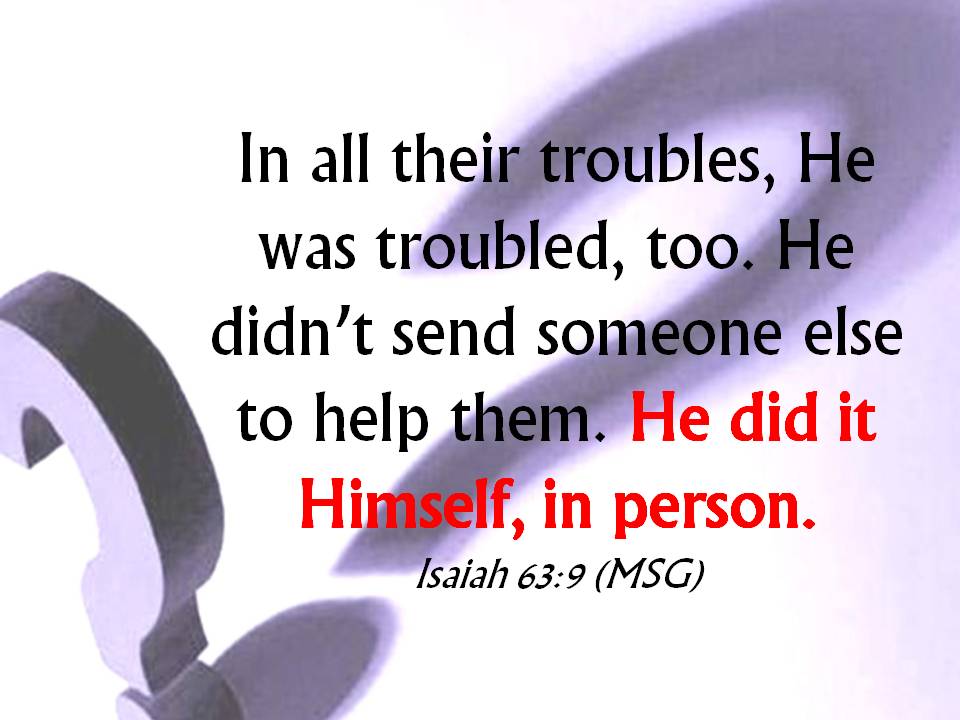
In all their troubles, He was troubled, too. He didn’t send someone else to help them. He did it Himself, in person. (Isaiah 63:9)
Listen to the podcast of this post by clicking on the player below, and you can also subscribe on Apple, Spotify, or Audible.
As a pastor, one of your responsibilities is to point out what may be harmful in someone’s life. We have a word for that: confrontation.
Handled correctly, confrontation can lead to restoration and newfound maturity. Handled incorrectly, and, well, let’s just say it can get very ugly!
I just heard the story of a pastor who felt like he needed to confront one of his board members. I don’t really know this pastor, nor do I know the board member; I don’t know what was said in their meeting, but I have heard about the outcome, and it got ugly.
Samuel was going to be sent by God to confront King Saul about the sin he had committed. Look at this passage:
Then the word of the Lord came to Samuel: “I am grieved that I have made Saul king, because he has turned away from Me and has not carried out My instructions.” Samuel was troubled, and he cried out to the Lord all that night. (1 Samuel 15:10-11)
Did you catch how Samuel responded? He cried out to the Lord all that night.
Perhaps if we, as pastors, cried before we confronted the results might be more healthy.
“Tears shed for self are tears of weakness, but tears shed for others are a sign of strength.” —Billy Graham
Nehemiah was another pastoral/prophetic figure that was going to confront the inhabitants of Jerusalem about their sin.
When I heard these things, I sat down and wept. For some days I mourned and fasted and prayed before the God of heaven. Then I said: …I confess the sins we Israelites, including myself and my father’s house, have committed against You. (Nehemiah 1:4-6)
Before Nehemiah confronted the sins of the people, he tearfully took a hard look at himself, and then asked for forgiveness. Jesus shared this same concept with these words:
Why do you look at the speck of sawdust in your brother’s eye and pay no attention to the plank in your own eye? How can you say to your brother, “Let me take the speck out of your eye,” when all the time there is a plank in your own eye? You hypocrite, first take the plank out of your own eye, and then you will see clearly to remove the speck from your brother’s eye. (Matthew 7:3-5)
So before you confront your brother or sister, let the Holy Spirit confront you. Then, if it’s needed, confess your sin and ask God’s forgiveness. Let the Holy Spirit remove things in your life so that you can see clearly how to lovingly confront your brother.
Cry before you confront. Cry over your sin. Cry over the sinful state of your brother or sister. Plead with the Lord for this time of confrontation to lead to restoration and maturity.
This is a weekly series with things I’m reading and pondering from Oswald Chambers. You can read the original seed thought here, or type “Thursdays With Oswald” in the search box to read more entries.
Not Self-Conscious, But God-Conscious
When I am lifted by the Atonement into oneness with God I do not lose my personal identity, my identity becomes that of conscious union with God. Man’s relationship with God in the beginning was such that the consciousness of union with Him was a delight: as soon as sin entered that went and man became self-conscious: he realized he was no longer in union with God and tried to hide himself from His presence.
For to me, to live is Christ… I have been crucified with Christ and I no longer live, but Christ lives in me. The life I live in the body, I live by faith in the Son of God, Who loved me and gave Himself for me. (Philippians 1:21; Galatians 2:20)
A great way to remember the meaning of the word Atonement is like this: At one-ment. Jesus paid the price for me to be at one-ment with the Father. He did not die so I could become more aware of myself, but so I could become more aware of God.
Christ’s Atonement makes me dead to me, and alive to Him; dead to trying to figure out myself, and alive to learn more of Him; dead to self-consciousness, and alive to God-consciousness.
And I would much rather be more aware of Him than I am of me!
Listen to the podcast of this post by clicking on the player below, and you can also subscribe on Apple, Spotify, or Audible.
Let me set the stage. Jesus is explaining to some of His new followers about finding their identity in God, not in a man. He says to them,
If You hold to My teaching, you are really My disciples. Then you will know the truth, and the truth will set you free. (John 8:31-32)
Notice the order of the if-then: If you hold to my teaching, then you will know the truth.
You see, later on in this discussion Jesus says, “Do you want to know why you can’t hear what I am saying? It’s because you are not listening with an ear to obey” (see vv. 43-47).
In other words, their tendency—and ours too—is to say, “If I hear truth from You, then I will obey.”
Instead, my attitude should be, “I will obey. No matter what You say to me, I will do it. Even if it sounds uncomfortable, I will do whatever You tell me.”
If you HOLD to my teaching, then you will KNOW the truth.
God will not speak a word I can hear and understand UNLESS I am committed to obeying every word He speaks. My attitude of obedience must come before His truth will be revealed. Let’s not get this mixed up with, “If You speak the truth, then I will obey.”
In yesterday’s “Where’s God?” series, I looked at the very difficult question: Where’s God in my sickness?
The word disease has an interesting origin. In the Old French the word literally means without ease. So we could call any disease our place of dis-ease. Whether it’s in the physical, the emotional, or the spiritual part of us, we have all experienced times of dis-ease.
God did not create disease. He did not create sickness. He did not create sin. We did. When we push our physical bodies too far, when we exploit our natural resources, when we rebel against God’s design, we are opening ourselves up to dis-ease. When we experience the painful results of this, God would be perfectly justified in standing aloof from our situation.
But this is the absolute miracle of the Incarnation—
Jesus choose to step into our pain!
He choose to personally experience our dis-ease!
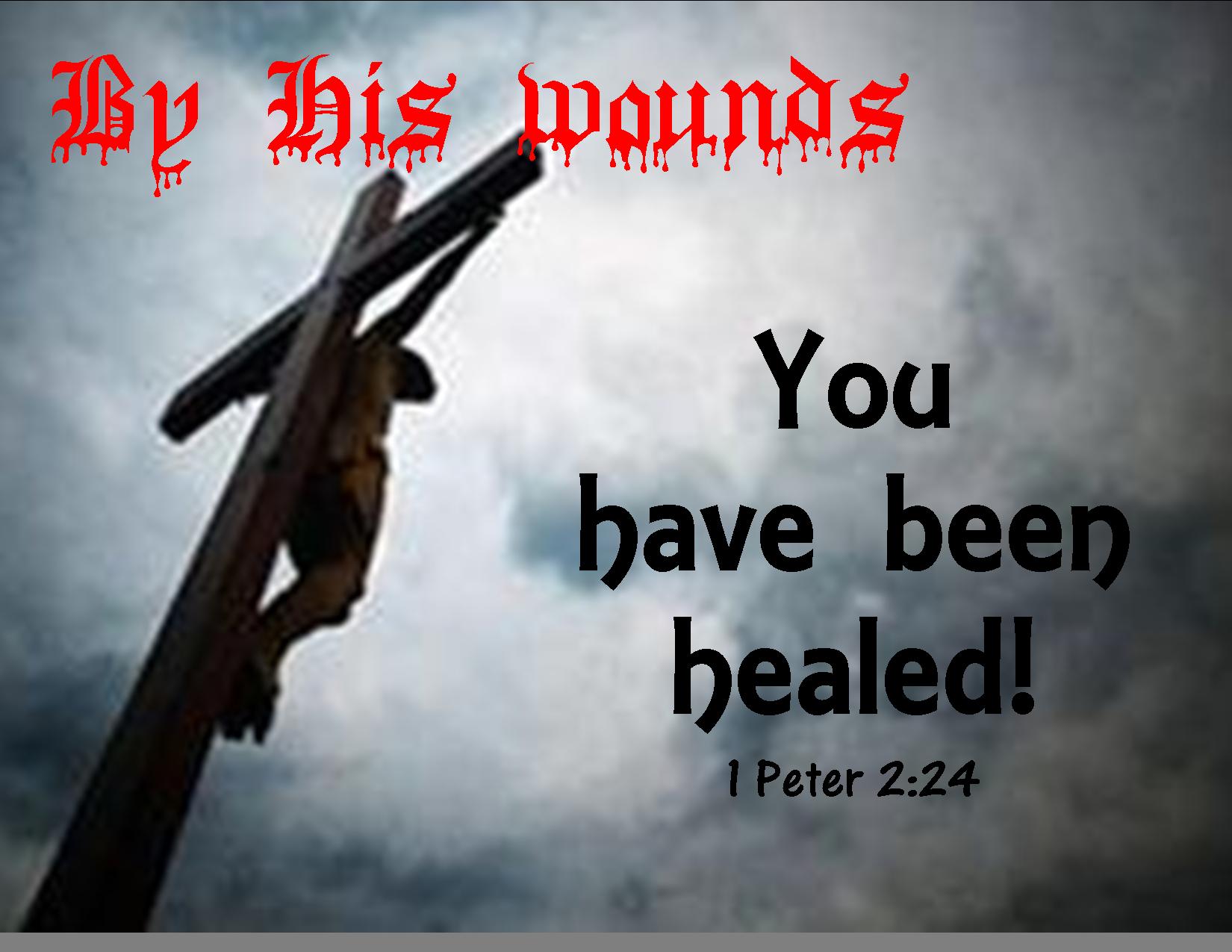
But the fact is, it was our pains He carried—our disfigurements, all the things wrong with us. We thought He brought it on Himself, that God was punishing Him for His own failures. But it was our sins that did that to Him, that ripped and tore and crushed Him—our sins! He took the punishment, and that made us whole. (Isaiah 53:4-5, The Message)



 Easter is over. Some people may have come to a church yesterday and may have even stepped into a relationship with the Risen Savior Jesus Christ. Wow, what a day!






 Craig T. Owens