[1:52] Does your empowerment show people you trust them?
[4:00] Craig tells a story about how the best mentors hold up a mirror.
[6:15] Do you believe you’re in-power, or do you empower?
[7:28] The guys talk about Patrick Lencioni’s leadership books.
[8:23] What is a habit that holds back a leader from empowering?
[10:27] Is your leadership trustworthy?
[12:10] Insecurity kills empowerment
[12:51] Getting Naked!!
[14:15] Are you admitting your mistakes first?
[14:50] Are you self-aware about what’s holding you back from empowering others?
[16:34] What is the difference between delegation and empowerment?
[17:45] Craig and Greg challenge leaders on examining their empowerment of others.
Check out this episode and subscribe on YouTube so you can watch all of the upcoming episodes. You can also listen to our podcast on Spotify and Apple.
Listen to the podcast of this post by clicking on the player below, and you can also subscribe on Apple, Spotify, or Audible.
My friend Greg Heeres and I have been through so many things over the past 30 years. For the past couple of years, we have been presenting a leadership podcast called The Craig And Greg Show. Recently, Greg wanted to talk with me about the success of my book Shepherd Leadership: The Metrics That Really Matter, and to get an update on how the book has been received by others.
I am so grateful that my book was listed on Amazon as a #1 new release. Shepherd Leadership: The Metrics That Really Matter is available in print or ebook, and in audiobook through either Audible or Apple.
Listen to the podcast of this post by clicking on the player below, and you can also subscribe on Apple, Spotify, or Audible.
Peter Drucker noted, “It wasn’t until the twentieth-century that we pluralized the word priority. For most of its history, the word has been singular.”
If we have too many priorities, we can frequently find them in conflict with each other. This forces us to make an extremely difficult decision: Which priority has a higher priority?!
Ultimately, whatever business or industry or profession we are in, we are in the people business. All of our efforts fail without good investment in people. So our overriding priority must be on the people God has placed around us.
“The human brain is simply not designed to multitask. You can get by doing multiple things at once, but you can’t do them well. Your brain is physically unable to process more than one set of instructions at a time, so while you are juggling all of those actions at once, your brain is scrambling to keep up. Through a variety of experiments measuring brain activity, scientists have discovered that the constant switching back and forth from one activity to another energizes regions of the brain that specialize in visual processing and physical coordination, while simultaneously disrupting the brain regions related to memory and learning. According to the research, ‘We are using our mental energy to concentrate on concentrating at the expense of whatever it is that we’re supposed to be concentrating on.’ Got that?
“More simply: when we multitask we’re dumber. How much dumber? A recent study for Hewlett Packard exploring the impact of multitasking on performance revealed that the average worker’s functioning IQ drops ten points when multitasking…. (The analogy the researchers used is that a ten-point drop in IQ is equivalent to missing one night of sleep.)” —Marcus Buckingham
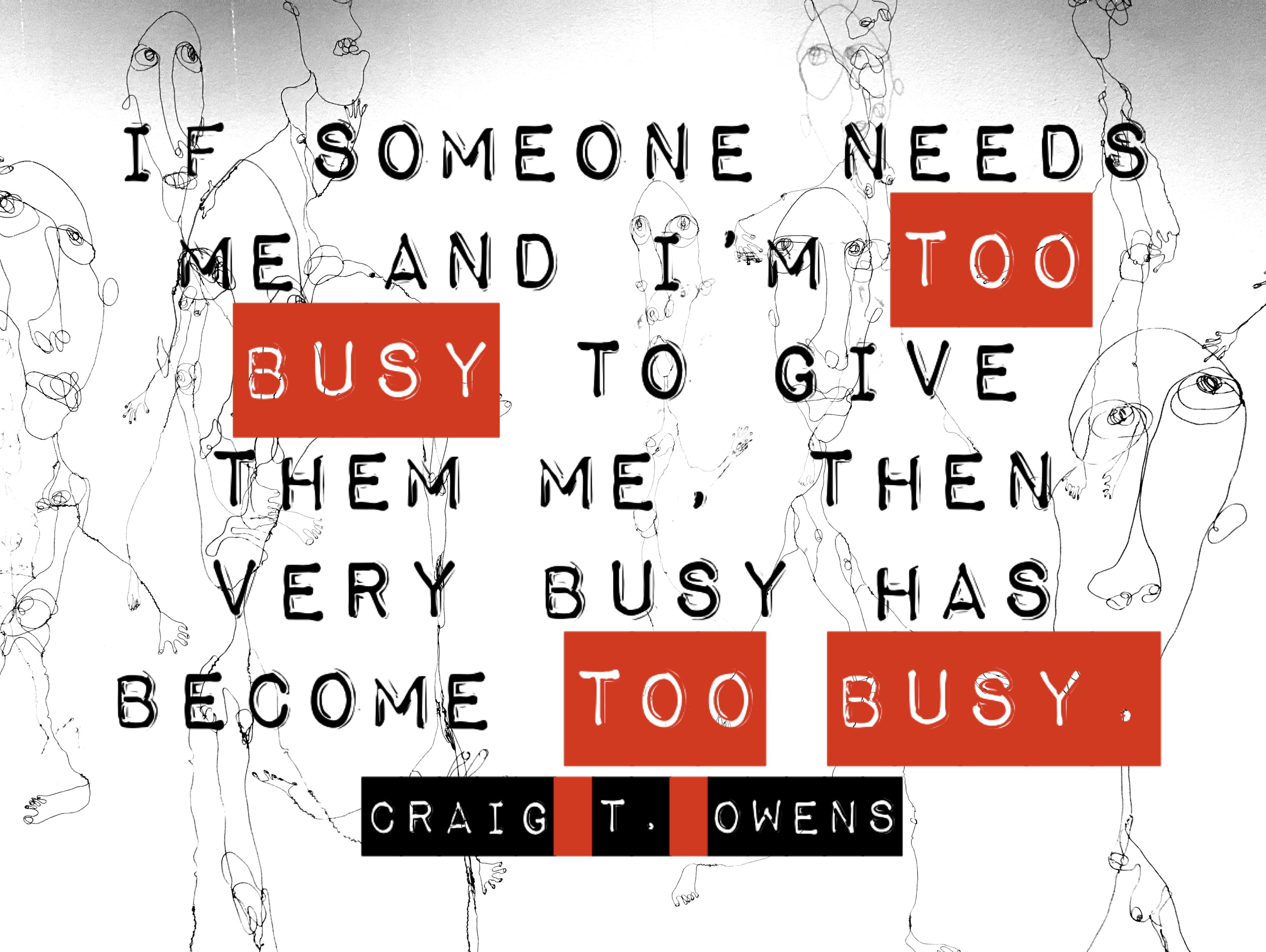
The biggest victim of attempting to multitask is your relationships. Those closest to you suffer the most. If someone needs me and I’m too busy to give them me, then very busy has become too busy and it’s time for me to evaluate who—not what—is my highest priority.
Check out this episode and subscribe on YouTube so you can watch all of the upcoming episodes. You can also listen to our podcast on Spotify and Apple.
Listen to the podcast of this post by clicking on the player below, and you can also subscribe on Apple, Spotify, or Audible.
Why is it that so many people have a worst-case mindset as their guiding factor?
As a leader responsible for programs, and large groups of people, and the financial well-being of organizations, I know that I frequently fell into this trap. When we began making plans for the future, I wanted to keep a “fallback plan” in place. I frequently found myself saying to our leadership team, “Even in the worst case scenario we can….”
But then I realized how much vitality this was sapping from our team.
If we as leaders want to infuse more energy and excitement in our teams it may take some paradigm shifts on our part. Here are three shifts that I have endeavored to implement in my life:
Shift scarcity to abundance.
Shift fear to hope.
Shift worst-case to best-case.
On a recent episode of our leadership podcast, my friend Greg Heeres and I discussed the limitations that come as a result of a leader’s limiting fears.
As a Christian, I believe the greatest Helper in these three paradigm shifts is the Holy Spirit. When I take time to pray about the big decisions for my personal life and for the organizations I lead, I find that His guidance helps me tap into God’s abundance, which gives me hope for the best-case scenarios to be realized. This hope in me quickly translates to hope and expectation in my team.
Leaders, start with prayer and then try these three paradigm shifts. As the Holy Spirit transforms your heart and mind, I believe you will begin to see a greater energy and excitement in the organizations that you lead.
Let’s stop asking, “What’s the worst thing that could happen?” and shift to asking, “What’s the best thing that could happen?”
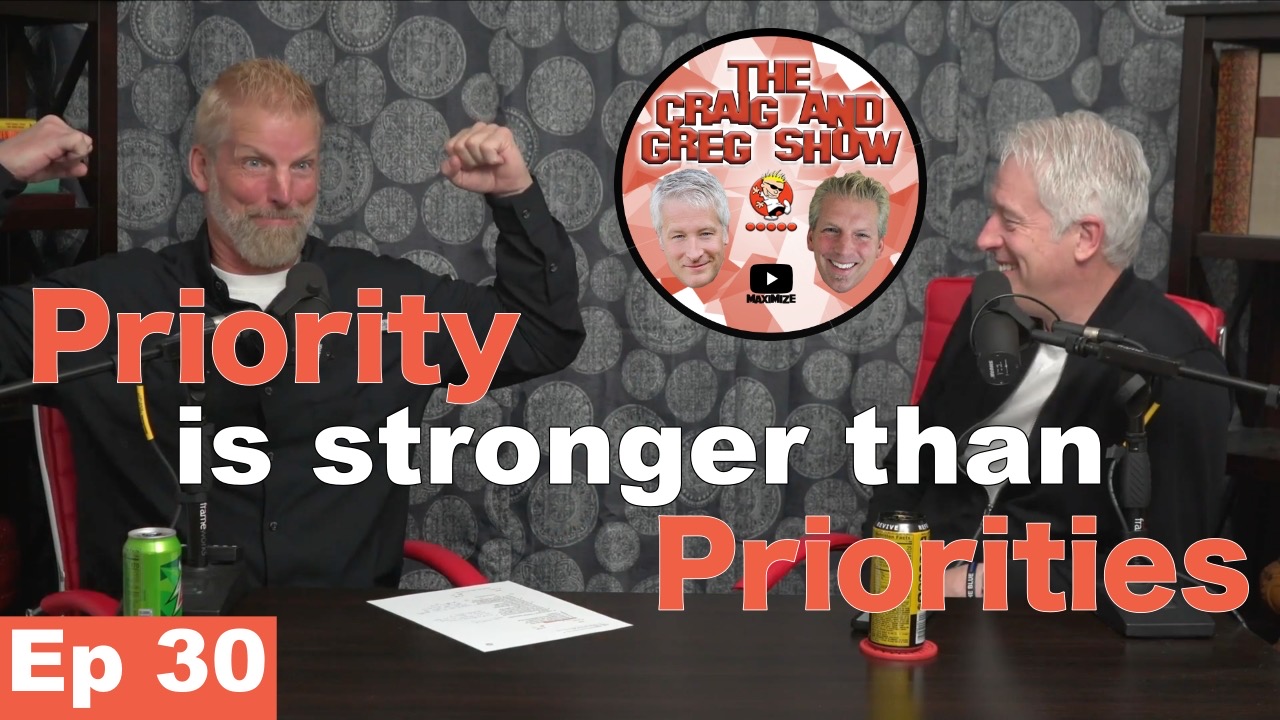
[12:42] How can leaders use the priority vs. priorities paradigm to create margin in their life?
[14:36] We throw out the “Not-To-Do List Challenge” for leaders.
Check out this episode and subscribe on YouTube so you can watch all of the upcoming episodes. You can also listen to our podcast on Spotify and Apple.
“While grief is expressed in words, its resolution is in God and the hope He gives for the future. In a way, the lamentation process is one of coming to grips with all that God wants us to see about our present circumstances.” —Dr. Henry Halley
My friend Greg Heeres and I have a brand new episode in our leadership podcast called The Craig And Greg Show. This discussion is all about setting good priorities.
On a recent episode of our leadership podcast, Greg Heeres and I were discussing how easy it is for people to slip into a complaining attitude. One of the things I point out is that if we ask for compliments instead of complaints, we can begin to change the culture of our organization.
[18:30] Legacy is determined by what our family says about us
[19:56] How leaders can set family leadership goals for the New Year
Check out this episode and subscribe on YouTube so you can watch all of the upcoming episodes. You can also listen to our podcast on Spotify and Apple.
Listen to the podcast of this post by clicking on the player below, and you can also subscribe on Apple, Spotify, or Audible.
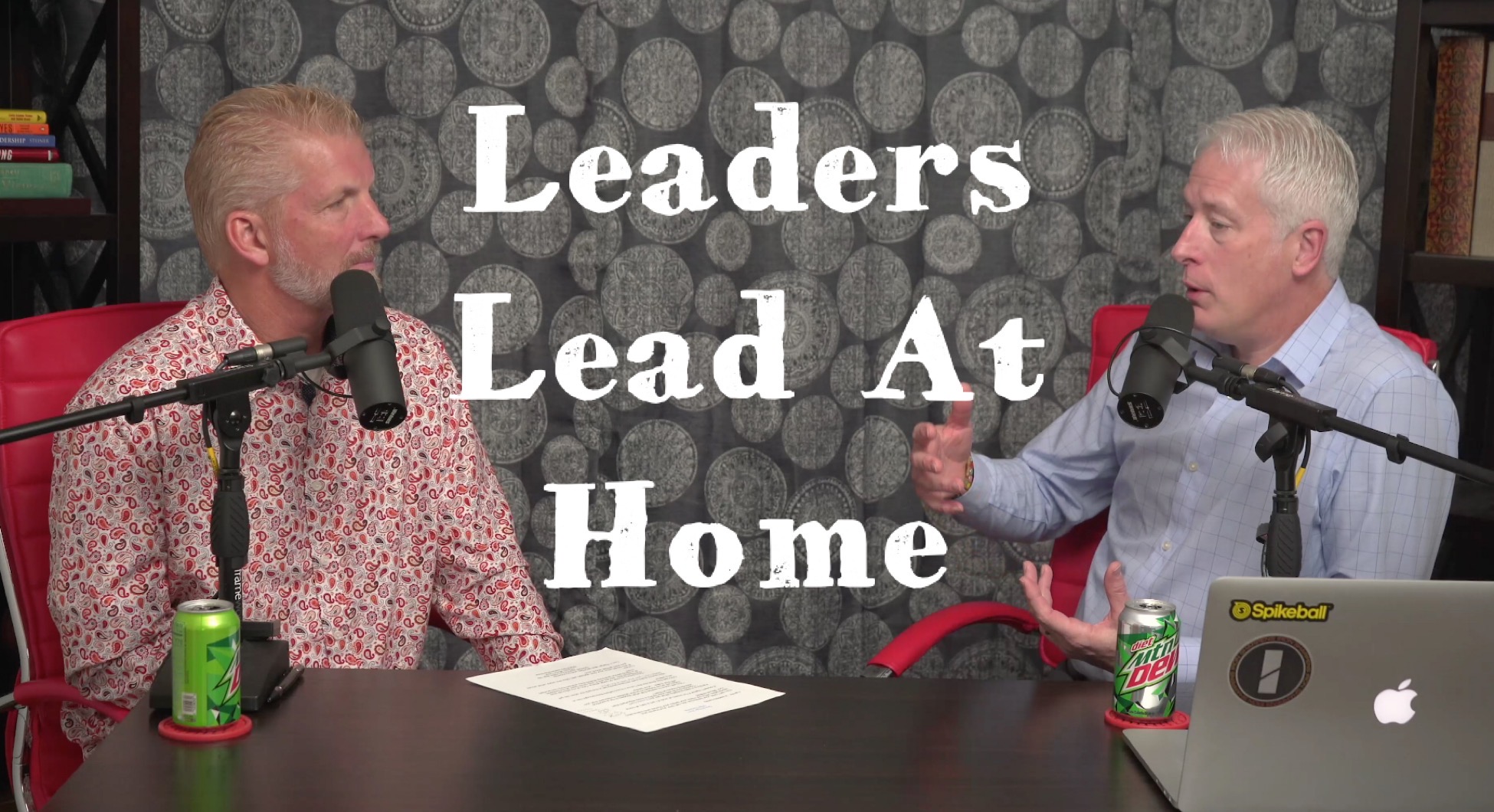
On a recent episode of The Craig And Greg Show, Greg and I discussed the vitally important role of leading in our families.
Most parents know they should do this, but one of the things that gets in the way is trying to determine just how “success” should be defined in a family setting.
Greg and I talk about the distractions to meaningful interactions with our spouse and kids, and I share a story about how I helped my church board understand this concept so that they could support me in this.
The bottom line: Someone else can do our jobs, but we are the only ones who can be the godly spouse for our husband or wife, and the godly parent for kids. Let’s make sure this is always our priority!
If you would like to watch this full episode of The Craig And Greg Show, please click here. And if you would like to know more about my book which I mentioned in this podcast, please click here.



 On this episode of “The Craig And Greg Show” we talk about: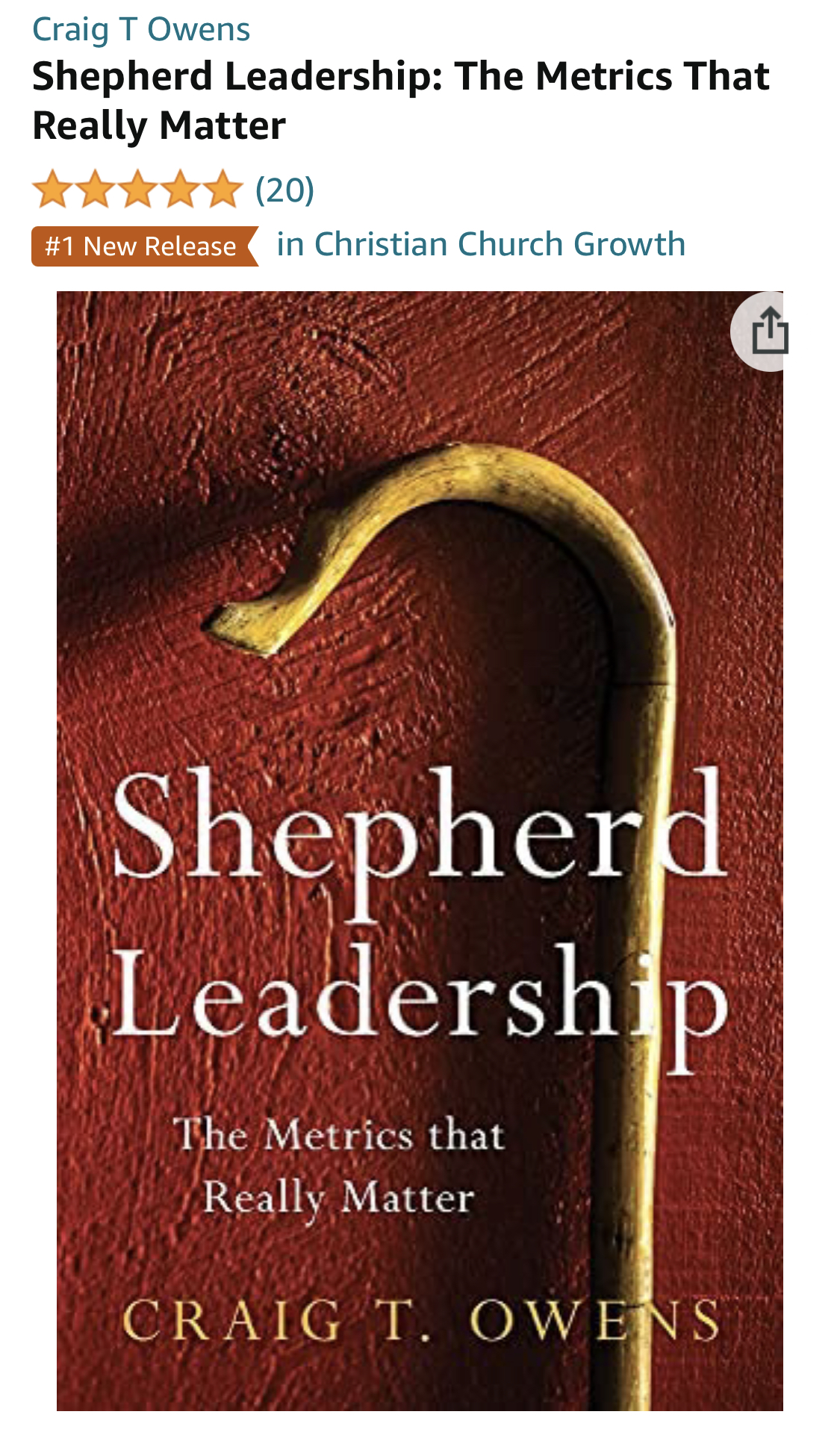







 Craig T. Owens