Perfect Tactics

Listen to the podcast of this post by clicking on the player below, and you can also subscribe on AppleSpotify, or Audible. 

In the mid-1930s, a German who fought in World War I as a lieutenant colonel published his book Infantry Attacks. This book recounted his heroic and innovative tactics that earned him battlefield success throughout that war. As World War II loomed, the popularity of this officer and his book compelled Adolf Hitler to appoint him field commander, even though he didn’t come from the prestigious family lines that were typical of other German officers. 

This field commander began adapting the tactics he had used with his infantry in WWI to the tanks that were now under his command in WWII. His success was so swift and noteworthy in northern Africa that he quickly earned the nickname “the Desert Fox.” This is Edwin Rommel. 

In Infantry Attacks, Rommel describes how his shock troops used speed, deception, and deep penetration into enemy territory to surprise and overwhelm. He used innovative tactics like assigning a small team of men to approach enemy lines from the direction in which his enemy expected the attack, which was really just concealing the bulk of his troops who were sneaking to the flanks and rears of the defenders to take them by surprise. These tactics usually intimidated his enemies into surrendering, which helped him avoid unnecessary risks to his supply lines and soldiers. 

But were these tactics truly innovative? If we look back in history we will discover a masterful tactician that used these maneuvers with his troops 3000 years before Rommel did! 

Joshua was the renown field commander of the Israelite army as they moved into the Promised Land. See if some of his tactics sound similar to those Rommel employed. 

  • A fake frontal assault to distract the enemy from the concealed special forces—Joshua 8:1-7, 18-19 
  • An early-morning surprise attack after an all-night march—10:7-10 
  • A divide-and-conquer campaign: the southern campaign was a relentless push (10:29-38, 41-42); the northern campaign relied on a surprise attack (11:1-9) 

(Check out all of the Scriptures in this post by clicking here.) 

Joshua knew God’s voice (Exodus 33:11) and we see it in his tactics. Notice how many times we read about Joshua hearing God’s voice (8:1, 18; 10:8, 10, 42; 11:6, 8). In fact, “The Lord said” appears 15 times in the Book of Joshua! 

The only time Joshua experienced any casualties at all was when he attacked the little town of Ai after their major victory at Jericho without getting God’s tactics first (7:1-12). In this case, Joshua made his tactics based on what “they said.” 

Presumption is so dangerous! We should never think, “This is how God did it last time, so I’ll just copy-and-paste that same prayer and that same tactic in this situation.” After the Israelites repented of their sin, God did give them the precise tactics to defeat Ai, which is what we already saw in Joshua 8. 

The next update we read about Joshua’s troops is, “The whole army then returned safely to Joshua in the camp at Makkedah” (Joshua 10:21). That isn’t miraculous, but it is the expected outcome because all of Joshua’s tactics were from God Himself.

The United States had a general who matched wits with Rommel in WWII. General George Patton wrote this in his diary, “In forty hours I shall be in battle, with little information, and on the spur of the moment will have to make the most momentous decisions. But I believe that one’s spirit enlarges with responsibility and that, with God’s help, I shall make them, and make them right.” 

General Patton was half-right: God will give directions, but we don’t have to wait until we’re in the heat of the battle; God can give us perfect tactics before the battle begins. 

This reminds me of what God said through the prophet—“Whether you turn to the right or to the left, your ears will hear a Voice behind you, saying, ‘This is the way; walk in it’” (Isaiah 30:21). This is foretelling what Jesus said the Holy Spirit would do for us (John 14:26, 16:13). God’s Voice must be the one and only Source of guidance in our spiritual warfare. 

Remember what God told Joshua in Joshua 1:7-8 that he should read and meditate on God’s word at every moment. The writer of Hebrews addresses the same idea about God’s Voice that is heard through His Word, and how this is to be our weapon and Source of strategy as well (Hebrews 4:1-12). 

The perfect tactic for every situation, every conversation, every attack, every opportunity is found in the inspired Word of God. Never presume you know what to do, but let the Holy Spirit illuminate the perfect tactic to you for each unique situation. 

If you have missed any of the messages in our series called The Lord’s Army, please click here. 

►► Would you please prayerfully consider supporting this ministry? My Patreon supporters get behind-the-scenes access to exclusive materials. ◀︎◀︎

Book Reviews From 2020

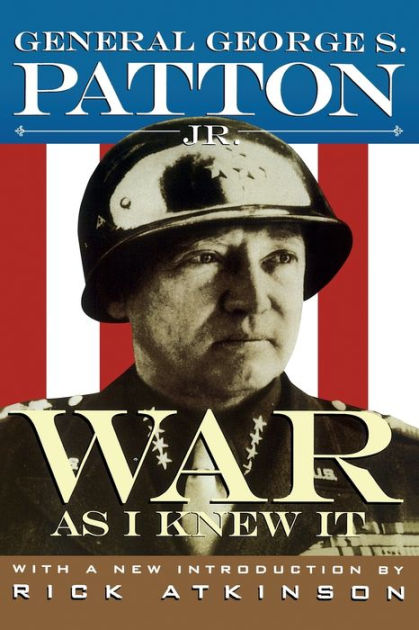
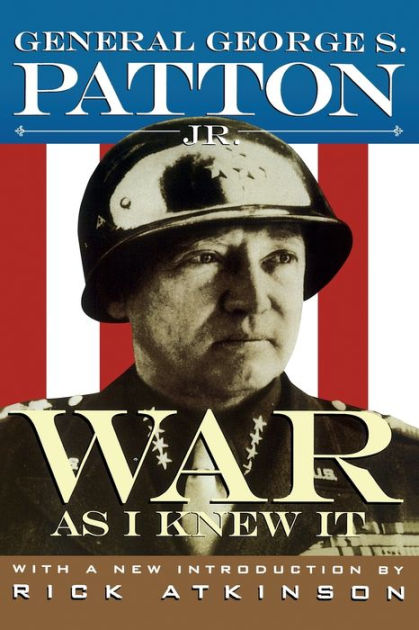
9 Quotes From “War As I Knew It”

General George Patton gives us an insightful leadership look into how his army was able to accomplish so much during such a short time in World War II. Check out my full book review by clicking here. 

“An ounce of sweat saves a gallon of blood.” 

“This is another example of the many I’ve encountered in life where great disappointments have proven to be the road to future success.” 

“Successful generals make plans to fit the circumstances, but do not try to create circumstances to fit plans.” 

“The 8th of May, 1945, marked exactly two-and-a-half years since we had landed in Africa. During all that time we had been in practically continuous battle, and when not in battle had been under the strain of continuous criticism, which I believe is harder to bear.” 

“It is unfortunate and to me a tragic fact, that in our attempts to prevent war we have taught our people to belittle the heroic qualities of the solider.” 

“Wars are not won by defensive tactics. … The best armor and the best defense is a rapid and well-directed fire.” 

“An army commander does what is necessary to accomplish his mission, and that nearly eighty percent of his mission is to arouse morale in his men.” 

“Don’t delay. The best is the enemy of the good. By this, I mean that a good plan violently executed now is better than a perfect plan next week.” 

“Fatigue breeds pessimism.”

War As I Knew It (book review)

Throughout my life, I’ve had the privilege of meeting World War II soldiers who fought in the Third Army in Europe. I’ve said to them, “Oh, so you were Patton’s man.” And the response is always the same, “Yes sir!” they proudly respond with a smile. General George Patton was a unique military leader, and his memoirs called War As I Knew It capture his uniqueness. 

George Patton lived as if he were always in pursuit of something big. He always pushed himself, those under his command, and even those in leadership over him, to keep moving forward. His memoirs cover the final 2+ years of World War II, from the time he landed his troops in Africa until Germany surrendered. 

Patton’s Third Army was an unstoppable force! They covered more ground, took more territory, captured or killed more enemy combatants, liberated more cities, and destroyed more enemy material than any other army in US history! This was because of Patton’s drive, and because of his strenuous personal preparation before the war even started. 

These memoirs record Patton’s successes, but he also is transparent enough to list where he miscalculated and where he was simply a beneficiary of good fortune. 

For students of leadership, US history, or military history, War As I Knew It is a very insightful book. 

Holocaust Remembrance Week

Reagan quote at Holocaust MuseumOne of the more sobering times of my week in Washington, D.C., was the afternoon we spent at the Holocaust Museum. The dehumanizing atrocities perpetrated by one group of people on another group of people is almost unimaginable.

And yet there it was—all the nauseating evidence of man’s evil right before my eyes. It was so overwhelming that I had to hurry past the final exhibits.

Commander of the Allied Forces Dwight Eisenhower wrote to George C. Marshall, the chairman of the U.S. Joint Chief Of Staff—

“…the most interesting—although horrible—sight that I encountered during the trip was a visit to a German internment camp near Gotha. The things I saw beggar description. While I was touring the camp I encountered three men who had been inmates and by one ruse or another had made their escape. I interviewed them through an interpreter. The visual evidence and the verbal testimony of starvation, cruelty and bestiality were so overpowering as to leave me a bit sick. In one room, where they were piled up twenty or thirty naked men, killed by starvation, George Patton would not even enter. He said that he would get sick if he did so. I made the visit deliberately, in order to be in a position to give first-hand evidence of these things if ever, in the future, there develops a tendency to charge these allegations merely to ‘propaganda.’” (emphasis added)

A statement from President Ronald Reagan, from 1988, is etched on the wall of the Holocaust Museum—

“We who did not go their way owe them this: We must make sure that their deaths have posthumous meaning. We must make sure that from now until the end of days all humankind stares this evil in the face … and only then can we be sure that it will never arise again.” (emphasis added)

The rise to power of the Nazis was swift. Their evil was initially unopposed. Few voices spoke out, and even few were heeded. We must never allow this to happen again!

As George Santayana said, “Those who do not learn from history are doomed to repeat it.” As revolting as it is, we must learn from this lesson. You must look this evil in the face. You must allow your children to look this evil in the face. If we don’t, we will be doomed to live through these unthinkable atrocities all over again.

Patton: The Pursuit Of Destiny (book review)

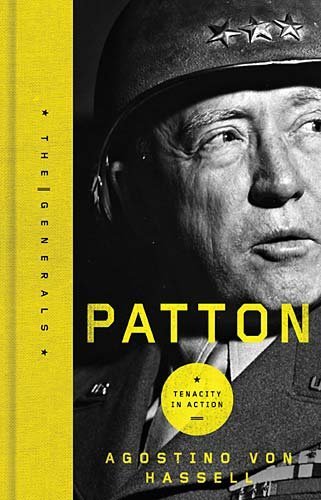
Disclaimer: I am a huge admirer of General George Smith Patton, Jr. So it should come as no surprise that I thoroughly enjoyed Agostino Von Hassell and Ed Breslin’s biography Patton: The Pursuit Of Destiny.

It’s also no surprise that I relished reading about Patton’s military genius and his relentless preparation to be a man of destiny. What did surprise me was the candor with which the authors dealt with the shortcomings of Patton. For all of his military genius, there were areas of his life that always seemed to get the best of this general. On the battlefield, he had few equals, but away from the heat of battle, his insecurities could get the best of him. I appreciated how the authors showed Patton playing to his strengths while still struggling with his weaknesses. While many biographies show great men and women overcoming their struggles, Patton shows the general living with his struggles and still achieving greatness in spite of them.

I also learned more about Patton’s family lineage in this book that helped me understand what drove this military hero. I read about a man who was a voracious learner, highly competitive, and a man who set extraordinarily high standards for himself. His biggest weakness: he couldn’t abide those who didn’t share these same lofty goals for their own lives or profession.

If you enjoy military history, a study of a larger-than-life leadership persona, or a biography with an unflinching look at a great man’s angels and demons, you will enjoy reading Patton: The Pursuit Of Destiny.

I am a Thomas Nelson book reviewer.

Goals & Strategies

I’m in the midst of a fascinating biography about General George S. Patton. As I wrote yesterday, I love borrowing the brains of other great men and women and adding some of their finer attributes to my life.

Years after Patton had died, his son donated his father’s books to the West Point Military Academy. It was then that a notation in Patton’s own hand was discovered on the last page of his Elements Of Strategy textbook. He wrote: “End of last lesson in Engineering. Last lesson as a Cadet, thank God.” But then on the back cover, he had also written—

Qualities of a Great General

1.  Tactically aggressive (loves a fight)

2.  Strength of character

3.  Steadiness of purpose

4.  Acceptance of responsibility

5.  Energy

6.  Good health and strength

George Patton

Cadet

April 29, 1909

Here’s what I love: he wrote these down years before he was ever given the command of anything! He put his goals and strategies in writing and dedicated himself wholeheartedly to achieving them. And achieve he did!

Years ago I took some time to write down a similar challenge for myself. Reading this about Patton reminded me that I haven’t reviewed my list in a while, and it was high time for me to reacquaint myself with those goals and strategies.

What about you?

Do you know where you want to go?

Do you know what it will take to get there?

Have you written down those goals and strategies?