Taunting

Coaches and parents especially don’t encourage those under their care to taunt their opponents. But the Bible does!

Seriously!

As a part of our P119 Spiritual Workout series, we looked at the section called Waw yesterday—

May Your unfailing love come to me, O Lord, Your salvation according to Your promise; then I will answer the one who taunts me, for I trust in Your Word. (Psalm 119:41-42)

“I will answer the one who taunts me.” How exactly do you answer the taunter? The word for answer here in Hebrew comes from the idea of “singing tunefully.”

You know how it feels when you have that perfect zinger—that great one-liner as a comeback to someone who’s tweaked you?

And you know how you don’t just say that zinger, but you add a musical note to it as well, just to add a little emphasis?

Well, this is what Christians can do to the devil when he taunts them! The book of Revelation tells us that satan is the accuser (the taunter) of the Christians, and that we overcome him by the blood of Jesus and the word of our testimony. But the psalmist says it’s not just plain old words, but the lilting sing-song, tuneful reply to his taunt.

We reply to our enemy’s taunts with a Scriptural-based tweak of our own. We can remind him of our total forgiveness in Christ. We can tell him how God loves us, and sent His Son to die for our sins, and how the Holy Spirit has been given to us as a deposit guaranteeing that we are now in Christ. We can use the Bible to tunefully taunt the taunter with the truth of God’s Word.

Don’t just silently take it when the enemy accuses you. Don’t get mad. But shut him up by answering him with a song right from God’s Word!

If you have missed any of the messages in our P119 series, you can access them all by clicking here.
God’s Truth, Not Your Comfort

Some time ago I was asked to speak in a church setting outside of my church. The audience was a blend of people from all different church backgrounds, and perhaps even some without any church background. I talked about the hopelessness of trying to pay-off our sin debt on our own, and the amazing love that Jesus showed when He paid our debt in full.

After the service, a couple of pastors in the audience wanted to speak with me about my message. They were moved by what they called “the impact” of the message, and especially about the way I called sin “sin.” As I spoke with them further, I discovered that they were somewhat hesitant to speak so openly and plainly about sin, because it unsettled some people in their congregations.

But here is the sober reality—

The Word of God IS unsettling because we cannot read it or hear it and remain unchanged.

Our job as pastors or preachers is to speak the Word. When we do, the Holy Spirit will bring the necessary conviction and pull hearts toward repentance. Here’s what Oswald Chambers wrote about this:

“When we preach, we are not simply proclaiming how people can be saved from Hell and be made moral and pure; we are conveying good news about God.

“In the teachings of Jesus Christ the element of judgment is always brought out—it is the sign of the love of God. Never sympathize with someone who finds it difficult to get to God; God is not to blame. It is not for us to figure out the reason for the difficulty, but only to present the truth of God so that the Spirit of God will reveal what is wrong. The greatest test of the quality of our preaching is whether or not it brings everyone to judgment. When the truth is preached, the Spirit of God brings each person face to face with God Himself.”

Pastor, just speak the truth. You’re not trying to win a popularity contest, but to share with people how to step into a deeper relationship with God Almighty!

One final thought from Chambers: “Never water down the truth of God. Let it have its way and never apologize for it.

Be The People (book review)

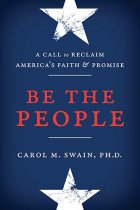
If Carol M. Swain’s book, Be The People, sounds like the opening words of the Constitution of the United States of America, it was fully intended that way.

Be The People is a clarion call for American citizens to return to our roots. And Dr. Swain makes no attempt to hide the fact that our country’s roots are firmly grounded in biblical truth. The first section of the book is three chapters long and is called “Broken Vows: Forsaking What We Once Knew.” In language that is sometimes scholarly, sometimes biblical, but always straightforward, Dr. Swain systematically lays out where we’ve come from, and how we’ve abandoned God’s ways to get to this point in our country’s history.

The second section — which makes up the remainder of the chapters — lays out what we can do to reclaim our Judeo-Christian heritage. Leaving nothing to the imagination, Dr. Swain lists several action points at the end of each chapter. She also includes the Ten Commandments, the Declaration of Independence, the Bill of Rights, and the Constitution at the back of the book. There are no excuses for her readers not to be fully informed of the stark divide between our Founding Fathers’ original intent, and the beliefs and practices of those currently in political power.

Parts of this book surprised me; parts disgusted me; still other parts gave me a greater appreciation for our heritage. But the entirety of this book called me to action. After reading Be The People I feel more prepared to defend what I believe about our great country, and more motivated to get involved.

If you are upset with the current highly-politicized, Scripture-eschewing, heritage-denying atmosphere among the current office-holders in the USA, Be The People is just the book for you.

I am a Thomas Nelson book reviewer.

Doing Virtuous Business (book review)

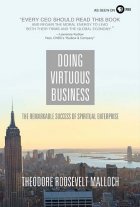
The quote on the front cover of Doing Virtuous Business by Theodore Roosevelt Malloch says it well: “Every CEO should read this book.” I agree!

It seems that our mainstream media has become more and more anti-capitalism and anti-private business. It seems a small — but very vocal — group would prefer that our government oversee every business enterprise. According to Theodore Malloch, nothing could be farther from the biblical way of thinking about business.

By using both real-time examples of virtuous businesses and the wisdom of Scripture, Mr. Malloch makes the strong case that businesses operating on biblical virtues become spiritual enterprises that can benefit all of society. As a former business owner myself, I couldn’t agree more.

A few quotes from the book to whet your appetite—

By creating wealth, we use God’s gifts responsibly, and provided that we work toward that goal in a spirit of humility and gratitude, we benefit all those with whom we deal long the way.

When people join together in an enterprise, they create a new person, the firm itself, which is something greater than the sum of its parts. It, too, has a soul, and if its members honor God, then it, too, honors God.

Profitability comes last among the principles: it is not the primary goal of the company, but the consequence of doing business in the right way, so as to honor God.

A company guided by faith will possess the virtues that I have described in this book: it will have the courage and perseverance to pursue its goals and also the humility, compassion, and forgiveness to guard against arrogance and offensiveness.

This is the first book I have read in quite awhile that deals head-on with the weak arguments the anti-capitalists use. And it does so winsomely, kindly, and quite persuasively. I repeat it again: every CEO should read this book!

I am a Thomas Nelson book reviewer.

Contending For The Faith

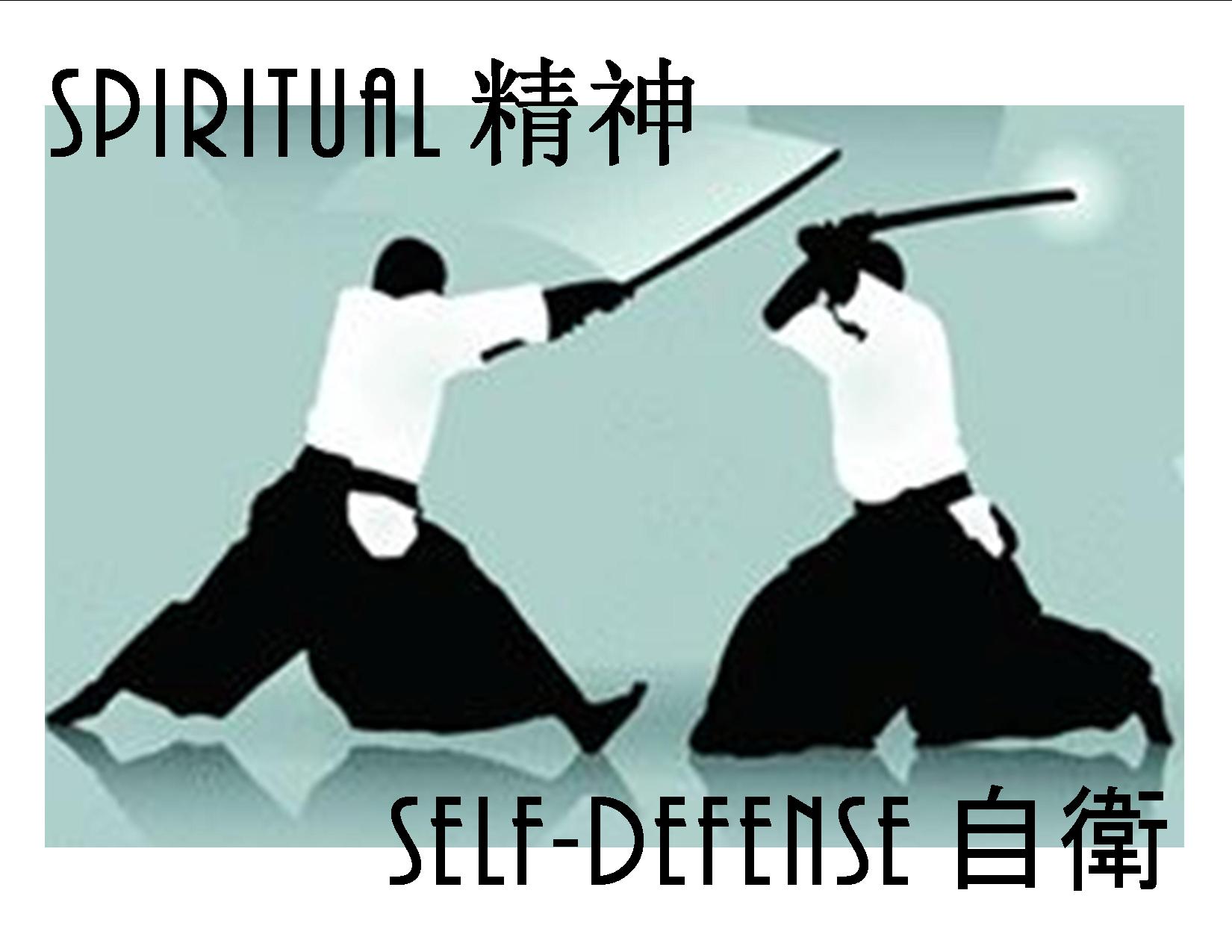
This Wednesday we’re starting an important series in our Impact youth group called “Spiritual Self-Defense.” Training our students how to defend what they believe. Jude wrote that we need to learn how to earnestly contend for the faith.

I’m also mindful of Peter’s instruction: But in your hearts set Christ apart as holy [and acknowledge Him] as Lord. Always be ready to give a logical defense to anyone who asks you to account for the hope that is in you, but do it courteously and respectfully.

As I’m preparing for this, here are a few things I’m trying to keep in mind. Perhaps you will have some additional things to share with me:

  • Earnestly means wholeheartedly. So I want to convey passion for biblical truths.
  •  Faith means an added dimension beyond scientific proof. Not in place of science, but beyond it. Albert Einstein observed, “Science without religion is lame. Religion without science is blind.”
  • Focusing on the lordship of Christ is the primary focus of Christian apologetics.
  • I need to prepare to answer.
  • My answers need to be logical and well thought out.
  • My answers need to lead people to the hope that is only found in a personal relationship with Jesus.
  • My defense of biblical truths need to be courteous and respectful.

In addition to our training times on Wednesday, we’ll also offer “sparing lessons” in our weekly men’s and women’s Bible studies. If you’re interested to learn more, come and join us at 7PM over the next few Wednesdays.