


Listen to the podcast of this post by clicking on the player below, and you can also subscribe on Apple, Spotify, or Audible.
 In The Matrix, Neo is fascinated by a young man who appears to be bending spoons simply by looking at them. Neo sits down on the floor across from this young man and takes a spoon in his hand. Although young, this boy gives sage counsel to Neo, “Don’t try to bend the spoon, for that is impossible. Instead remember that there is no spoon. That way you will see that it is not the spoon the bends, but you are the one who bends.”
There is a nugget of truth here for anyone who has ever been face-to-face with an impossible situation. The God who does the “impossible” has offered us the means to see His omnipotence at work—He has told us that we can bring our impossibles to Him in prayer. Prayer changes things!
In God’s perfect will, sometimes the impossible is done before our very eyes, and sometimes we see that it is not the situation that bends, but it is we who bend, becoming more godly, wise, and mature because of what God has imparted to us. Heartfelt prayer is never a meaningless exercise. Without exception, something is changed with every single prayer we offer to God.
There are many of us who have experienced a miraculous answer to prayer. We prayed to God in a bitter season of our life and experienced His sweetness come to our rescue. These answered prayers are testimonies of God’s love and power.
Think about people you know who are struggling with the bitterness of life. I wonder: do they know that there is a sweetness that only God can bring? Brian Ridolfi noted, “Vinegar is not bitter to those who have not tasted honey.” Peter told us we are to crave more and more of God’s sweetness “now that you have tasted that the Lord is good” (1 Peter 2:2-3). This isn’t primarily for us, but it is to us and through us so that a watching world can recognize their bitterness as contrasted to the sweetness in our Savior.
One of the things prayer changes is my attitude about the things of God. When I say “attitude” I am referring to how an airplane pilot defines this term: The nose of the plane in relation to the horizon. If the attitude of the plane is up, the plane and all of its passengers are climbing.
There is a man we meet in the Gospels whose name means “whom God enlightens.” The answer to prayer he received was an attitude-changer for him, everyone around him, and his family. Check out his story in Luke 8:40-56.
Jairus is called “a ruler of the synagogue.” He is the final authority on what happens in his synagogue. He came and “fell at [Jesus’] feet, pleading with Him” [pleaded earnestly—Mark 5:23], which sounds like a posture of intense prayer to me!
We don’t know how long the journey was to Jairus’ home, but it was made longer by “the crowds [that] almost crushed [Jesus].” It was made even longer by an interruption of yet another healing (vv. 43-48). During this delay, there is not a word of protest from Jairus as he is clinging to his faith in Jesus.
Jairus gets the news, “Your daughter is dead.”
Jesus reignited Jairus’ faith with the words, “Don’t be afraid; just believe, and she will be healed.” Matthew 9:18 records Jairus’ renewed faith-filled prayer as he acknowledges, “My daughter has died.”
The family and friends gathered at Jairus’ house were “wailing and mourning.” The AMPC says, Jesus saw “the tumult and the people weeping and wailing loudly” (Mark 5:38). Why? Because they knew she was dead—this was now an impossible situation.
But let me ask you: Is it possible that Jesus allowed this delay so that the little girl would become beyond all human hope? I think it is. Jesus was going to do something that absolutely no one could take any credit for. Jesus said, “Stop wailing. She is not dead but asleep.” They laughed at Him!
After this dead little girl stood up, who was laughing then? I think Jesus was—He always gets the last laugh and the best laugh!
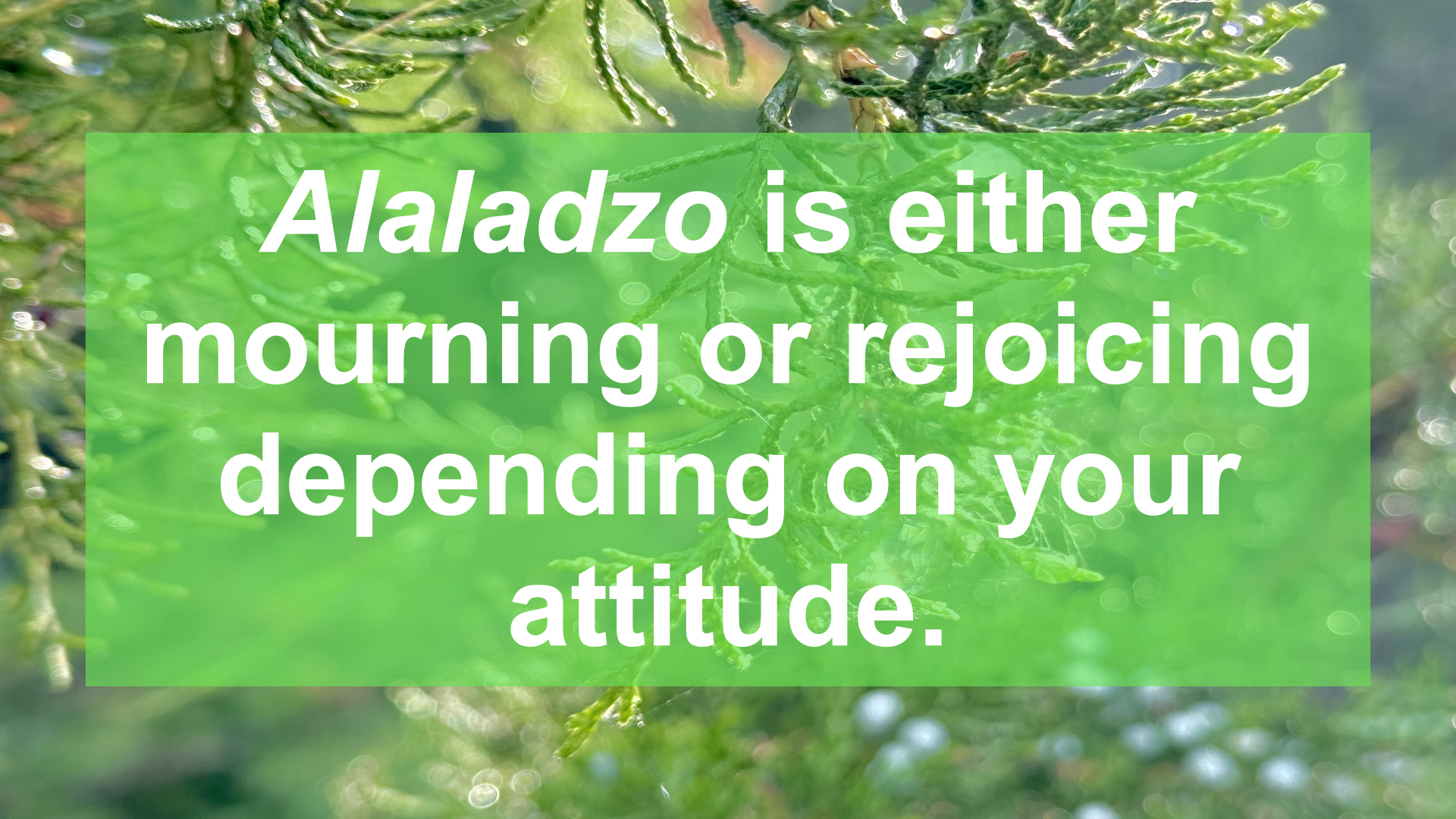
The Greek word for “wail” (alaladzo) has an interesting root word (alala) which means the cry of soldiers running to the battlefield. And then when those soldiers return victoriously, they have a total change in their attitude so alaladzo is now a joy-filled shout (Psalm 47:1; 66:1-3).
 (1) Jairus had an attitude change. I believe became a Christ-follower in the truest sense of the word. Why do I think this? Because we know his name. There are four “synagogue rulers” described in the New Testament: three that become Christians we know by name (Crispus [Acts 18:8], Sosthenes [Acts 18:17], Jairus) and one who remains anonymous because he was bitter that Jesus healed someone on a Sabbath (Luke 13:14).
(2) The scorning mourners who knew the girl was dead had an attitude change. They spread the laughter everywhere (Matthew 9:26).
(3) What about us? An encounter with Jesus changes us (Romans 12:2; 2 Corinthians 3:18). In order to “taste and see” how good God is, we must be people who are consistently prayerful and expectant of His wonder-working power. Let’s change our wailing into a battlecry, our mourning into praise, so that God can chance our tears into laughter!
A world steeped in bitterness needs to see the sweetness of our God—Come and see what God has done, His awesome deeds for mankind! (Psalm 66:5).
Keep up with all of the messages in this prayer series by clicking here.
►► Would you please prayerfully consider supporting this ministry? My Patreon supporters get behind-the-scenes access to exclusive materials. ◀︎◀︎


 Craig T. Owens