Do You Really Want To Be Accountable?

I have a great friend. He is the brother I never had, but he is more than any brother I could have ever hoped for. We are brothers like David and Jonathan were brothers in the Bible. We are covenant brothers (we’ve coined the shorthand CovBro).

What is accountability? The dictionary simply says it means “to give an account or to give an answer.” It doesn’t say “to give an excuse or to give the rationale.”

Accountability means there is only black and white. No gray. Either I did what I was supposed to do. Or I didn’t. King Solomon said it this way:

Young people, it’s wonderful to be young! Enjoy every minute of it. Do everything you want to do; take it all in. But remember that you must give an account to God for everything you do.

Before it’s time to give an account to God, wouldn’t you like someone else to hold you accountable? I would!

In this everything’s-relevant, I’m-not-responsible-for-my-own-actions world, finding someone who will actually hold you to a rigid “Yes, I did it” or “No, I didn’t do it” standard is rare. But my CovBro is one who holds me accountable.

When we meet each month, he asks me the hard questions:

  • How are your business dealings?
  • Are you spending enough time with God?
  • Are you doing what God has called you to do?
  • What’s happening in your marriage? Your relationship with your kids? Your church?

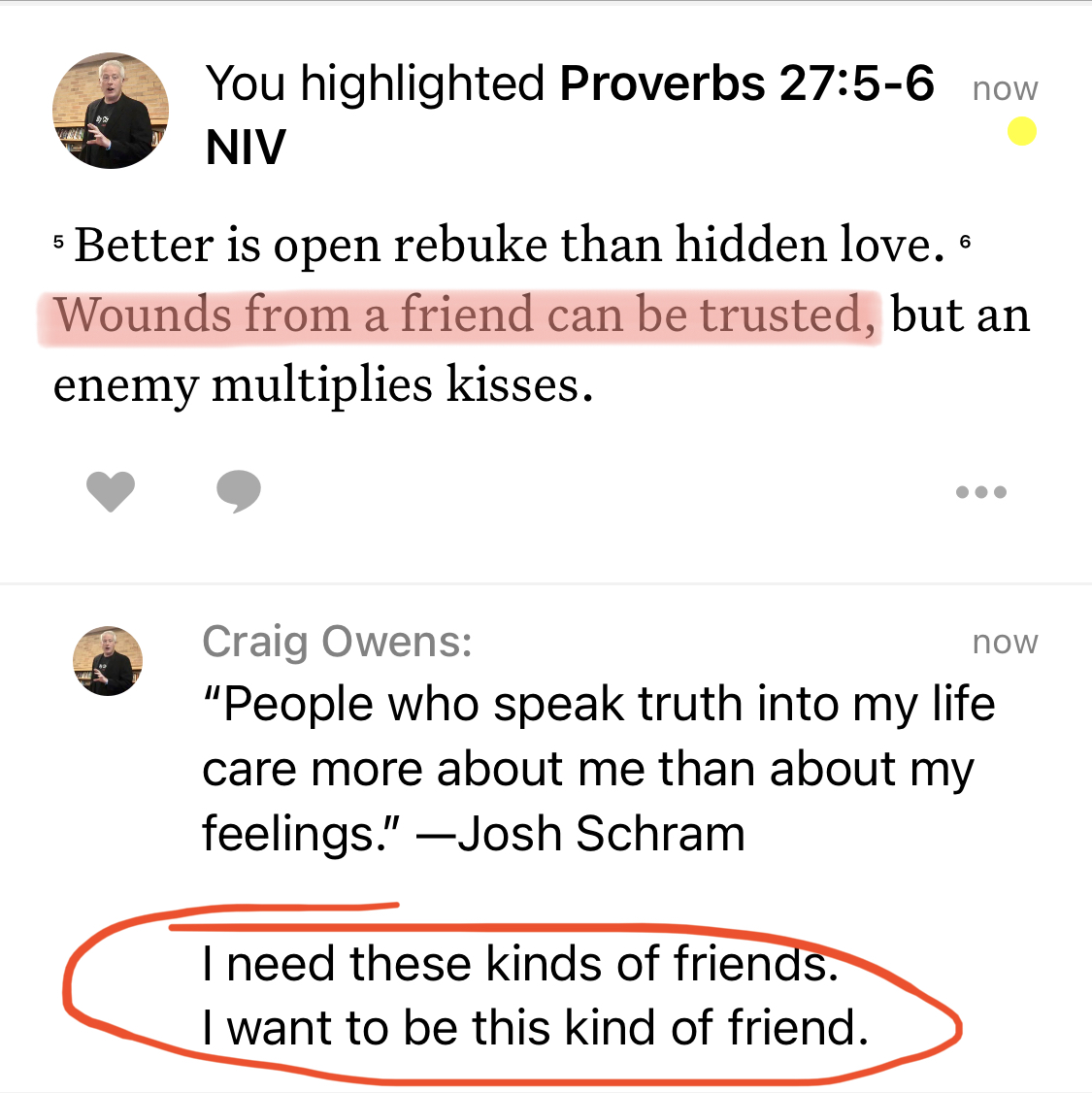
He gets my internet usage report from X3 Watch. He is the iron that sharpens my iron. He accepts no wishy-washy answers nor any flimsy excuses. I do the same for him. And we’re both better off for it.

Do you really want to be accountable? Then find someone that loves you too much to let you get away with anything less than your very best. Someone who will hold you to God’s standards. Someone who will sharpen your iron. It can be painful. But the results are so worth it!

Not Mine But God’s

Have you ever wondered how Cain and Abel could end up so night-and-day different from each other? Think about it:

  • Same parents
  • Same home
  • No peer pressure
  • No real outside influences

Yet Cain became a farmer and the first murderer, and Abel became a shepherd and the first murder victim.

Yes, I know personality and temperament come into it. But so does the involvement of their parents. It’s interesting that Eve (not Adam) names their boys. There seems to be a little bit of “father absenteeism” that is involved here, but more telling is the commentary that Eve makes in naming her boys.

With Cain, she said, “I have gotten a man from the Lord.” Digging a little deeper in the Hebrew language, Cain means “a possession.” So Eve said, “This is mine. I did it.”

When Abel is born, there is no commentary. However, his name means “breath.” Something only God can give.

See the difference:

Cain = mine!

Abel = God’s!

As a result, Cain grew up wanting to do things to please himself, and Abel only wanted to please God.

As a parent, I always have to remember that my children are God’s. He loaned them to me to raise them up to serve and love Him. They are not mine, they are His.

Children are a gift from the Lord; they are a reward from Him. (Psalm 127:3)

Keep that in mind, Moms and Dads, when you’re interacting with God’s gifts and rewards.

Finding Purpose Beyond Our Pain (book review)

I’ve been a fan of Dr. Paul Meier for quite some time, and his latest book—co-authored with Dr. David Henderson—kept me cheering. Finding Purpose Beyond Our Pain explores seven areas that prompt some of the deepest soul-searching and some of the stickiest questions that humans face.

There are a couple of things I admire about Drs. Meier and Henderson. One is their understanding that humans are a tri-part being: body, soul, and spirit. Those that try to bring help for the deep pain that we all experience by addressing just one area are missing the mark. There is physical pain, emotional pain, and spiritual pain.

I’ve often found that humanists who just want to address the physical and emotional symptoms, but ignore the spiritual symptoms, offer only short-sighted answers. On the other extreme, some in the church world want to offer spiritual solutions for everything, and completely ignore the physical and emotional causes. Either extreme is unhelpful to someone who is hurting. Drs. Meier and Henderson do an excellent job addressing all three areas.

The other thing I’ve always appreciated about Dr. Meier, and now his new coauthor as well, is his accessible writing style. In other words, although these are incredibly well-educated men, they write in a way that everyone can understand. And more importantly, their writing style allows for ready application.

This book is divided into seven sections of four chapters each. Each section diagnosis an area of pain, looks at the causes, explores the possible responses, and ultimately uncovers the purpose beyond the pain. In every section, the physical, emotional, and spiritual dimensions are addressed. These sections cover the most common pain-filled struggles we all face:

  • Injustice
  • Rejection
  • Loneliness
  • Loss
  • Discipline
  • Failure
  • Death

As a pastor, I have to deal with people who are experiencing past or present pain quite frequently. This book has enlightened me in some biblically-rooted, practical ways I can point to the purpose beyond their pain. But even if you are not a pastor or counselor, this book will be a great resource to have on your shelf. Whether you have lingering questions about the pain you have experienced, or you simply want to be ready to help a friend or loved one who may be battling one of these areas, you will appreciate Finding Purpose Beyond Our Pain.

I am a book review blogger for Thomas Nelson.

Slow Reading

I have a well-worn Bible. It’s my favorite study Bible. I’m not sure how many times I’ve read it all the way through, but I just finished journaling all 66 books of the Bible again.

I’ve heard others talk about reading through the entire Bible in a year. This sounded like a good idea to me, so today was Day 1. According to Oneyearbibleonline.com here’s what I should have accomplished this morning:

GENESIS 1:1-2:25
MATTHEW 1:1-2:12
PSALM 1:1-1:6
PROVERBS 1:1-1:6

Want to know how far I got? Genesis 1. That’s it. One chapter. I got so enamored with the words said, called, and blessed that I had to look more deeply. And before I knew it, an hour had gone by and I only finished Genesis 1.

Oh, well. It was worth a try.

Now I’m just back to reading slowly and loving God’s Word even more than ever. It’s the most fascinating Book I’ve ever read. I read it slowly because there is just so much there.

What kind of Bible reading program do you have? I hope you’re getting into God’s Word every day. It’s good stuff!

The World Needs Men

In our week of prayer we’ve been focusing our prayers on a different area each day. Last night we prayed for men. Men who love Jesus need to be the pacesetters in our families, our churches, our communities, our businesses.

What kind of men? We used this poem from Ted Engstrom to help us focus our prayers —

The world needs men
who cannot be bought;
whose word is their bond;
who put character above wealth;
who possess opinions and a will;
who are larger than their vocations;
who do not hesitate to take chances;
who will not lose their individuality in a crowd;
who will be as honest in small things as in great things;
who will make no compromise with wrong;
whose ambitions are not confined to their own selfish desires;
who will not say they do it “because everybody else does it”;
who are true to their friends through good report and evil report, in adversity as well as in prosperity;
who do not believe that shrewdness, cunning, and hardheadedness are the best qualities for winning success;
who are not ashamed or afraid to stand for the truth when it is unpopular;
who can say “no” with emphasis, although all the rest of the world says “yes.”

Can you be that man? The world needs you to be that man.

Naked Before God

Imagine: You and your wife are the only people on the face of the earth. No bills, no employer, no economic downturn, no kids, no school, no traffic. Just you and God. That was Adam and Eve in the Garden of Eden. The Bible gives this commentary, “Now the man and his wife were both naked, but they felt no shame.”

Nothing to hide from God. Nothing to hide from each other. A perfect relationship with God. A perfect relationship with each other.

Then the temptation, and the bite of the forbidden fruit. Sin enters. Now, something changes when God comes to talk with His favorite couple: “Then the man and his wife heard the sound of God as He was walking in the garden in the cool of the day, and they hid from God among the trees.”

“Why are you hiding from Me?” God asks.

“Uh,” Adam stammers, “because we’re naked.”

Sin made mankind uncomfortable in God’s presence. Sin made them want to hide from God. They knew He was there, but they tried to pretend He wasn’t. This is why I think many of us don’t come into God’s presence in prayer: we’re uncomfortable because of our sin.

We should not run away from God, instead, we should run to Him. “If we confess our sins to Him, He is faithful and just to forgive us our sins and to cleanse us from all wickedness” (1 John 1:9).

What happens when we’re forgiven? We’re re-clothed. God Himself clothes us. He made clothes for Adam and Eve, and He clothes us, too, in the righteous robes of Jesus. “And all who have been united with Christ in baptism have put on Christ, like putting on new clothes” (Galatians 3:27).

And when we’re clothed in Christ, we no longer have to hide from God, nor feel uncomfortable in His presence. Instead, we can “come boldly to the throne of our gracious God. There we will receive His mercy, and we will find grace to help us when we need it most” (see Ephesians 3:12 and Hebrews 4:16).

Perhaps the reason we don’t spend enough time in prayer is that we feel self-conscious, sinful, uncomfortable… naked.

You don’t have to be naked. You can be clothed in Christ. You can enter into God’s presence without shame and find the mercy and grace and help that you need.

The Least-Attended Church Service…

…and quite possibly my least-popular blog post.

Just to give you a chance to bail out right now: (1) This blog post is about prayer, and (2) I’m going to offend you.

In every church I’ve ever attended or been associated with, the least-attended gathering is the prayer meeting. Guaranteed. When the pastor says, “We’re going to gather just to prayer,” people stay away. Want to hear something else painful? Jim Cymbala nailed it in Fresh Wind, Fresh Fire:

“You can tell how popular a church is by who comes on Sunday morning. You can tell how popular the pastor or evangelist is by who comes on Sunday night. You can tell how popular Jesus is by who comes to the prayer meeting.”

Jesus knew this, too. When He had a prayer meeting with His followers, they couldn’t even stay awake!

Here are four reasons why I think this is true:

1.  Prayer has no entertainment value. Don’t get me wrong, I’m not saying we go to church to be entertained, but there is a certain element of that in a typical church service: we listen to good music, laugh at a humorous video, engage with an effective sermon. We’re largely passive, just absorbing what’s going on.

2.  Prayer is hard work. We’re doing spiritual battle, and everything in our flesh is going to fight against this. Prayer requires physical, mental, emotional, and spiritual energy. It’s draining work.

3.  We want immediate visible results. In our microwave, cellular phone, on-the-go world, we want everything faster and faster. Something is happening when we pray, but we may not see the results of our prayers immediately.

4.  Prayer is naked communication. We’re talking to the All-Knowing Creator of the Universe. There is a certain level of discomfort when we come into God’s presence. Adam and Eve hid when they knew their sins would be seen by God, and we have a tendency to avoid God’s presence for the same reason.

Perhaps this is why Jesus said if just two of us come together in prayer He would be right there with us. I think Jesus knew that prayer meetings wouldn’t attract the large crowds of a concert or even a Sunday morning church service. So if just two people got together who wanted to do the hard work of praying, He would be right there.

If your church, like ours, is kicking off this new year with a time of prayer, don’t become discouraged by the lack of attendance. Keep on praying—Jesus is right there with you.

Pray On

We usually give the first day of each week to God, and that’s a good thing. I want us to give the first week of the year to God too. We have to be people of prayer.

Not talking about prayer, but praying.

Not talking about our needs, but casting our cares on God.

Not talking about others’ needs, but interceding for them.

Join us in prayer all throughout this week. If you can come to the church at 6:30pm on any night, please do. But even if you can’t, then just pray on!

TomTom Directions

My wife is a beautiful, talented woman, but she tends to be, uh, directionally-challenged. That is to say, it’s not hard for her to get on the wrong road, heading the wrong direction. So a wonderful Christmas gift from my folks this year was a TomTom GPS unit.

Yesterday I took a trip and borrowed her TomTom. My first destination was a familiar one, but my second stop was somewhere I hadn’t been before. So I’m driving along when all of a sudden I hear a pleasant female voice tell me, “In two miles, exit to the right.”

Cool!

The Bible tells us that we can have a moral GPS system just like my wife’s TomTom. Check this out:

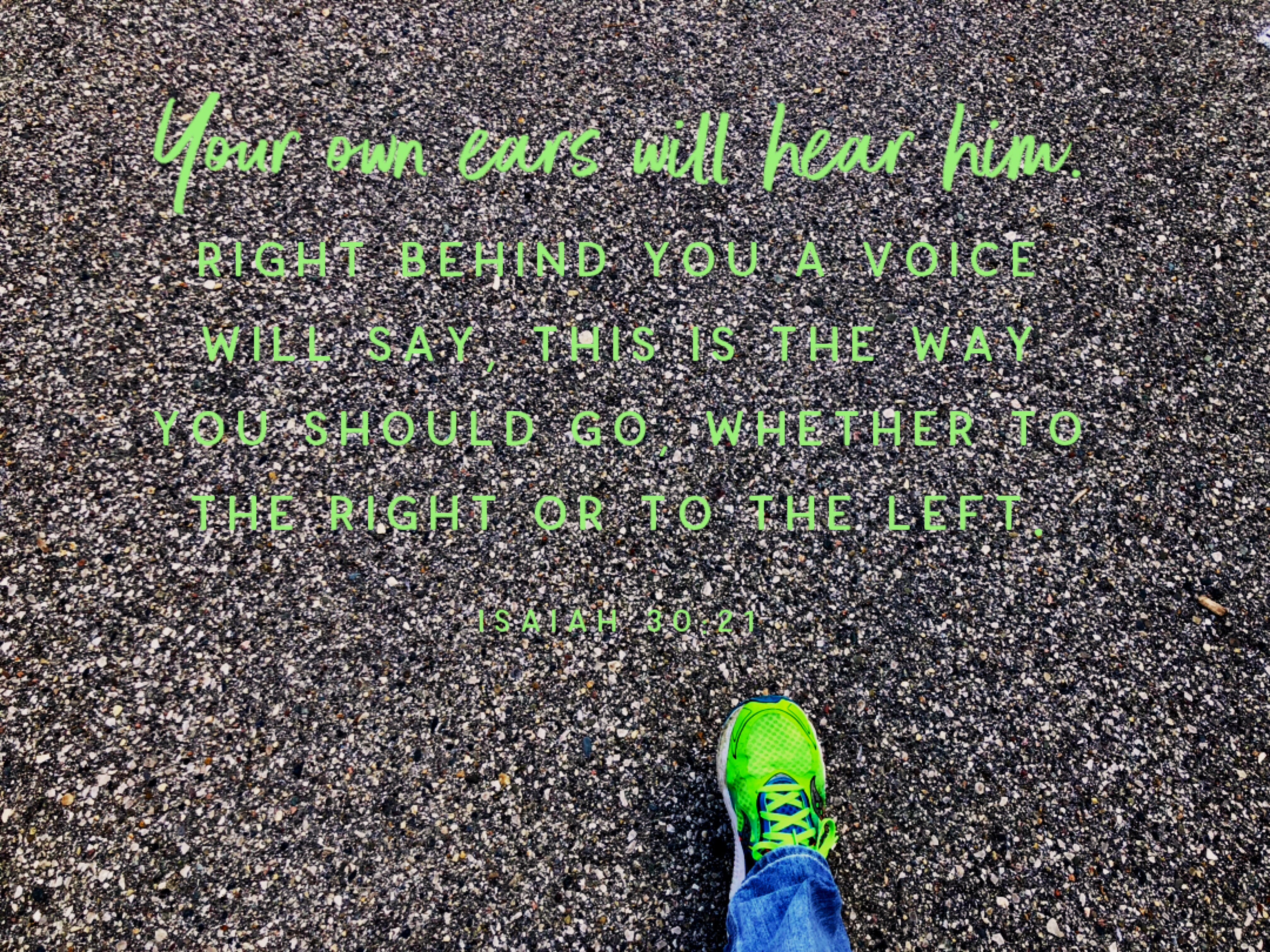
Whether you turn to the right or to the left, your ears will hear a Voice behind you, saying, “This is the way; walk in it.”

That Voice is the Holy Spirit. Jesus said the Holy Spirit would guide us in the right ways to go:

But when the Father sends the Advocate as My representative—that is, the Holy Spirit—He will teach you everything and will remind you of everything I have told you.

You have this moral GPS system at your disposal. Are you using it? Prayer is the power supply that activates the Voice. Turn Him on and make better decisions, live a better life, and do greater things for God.

“Gentleman, This Is A Football”

Listen to the podcast of this post by clicking on the player below, and you can also subscribe on AppleSpotify, or Audible.

After reading Mark Batterson’s book Primal, I started thinking quite a bit about the “stuff” that gets accumulated in our walk with Christ. Especially church traditions.

I find it amazing that neither Jesus nor Paul nor Peter nor any other biblical writer gave us a format for how we should “do” church. Over time we’ve just come to expect that a church service will have some songs, announcements, an offering time, some special music, and a sermon. But even changing the order of the service is so jarring to some people that they treat it like one of the Ten Commandments has been broken.

We can’t just keep doing church the way we’ve always done church. Sometimes we need to step back to ask, “Why do we do what we do?

So I’ve been spending some time reading through the Book of Psalms. I want to get back to the essence of worship.

  • What is it?
  • Is it just singing songs? If so, what songs?
  • Is there a style that is more God-honoring?
  • What instruments should we use? Should we even use instruments at all?
  • Do we sing hymns? Choruses? Both? Neither?
  • Does music only come at the beginning and the ending of a service?

Since I love sports, I frequently go back to sports analogies. Several years ago I read David Maraniss’ excellent biography on Vince Lombardi. Every year the Green Bay Packers coach went into pre-season drills with a stronger and stronger passion to win. Here’s how Maraniss describes it:

“He began a tradition of starting from scratch, assuming that the players were blank slates who carried over no knowledge from the year before. He reviewed the fundamentals of blocking and tackling, the basic plays, how to study the playbook. He began with the most elemental statement of all. ’Gentleman,’ he said, holding a pigskin in his right hand, ’this is a football.’”

“Folks, this is worship…” 

  • I know it can involve instruments, but it can also be acapella.
  • I know it can be loud shouts, but it can also be quiet whispers.
  • I know it can be hymns written 150 years ago, but it can also be spontaneously composed.
  • I know it can open a service, but it can also be throughout a service, or even at the close of a service.
  • I know it can be in a church building, but it can also be in a grocery store.

I know it is highly personal.

I know it is based on what attributes of God I have experienced firsthand.

I know God loves it when I worship Him.

As for the other details, well, I’m still wrestling with that.

►► Would you please prayerfully consider supporting this ministry? My Patreon supporters get behind-the-scenes access to exclusive materials. Like some exclusive quotes from a book I just reviewed. ◀︎◀︎