Americanism

Americanism

“Americanism means the virtues of courage, honor, justice, truth, sincerity, and hardihood – the virtues that made America. The things that will destroy America are prosperity-at-any-price, peace-at-any-price, safety-first instead of duty-first, the love of soft living and the get-rich-quick theory of life.” —Teddy Roosevelt

Furious Longing

Furious longingThere is a passage of Scripture in the Book of James which has caused many people to propose many different explanations. I’m not a theologian, but here’s my take on this—

Or do your think the Scripture says without reason that the spirit He caused to live in us envies intensely? (James 4:5)

Envy in the Greek is a neutral word; it becomes a virtue or a vice depending on its context. I could long for a deeper relationship with my wife (virtue), or I could long for a drug that gives me a temporary escape (vice).

The Greek word for envy can mean pursue with love (virtue), or lust after forbidden desires (vice).

“The spirit [God] caused to live in us” came from a loving Creator, and was intended for us to long for Him. When God created man in His image, He said, “Let Us create man like Us” (Genesis 1:26). In the Triune God there is a furiously intense longing among Father, Son, and Spirit. Each part of the Godhead longs for the entire Godhead to be glorified—this makes the Godhead indivisibly and gloriously One. This is the same spirit God placed in man.

Of man God said, “It is not good for man to be alone” (Genesis 2:18). The God-implanted spirit of man longs to give love and to receive love. Our God-implanted spirit longs to connect.

But for what do we long? We were made to long for intimacy with God. If we substitute or exchange this with a longing for temporary worldly things, we are rightly called by James “adulterous people” and “an enemy of God” (James 4:4).

“But God gives more grace” (James 4:6) that we will turn from our temporary longings to long after Him. James almost seems to be saying that those in the church have their hearts hanging in the balance. Of the other eight times this Greek word for envy is used in the Bible, they are in the positive (or virtuous) connotation.

James is imploring us—longing for us—to not be the exception. Longing for us to humbly admit our need for God and to receive even more divine grace. Longing for us to tip our hearts toward God and renew the passionate, furious longing for which we were created.

O God, I want my passion to burn furiously for You alone. Jesus, may I follow Your example to only do what pleases the Father. Holy Spirit, may I hear Your voice if my heart ever begins to turn toward anything but my Beloved.

(I explored this idea further in a whole series of messages called Craving.)

Thursdays With Oswald—The Vices And Virtues Of Vowing

This is a weekly series with things I’m reading and pondering from Oswald Chambers. You can read the original seed thought here, or type “Thursdays With Oswald” in the search box to read more entries.

The Vices And Virtues Of Vowing 

     The vices of vowing outweigh the virtues, because vowing is built on a misconception of human nature as it really is. If a man had the power to will pure will it would be different, but he has not. There are certain things a man cannot do, not because he is bad, but because he is not constituted to do them. We make vows which are impossible of fulfillment because no man can remain master of himself always; there comes a time when the human will must yield allegiance to a force greater than itself, it must yield to God or to the devil. 

     Modern ethical teaching bases everything on the power of the will, but we need to recognize also the perils of the will. The man who has achieved a moral victory by the sheer force of his will is less likely to want to become a Christian than the man who has come to the moral frontier of his own need. It is the obstinate man who makes vows, and by the very fulfillment of his vow he may increase his inability to see things from Jesus Christ’s standpoint. …

     It is not our vows before God that tell, but the coming to God exactly as we are, in all our weakness, and being held and kept by Him. Make no vows at this New Year time, but look to God and bank on the Reality of Jesus Christ. 

From God’s Workmanship

When considering your New Year’s resolutions (or vows, as Chambers calls them), remember these sobering words: “It is the obstinate man who makes vows, and by the very fulfillment of his vow he may increase his inability to see things from Jesus Christ’s standpoint.”

Don’t let your resolutions blind you to seeing how Jesus Christ wants to work through your weaknesses.

Thursdays With Oswald—Christ Exhibited In Me

Listen to the podcast of this post by clicking on the player below, and you can also subscribe on AppleSpotify, or Audible.

This is a weekly series with things I’m reading and pondering from Oswald Chambers. You can read the original seed thought here, or type “Thursdays With Oswald” in the search box to read more entries.

Christ Exhibited In Me 

     The inspiration of God does not patch up my natural virtues; He re-makes the whole of my being until we find that every virtue we possess is His alone. God does not come in and patch up our good works, He puts in the Spirit that was characteristic of Jesus; it is His patience, His love, and His tenderness and gentleness that are exhibited through us. … When God alters a man’s heart and plants His Spirit within, his actions have the inspiration of God behind them; if they have not, they may have the inspiration of satan. 

From Biblical Psychology

This passage reminds me of a story told about Francis of Assisi. While he was hoeing his garden, someone asked him, “What would you do if you knew you would die at the end of the day today?” Francis thoughtfully replied, “I’d finish hoeing this garden.”

Francis’ view should be ours as well: Every thought, every word, every action is directed by the Spirit of Christ in me. What I am doing now, I’m doing because the Holy Spirit inspired me to do it.

It’s encouraging to know that Christ can be exhibited in everything I think, say, and do. But it’s also very sobering to realize that I need to be constantly tuned in to the influence of the Holy Spirit.

I never want to be out-of-step with the Holy Spirit, but I want all my thoughts, words, and actions to be Christ exhibited in me.

►► Would you please prayerfully consider supporting this ministry? My Patreon supporters get behind-the-scenes access to exclusive materials. ◀︎◀︎

5 Quotes On Battle From “The Book Of Man”

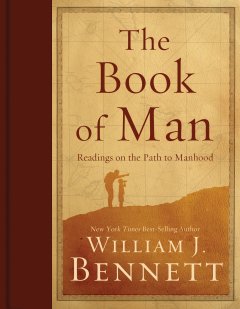
I really enjoyed reading The Book Of Man by William J. Bennett (you can read my book review here). The topics were very broad, so I’ll be sharing some of my favorite quotes on the different sections in this book over the next few days.

Here are five quotes about battle…

“War is an ugly thing, but not the ugliest of things. The decayed and degraded state of moral and patriotic feeling which thinks that nothing is worth war is much worse. A man who has nothing for which he is willing to fight, nothing which is more important than his own personal safety, is a miserable creature and has no chance of being free unless made and kept so by the exertions of better men than himself.” —John Stuart Mill 

“No person was ever honored for what he received. Honor has been the reward for what he gave.” —Calvin Coolidge

Whom neither shape of danger can dismay, 

Nor thought of tender happiness betray; 

Who, not content that former worth stand fast, 

Looks forward, persevering to the last, 

From well to better, daily self-surpast: 

Who, whether praise of him must walk the earth 

For ever, and to noble deeds give birth, 

Or he must fall, to sleep without his fame, 

And leave a dead unprofitable name— 

Finds comfort in himself and in his cause; 

And, while the mortal mist is gathering, draws 

His breath in confidence of Heaven’s applause: 

This is the happy Warrior; this is He 

That every Man in arms should wish to be. —William Wordsworth

“Thus choosing to die resisting, rather than to live submitting, they fled only from dishonor, but met danger face to face, and after one brief moment, while at the summit of their fortune, escaped, not from their fear, but from their glory.” —Pericles

“So that in the nature of man, we find three principal causes of quarrel. First, competition; secondly, diffidence; thirdly, glory. The first maketh men invade for gain; the second, for safety; and the third, for reputation. The first use violence, to make themselves masters of other men’s persons, wives, children, and cattle; the second, to defend them; the third, for trifles, as a word, a smile, a different opinion, and any other sign of undervalue, either direct in their persons or by reflection in their kindred, their friends, their nation, their profession, or their name.” —Thomas Hobbes

Cardinal Virtues of Ladies & Gentlemen

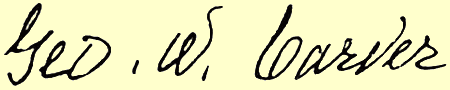
George Washington Carver never married, and never had children of his own. But he saw himself as a father to all of his students at the Tuskegee Institute, and they viewed him the same way.

The graduating class of 1921 presented Dr. Carver with a beautiful fountain pen. He used that pen to write the following note to his children—

As your father, it is needless for me to keep saying, I hope, except for emphasis, that each one of my children will rise to the full height of your possibilities, which means the possession of these eight cardinal virtues which constitutes a lady or gentleman.

1st. Be clean both inside and outside.

2nd. Who neither looks up to the rich or down on the poor.

3rd. Who loses, if need be, without squealing.

4th. Who wins without bragging.

5th. Who is always considerate of women, children, and old people.

6th. Who is too brave to lie.

7th. Who is too generous to cheat.

8th. Who takes his share of the world and lets other people have theirs.

I think we would do very well if we, too, possessed these virtues, and taught them to our children.

Leadership Tension

Along time ago I was studying the virtues that the Greek philosophers taught. To the Greeks, the virtue was considered the “golden mean” between two opposite extremes. It was the ability to balance the tensions that produced the virtue.

In areas where I have leadership responsibilities, I try to find the virtue of leadership as the balance between these two tensions:

  • Here is a trustworthy saying: Whoever aspires to be an overseer desires a noble task. (1 Timothy 3:1)
  • Should you then seek great things for yourself? Do not seek them. (Jeremiah 45:5)

On the one side: desire leadership. On the other side: don’t desire leadership. Do your best at it, but be ready to give it up.

I love this statement on leadership from John Maxwell—

Leadership is the willingness to put oneself at risk.
Leadership is the passion to make a difference with others.
Leadership is being dissatisfied with the current reality.
Leadership is taking responsibility while others are making excuses.
Leadership is seeing the possibilities while others are seeing the limitations.
Leadership is the readiness to stand out in a crowd.
Leadership is an open mind and an open heart.
Leadership is the ability to submerge your ego for the sake of what is best.
Leadership is evoking in other the capacity to dream.
Leadership is inspiring others with a vision of what they can contribute.
Leadership is the power of one harnessing the power of many.
Leadership is your heart speaking to the hearts of others.
Leadership is the integration of heart, head, and soul.
Leadership is the capacity to care, and in caring, to liberate the ideas, energy and capacity of others.
Leadership is the dream made reality.
Leadership is, above all, courageous.

I am trying to balance the pulls of leadership, but while I do I’m loving the leadership tension!

UPDATE: This idea of leadership tension became one of the key seed thoughts for my book Shepherd Leadership: The Metrics That Really Matter

Lee: A Life Of Virtue (book review)

I’m thoroughly enjoying The Generals series from Thomas Nelson Publishers! The latest installment that kept me turning page after page is Lee: A Life Of Virtue by John Perry. (By the way, my review of the first book in this series is here.)

You probably think you know quite a bit about General Robert E. Lee, commander of the Confederate Army during the Civil War. After all, in our American History classes, we heard all about how Lee went to war to protect slavery, right? At least, that’s what I thought. But did you know that Lee signed the papers to free the slaves his family had inherited? And that Lee was working with other leaders to find the best way to free all of the slaves in the South?

This biography portrayed a side of Lee I had never heard before. John Perry does a remarkable job of showing us a man who quietly and resolutely relied on his faith in God for so many crucial decisions; a man who lovingly cared for his invalid mother; a man who continued to court his wife all throughout their marriage; a man who dearly loved his children; and a man who made his battlefield decisions based on what was best for his men.

The title is so apt: Lee was a man of virtue throughout his life. Always exercising self-control, always considerate of others, never cutting corners nor compromising.

If for no other reason, I recommend that you read Lee just to get a complete picture of a man who was so much more than an outstanding general; he was an outstanding man.

I am a Thomas Nelson book reviewer.

Courage

Love this quote from C.S. Lewis—

Courage is not simply one of the virtues, but the form of every virtue at the testing point, which means at the point of highest reality. A chastity or honesty, or mercy, which yields to danger will be chaste or honest or merciful only on conditions. Pilate was merciful till it became risky.