Answer (Wo)Man

“Hey, pastor, I have a question for you….” As a pastor, do you feel like you need to have all the answers, all the time, to everyone’s questions? I’m not saying that as pastors we shouldn’t always be studying and learning and growing, but I think it’s a dangerous trap for us to feel like we need to have every answer.

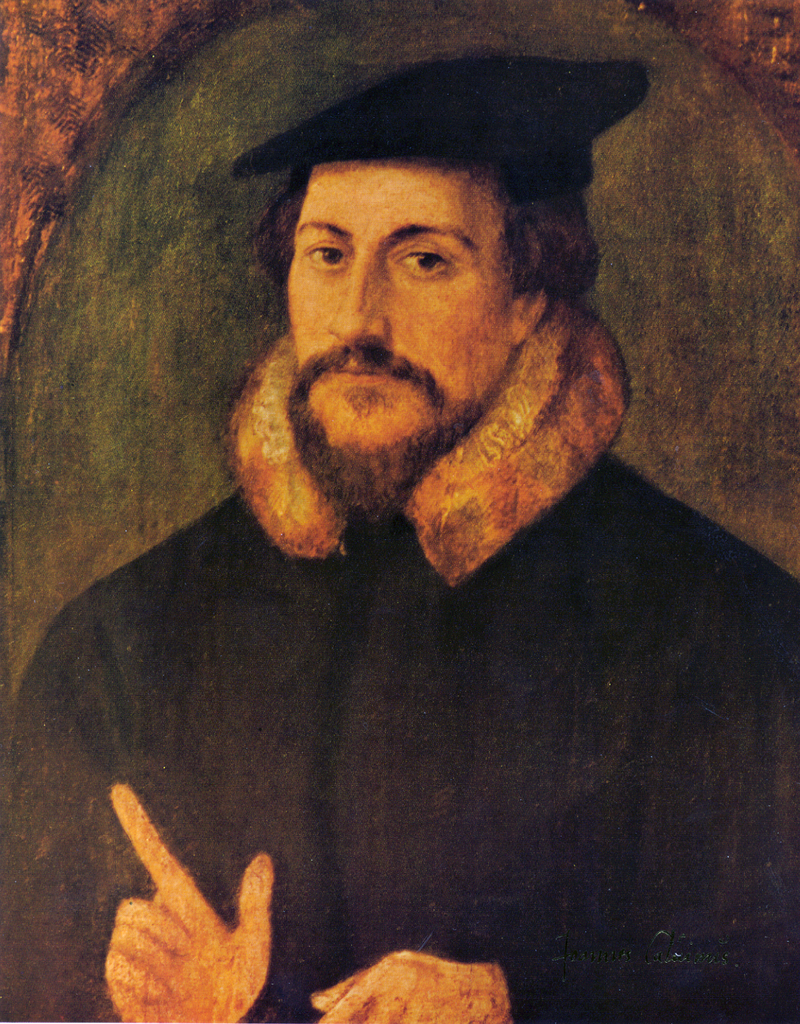
Here’s what John Calvin wrote in The Institutes of the Christian Religion

“And since the Holy Spirit always instructs us in what is useful, but altogether omits, or only touches cursorily on matters which tend little to edification, of all such matters, it certainly is our duty to remain in willing ignorance.

“…Let us here remember that on the whole subject of religion one rule of modesty and soberness is to be observed, and it is this, in obscure matters not to speak or think, or even long to know, more than the Word of God has delivered. A second rule is, that in reading the Scriptures we should constantly direct our inquiries and meditations to those things which tend to edification, not indulge in curiosity, or in studying things of no use.

“…The duty of a Theologian, however, is not to tickle the ear, but confirm the conscience, by teaching what is true, certain, and useful.”

Study for edification, not curiosity. Teach what is true and helpful, not what is tickling ears. And don’t feel like you need to have all the answers.
A Spiritual Reflex

I love this quote from Martin Luther—

“I first lay down these two propositions concerning spiritual liberty and servitude. A Christian man is the most free lord of all, and subject to none; a Christian man is the most dutiful servant of all, and subject to everyone.”

Yesterday we had our annual business meeting—although it was really our annual celebration. The one thing that stood out to me about 2011 is how much serving Calvary Assembly of God did in Cedar Springs. We are servants to everyone!

We picked up trash, put on carnivals, cleaned the Cedar Creek, helped our neighbors, worked with other community organizations, and presented a living nativity. We answered the call to serve whenever and however it came to us. We served individuals, our city governments, our ministerial association, and other churches and non-profit organizations.

Doctors routinely check our patellar reflex, where they tap our leg just below the knee cap and watch the involuntarily response of our leg. This reflex helps maintain posture and balance, allowing us to keep our balance with little effort or conscious thought.

I want my and Calvary Assembly of God’s spiritual patellar reflex in 2012 to be servanthood. When anyone asks for help, our involuntary response should be service. This is the best way to keep our posture and balance as servants of Jesus Christ and servants of our Cedar Springs neighbors.

This is why so many people around here say, “I My Church!” Come join us in serving in 2012.

Start It With Me

Pastors, I wrote earlier about the idea that you have to preach your message to yourself before you preach it you’re your congregation. But I want to back up a step to the motivation for that.

These words from William Law are challenging—

“The first business of a clergyman awakened by God into a sensibility and love of the truths of the Gospel, and of making them equally felt and loved by others, is to thankfully, joyfully, and calmly adhere to and give way to the increase of this new-risen light, and by true introversion of his heart to God, as the sole Author of it, humbly beg of Him that all that he feels a desire of doing to those under his care may be first truly and fully done in himself.”

God, if You want to do something in my congregation, start it with me. Right here, right now, in the privacy of my study, begin with me. When I come before my congregation this weekend, may my life be the example of the work You want to do in us all.

Better Pray-ers

Have you ever heard someone that can pray really well? And then isn’t it a bit intimidating when you’re asked to pray right after that master pray-er?

Or maybe you hear about people that spend extended time praying. But you think, “I run out of things to say after just a few minutes,” or “I get so distracted when I’m trying to pray.”

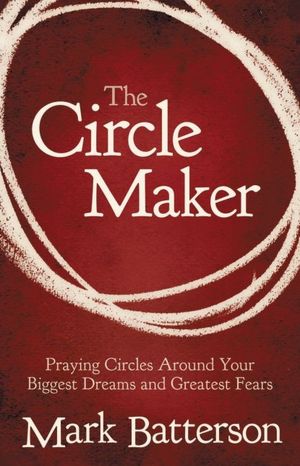
Here’s a thought from Mark Batterson’s book The Circle Maker which may help you—

“Prayer was never meant to be a monologue; it was meant to be a dialogue. Think of Scripture as God’s part of the script; prayer is our part. Scripture is God’s way of initiating a conversation; prayer is our response. The paradigm shift happens when you realize that the Bible wasn’t meant to be read through; the Bible was meant to be prayed through. And if you pray through it, you’ll never run out of things to talk about.”

Think about it this way. If you are a parent, doesn’t it get your attention when your child says, “Dad, you said…”? I know that makes my ears perk up. It’s the same way when we use Scripture to pray. It’s like saying to God, “Dad, you said….”

Praying Scripture also helps you personalize the promises you come across. Whether you need courage, health, money, wisdom, protection, or anything else, there is a promise in the Bible that you can pray to God.

As Mark said, don’t just read through your Bible, pray through your Bible!

Faith Is Always Doing

The apostle James said it this way:

What good is it, my brothers, if a man claims to have faith but has no deeds? Can such faith save him? Suppose a brother or sister is without clothes and daily food. If one of you says to him, “Go, I wish you well; keep warm and well fed,” but does nothing about his physical needs, what good is it? In the same way, faith by itself, if it is not accompanied by action, is dead. (James 2:14-17)

And I love Martin Luther’s commentary on this:

Faith cannot help doing good works constantly. It doesn’t stop to ask if good works ought to be done, but before anyone asks, it already has done them and continues to do them without ceasing. Anyone who does not do good works in this manner is an unbeliever. He stumbles around and looks for faith and good works, even though he does not know what faith or good works are. Yet he gossips and chatters about faith and good works with many words.”

A question for us to ponder: Can people see my faith by what I am doing?

Stop Yawning!

A challenging quote from Oswald Chambers—

“We have to treat the body as the servant of Jesus Christ: when the body says ‘Sit,’ and He says ‘Go,’ go! When the body says ‘Eat,’ and He says ‘Fast,’ fast! When the body says ‘Yawn,’ and He says ‘Pray,’ pray!”

I do not run like a man running aimlessly; I do not fight like a man beating the air. No, I beat my body and make it my slave so that after I have preached to others, I myself will not be disqualified for the prize. (1 Corinthians 9:26-27)

Wow! Time for me to redouble my efforts to Go, Fast, and Pray.

Preach It To Yourself

Before I am a pastor sharing with my congregation, I am a saved sinner standing before God.

Before I open the penetrating brilliance of God’s Word to my church, I must stand in the spotlight of His Word.

In other words, I should never stand before my church with my finger pointed at them. Instead, the finger of God should be squarely pointed at me. Only then can I share with my congregation what God is doing in my life.

I’ve always tried to pastor this way, but recently I read this passage in John Bunyan’s autobiography which made this truth even more real to me—

“Sometimes I have been about to preach upon some smart and searching portion of the Word, I have found the tempter suggest, What! will you preach this! This condemns yourself; of this your own soul is guilty; so don’t preach any of it; or if you do, mince your words, as to make way for your own escape; lest instead of awakening others, you lay that guilt upon your own soul, that you will never get from under. … It is far better that you judge yourself, even by preaching plainly unto others, than that you, to save yourself, imprison the truth in righteousness.”

So, pastor, preach the Word to yourself first. Then go share with your congregation about what God is dealing with you.

Set Them Free!

Jesus has some pointed words for us in Matthew 5—

Therefore, if you are offering your gift at the altar and there remember that your brother has something against you, leave your gift there in front of the altar. First go and be reconciled to your brother; then come and offer your gift. (vv. 23-24)

Notice that Jesus says that your brother has something against you. Since the first word of this verse is therefore, we have to back up a couple of verses to get the context. In the preceding two verses Jesus talks to us about our anger, our harsh words, and our rash judgments leveled at others. In other words, things we have done to others which has made them upset at us.

In our prayer time, the Holy Spirit will help us remember what we have done. Now what are you going to do about it? Excuse it? Justify it? Or will you rectify it? Will you be obedient to go and make it right?

Until we do, we’re keeping our offended brother or sister in bondage to us. But as soon as we ask forgiveness, we set them free.

I love what C.S. Lewis said about recognizing where we may have offended someone—

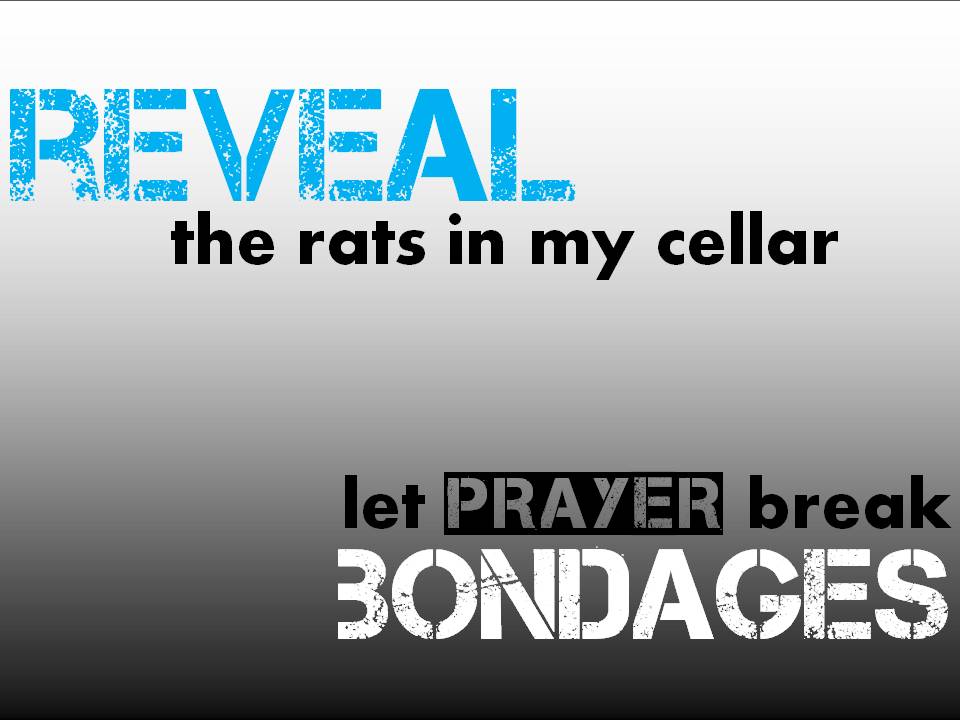
“When I come to my evening prayers and try to reckon up the sins of the day, nine times out of ten the most obvious one is some sin against charity; I have sulked or snapped or sneered or snubbed or stormed. And the excuse that immediately springs to mind is that the provocation was so sudden or unexpected. I was caught off my guard, I had not time to collect myself…. Surely what a man does when he is taken off guard is the best evidence of what sort of man he is. Surely what pops out before the man has time to put on a disguise is the truth. If there are rats in the cellar you are most likely to see them if you go in very suddenly. But the suddenness did not create the rats; it only prevents them from hiding. In the same way the suddenness of the provocation does not make me an ill-tempered man: it only shows what an ill-tempered man I am.

When the Holy Spirit shows you the rats in your cellar—when He helps you remember how your ratty words or behavior hurt someone else—take care of it immediately! It’s the fastest way to freedom!

I will be speaking on The Danger Of Prayerlessness again next Sunday. I hope you can join me.

Praying Through

I love this quote from Mark Batterson’s book The Circle Maker.

“Our generation desperately needs to rediscover the difference between praying for and praying through.  Praying through is grabbing hold of the horns of the altar and refusing to let go until God answers.” 

I grew up hearing that phrase praying through, but how quickly we pray one-and-done prayers! There is such a power in praying through. May I learn to do this better!

(By the way, Draw The Circle is a great companion book to The Circle Maker.)

Copartnership

Do you want your church services to be more engaging?

Do you want your pastor to preach more effectively?

Do you want to come away from church more energized?

If so, you need to enter into a partnership. E.M. Bounds, in his fascinating book The Weapon of Prayer, wrote this—

“Prayerlessness, therefore, as it concerns the preacher is a very serious matter. If it exists in the preacher himself, then he ties his own hands and makes the Word as preached by him ineffective and void. If prayerless people be found in the pew, then it hurts the preacher, robs him of an invaluable help, and interferes seriously with the success of his work. How great the need of a praying church to help in the preaching of the Word of the Lord! Both pew and pulpit are jointly concerned in this preaching business. It is a copartnership.”

If you want more engagement, effectiveness, and energy at your church, partner with your pastor in prayer.

If you don’t have a church home, I hope you can partner with me this Sunday at Calvary Assembly of God as I continue a series called The Danger Of Prayerlessness.