This is a weekly series with things I’m reading and pondering from Oswald Chambers. You can read the original seed thought here, or type “Thursdays With Oswald” in the search box to read more entries.
General Maxims
(a) If you lack education, first realize it; then cure it.
(b) Beware of knowing what you don’t practice.
From Approved Unto God
I know the maxim for some is, “Fake it until you make it.” I can’t do that. I won’t do that. The Bible has a word for doing that: Hypocrisy.
How can you say to your brother, “Brother, let me take the speck out of your eye,” when you yourself fail to see the plank in your own eye? You hypocrite, first take the plank out of your eye, and then you will see clearly to remove the speck from your brother’s eye (Luke 6:42).
But just as bad is when I know what I’m supposed to do, and then make excuses not to do that. The Bible has a word for not doing that: Sin.
Remember, it is sin to know what you ought to do and then not do it (James 4:17).
Listen to the podcast of this post by clicking on the player below, and you can also subscribe on Apple, Spotify, or Audible.
King Josiah is widely regarded as one of the greatest reformers of Judah. He led a revival in Israel that led to the people cleaning out their idols and worshipping God in ways that hadn’t been seen since the time of King David.
This whole revival started with a Book. Not just any book, but the Book of the Law (the Bible).
When the king heard what was written in the book, God’s Revelation, he ripped his robes in dismay. And then he called for Hilkiah the priest, Ahikam son of Shaphan, Acbor son of Micaiah, Shaphan the royal secretary, and Asaiah the king’s personal aide. He ordered them all: “Go and pray to God for me and for this people—for all Judah! Find out what we must do in response to what is written in this Book that has just been found! God’s anger must be burning furiously against us—our ancestors haven’t obeyed a thing written in this book, followed none of the instructions directed to us.”
Josiah’s leadership was already stellar. The Bible describes Josiah this way: “He did what was right in the eyes of the Lord.” But 18 years into his reign as king, the Scriptures were rediscovered and his leadership went up a notch.
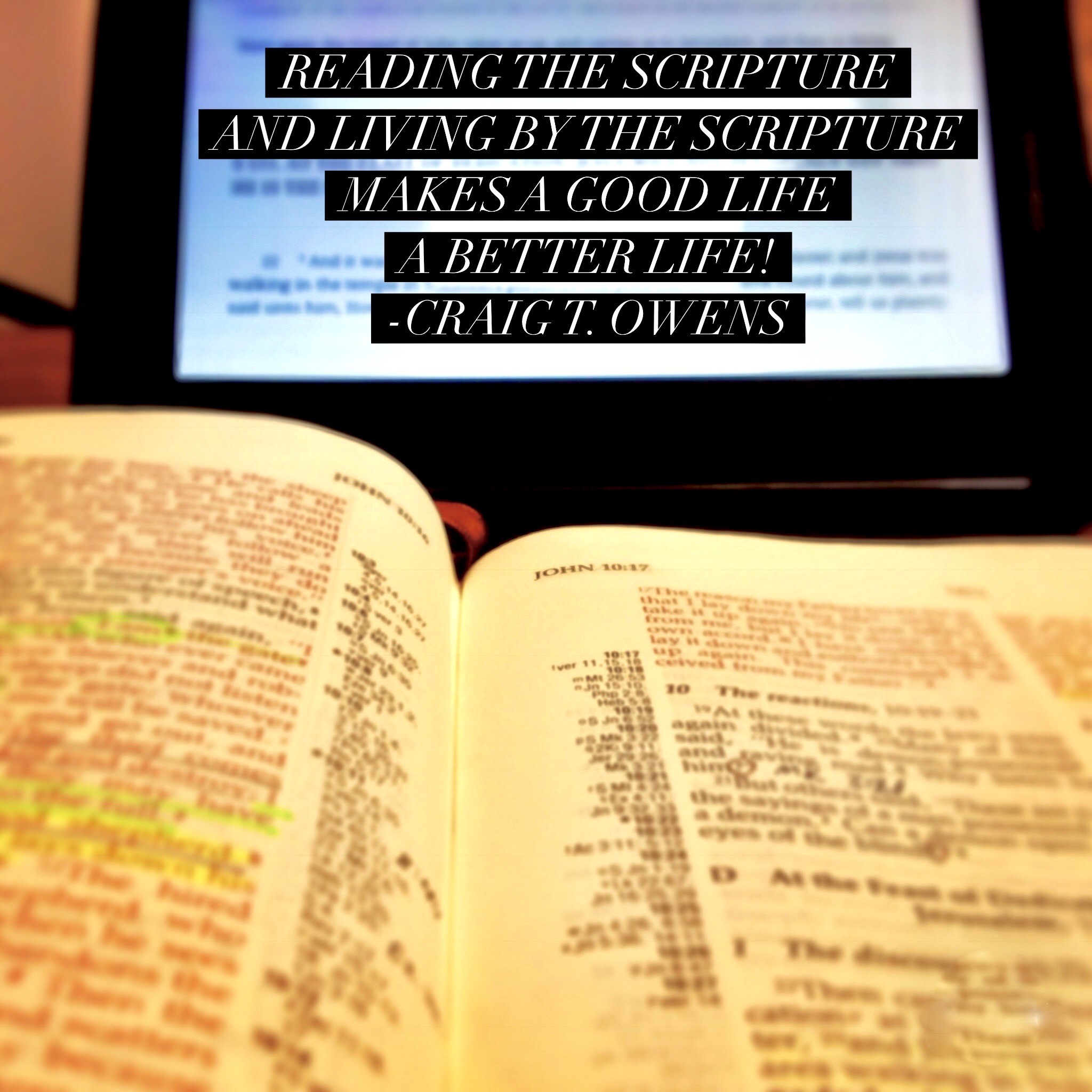
Reading the Scripture and living by the Scripture makes a good life a better life!
At the end of Josiah’s life, something is recorded about him that isn’t mentioned about any other king:
The prophet Jeremiah composed funeral songs for Josiah, and to this day choirs still sing these sad songs about his death. These songs of sorrow have become a tradition and are recorded in The Book of Laments.
Do you want to take your life up a notch? Get into God’s Word and let it get into you and change the way you think and live.
I live by the axiom, “If you’re through learning, you’re through.” So I try to learn something new every day.
I just finished a class called New Testament Survey: a quick overview of the 27 books that compromise the New Testament of the Bible. Here’s a couple of interesting factoids I picked up from my studies:
The earliest-written book was James. Interesting, because at one point James thought Jesus (his half-brother) was nuts.
Only Matthew uses the term kingdom of heaven; all of the other writers use kingdom of God.
Mark uses the word immediately more times than anyone else. Perhaps because his source (Peter) was always doing things so quickly… sort of a ready, FIRE!, aim kinda guy.
Luke wrote what is called “the global gospel” for everyone, so he included 45 teachings/events that no one else records.
John doesn’t record any of Jesus’ parables.
John uses the word believe nearly 100 times— way more than any other writer.
Luke talks about the Holy Spirit nearly 60 times in the 28 chapters of Acts.
Romans is the longest of Paul’s epistles with 7101 words; Philemon is the shortest with just 355 words.
With the exception of the pastoral epistles (1 Timothy, 2 Timothy, Titus) Paul’s letters are arranged in the Bible from longest to shortest.
In 1 & 2 Thessalonians (only 136 verses) Paul refers to God, Christ, the Holy Spirit, or a combination thereof more than 150 times.
Paul gives Timothy seven word pictures to describe the kind of pastor he should be: son, soldier, athlete, farmer, workman, instrument, and servant.
Hebrews is called “the book of better things” so better is used 13 times. This word is used only six times in the remaining 26 books of the New Testament.
James wrote 108 verses but issues 50+ direct commands.
In John’s three short epistles he uses the word know 33 times, and the word dear ten times.
Keep on learning! There’s a lot of good stuff out there. What have you learned lately?



 General Maxims


 Craig T. Owens