This is a weekly series with things I’m reading and pondering from Oswald Chambers. You can read the original seed thought here, or type “Thursdays With Oswald” in the search box to read more entries.
Trials
Christianity is drawing on the overflowing favor of God in the second of trial.
From Facing Reality
So you see, the Lord knows how to rescue godly people from their trials. (2 Peter 2:9)
Anyone who meets a testing challenge head-on and manages to stick it out is mighty fortunate. For such persons loyally in love with God, the reward is life and more life. (James 1:12)
In the moment of your trial, God is right there in the thick of it with you. He will bring you through. Draw on God’s overflowing favor and hang in there!
If you are going through a difficult place in your life … or if you are trying to process an event that doesn’t make much sense … or if there is a painful memory that makes you wonder, “Where was God in that?” … check out this short video clip:
Now, go eat a cookie and know that God IS working out something good.
I seldom turn on religious TV shows, because when I do I typically hear the same two messages: (1) God wants you to be rich; (2) God wants you to be healthy. I believe God is good all the time, but that doesn’t mean those who follow Him always get wealth and health.
After Rehoboam’s position as king was established and he had become strong, he and all of Israel with him abandoned the law of the Lord.
Notice: When Rehoboam was healthy and wealthy, he abandoned God. When things looked bleak—when the future for Rehoboam was very much in doubt—Rehoboam was “walking in the ways of David and Solomon” (2 Chronicles 11:17). When the Egyptians attacked, Rehoboam and his court officials “humbled themselves before God” (12:6).
Health and wealth derailed Rehoboam, but difficulties kept him close to God.
Maybe a better prayer than “Bless me” would be “Build Your character in me.” Or as it says in Proverbs:
Give me neither poverty nor riches, but give me only my daily bread. Otherwise, I may have too much and disown You and say “Who is the Lord?” Or I may become poor and steal, and so dishonor the name of my God.
The prayer that Jesus taught us to pray is perfect: Give us today our daily bread—no more, no less. That keeps me focused on my Heavenly Father.
Smell is one of the most potent of our five senses. It is strongly tied to memory and emotion. Maybe that’s why a “smelly phrase” appears so often in God’s requirements for the sacrifices the Israelites would offer Him:
An offering made by fire, an aroma pleasing to the Lord….
As a New Testament follower of Christ, instead of bulls or sheep or goats or birds, I have something more valuable to sacrifice to God: myself.
When I offer myself to God, it’s a powerful aroma that is pleasing to the Lord. Check this out:
Therefore, I urge you, brothers, in view of God’s mercy, to offer your bodies as living sacrifices, holy and pleasing to God—this is your spiritual act of worship. (Romans 12:1)
But thanks be to God, who always leads us in triumphal procession in Christ and through us spreads everywhere the fragrance of the knowledge of Him. For we are to God the aroma of Christ…. (2 Corinthians 2:14-15)
Offer your entire self to God and you’ll smell really good to Him.
WARNING: In order for a sacrifice to release its full fragrance it has to go through the fire. It’s especially true in the tough times that you can release the best aroma of Christ. So don’t run away from the challenging times—stay in them and release your God-pleasing aroma.
You are the pleasing aroma, so go smell good today!
Listen to the podcast of this post by clicking on the player below, and you can also subscribe on Apple, Spotify, or Audible.
I read a verse in the Bible that I think may have been the origin of the cliché: “We are between a rock and a hard place.”
Tell the Israelites to turn back and encamp near Pi Hahiroth, between Migdol and the sea. They are to encamp by the sea, directly opposite Baal Zephon. (Exodus 14:2)
Well, except the Israelites would have said, “Remember that time we were stuck between Migdol and the sea?”
The cliché implies that neither of my options are very pleasant. In fact, it really doesn’t matter whether I choose the rock or the hard place, there is going to be some pain involved in my choice. One way looks bad, and the other way looks just as bad.
Ever been there?
The rock and the hard place the Israelites found themselves between was the onrushing, ticked-off, fearsome Egyptian army and the un-crossable Red Sea. ″Let’s see, would I rather have death by the sword or death by drowning?″
Between a rock and a hard place for sure!
But it gets even worse when the Israelites stopped to think, “How did we end up here? Oh, yeah, God told us to encamp here!”
Sometimes I end up between a rock and a hard place—an angry army and an uncrossable ocean—because of my own stupid choices. I can accept that. But it’s a little harder to accept my predicament when I realize that God put me here.
Why would God do this to the Israelites? Why would He do it to me? Here’s what God said:
But I will gain glory for Myself through Pharaoh and all his army, and the Egyptians will know that I am the LORD. (v. 4)
Is this a scary place to be? Yep! In fact, the Bible says the Israelites were terrified!
But here’s the really great news: When I realize that God has put me between a rock and a hard place, stay calm! Because He brought me here, He is going to do the heavy lifting.
The Lord Himself will fight for you. Just stay calm.
God shattered the rock by wiping out the onrushing Egyptian army.
God made the hard place smooth by parting the waters of the ocean.
God was glorified and all people knew He was God.
Are you in a tough spot? Are you between a rock and a hard place? Do you feel like God put you there? If so, it’s time to stay calm. He’s in control. If He put you there, let Him fight the battle for you. Let God be glorified in smashing your rock and making your hard place smooth.
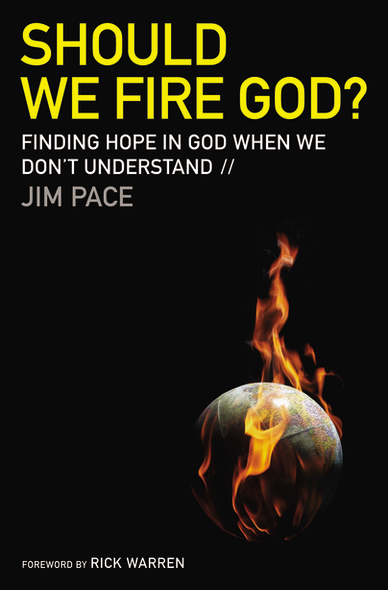
Probably like me, the first thing that caught your eye was the title. Jim Pace didn’t entitle his book Should We Fire God? just to be provocative. It’s a legitimate question. In fact, it’s a question that so many have wrestled with for centuries: How can God allow bad things to happen?
It’s one thing when we in America are asking this question about the genocide in Darfur, or the earthquake in Haiti, or a famine in the Middle East. But what about when it hits so much closer to home?
Jim Price was pastoring at Virginia Tech University, when on April 16, 2007, a lone gunman opened fire on the campus killing over 30 people, including himself. Immediately Jim was forced face-to-face with this age-old question: How could this happen?
Some thought, “If God couldn’t keep us safe, perhaps He’s not up to the job. Should we fire God?”
Carefully, honestly, loving, Jim addresses this question. For him, this is not some theoretic exercise. It’s personal. The emotion comes through raw and real. After weighing all the evidence and considering all of the possibilities, Jim reaches the conclusion that…. Well, you’ll have to read Should We Fire God? for yourself and come up with your own conclusion.
If you’ve ever faced heartache, if you’ve ever wondered how God could allow something tragic to happen, if you’ve ever wrestled with the thought of firing God, you will find some great thinking material in this book.
Thomas Huxley wrote, “I object to Christians: they know too much about God.”
When Job was going through his trials, his “friends” showed up with all kind of knowledge about God. They knew that God would never allow the innocent to go through difficulty. They knew Job had sinned somewhere along the way. They knew that God always answers a righteous man‘s prayers exactly as he had prayed it.
They knew too much about God.
They put God in their box, telling Him how to behave the way they knew He should.
They became their own god.
Job didn’t know all that God was doing, but he did know, “He does great things too marvelous to understand” (Job 9:10). The Apostle Paul echoed the same thought: “Oh, how great are God‘s riches and wisdom and knowledge! How impossible it is for us to understand His decisions and His ways!” (Romans 11:33).
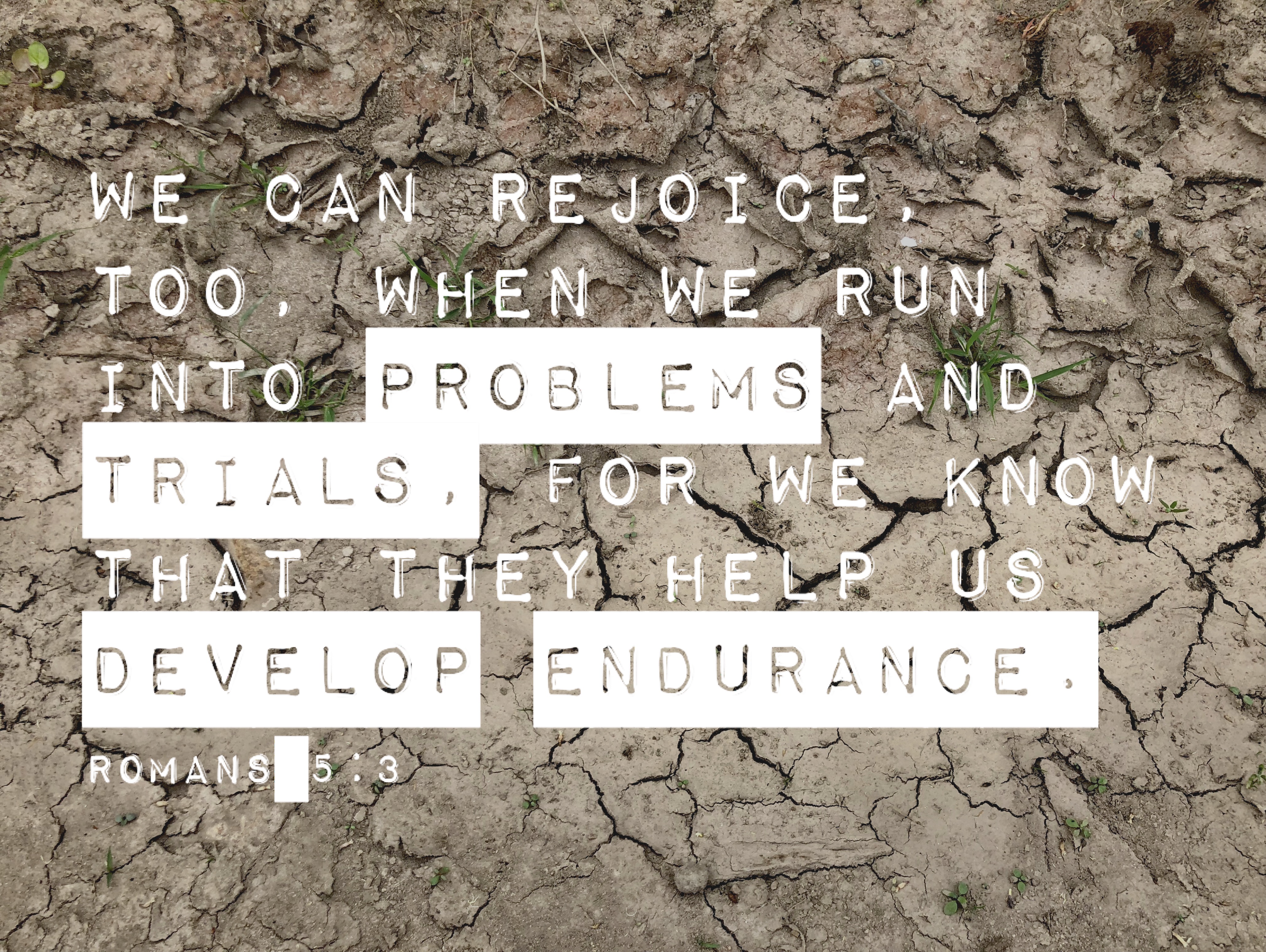
As I go through my own trials, I‘m learning a little more about the depths of God‘s love for me everyday—“We can rejoice, too, when we run into problems and trials, for we know that they help us develop endurance. And endurance develops strength of character, and character strengthens our confident hope of salvation. And this hope will not lead to disappointment. For we know how dearly God loves us, because He has given us the Holy Spirit to fill our hearts with His love” (Romans 5:3-5).
How about you: Do you know too much about God? Or are you still open to learn more?
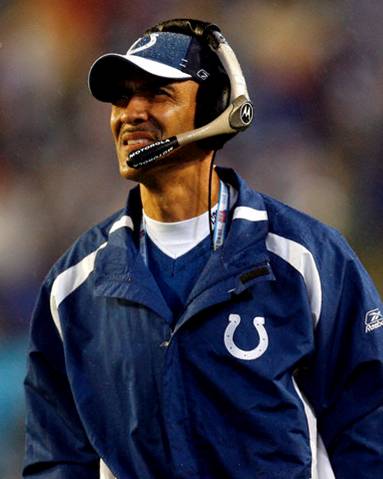
Consider this quote from Tony Dungy’s memoir Quiet Strength—
“It’s easy to be gracious when you’re getting carried off the field in celebration. It’s more difficult when you’re asked to pack up your desk and your passcode doesn’t work anymore. I think people look more closely at our actions in the rough times, when the emotions are raw and our guard is down. That’s when our true character shows and we find out if our faith is real. If I’m going to call myself a Christian, I have to honor Jesus in the disappointments too.” (emphasis mine)
So we could use this definition for integrity: when I act the same in rough times as I do in good times. It’s easy to give God thanks, be on my best behavior and say all the right things when everything is going my way. But I need to be just as attentive in the rough times to still give God thanks and still do and say the right things—the things that honor Jesus.
Great challenge, coach! I’m trying to live this out in my life too.




 Trials




 Craig T. Owens