Listen to the podcast of this post by clicking on the player below, and you can also subscribe on Apple, Spotify, or Audible.
Staying power is something special. It especially stands out to us when someone holds their position for years and continues to remain one of the go-to people in the organization. For Christians, the key to staying power may not be as difficult to obtain as you may think.
The timeline between Nebuchadnezzar and Belshazzar:
Nebuchadnezzar died in 562 and was succeeded by his son Amel-Marduk.
Amel-Marduk was assassinated by his brother-in-law, Nergal-Sharezer, two years later (560 BC), who then assumed the throne.
Four years later (556 BC) Nergal-Sharezer died, and he was succeeded by his son, Labashi-Marduk.
Before a year had passed, Labashi-Marduk was assassinated by a group of malcontents headed up by Nabonidus, who then assumed the throne.
Five years later (550 BC), Nabonidus died and was succeeded by his son, Belshazzar.
Darius—a common name for Medo-Persian rulers. “Darius the Mede” (Daniel 5:31) is a more mysterious figure who, so far, appears only in the Bible. Historians think he may have been Gubaru, an officer in Cyrus’ army who became governor of the Persian province of northern Babylon. In this case, he’s the military leader who invaded Babylon, killed Belshazzar, and effectively ended the reign of Babylon. Persia was now the new world power.
Darius I, called the Great, reorganized the government into satraps and extended the boundaries of the empire (Daniel 6:1-3). Daniel was appointed as one of three presidents over the 120 satraps but was being considered as the chief of the three.
Cyrus the Great was king of Persia from 550-529 BC. When Cyrus became ruler of the Persian district of Anshan, the district was subject to the Medes; five years later he led a rebellion against the Medes that resulted in the capture of King Astyages and the overthrow of the Median Empire. Thereafter Cyrus called himself king of Persia. In 539 BC the kingdom of Babylon fell to Cyrus.
Listen to the podcast of this post by clicking on the player below, and you can also subscribe on Apple, Spotify, or Audible.
The Bible is not only the inspired Word of God but it is rooted in history too. Every prayer was prayed by a real person in distress, and every song of praise was lifted up by someone who personally experienced God’s deliverance.
The reason why this is so important is that it makes God’s Word relatable and applicable to us. If the Bible merely contained moral stories set in some make-believe world, we may have a hard time seeing how to apply the principles to our daily lives. But, thankfully, this isn’t the case. We can read the real-life experiences of real historical people and then we can allow the Holy Spirit to help us apply this inspired Word to our lives.
There is a collection of 15 songs in the Book of Psalms called “The Songs of Ascent.” Even these songs have an important historical background.
Second Chronicles ends with this proclamation from King Cyrus: “The Lord, the God of heaven, has given me all the kingdoms of the earth and He has appointed me to build a temple for Him at Jerusalem in Judah. Anyone of His people among you—may the Lord his God be with him, and let him go up” (2 Chronicles 26:23).
The phrase “let him go up” is both literal (since Jerusalem is 2500 feet above sea level) and spiritual. Listen to these words from King Solomon, “The way of life winds upward for the wise, that he may turn away from hell below” (Proverbs 15:24 NKJV).
The Songs of Ascent were a rallying cry—an encouragement to all pilgrims to keep climbing up.
In Hebrew literature, the main point is usually found in the middle of the poem or story, unlike our Western literature which puts the payoff at the end. In the first Song of Ascent, the middle is verse 4. But the second half of Psalm 120 seems out of place for people ascending up to Jerusalem to worship God. Verse 5 begins with the words, “Woe to me.”
The psalmist is expressing his pain in living among the people of Meshech and Kedar. The people of Meshech were vicious people who traded human lives for money and who conducted themselves as terrorists (Ezekiel 27:13; 32:26). Their name literally means “drawing away.” The people of Kedar were nomadic sons of Ishmael. Being nomadic means they were never at rest. Their name literally means “dark place.” Very noteworthy is that there is no mention of God in verses 5-7.
The middle verse of this song (v. 4) turns the people of Meshech and Kedar over to God. It is a reminder that we are not the ones to dispense justice. If God knew how to overthrow the powerful kingdoms of Judah, Babylon, and the Medes, if He knew to call Cyrus by name at just the right moment, He also knows how to deal with these sinners.
This Song of Ascent shows the stark contrast between keeping our eyes on the dark culture around us versus keeping our eyes on the God who is never weighed down by the darkness. As we go higher up, we focus more on God; as His saints focus on Him, His light shines on them; as His light shines on them, they point sinners living in dark valleys to the God of light and love.
Staying down is easy. Getting up requires intentional effort. Going up requires us to overcome the pull of sin and the frustration of watching for judgment to fall on sinners.
Continually going up glorifies God, has eternal rewards for saints, and creates a compelling testimony for sinners.
Going up is a lot of effort, but the rewards are so worth it! As the apostle Paul reminded his friends in Rome, “I consider that our present sufferings are not worth comparing with the glory that will be revealed in us” (Romans 8:18). Let’s keep climbing up and let’s keep lifting our eyes to the only One who has the eternal light.
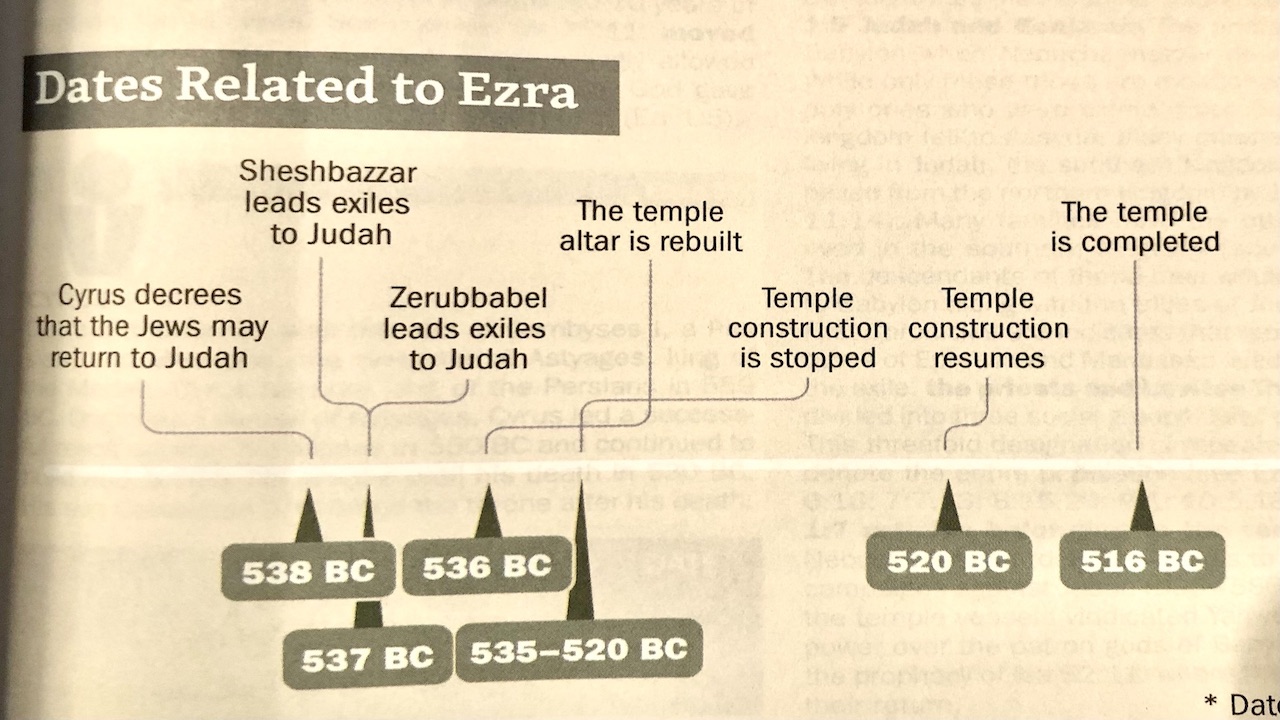
The reason these dates are so important is that they precisely align with the prophecy spoken by Jeremiah BEFORE the Israelites were even taken into exile. God said that they would return to worship in Jerusalem 70 years after their exile (Jeremiah 29:10-14; Daniel 9:1-2). Which is exactly what happened: They were taken into captivity in 586 BC, and the temple was completed in 516 BC!
Haggai’s final prophecy (Haggai 2:20-23) has an unusual ending. It’s unusual in that it doesn’t sound like “The End” that usually ends a book of the Bible. That is precisely because it’s not the end.
God tells Zerubbabel that he is God’s “signet ring,” a mark of God’s supreme authority. Zerubbabel was not the signet ring, but he was a forerunner—a type—of Jesus.
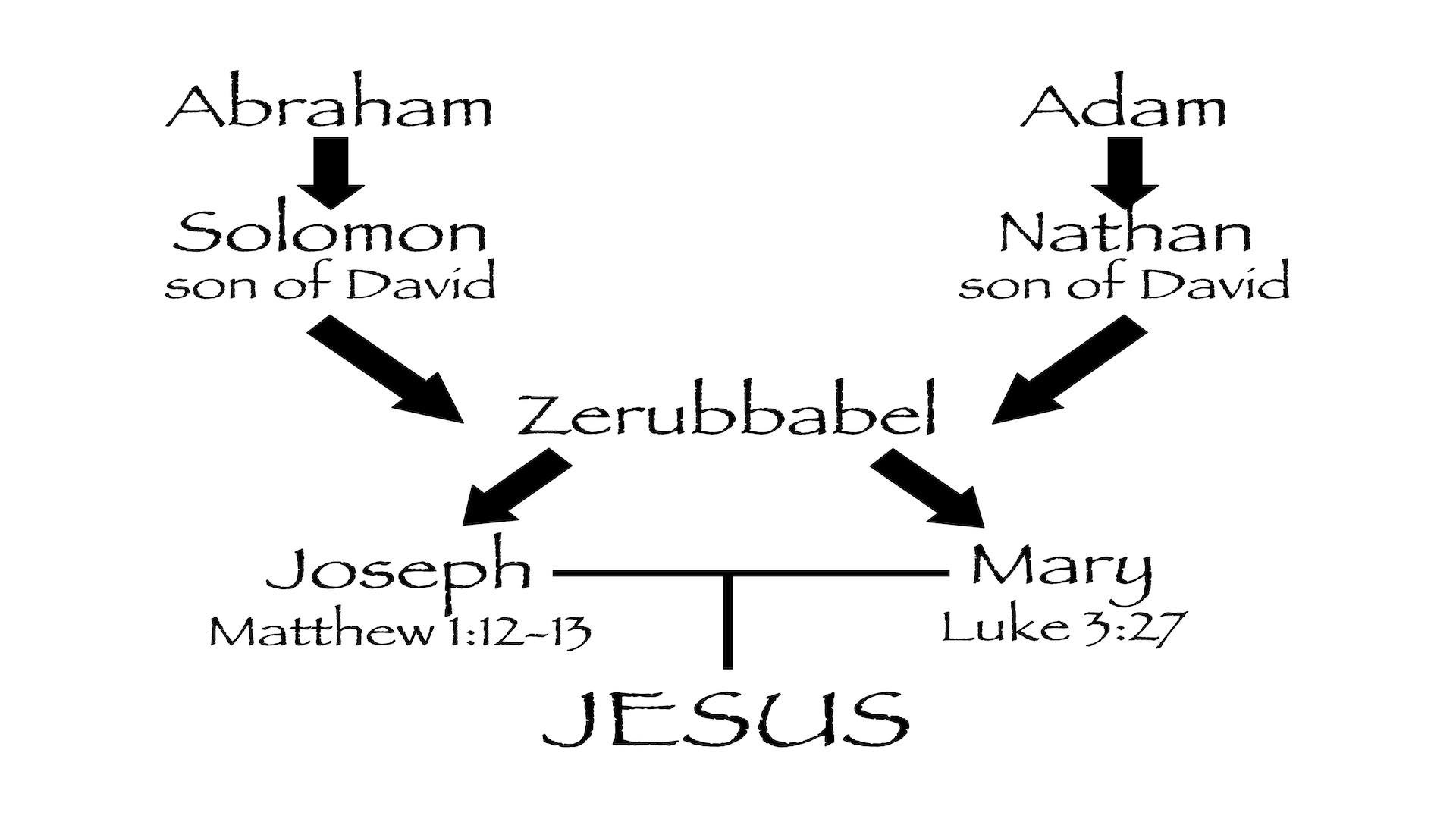
So when we trace the genealogies of Jesus in the New Testament, we see that Zerubbabel appears in the family line of both Joseph and Mary—both the family line from Abraham who received God’s covenant, and the family line of Adam who heard God promise that a human offspring would crush satan’s head.
These genealogies are as precise and exacting as the dates for the return of the exiles. God does everything exactly according to plan. He speaks His promises to us, and we can stand on those promises. Jesus is THE Signet Ring that stamps His “Amen” to every promise of God on which we stand.
In the first year of Cyrus king of Persia, in order to fulfill the word of the Lord spoken by Jeremiah, the Lord moved the heart of Cyrus… (Ezra 1:1).
Ezra begins as 2 Chronicles ends: with the proclamation of Cyrus allowing the Israelites to return to Jerusalem.
The Babylonians defeated the Assyrians, who were then defeated by the Medes, who were themselves defeated by the Persians under Cyrus II. This was a powerful man who claimed “all the kingdoms of the earth” as his possession. (v. 2).
Yet this conquering king who was called Cyrus the Great had his heart directed by God.
Among the Israelite exiles that returned to Jerusalem were princes, priests, Levites, servants, and common people of every stripe. These exiles were rulers of nothing.
Yet these people also had their hearts moved by God (v. 5)—42,360 of them, to be precise.
The same God who moved the heart of the most powerful king on earth also moved the hearts of common people. God had a plan to fulfill and He knew exactly which hearts to move at the precise time to bring about His purpose. God is sovereignly in control. All of history—including all the people in history—is His story.
The king is not too powerful and the common citizen is not too small to be used by God.
Let me make that statement more personal: All of the “great” people on earth today are not too powerful to be used by God, nor are you too small to be used by Him.
Will you say “yes” when He moves your heart to action?







 Craig T. Owens