
Perelandra (book review)

Listen to the podcast of this post by clicking on the player below, and you can also subscribe on Apple or Spotify.

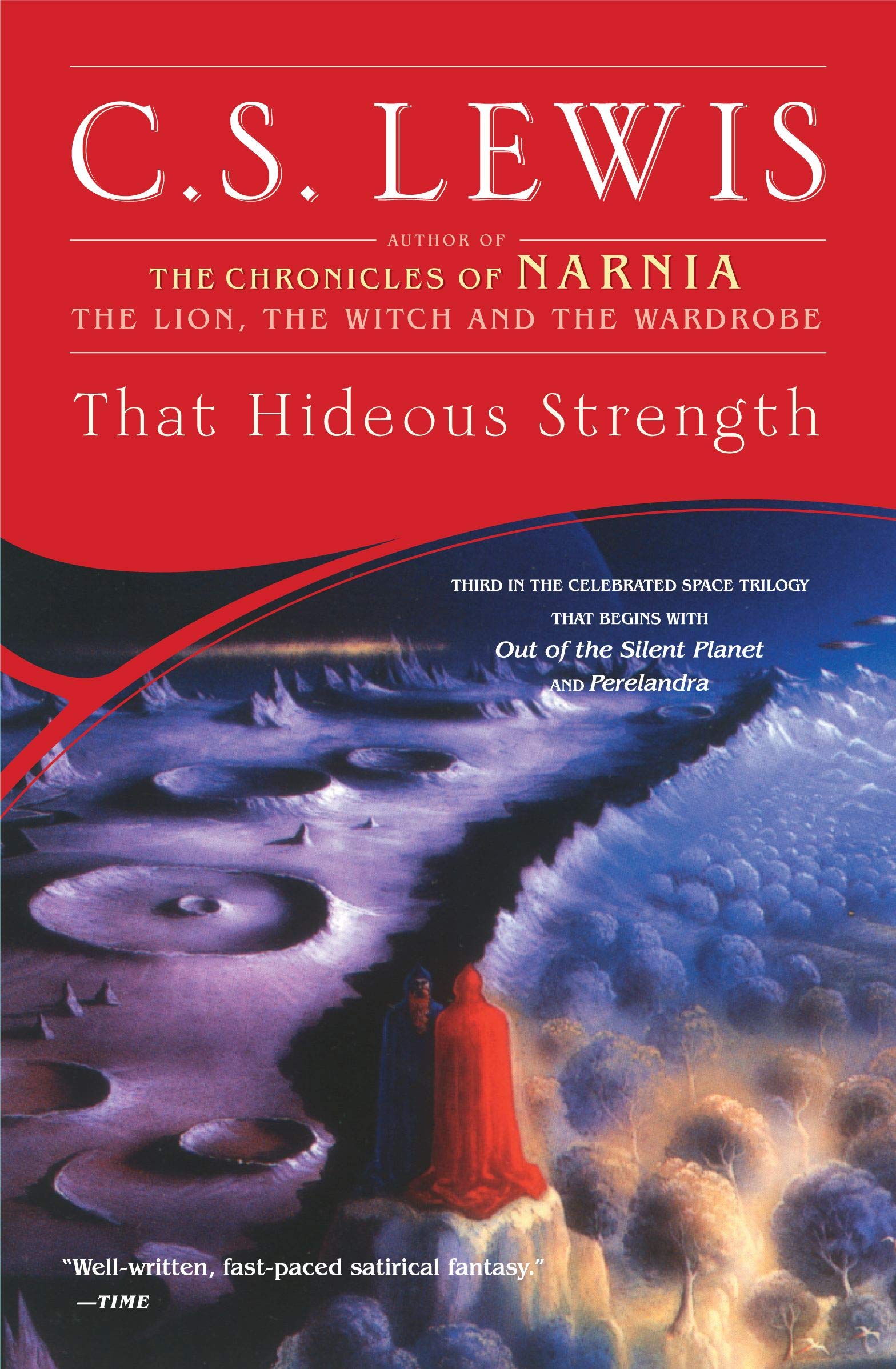
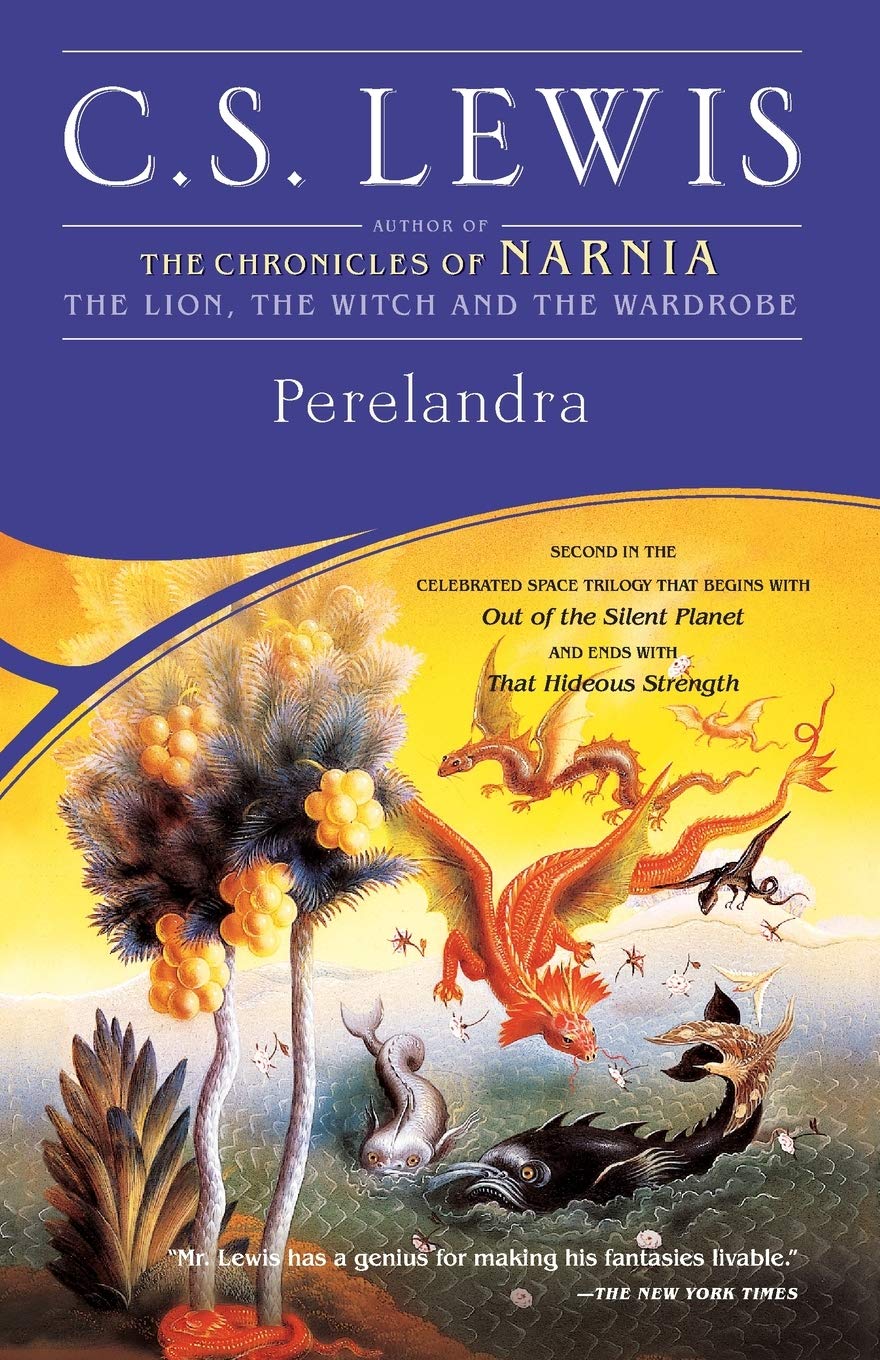
Perelandra by C.S. Lewis is the second book in Lewis’ space trilogy. Of all the books in this series, this is the only book that I would recommend reading the first book—Out Of The Silent Planet—first, so that you can fully appreciate the story. 

Out Of The Silent Planet took place on Malacandra (or Mars) where our protagonist Dr. Elwin Ransom learns the Old Solar language and clashes with the antagonist Dr. Edward Weston. Perelandra (or Venus) is the setting of this second book, which essentially picks up right from the conclusion of book one. 

Although C.S. Lewis had much stricter definitions for terms like “allegory” or “parable,” his fantasy stories in both this space trilogy and his Narnian books clearly are telling a much grander and more real Story than merely the fictional accounts in these books. This concept is on full display in Perelandra. 

In the biblical account of the temptation of Eve, the whole affair is covered rather quickly. The devil says, “Eat the fruit,” to which Eve replies, “We’re not supposed to.” And then the devil says, “Nothing bad will happen to you if you do eat it,” and she does it. In Perelandra, C.S. Lewis takes us back to that scene and imagines the debate that might have happened, with Ransom counseling the Lady of Perelandra to obey, and Weston (or at least Weston’s body) trying to convince her to bravely disobey. The interplay between these three characters is quite fascinating. 

This story is a very enjoyable read on its own, but I found that the backstory of Out Of The Silent Planet increased my enjoyment in reading this book again. Whenever you choose to read this book, you are in for—with all due apologies to C.S. Lewis—a lovely allegory! 

►► Would you please prayerfully consider supporting this ministry? ◀︎◀︎
Holy Sexuality And The Gospel (book review)

Listen to the podcast of this post by clicking on the player below, and you can also subscribe on Apple or Spotify.

I’m not sure there could be a more timely book for our current generation than Christopher Yuan’s Holy Sexuality and The Gospel. 

My wife was reading Dr. Yuan’s memoir, which he co-wrote with his mother, called Out Of A Far Country, and she continually raved to me about the powerful message in their story. As I began to look at that book, I saw his more recent release—Holy Sexuality—and immediately got pulled into its timely message. 

It appears dialogues about sexuality, sexual orientation, and what God condones or condemns regarding sex are taking place everywhere. Dr. Yuan clearly addresses these issues by taking us back to the foundational truths of the Scripture. 

Dr. Yuan’s clear message is not about heterosexuality or homosexuality, but about holy sexuality. That is, what does God say about sexuality, and how does this tie in to the Gospel of Jesus Christ? This book is unabashedly Bible-centric, but it’s presented in concepts and language that everyone can grasp. 

In my opinion, this book is a must-read for pastors, youth pastors, and parents who engage the younger generations in conversations about sexuality. Pop culture has a message they are promoting in every movie, TV show, and music album, so thoughtful, loving Christians need to be armed with the truth from God’s Word on how to get to the root of both the cultural message and the biblical message. Dr. Yuan will help you be more attuned to the message in our current culture, as well as how to have loving and meaningful conversations about what is a very sensitive subject for many people. 

►► Would you please prayerfully consider supporting this ministry? ◀︎◀︎
The Craig And Greg Show: Talking About “The Shawn Effect”

On this episode of “The Craig And Greg Show” we talk about: 

  • Greg’s booked called The Shawn Effect
  • what leaders look like [1:14] 
  • leaders make friends easily [2:53]
  • how you can get a free copy of The Shawn Effect [3:53]
  • Shawn’s parents set him up for success [5:15]
  • leaders get informed so they can interact with others and stay relevant [6:28]
  • Shawn demonstrated chivalry and trained young men to be gentlemen [7:53]
  • leaders don’t need a platform or a big following to be an influencer [8:40]
  • Shawn shows how leaders love [10:33]
  • leaders are encouragers [11:37]
  • leaders are readers and appliers [12:27]

Check out this episode and subscribe on YouTube so you can watch all of the upcoming episodes. You can also listen to our podcast on Spotify and Apple.

Out Of The Silent Planet (book review)

Listen to the podcast of this post by clicking on the player below, and you can also subscribe on Apple or Spotify.

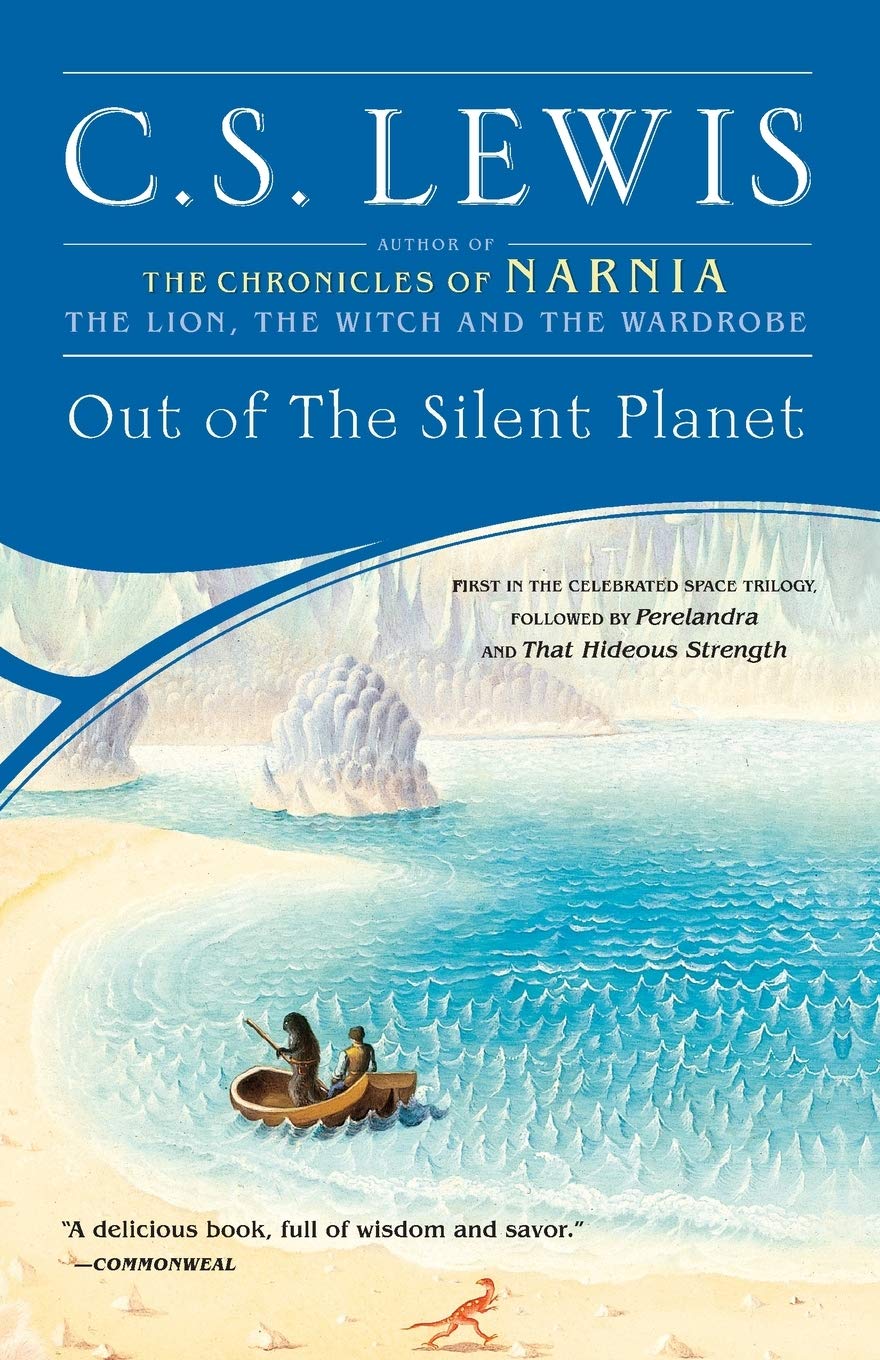
I truly believe that leaders are readers. But leaders need to also be discerning in the books they choose. I almost exclusively read non-fiction, but I make an exception when a fictional piece of literature is a mind-expanding book. As I am re-reading C.S. Lewis’ space trilogy, I’m reminded again how this master storyteller can pack so much into a few pages. Book one in this trilogy is Out Of The Silent Planet. 

In its simplest form, this book is about a trip to Malacandra (or Mars), but as with any fantasy work written by Lewis, the story tells a far deeper and more substantial Story. In this book, we go behind the scenes to witness the aftermath of the battle in heaven when Lucifer and his fallen angels attempted to usurp God’s throne. In the Malacandrian language, Lucifer is “the bent one,” having deviated away from God’s loving design, so those who have allowed themselves to be influenced by him are also called “bent.” The three Earthlings who have arrived on Malacandra show their level of straightness or bentness as this story unfolds. 

Another fascinating part of this book is the subtle change in language. The main protagonist is a philologist named Dr. Elwin Ransom. Watching how Lewis shows Dr. Ransom progressively learning the language of the inhabitants of Malacandra, contrasted with the way the bent men continue to speak it in “baby talk” is amazing. Ransom slowly learns more of the planet’s culture and the nuance of the language becomes more precise as he does so. And Lewis keeps pace by showing us the evolving vocabulary as the story moves along. 

If you are already a C.S. Lewis fan, this is a great book to continue your journey into his vast mind. But if you haven’t been exposed to much of Lewis’ writings yet, I would suggest holding off on this book until you have a better grasp of his more accessible works. 

►► Would you please prayerfully consider supporting this ministry? ◀︎◀︎
Seeing Beauty And Saying Beautifully (book review)

Listen to the podcast of this post by clicking on the player below, and you can also subscribe on Apple or Spotify.

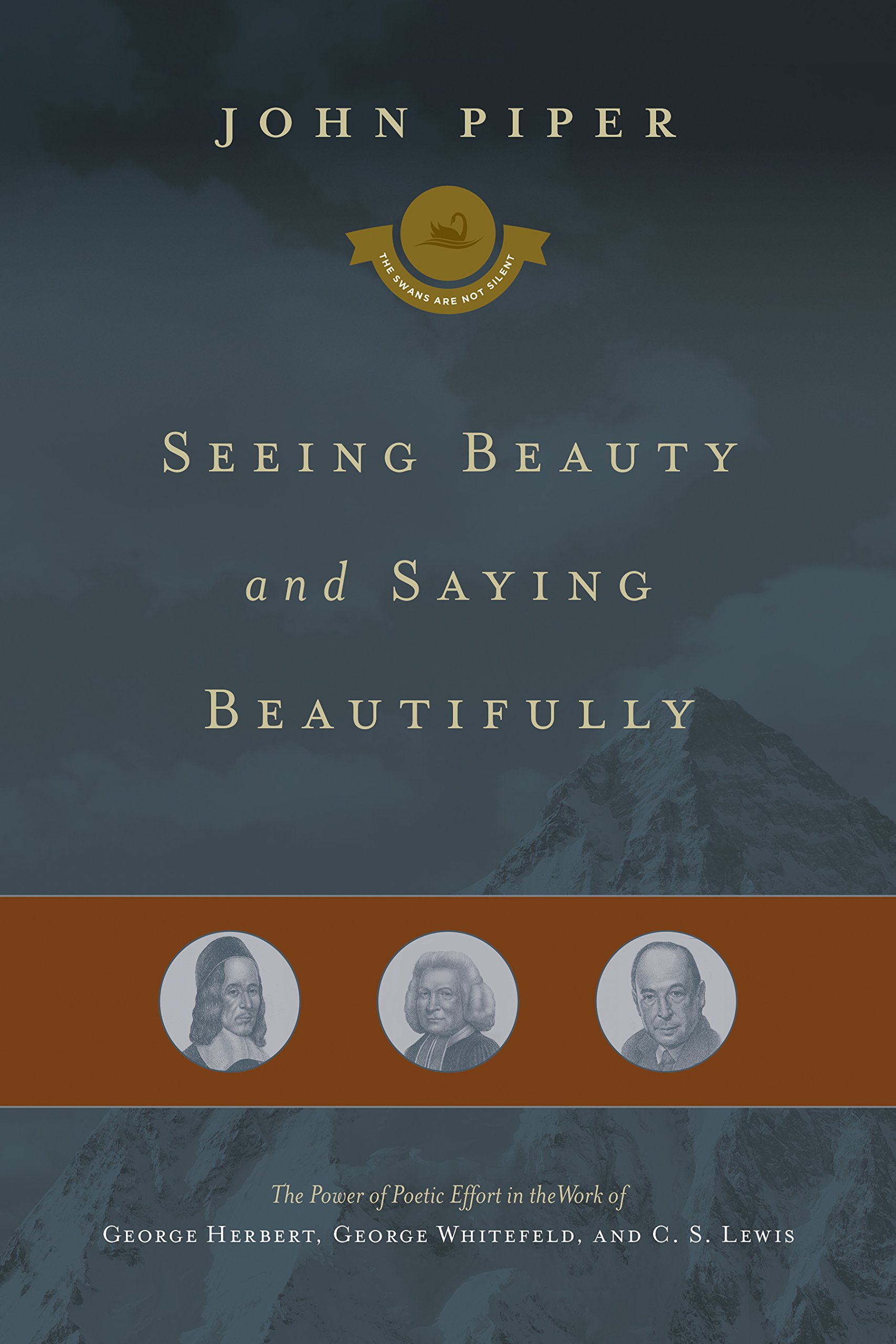
Seeing Beauty And Saying Beautifully is, in my mind, a grand slam! It features one of my favorite poets (George Herbert), possibly the most prolific evangelist of history (George Whitefield), my all-time favorite author (C.S. Lewis), all tied together by my go-to theologian (John Piper). Seeing Beauty And Saying Beautifully is part 6 in Piper’s series called “The Swans Are Not Silent.” 

George Herbert was a pastor of a small country church and a prolific poet who wrote almost all of his poems uniquely. “Of the 167 poems in The Temple, 116 are written with meters that are not repeated,” which even modern poets find astounding. George Whitefield spent more hours of his life preaching than he did sleeping, and he spoke with such a captivating style that he was quite possibly the first celebrity of the American colonies. C.S. Lewis wrote everything from history to fantasy, autobiography to poetry, theology to children’s novels. Peter Kreeft says of him, he “was not a man: he was a world.” 

John Piper finds in all three of these men a common thread: They all were able to not only see the beauty of God in everything, but they were able to express it in a beautiful way that drew in others to see the beauty of God for themselves. Pastor John calls this “poetic effort.” 

Pastor John also wrestles with how the profound creativity and eloquence of his three subjects meshes with the apostle Paul’s admonition that human eloquence could drain the Cross of Jesus of its power (see 1 Corinthians 1:17-2:5). He concludes that poetic effort for the sake of exalting the speaker or poet does turn people’s eyes to man and away from God. But that poet, evangelist, or author that uses the beauty in God’s creation to point people to the Creator is doing so in a way in which God is supremely exalted. This, Pastor John says, is exactly what Herbert, Whitefield, and Lewis have done, and done so well that their poetic efforts are still fruitful and God-glorifying long after their deaths. 

Seeing Beauty And Saying Beautifully is a wonderful book for those who enjoy biographies, theology, or the craft of skilled artisans. If you don’t know about the poems of George Herbert, the preaching of George Whitefield, or the vast library of literature of C.S. Lewis, let this book be your doorway to a rich new world of discovery, enjoyment, and God-glorification. 

►► Would you please prayerfully consider supporting this ministry? ◀︎◀︎
Churchill’s Ministry Of Ungentlemanly Warfare (book review)

Listen to the podcast of this post by clicking on the player below, and you can also subscribe on Apple or Spotify.

This book was a complete and pleasant surprise! I have read so many books about Winston Churchill, including a number of books that Churchill himself wrote, and I never knew about the prime minister’s special group that played such havoc with the Nazi war machine. Giles Milton unpacks the fascinating tale in Churchill’s Ministry Of Ungentlemanly Warfare. 

This book reads like a classic spy novel, but it is the actual historic record of saboteurs, weapons makers, and out-of-the-box plotters who absolutely frustrated Adolph Hitler’s war plans at nearly every turn. The start of World War II caught so many by surprise that they were woefully unprepared to confront what appeared to be the invincible German military. Some in the British government hit upon the idea of fighting a guerrilla-style war to slow down the Germans’ advance. 

Mr. Milton does a marvelous job of following six key gentlemen in the way they created new weapons, new training regimens, and new fighting styles. Everything they did was so unconventional that the traditional leaders in the British government and military hesitated to give their support to this special ministry, and even went out of their way to thwart their efforts. Fortunately, Mr. Churchill was all-in on this group and cleared out the roadblocks for them. 

Whether you enjoy fictional spy novels or non-fictional accounts of historical events, I’m confident you will thoroughly enjoy Churchill’s Ministry Of Ungentlemanly Warfare. 

►► Would you please prayerfully consider supporting this ministry? ◀︎◀︎
Secrets Of Dynamic Communication (book review)

Listen to the podcast of this post by clicking on the player below, and you can also subscribe on Apple or Spotify.

If you’ve ever seen Ken Davis speak, you will recognize instantly his ability to capture an audience’s attention and keep them engaged through his entire presentation. In Secrets Of Dynamic Communication, Ken has given us the step-by-step regimen he uses to prepare such enthralling presentations. 

Let me just state right up front that anyone who communicates with a group of people will need to get this book. I’m not talking about just those who speak to large groups of people, but even someone who runs a sales meeting or teaches a Sunday School class will benefit from the strategies outlined in this book. 

Ken has developed a whole course around the acrostic SCORRE. These are steps that have been battle-tested by Ken himself and refined over years of his public speaking. He has done a masterful job in distilling the basic structure of an engaging address, while still leaving ample room for every speaker to infuse their own unique style and personality. 

Each chapter ends with a review and practice section that will help you begin to learn and apply these steps. Ken also has some excellent tools in the Appendices that will jump-start your speaking craft. 

I’m so appreciative of Ken Davis’ willingness to open up his storeroom of speaking insights to share with all of us! 

►► Would you please prayerfully consider supporting this ministry? ◀︎◀︎

John Adams (book review)

Listen to the podcast of this post by clicking on the player below, and you can also subscribe on Apple or Spotify.

I find David McCullough to be one of the most thorough, impartial, comprehensive, and engaging historians that I have read. These attributes—and many others—are on full display in his biography of our second president John Adams. 

Many have rightly called Thomas Jefferson the pen of the Declaration of Independence and John Adams the voice of the Declaration. But it’s not just this historic document for which Adams should be remembered, but the very form of government which we enjoy right now is a living tribute to his forceful and persuasive genius. 

This biography is brilliantly told by McCullough through the first-person accounts of Adams’ vast quantity of letters, as well as the letters written to and about him, and the contemporary newspapers of the day. McCullough takes us back to Adams’ boyhood home to give us a good understanding of the upbringing and family heritage that fueled his quest for learning and leading. From his first elected office, through his time in Europe advocating for the newly created United States of America, into his presidency, and then through his long retirement, Adams was tireless in his efforts to make this country the best it could be. 

For students of history or leadership, this is a remarkably insightful look into a man that was at the heart of so much of what characterizes our great nation today. I have other books about John Adams in my library, but David McCullough’s lengthy work is, in my opinion, the definitive source. 

►► Would you please prayerfully consider supporting this ministry? ◀︎◀︎
How Christianity Changed The World (book review)

Listen to the podcast of this post by clicking on the player below, and you can also subscribe on Apple or Spotify.

Alvin Schmidt claims, “No other religion, philosophy, teaching, nation, movement—whatever—has so changed the world for the better as Christianity has done.” And I quite believe him. He lays out the evidence to back up this bold claim in his book How Christianity Changed The World. 

A few years ago I presented a series of messages to make the case for the resurrection of Jesus. One of the pieces of evidence I presented was the cultural engagement of Christians whose lives had been transformed by a personal relationship with the resurrected Jesus Christ. Alvin Schmidt’s book is like taking this single point of mine and putting it on steroids! 

Using the reports of first-person observers from the first century all the way through present day, Mr. Schmidt shows how there is not a single part of the culture that hasn’t benefitted from the involvement of those who live out the Christian principles they have discovered in the Bible. From the care of the sick and elderly, to the elevation of women and marriage, to art, and architecture, and music, and medicine, and science, and education—every sphere of life has been improved by practicing Christians. 

I would highly recommend reading this book and then keeping it close at hand to share with those ignorant or skeptical of the claims of Christianity. As William Barclay noted, “Anyone who asks the question, ‘What has Christianity done for the world?’ has delivered himself into a Christian debater’s hands. There is nothing in history so unanswerably demonstrable as the transforming power of Christianity and of Christ on the individual life and on the life of society.” To that, I add a hearty Amen! 

Please get a copy of How Christianity Changed The World for your library. 

►► Would you please prayerfully consider supporting this ministry? ◀︎◀︎
Reading The Bible With The Founding Fathers (book review)

Listen to the podcast of this post by clicking on the player below, and you can also subscribe on Apple or Spotify.

You know how they say, “Never judge a book by its cover?” Well, I did that with Reading The Bible With The Founding Fathers, and I judged incorrectly. My son gave me this book as a gift and I thought I would be reading passages of Scripture that our founding fathers had highlighted in their Bibles. Although that wasn’t the case at all, I was delighted to be wrong. What Daniel Dreisbach has given us in this book is a masterpiece of American history that I so thoroughly enjoyed devouring. 

This book is about the Bible’s influence on not only the founders’ thought process as they contemplated independence from Great Britain, but also as they formed our own republican form of government. It’s also about the common lexicon that the colonists had with each other because the Bible was the most well-read book in the American colonies. This allowed our founding fathers to speak in figurative language that rang true to the hearts of their fellow Americans. 

Mr. Dreisbach often takes us back to Europe and the Protestant Reformation era to help us understand how biblical thinking had coalesced and gained strength in the minds of the mid-eighteenth century Americans. Things like did the Bible sanction rebellion against the king of England, or could principles for a sound government structure be found in the pages of Scripture? 

Reading The Bible With The Founding Fathers is a fascinating and eye-opening read. Not only to help us understand the foundational thoughts of our great country but also to see the role that biblical literacy still plays in our governmental operations today. This book is extensively footnoted, so the curious reader can dig even deeper than Mr. Dreisbach has already taken these topics. 

For Christians who want a better understanding of the Bible’s place in the republican form of government in these United States of America, I would recommend reading this book alongside your Bible so you may ponder for yourself how much of our civic framework is supported by a proper understanding of Scripture. 

P.S. Another great study of our founding fathers is Faith Of Our Fathers.

►► Would you please prayerfully consider supporting this ministry? ◀︎◀︎
UPDATE: I share some quotes from this book here.