8 More Quotes From “The Ministry Of God’s Word”

The Ministry Of God's WordI stand by what I said: The Ministry Of God’s Word by Watchman Nee is a must read for anyone who preaches the Bible. You can read my full review of this book by clicking here. Below are some more quotes from this amazing book.

“Should anyone fail to see the necessity of having himself dealt with by God, fail to see how his habits, temperament and life need to be pruned and refined, he is of no use to the Word of God.”

“Never forget what the ministry of the Word is. It is the outflowing of the Spirit of God in man as well as in the Word. One part of it consists of God’s Word and the other part of man’s ministry. The Word of God comes to man, who adds in his ministry, and then the two flow out together. God’s Word is not delivered if it is just the Word without the human ministry.”

“Having been set apart as a minister of God’s Word from our mother’s womb, none of us can afford to be foolish before God.”

“A minister of the Word needs to rise very high before God; only then will His Word come through. The pureness of the Word released depends on the amount of discipline received before God. The more the man is broken, the purer the Word; the less that has been learned, the more corrupt its release. The ministry of the Word is based on the condition of the man before the Lord.”

“When the Holy Spirit finds it possible to put the Word in a person’s mouth because the emotion, thought, will, and spirit of that man are under His control, then there is revelation.”

“Every area of our life must therefore be dealt with by God. Always remember that to be a minister of the Word is not a cheap matter.”

“God does not put His Word in man for him to repeat verbatim. He puts His Word in man for the latter to search out with his mind. He gives light to man that man may grasp it and think on it. He places a burden in man for him to find appropriate words to express that burden. It is man who thinks, searches, and speaks; even so, God is able to acknowledge that it is in truth His very own Word.”

“If you as a person have not been pruned and refined by God, your opinion will not be dependable. Any bit of its projection will spoil the Word of God. How God has trusted you as His minister! He gives you a light and burden, and then allows you to think out and feel His Word, even permitting you to form your own opinion. He trusts you. He still works in you that all your opinion, thought and feeling will be like His. This is New Testament prophesying, New Testament ministry of the Word.”

You can read some previously posted quotes from this book by clicking here.
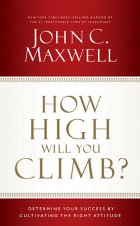
11 Quotes From “How High Will You Climb?”

How High Will You Climb?How High Will You Climb? is an abridgment of Dr. John Maxwell’s amazing book The Winning Attitude. Truly, attitude will determine your success in life. I highly recommend either of these books (you can check out my review by clicking here). Below are some attitude quotes I highlighted and one helpful infographic.

“The attitude is an inward feeling expressed by behavior. That is why an attitude can be seen without a word being said.” 

“It is impossible to perform consistently in a manner that is inconsistent with the way we see ourselves. In other words, we usually act in direct response to our self-image. … We should also remember God’s unconditional love and acceptance. He thinks more of us than we do of ourselves. … This principle works in reverse too. How we see ourselves reflects how others see us. If we like ourselves, it increases the odds that others will like us.”

“Others can stop you temporarily, but you are the only one who can do it permanently.”

“Usually wrong decisions are made at the wrong time, and right decisions are made at the right time. The reason? We let our environment control our thinking, which controls our decisions. Therefore, the more decisions that are made in the calm of life, the fewer times storms can bring us down.”

“Failure—we hide it, deny it, fear it, ignore it, and hate it. We do everything but accept it. By acceptance, I don’t mean resignation and apathy. I mean understanding that failure is a necessary step to success. The person who never makes a mistake never does anything.”

“Fear of failure grips those who take themselves too seriously.”

“First, discouragement hurts our self-image. … Discouragement causes us to see ourselves as less than we really are. This fact becomes even more important when we realize that we cannot consistently perform in a manner that is inconsistent with the way we see ourselves. Second, discouragement causes us to evade our responsibilities. … Third, discouragement causes us to blame others for our predicaments. … Fourth, discouragement causes us to blur the facts.”

“When our attitude crashes, we have two alternatives. We can either alter the difficulty or alter ourselves. What can be changed for the best, we must change. When that is impossible, we must adjust to the circumstances in a positive way.”

“We are either the masters or the victims of our attitudes. It is a matter of personal choice. Who we are today is the result of choices we made yesterday. Tomorrow we will become what we choose today.” 

“It is a sad day for any person when he becomes so satisfied with his life, his thoughts, and his deeds that he ceases to be challenged to do greater things in life.”

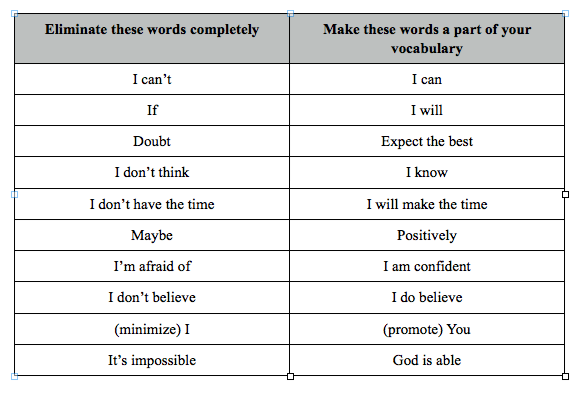
“When an opportunity for growth is open to you, what do you tell yourself? Will you grasp the chance with a tingle of excitement and say, ‘I can make it work!’ or do you smother it by saying, ‘That’s impractical… too difficult… I don’t think it can be done’? In that moment, you choose between success and failure. You helped to form a habit of either positive or negative thinking by what you tell yourself. So give your ‘better’ self a chance to grow. Form the habit of positive reaction followed by positive action.”

Change your vocabulary


How High Will You Climb? (book review)

How High Will You Climb?John Maxwell’s books give me wings! They are always so encouraging, yet at the same time challenging me to go beyond my current setting. I recently read How High Will You Climb? (again). I put the “again” in parenthesis because this is an abridgment of The Winning Attitude, which I read over 10 years ago. But the message about the power of attitude was a welcome reminder.

What is an attitude?
It is the “advance man” of our true selves.
Its roots are in word but its fruit is outward.
It is our best friend and our worst enemy.
It is more honest and more consistent than our words.
It is an outward look based on past experiences.
It is a thing that draws people to us or repels them.
It is never content until it is expressed.
It is the librarian of our past.
It is the speaker of our present.
It is the prophet of our future. (from How High Will You Climb? page 14)

If your natural bent is a negative attitude, you need to read this book. If you natural bent is a positive attitude, you will find page after page of reinforcing ideas to take your attitude even higher, and help you lift others with you.

How High Will You Climb? (or The Winning Attitude) is a great read for everyone!

I am a Thomas Nelson book reviewer.

The Love Of God (book review)

The Love Of GodAs I have often said, Oswald Chambers challenges me to think more deeply and broadly like few others can. This collection of books (there are six of them in this one volume) under the heading The Love Of God is no different.

And thinking is what this collection of books is all about. This is a series of lectures and sermons which caused me to rethink not the various biblical doctrines I have learned, but the application of those doctrines to my daily life. This is just what Oswald Chambers had in mind. For one set of lectures, Chamber wrote this introduction—

“The object of these studies is to stimulate thinking along Christian lines. So many among us have a good spiritual experience, but have never thought things out on Christian lines. It is just as true that a man may live a Christian life without thinking it as that a man may think the Christian life without living it; but to combine the two means that great help may be rendered during times of confusion, turmoil and tension like the present. Bear in mind that Christian growth is based on the regeneration of a man’s soul through Redemption.” (emphasis in his original)

If you want to have your thinking stretched, this is the book for you!

7 Quotes From “Did Jesus Rise From The Dead?”

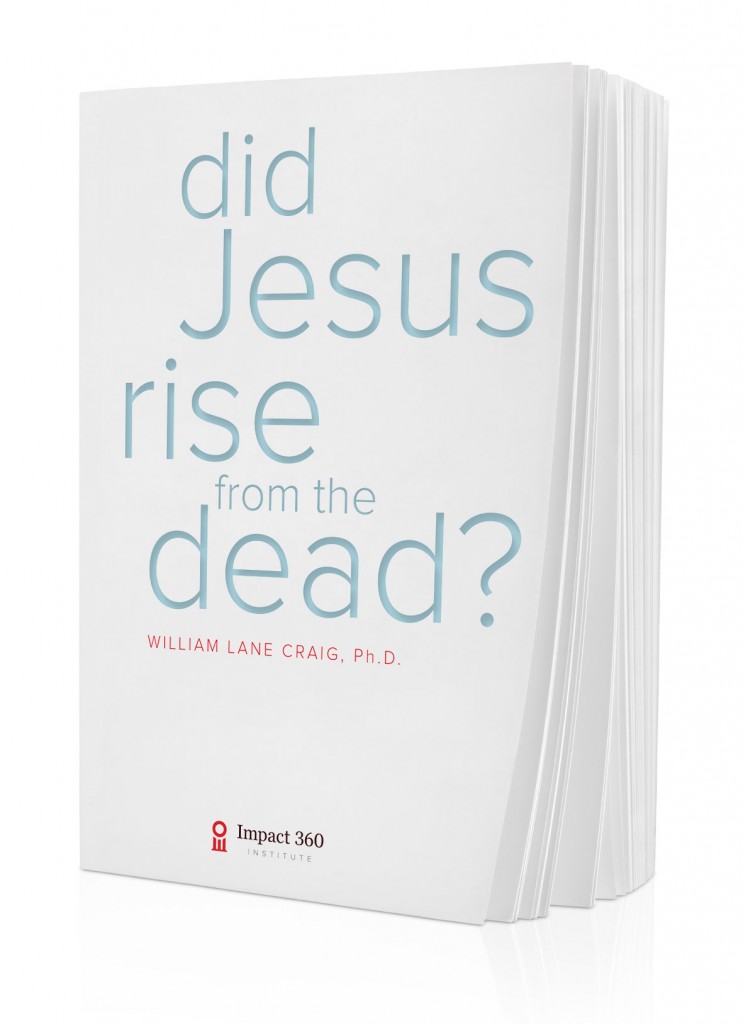
Did Jesus Rise From The DeadDid Jesus Rise From The Dead? is an excellent apologetic for both the biblical skeptic and the biblical student. You can read my full book review by clicking here. Below are seven noteworthy quotes and one infographic from this fascinating book.

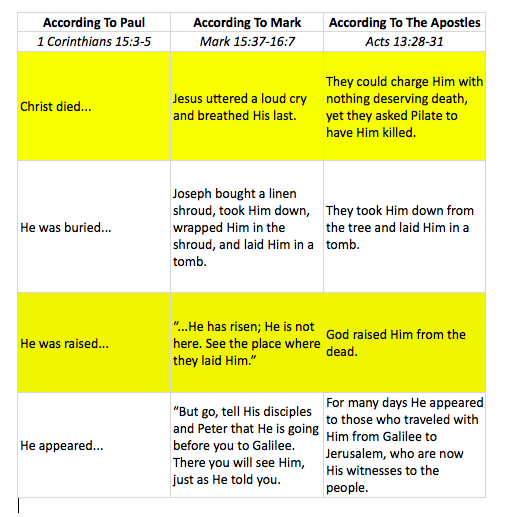
“One of the most noteworthy facts about the early Christian belief in Jesus’ resurrection was that it flourished in the very city where Jesus had been publicly crucified. So long as the inhabitants of Jerusalem thought that Jesus’ corpse lay in the tomb, few would have been prepared to believe such silliness as the claim that God had raised Jesus from the dead.”

“We have the extraordinary number of at least five independent sources for Jesus’ burial, some of which are extremely early. The Gospels describe Joseph as a rich man, a member of the Jewish Sanhedrin. As a member of the Jewish Sanhedrin that condemned Jesus, Joseph of Arimathea is unlikely to be a Christian invention. The Sanhedrin was a sort of Jewish high court made up of seventy of the leading men of Judaism, which presided in Jerusalem. There was an understandable hostility among early Christians toward the Jewish Sanhe-drists, for Christians blamed the Sanhedrists for engineering a judicial murder of Jesus at the hands of the Romans. … Therefore, Jesus’ burial by Joseph is very probably historical, since it would be almost inexplicable why Christians would invent a story about a Jewish Sanhedrist who gives Jesus a proper burial.”

“Matthew is clearly working with an independent source, for he includes the story of the guard at the tomb, which is not derived from Mark and is unique to his Gospel; moreover, his comment that the rumor that the disciples had stolen Jesus’ body, ‘And this story has been spread among the Jews to this day,’ (Matthew 28:15) shows that the guard is not Matthew’s own creation, but was part of prior tradition. Luke also has an independent source, for he tells the story, not found in Mark, of two disciples’ inspecting the tomb to verify the women’s report that the tomb was vacant. This story cannot be regarded as Luke’s own creation, since the incident is independently reported in John’s Gospel. And, again, given John’s independence of the other three Gospels, we have yet another independent report of the empty tomb.”

Did Jesus Rise From The Dead infographic

(click image for a larger view)

“To appreciate how restrained Mark’s narrative is, we need only read the account in the second-century apocryphal Gospel of Peter. It describes Jesus’ triumphant exit from the tomb as a gigantic figure whose head reaches above the clouds, supported by giant angels, followed by a talking cross, heralded by a voice from heaven, and all witnessed by a Roman guard, the Jewish leaders, and a multitude of spectators! This is how real legends look: They’re richly decorated with theological and apologetical motifs. By contrast, Mark’s account is stark in its simplicity.”

“Think about that: ‘His disciples came by night and stole Him away’ [Matthew 28:13]. The Jewish authorities did not deny the fact that Jesus’ tomb was empty; instead they entangled themselves in a hopeless series of absurdities, trying to explain it away. In other words, the Jewish claim that the disciples stole the body presupposes that the body was, in fact, missing. Therefore, we have evidence from the very adversaries of the early Christian movement for the fact of the empty tomb.”

“All the followers of those first century messianic movements were fanatically committed to the cause…. But in no case right across the century before Jesus and the century after Him do we hear of any Jewish group saying that their executed leader had been raised from the dead, and he really was the Messiah after all.” —N.T. Wright

“A supernatural explanation of the empty tomb, the resurrection appearances, and the origin of the Christian faith is not contrived given the context of Jesus’ own unparalleled life, ministry, and personal claims.”

Did Jesus Rise From The Dead? (book review)

Did Jesus Rise From The DeadDr. William Lane Craig is a brilliant Christian apologist. Part of his brilliance is in the way he can make complex subject matters so accessible for everyone. This is fully on display in his book Did Jesus Rise From The Dead?

This book is a fairly quick read, but it is packed with powerful information. Point-by-point Dr. Craig leads us through the evidence for the empty tomb of Jesus, laying out all of the independently-corroborated evidence for Christ’s resurrection, and dismantling the arguments against His resurrection.

Next he lists several hypotheses—including the conspiracy hypothesis, the apparent death hypothesis, the displaced body hypothesis and the hallucination hypothesis—and gives us the criteria to analyze each of these hypotheses on our own. These criteria include the explanatory scope, the explanatory power, plausibility, less contrived theories, and the disconfirmation factors. Quite fascinating!

The book is well footnoted to give the reader ample sources to dig deeper on any of the points Dr. Craig covers. I could see this being an ideal book for those skeptical of the biblical claims of Christ’s resurrection, as well as a good study tool for Christians to prepare themselves to answer the objections others may have about the good news of Jesus being raised from the dead.

4 Quotes By And About Abraham Lincoln In “Humility”

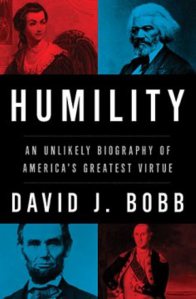
HumilityI thoroughly enjoyed Dr. David Bobb’s book Humility (you can read my full book review by clicking here). The book was partially a challenge for us to cultivate this virtue in our individual lives and in the fabric of our nation. So Dr. Bobb uses several biographies of notable Americans to illustrate the power of humility. These are some quotes by and about Abraham Lincoln.

“Towering genius disdains a beaten path. It seeks regions hitherto unexplored.” —Abraham Lincoln

“Nowhere in the world is presented a government of so much liberty and equality. To the humblest and poorest amongst us are extended the highest privileges and positions. The present moment finds me at the White House, yet there is as good a chance for your children as there was for my father’s.” —Abraham Lincoln

“[Abraham] Lincoln’s navigation of these almost impossible waters was not without mistakes. What distinguished him from many others, however, were his ability to shift his course without ever losing sight of his destination and his willingness to admit when he steered awry.” —David Bobb

“With our limited understanding we may not be able to comprehend it, yet we cannot but believe, that He who made the world still governs it.” —Abraham Lincoln

5 Quotes By James Madison In “Humility”

HumilityI thoroughly enjoyed Dr. David Bobb’s book Humility (you can read my full book review by clicking here). The book was partially a challenge for us to cultivate this virtue in our individual lives and in the fabric of our nation. So Dr. Bobb uses several biographies of notable Americans to illustrate the power of humility. These are some quotes by James Madison.

“Had every Athenian citizen been a Socrates, every of Athenian assembly would still have been a mob.” —James Madison

“The aim of every political constitution is, or ought to be, first to obtain for rulers men who possess most wisdom to discern, and most virtue to pursue, the common good of the society, and in the next place, to take the most effectual precautions for keeping them virtuous whilst they continue to hold their public trust.” —James Madison

“As there is a degree of depravity in mankind which requires a certain degree of circumspection and distrust, so there are other qualities in human nature which justify a certain portion of esteem and confidence. Republican government presupposes the existence of these qualities in a higher degree than any other form.” —James Madison

“Before any man can be considered as a member of a Civil Society, he must be considered as a subject of the Governor of the Universe.” —James Madison

“Is there no virtue among us? If there be not, we are in a wretched situation. No theoretical checks—no form of government can render us secure. To suppose that any form of government will secure liberty or happiness without any virtue in the people, is a chimerical idea.” —James Madison

4 Quotes By & About George Washington In “Humility”

HumilityI thoroughly enjoyed Dr. David Bobb’s book Humility (you can read my full book review by clicking here). The book was partially a challenge for us to cultivate this virtue in our individual lives and in the fabric of our nation. So Dr. Bobb uses several biographies of notable Americans to illustrate the power of humility. These are some quotes by and about George Washington.

“In [George] Washington’s early haste to achieve greatness, he sometimes let his ambition outpace virtue. He gradually realized this, and he calibrated his actions accordingly. Rather than just cloaking his ambition, Washington recognized that the more he served others and the cause of justice, the more his success would matter. The less his ambition was about his own fame, the more he would deserve the honors he received. Virtue in this sense, he discovered, can be its own reward.” —David Bobb

“I consider it an indispensable duty to close this last solemn act of my official life, by commending the interests of our dearest country to the protection of Almighty God, and those who have the superintendence of them, to His holy keeping.” —George Washington’s resignation speech

“I hope I shall always possess firmness and virtue enough to maintain (what I consider the most enviable of all titles) the character of an honest man, as well as prove (what I desire to be considered in reality) that I am.” —George Washington 

“Of all the dispositions and habits which lead to political prosperity, religion and morality are indispensable supports.” —George Washington’s farewell address

6 Quotes From Profound Thinkers From “Humility”

HumilityI thoroughly enjoyed Dr. David Bobb’s book Humility (you can read my full book review by clicking here). The book was partially a challenge for us to cultivate this virtue in our individual lives and in the fabric of our nation. These are some noteworthy quotes from some noteworthy thinkers that Dr. Bobb referenced.

“This way is first humility, second humility, third humility … if humility does not precede and accompany and follow every good work we do, and if it is not set before us to look upon, and beside us to lean upon, and behind us to fence us in, pride will wrest from our hand any good deed we do while we are in the very act of taking pleasure in it.” —Augustine 

“But devout humility makes the mind subject to what is superior. Nothing is superior to God; and that is why humility exalts the mind by making it subject to God.” —Augustine

“Real wisdom is never pretending to seem to know what one does not know.” —Plato

“The Christian virtues are not natural and reasonable virtues of a golden mean but radical virtues of grace.” —Karl Löwith

“Nothing more certainly makes a man ridiculous than an over-forwardness to display his excellencies.” —John Witherspoon

“Smoke has no weight.” —Augustine