No Presumptions

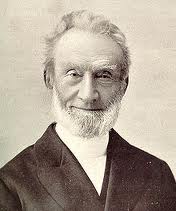
George Mueller

George Mueller

I’m a planner. I like to plan out my personal schedule. I also like to plan out my preaching schedule. Near the end of each calendar year, I spend an extended time in prayer asking God to show me what He would like me to share with my congregation in the upcoming new year.

By no means should this override being Spirit-directed in the moment. I need to remain sensitive to the “course corrections” that the Holy Spirit wants me to make, but I also think planning ahead is using His wisdom as well.

As I approach each week’s message preparation time, there is a temptation to just stick with the plan, no matter what. After all, I know what I’ve prayerfully planned, so I can just get down to the business of crafting a sermon, right?

This wise counsel from George Mueller—a pastor that was preeminent in prayer—helps me to check my impulses…

“Rather than presuming to know what is best for the hearers, I ask the Lord to graciously teach me the subject I should speak about.”

My prayer goes something like this: “Lord, You know I will be speaking this Sunday; You know each person who is going to attend our service this week; You know exactly what they have been going through and what they are about to go through; You know exactly what they need to hear this week, so speak those words to me now.

How arrogant for me to say, “Lord, here’s my sermon. Please bless it.”

Instead I need to pray, “Lord, what message will you bless? Please speak those words to me.”

Pastor, please don’t presume to know what is best for your congregation, but ask the One who truly knows to give you His timely word.

Thursdays With Oswald—Unchecked Imaginations

Listen to the podcast of this post by clicking on the player below, and you can also subscribe on AppleSpotify, or Audible.

This is a weekly series with things I’m reading and pondering from Oswald Chambers. You can read the original seed thought here, or type “Thursdays With Oswald” in the search box to read more entries.

Unchecked Imaginations 

     The day we live in is a day of wild imaginations everywhere, unchecked imaginations in music, in literature, and, worst of all, in the interpretation of Scripture. People are going off on wild speculations, they get hold of one line and run clean off at a tangent and try to explain everything on that line, then they go off on another line: none of it is in accordance with the Spirit of God.

From Biblical Psychology

We must be so cautious about not reading into Scripture what we want it to say. In other words, we cannot say, “This is what I believe to be true, now let me find a verse or two that will support that belief.” Instead, we must let the living Word of God speak. As the prophet Samuel approached God, so must we with the humble attitude, “Speak, Lord, for Your servant is listening” (1 Samuel 3:10).

Jesus said the Holy Spirit will guide us into all truth. The truth into which He will lead us is objectively true. That means it’s not true because we think it’s true, but it’s true because it’s God’s Word.

Make sure you don’t interpret Scripture through your feelings, or through the commentary of another human; rather let Scripture be its own commentary on other Scripture, and let the Spirit guide you. I love this insight from the habits of the Berean Christians—

Now the Bereans were of more noble character than the Thessalonians, for they received the message with great eagerness and examined the Scriptures every day to see if what Paul said was true. (Acts 17:11)

Watch your imagination. Don’t get caught up in others’ ideas of what God said. Read the Scriptures—or better yet, let the Scriptures read you—with the help of the Holy Spirit.

►► Would you please prayerfully consider supporting this ministry? My Patreon supporters get behind-the-scenes access to exclusive materials. ◀︎◀︎

Who Do You Think You Are? (book review)

Who Do You Think You AreIf you’ve ever heard Mark Driscoll speak, you know that he pulls no punches as he unashamedly uses the Bible to address the situations we all face. Who Do You Think You Are? is no exception.

Your friends, Madison Avenue, your colleagues, even your family members are all trying to influence you. They all weigh-in on who you are, or who they think you should be. But Pastor Mark Driscoll wants to show you who the Bible says you are. So using the book of Ephesians in the Bible, Pastor Mark convincingly and lovingly will show you that you are…

  • In Christ
  • A saint
  • Blessed
  • Appreciated
  • Saved
  • Reconciled
  • Afflicted
  • Heard
  • Gifted
  • New
  • Forgiven
  • Adopted
  • Loved
  • Rewarded
  • Victorious

Pastor Mark writes in a very readable, conversational style as he uses the powerful words of Ephesians, along with some personal stories from his own life, as well as the lives of others he has known, to make sure you know how God sees you. In a world where everyone else wants to squeeze you into a different mold, how freeing it is to discover how God sees you, and to know that God loves you because you’re you!

This was a very encouraging read. I’d recommend this to anyone struggling with peer pressure or with their own self-identity. I also think this would be an excellent book to use in a small group setting, perhaps even among a recovery group.

I am a Thomas Nelson book reviewer.

I have shared some quotes from this book here.

The Contemplative Pastor

Search mePastors can get caught in a rut, just like anyone in any number of other professions. That’s why it’s so vital for us to pause often to make sure we haven’t slipped into something without being aware of its impact.

It is absolutely vital for pastors to have regular quiet time with God. Read the Word, pray, contemplate, read other pastors (especially the “old guys”), pray, and contemplate some more. Let the Holy Spirit point out to you any blind spots.

I’ve been contemplating two quotes from the “old guys” over the last few days.

[1] “We prefer to build up converts to our own point of view.” —Oswald Chambers

I want to make sure I’m always allowing the Holy Spirit to be as unique with others as He is with me. I need to be cautious that I’m not making my practices the universal practices for everyone. I need to give these converts a solid biblical foundation, and then let the Spirit build them up as He knows best.

[2] “Recollect, as ministers, that your whole life, your whole pastoral life especially, will be affected by the vigor of your piety. If your zeal grows dull, you will not pray well in the pulpit; you will pray worse in the family, and worst in the study alone. When your soul becomes lean, your hearers, without knowing how or why, will find that your prayers in public have little savor for them; they will feel your barrenness, perhaps, before you feel it yourself.” —Charles Spurgeon

I need to be a praying pastor. My sermons must be birthed in prayer before I deliver them, and sealed in prayer after I deliver them; my appointments must be covered in prayer; my schedule must be directed by prayer; my relationships must be nurtured through prayer. I must be in prayer continually if I am to be effective at anything.

My fellow pastor, I hope you are taking the time to contemplate: to be quiet as you ponder how the Holy Spirit is speaking to you. It is absolutely vital for the health of the part of the Body of Christ to which we minister.

17 Quotes From “Jesus”

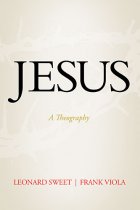
Jesus A TheographyJesus: A Theography is one of those rare books that I gave a “must read” designation (you can read my full review by clicking here). It’s impossible to share with you all of the incredible thoughts that are in this book, but here are 17 of my favorite quotes from Jesus.

Unless otherwise designated, all the quotes are from Leonard Sweet and Frank Viola.

“In Jesus the promise is confirmed, the covenant is renewed, the prophesies are fulfilled, the law is vindicated, salvation is brought near, sacred history has reached its climax, the perfect sacrifice has been offered and accepted, the high priest over the household of God has taken His seat at God’s right hand, the Prophet like Moses has been raised up, the Son of David reigns, the kingdom of God has been inaugurated, the Son of Man has received dominion from the Ancient of Days, the Servant of the Lord has been smitten to death for His people’s transgressions and borne the sins of many, has accomplished the divine purpose, has seen the light after the travail of His soul, and is now exalted and made very high.” —F.F. Bruce

“Jesus is the Logos. He is the Word, or the self-utterance, of God. So when God speaks, it is Christ who is being spoken about. When God breathes, it is Christ who is being imparted. The Spirit of God’s breath (the words ‘Spirit’ and ‘breath’ are the same in both Hebrew and Greek). The Second Testament tells us clearly that the Holy Spirit’s job is to reveal, magnify, and glorify Christ, Thus, because the Bible is inspired, it all speaks of Jesus. Again, Jesus Christ is the subject of all Scripture.” [The authors refer to the two sections of the Bible as the First and Second Testaments, in place of the usual designations of Old and New Testaments]

“Every word of the God-breathed character of Scripture is meaningless if Holy Scripture is not understood as the witness concerning Christ.” —G.C. Berkouwer 

“Your salvation was established, completed, and sealed before creation itself. Your Lord wrapped it up, won it, and came out victorious before anything ever went wrong.”

“What did He finish? He finished the old creation and the Fall. He finished sin. He finished a fallen world system. He finished the enmity of the Law. He finished satan. He finished the flesh. He put you to death and finished you completely. The person you were in Adam was terminated, swallowed up in death. And then He finished His greatest enemy, the child of sin itself, death. If that isn’t enough, He did something else beyond the rest: He raised you up in resurrection and glorified you.

“In Genesis 2:15, God commanded Adam to cultivate and keep the garden. The Hebrew word for cultivate is abad, and the Hebrew word for keep is shamar. These same Hebrew words are used to describe how the priests cared for the tabernacle of Moses. (The tabernacle was a precursor to the temple of Solomon.) The priests were to cultivate (abad) and keep (shamar) the tabernacle. In addition, we are told that God walked in the garden (Hebrew, hawlak) during the cool of the day. God also walked (hawlak) in the midst of the temple. The meaning is clear. The garden was a temple for God. Like the temple, the garden was the joining together of God’s space and man’s space—the intersection of the heavenly realm and the earthly realm. For this reason, Isaiah called it ‘the garden of the Lord,’ and Ezekiel called it ‘the garden of God.’ …Jesus Christ is the reality of the temple. (In the Greek, John 1:14 says Jesus ‘tabernacled among us.’) He is also the reality of the garden. He is the real Tree of Life and a flowing river. In Christ, God’s space and man’s space are joined together.”

“There are 184 verses in the birth narratives of the Second Testament. These 184 verses presuppose or repeat the words of 170 verses from eighteen verses of the First Testament.” 

“Jesus is the three shepherds: the good shepherd, the great shepherd, and the Chief Shepherd. Jesus presented Himself as both sheep and shepherd, the good shepherd who lays down His life for the sheep. …Jesus died on the cross at the ninth hour (about three o’clock in the afternoon) when the Passover lamb would be sacrificed in the temple. Christ, the Paschal Lamb, was slain to atone for the sins of humanity and to open the gate of the true temple that promises God’s salvation for all people.”

“In the Second Testament, as the sacrificial sign of the new covenant, Jesus Himself becomes the sin offering of humanity. In fact, Jesus’ very words on the cross, ‘It is finished!’ (‘Kalah’), are the words used by a priest at the conclusion of the sacrificial offering in the temple. In the ancient days, when the Jewish priest had killed the last lamb of the Passover, he uttered the Hebrew word Kalah, ‘It is finished.’” 

“At His birth, Jesus received the myrrh. At His death, He rejected it. Jesus’ earthly ministry centered on alleviating human suffering. He was the personification of myrrh. In His crucifixion, however, He was bearing the full brunt of human pain, suffering, and agony on the cross. He bore our shame and sorrows. So He rejected the myrrh and the wine that came with it. Jesus took the full dose of suffering for sin on the cross so we wouldn’t have to. And He rejected the myrrh so we would be able to receive it.”

“When in a garden relationship with God, humanity had no need of the Torah, for we had the Tree of Life. The Torah was the Tree of Life reborn, and Jesus was the Torah reborn.”

“We need the whole Jesus. The complete Jesus. Everything He said. Every detail of what He did.” —Eugene Peterson

“The temptation of Jesus was a playback of two episodes in the First Testament. First, it’s a replay of the first temptation in the garden of Eden. John tells us that the three enemies of the Christian are ‘the lust of the flesh, the lust of the eyes, and the pride of life.’ Each of these temptations was in play in the temptation of Adam and Eve in the garden:

    • The fruit was ‘good for food’ = the lust of the flesh. 
    • The fruit was ‘pleasant to the eyes’ = the lust of the eyes. 
    • The fruit was ‘desirable to make one wise’ = the pride of life. 

“…The temptations that satan leveled at Jesus in the wilderness struck the same three chords. Here is the ordered presented in Luke 4 (paraphrased):

    • ‘Turn these stones to bread’ = the lust of the flesh. 
    • ‘I will give you the kingdom of the world and their glory’ = the lust of the eyes. 
    • ‘Cast yourself down from here and angels will protect you’ = the pride of life.” 

“The Second Covenant knows the First Covenant: the Second Testament quotes from the First Testament more than 320 times, and that does not include times when biblical writers, searching for the scriptural reference, were reduced to admitting that ‘somewhere’ it reads thus and so.”

“Theology is nothing more than the Holy Spirit making His way through our brains, as the Scriptures make their way through our hearts.” 

“In biblical prophesy, the coming of Jesus is viewed as one event separated by parentheses that stretch from the ascension to His royal appearing at the end of the age. We are now living in the parentheses, wherein we look back to His first coming and anticipate His second coming. Put another way, the kingdom has come and will come. Jesus’ first coming inaugurated the kingdom of God; His second coming will consummate it. So the coming of the Messiah is one event separated by two moments: Bethlehem and the end of the age.”

“As followers of Jesus, we have a task before us. That task is to work for the kingdom. To continue the ministry of Jesus in the power of the Holy Spirit… to bear witness to the sovereign lordship of Christ… to embody the message that Jesus is both Lord and Savior, not just of our personal lives but of the entire world. And to find creative ways to manifest that kingdom where we live and travel.” 

The Pastor & Prayer

E.M. BoundsMy fellow pastor, please consider these wise words from E.M. Bounds—

“No one having any knowledge of the existing facts, will deny the comparative lack of expository preaching in the pulpit effort of today. And none, we should, at least, imagine, will do other than lament the lack. Topical preaching, polemical preaching, historical preaching, and other forms of sermonic output have, one supposes, their rightful and opportune uses. But expository preaching—the prayerful expounding of the Word of God is preaching that is preaching—pulpit effort par excellence. For its successful accomplishment, however, a preacher needs must be a man of prayer. For every hour spent in his study-chair, he will have to spend two upon his knees.”

I believe God will be honored if we spend twice as much time praying our sermons as we do preparing our sermons. 

Counting Down 2012: #4 God’s Word Is…

I am counting down the top 5 posts that I wrote in 2012, as determined by the number of views during this year. The 4th most read post is: God’s Word Is….

“Never compare this Book with other books. Comparisons are dangerous. Never think or say that this Book contains the Word of God. It is the Word of God. It is supernatural in origin, eternal in duration, inexpressible in value, infinite in scope, regenerative in power, infallible in authority, universal in application, inspired in totality. Read it through. Write it down. Pray it in. Work it out. And then pass it on.” —Smith Wigglesworth

Another Christmas Message?!?

Christmas presentBelieve it or not, I actually heard a pastor say this: “I’m not sure I’m going to preach a Christmas message this year. It’s the same story all over again, and everyone’s already heard it.”

Are you kidding me?!?

This is the greatest story. Ever! God coming to earth—the Infinite invading our finite world—yields infinite possibilities in how to re-tell this story. One of the biggest cop-outs there could ever be is to say, “I couldn’t possibly think of another way to tell the Christmas story.”

Pray. Ask the Holy Spirit to illuminate your mind. Read the story again. Insert yourself into the story. Imagine how those first century characters felt. Re-read the story in a different translation. Slow down. Soak in the text.

There are so many ways to share this amazing story. It’s not just another Christmas message. It’s THE greatest story that can be shared in an infinite number of ways.

Pastor, may God give you a fresh view of this amazing story!

Showers Of Blessings

My Word will not return emptyAs the rain and the snow come down from heaven, and do not return to it without watering the earth and making it bud and flourish, so that it yields seed for the sower and bread for the eater, so is My word that goes out from My mouth: It will not return to Me empty, but will accomplish what I desire and achieve the purpose for which I sent it. (Isaiah 55:10-11)

Pastor, please carefully read these words from Oswald Chambers, written nearly a century ago, but still so relevant for us today—

“God’s Word is a seed. The ‘seed-thought’ idea is one that preachers and evangelists need to remember. We imagine we have to plough the field, sow the seed, reap the grain, bind it into sheaves, put it through the threshing machine, make the bread—all in one discourse. … 

The truth is we don’t believe God can do His work without us. We are so anxious about the word, so anxious about the people who have accepted the word; we need not be, if we have preached what is a word of God it is not our business to apply it, the Holy Spirit will apply it. Our duty is to sow the word, see that it is the word of God we preach, and not ‘huckster’ it with other things, and God says it will prosper in the thing whereto He sends it. …

“He says, ‘My word…will not return to Me empty.’ Every temptation to exalt the human, human experience, human interests and blessings, will fall short; the only thing that prospers in God’s hands is His own word.”

From God’s Workmanship, emphasis added

I need to be reminded of that again. Perhaps, my fellow pastor, you needed it to. This Sunday just preach the word God has given you, and then let the Holy Spirit take it from there. God WILL bring the harvest in His time.

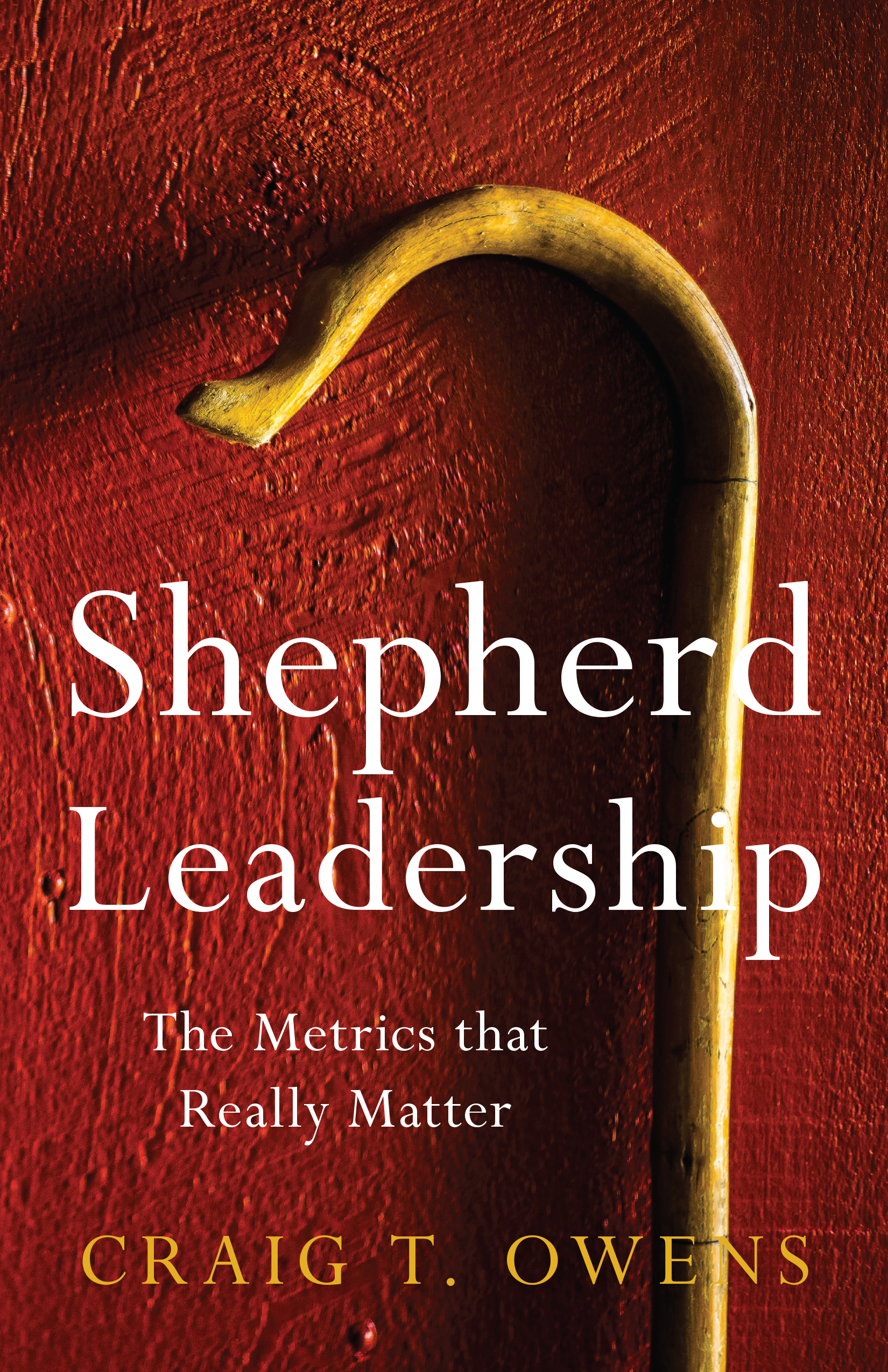
UPDATE: In the final chapter of my book Shepherd Leadership (a chapter entitled “Applause”) I wrote this:

      Did you catch that? Twice Paul reminds us that it is God who makes things grow [1 Corinthians 3:4-8]. God, not man. So is the only successful ministry the one that harvests? How did they harvest without someone watering the seed? What exactly were they watering if no one had planted any seeds? And even with everyone doing the work, it is still God who makes things grow. 

      According to Paul, what does God reward? It’s not numeric growth, but shepherds “will be rewarded for their own hard work … the work the Lord gave us.”

Thursdays With Oswald—The Bible

This is a weekly series with things I’m reading and pondering from Oswald Chambers. You can read the original seed thought here, or type “Thursdays With Oswald” in the search box to read more entries.

The Bible

      The revelation of God’s will has been brought down to us in words. The Bible is not a book containing communications from God, it is God’s revelation of Himself, in the interests of grace; God’s giving of Himself in the limitation of words.

      The Bible is not a faery romance to beguile us for awhile from the sordid realties of life, it is the Divine complement of the laws of Nature, of Conscience and of Humanity, it introduces us to a new universe of revelation facts not known to unregenerate commonsense. The only Exegete of these facts is the Holy Spirit, and in the degree of our reception, recognition, and reliance on the Holy Spirit will be our understanding. …

      The Bible does not simply explain to us the greatest number of facts, it is the only ground of understanding of all the facts, that is, it puts into the hand of the Spirit-born the key to the explanation of all mysteries. …

      The Bible tests all experience, all truth, all authority, by our Lord Himself and our relationship to Him personally….

From God’s Workmanship

Quite simply: The only authoritative Source we need to understand all the facts of life is the Bible.

Are you reading it? Every day? If not, make it a habit to live on and live through. It is God’s Word to you!