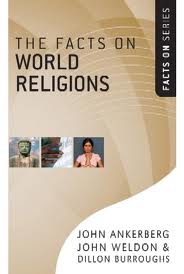
8 Quotes From “The Facts On World Religions”

The Fact On World ReligionsThe Facts On World Religions is a broad overview of the four major religions of the world—Christianity, Islam, Buddhism and Hinduism. You can read my full book review by clicking here. These are some of the passages I found noteworthy….

“Positive criticism: Being critical of other people’s beliefs is necessary for the sake of what is true and what is good. Every idea in the world is not true, regardless of what relativists claim. And some ideas are harmful, including religious ideas. We have also been critical of our own faith when needed, so when we ask adherents of other religions to analyze their own perspectives, we are not requesting that they do something we ourselves have neglected.” 

“The Bible’s uniqueness in some 20 different areas—including many specific predictions of the future (especially as to the Messiah), theology and content, textual preservation against all odds, the physical resurrection from the dead of its central character, scientific and medical prevision, the miraculous existence of Israel, historic and archaeological accuracy, victory over all criticism, and massive influence in human history—is virtual proof that the Bible comprises God’s revelation to humanity. Because it alone is evidentially and independently verified, at points of conflict all other scriptures are, by definition, false. … The manuscript evidence proving the New Testament’s accuracy is about a thousand times better than for ancient manuscripts that scholars everywhere concede are reliable.”

“Historical facts confirm that the Qur’an has experienced significant corruption through various means. Texts such as The Origins of the Qur’an (edited by Ibn Warraq), though sometimes displaying a rationalistic bias, nevertheless prove beyond doubt that the Qur’an is not a pure text. … Dr. William Miller reveals that for some years after the death of Muhammad there was great confusion as to what material of all that had been preserved should be included in the Qur’an. Finally, in the caliphate of Uthman (644-656 AD) one text was given official approval, and all other material was destroyed.” 

“Buddha did not even claim that his teachings were a unique and original source of wisdom. Buddha always said, ‘Don’t take what I’m saying [that is, on my own authority], just try to analyze as far as possible and see whether what I’m saying makes sense or not. If it doesn’t make sense, discard it. If it does make sense, then pick it up.’” —Clive Erricker

“Internal contradictions in Buddhism make it impossible to know what is true and what is false, leading to an emphasis on subjectivism and experientialism to discover ‘truth,’ rather than upon objective data.” 

“Consider the Wall Street Journal/Heritage Foundation’s ‘Index of Economic Freedom Report.’ From 1995 to 2008, the ‘mostly free’ categories of nations include only some Muslim states, while the ‘mostly unfree’ and ‘repressed’ categories include the large majority of Muslim nations; no Muslim nation exists in the ‘free’ category. Some 600 million souls live in dismal poverty. And it’s not difficult to see why: The average man, woman or child living in a repressed or mostly unfree economy lives a life of poverty on only about $2,800 a year. Compare this with the prosperous residents of the world’s free economies, where the average per-capita income is $21,200, or nearly eight times greater. Put simply, the difference between poverty and prosperity is freedom.”

“Islam may be called a ‘religion of peace,’ but history paints a different picture, no matter how many individual Muslims are peace-loving. The book that most regulates Islam, the Qur’an, is mixed at best in this regard. Entirely different religions, both logically justified, can be extracted from its pages. There are verses about peace and tolerance, but also verses about intolerance, Holy War against non-Muslims, and subjugating the world to the will of Allah. … Evils done in the name of Christian faith have been committed either by nominal Christians who are unbelievers or by deceived believers. In both cases the people are acting inconsistently with Christian faith and the clear teachings of Christian Scripture.” 

“Too few appreciate how critically unique biblical Christianity is when compared to other religions—or the implications. For example, Christianity is the only religion based on the death of its founder, a death that forever altered the course of human history. No other religion has the literal physical resurrection of its founder. Biblical Christianity is the only religion having solid evidence to prove it true. It’s the only religion offering eternal life as a free gift through grace, and the only religion demonstrating beyond the shadow of a doubt that God truly loves us—as demonstrated at the Cross. Biblical Christianity is the only religion to dramatically improve the welfare of humanity in a score of areas.”

Links & Quotes

link quote

These are links to articles and quotes I found interesting today.

“If you asked twenty good men today what they thought the highest of the virtues, nineteen of them would reply, Unselfishness. But if you had asked almost any of the great Christians of old, he would have replied, Love. You see what has happened? A negative term has been substituted for a positive, and this is of more than philological importance. The negative idea of Unselfishness carries with it the suggestion not primarily of securing good things for others, but of going without them ourselves, as if our abstinence and not their happiness was the important point. I do not think this is the Christian virtue of Love.” —C.S. Lewis

“Since the end of World War II, at least 188 countries have drafted at least 729 versions of constitutions, while we’ve made only minor changes to ours through a constitutionally-provided amendment process. Our Constitution is unique in its simplicity, and uniquely effective.” Happy 225th Birthday, U.S. Constitution!

“Faith in God is to be demonstrated, not defined.” —A.W. Tozer

“Let us look to it that in all things we are just—in our trade, in our judgment of others, in our treatment of neighbors, and in our own personal character. A just God cannot bless unjust transactions.” —Charles Spurgeon

“Our old history ends with the Cross; our new history begins with the resurrection.” —Watchman Nee

Links & Quotes

link quote

These are links to articles and quotes I found interesting today.

“Once we receive the revelation of God’s glory, we cannot continue in our old ways of treating others. That must all change.” —David Wilkerson

“Do we regularly think ‘WHAT’S RIGHT WITH IT?’ instead of ‘what’s wrong with it?’ Do our opinions, as naive as they may seem to be, lift the spirits of others and promote thankfulness, joy and love? Is this how we approach our relationships, our jobs and our church? Do we look for the negative and annoying? Will we drive away from service tomorrow saying, ‘I didn’t like that song’ … or, ‘I thought that message lacked substance’ … or, ‘_______ was really rude today’ … or …  something else unkind or unnecessary? I’m guilty of negative opinions too… I’m not proud of this fact and I’m determined to see it radically change in 2014.” —Chilly Chilton

West Michigan is great place to live, and find a job, and get involved with great church: Why Unemployment Is High In Parts Of Michigan

“No Christian and, indeed, no historian could accept the epigram which defines religion as ‘what a man does with his solitude.’ It was one of the Wesleys, I think, who said that the New Testament knows nothing of solitary religion.” —C.S. Lewis

Muslims are finding Jesus! A Wind In The House Of Islam

Stunning Photos Of Earth From Above

A touching story about Hockeytown′s famous #9: The Best Gift Ever Given To Gordie Howe

A great reminder/challenge from Max Lucado: Someday

Tim Elmore′s helpful advice for anyone working with youth: Six Steps To Prepare For The Coming Culture Shift

“I used to ask God to help me. Then I asked if I might help Him. I ended up by asking Him to do His work through me.” —Hudson Taylor

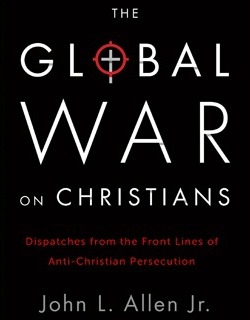
6 Quotes From “The Global War On Christians”

The Global War On ChristiansYesterday I shared some eye-opening statistics from The Global War On Christians by Jeff L. Allen, Jr. Below are some of the quotes which especially stood out to me. If you want to read my full review of this book, please click here.

“Spectacular outbreaks of violence are often produced by less intense incidents, such as believers being harassed on the streets, slurred in the media, shunned in the workplace, and hassled as they gather to worship. The usual cycle is for complaints to be made about these incidents, which are then ignored or dismissed. That failure to act usually serves to emboldened the perpetrators, who then may become more likely to move on to even more lethal assaults, in effect testing the limits of official tolerance.”

“The bottom line is that the global war on Christians will never be won as long as the myth persists that nobody’s really responsible for it.”

“Perpetuating the idea that Islam is by far the primary threat facing Christians in the early twenty-first century also stokes the idea of a ‘clash of civilizations’ between the two faiths, adding fuel to the fire of those who long for a new holy war. That doesn’t do justice to the complex reality of the situation, as there are examples of both conflict and coexistence, and for every virulent and dangerous current in the Islamic world there are also movements and individuals devoted to peace.” 

“Politically correct silence does no one any good, and arguably insults the dignity of those who run risks to life and limb on a daily basis to keep the faith alive.”

“Politics distorts perceptions of the global war on Christians in another sense. Ideological bias tempts observers in the West to see only part of the picture. Those on the political left may celebrate martyrs to corporate greed or to right-wing the police states, but fear to speak out about the suffering of Christians behind the lines of the Islamic world. Conservatives may be reluctant to condemn the situation facing Christians in the state of Israel or in regimes that are presently in fashion on the right has allies in the ‘war on terror.’ Either way, the result is a reductive reasoning of the true score of anti-Christian persecution, and a double standard when it comes to engaging its protagonists. If we want to see the global war on Christians clearly, we have to stop looking at it through the funhouse mirror of secular politics.”

“Historically, waves of persecution have fueled major advances for Christianity. … Today, it’s no accident that zones where persecution of Christians is the most intense… are also the places where Christianity is growing the most dramatically.”

Mansfield’s Book Of Manly Men (book review)

Mansfield's Book Of Manly MenIn my experience, men today aren’t allowed to be true men, manly men. I’m sure there are a lot of reasons why (but that’s another subject for another time), but for those men who are yearning to be the manly men that God has created them to be, Mansfield’s Book Of Manly Men by Stephen Mansfield will make you jump up and growl!

Men are wired by God in a unique way that makes them, well, men. When men embrace their God-implanted uniqueness they become manly men (which is another way of saying God-honoring men) who are better husbands, fathers, friends, and citizens. Stephen Mansfield quickly outlines his four maxims for manly men, and then shares a list of manly qualities to which all manly men should strive.

Each of these manly qualities are introduced by the life story of a manly man from history’s pages. Mansfield presents these men in all their manliness, including both their strengths and weaknesses; there are no perfect men, but there are many real men from which Mansfield allows us to learn. These manly qualities also come with some real in-your-face challenges of how to assess the growth of that quality in a man’s life.

In the foreword, written by retired Lt. General William G. Boykin (himself a true manly man), is this challenge: “This book is a must read for every American male. We must restore the understanding of what it means to be a manly man. The nation’s future depends on getting back to the fundamentals of being men of courage and values.” I couldn’t have said it any better!

I am a Thomas Nelson book reviewer.

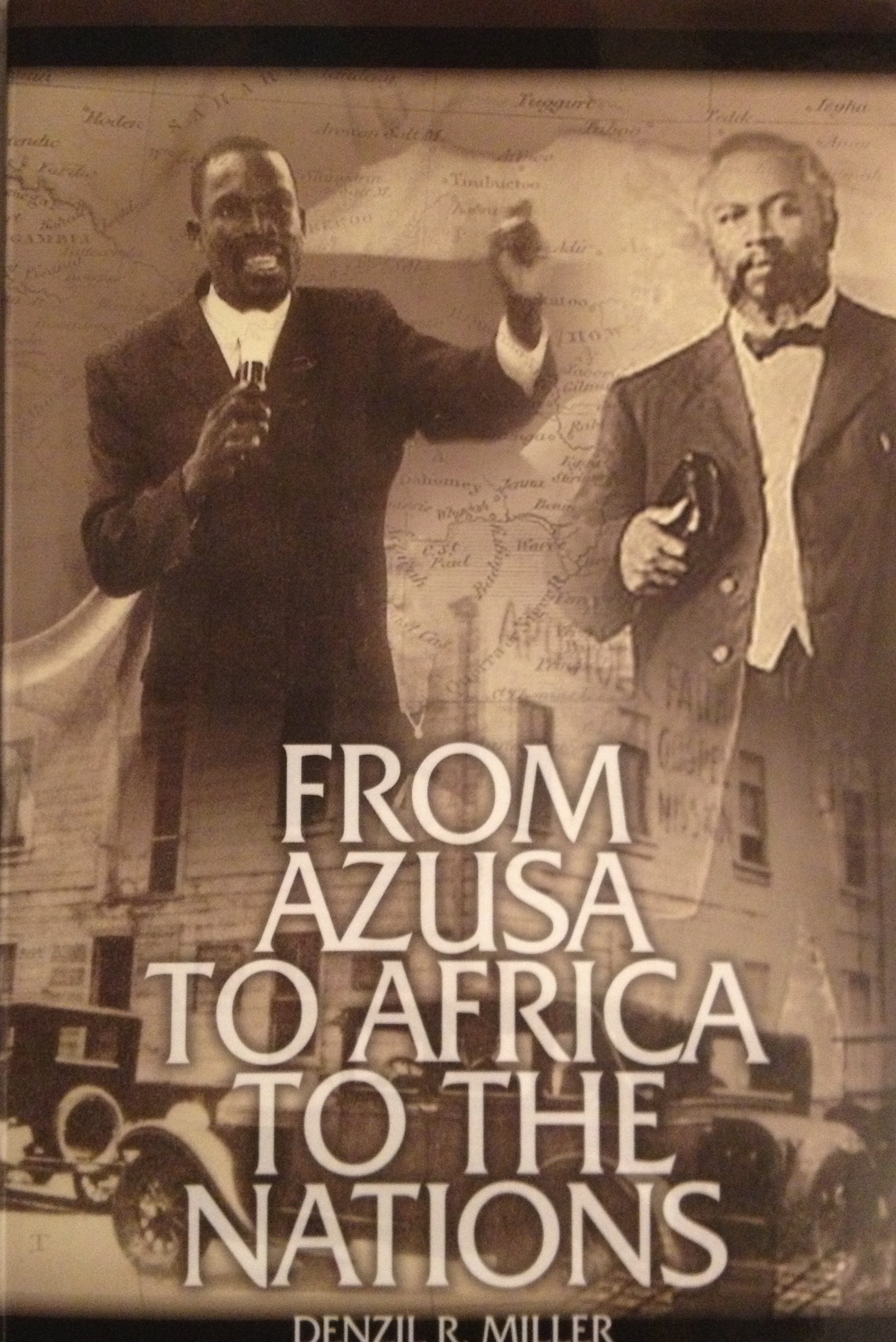
From Azusa To Africa To The Nations (book review)

AzusaMost people are familiar with George Santayana’s powerful reminder: “Those who do not learn from history are doomed to repeat it.” This is why I love reading books of history. Denzil R. Miller has given us a powerful lesson of the history of the Pentecostal church in From Azusa To Africa To The Nations.

Denzil, a missionary in Africa, had a very specific motivation for writing this book: To remind African Christians how the full gospel message came to them, and how they should be responding to it. But I found that this book is a great reminder for all who call themselves Pentecostal.

From Azusa re-tells the story of the Pentecostal reawakening in the early days of the 1900s in a small church in Los Angeles pastored by William Seymour. From that small church, a worldwide revival to the fullness of the operation of the Holy Spirit began. It was a call to return to biblical roots; a call back to the message of Jesus, “You will receive power to be My witnesses after the Holy Spirit comes upon you” (Acts 1:8).

Denzil Miller aims to call the African churches back to their Pentecostal roots, but this is a call for all Pentecostals, regardless of the continent on which they live. This is a short, but powerful book, that I encourage you to check out.

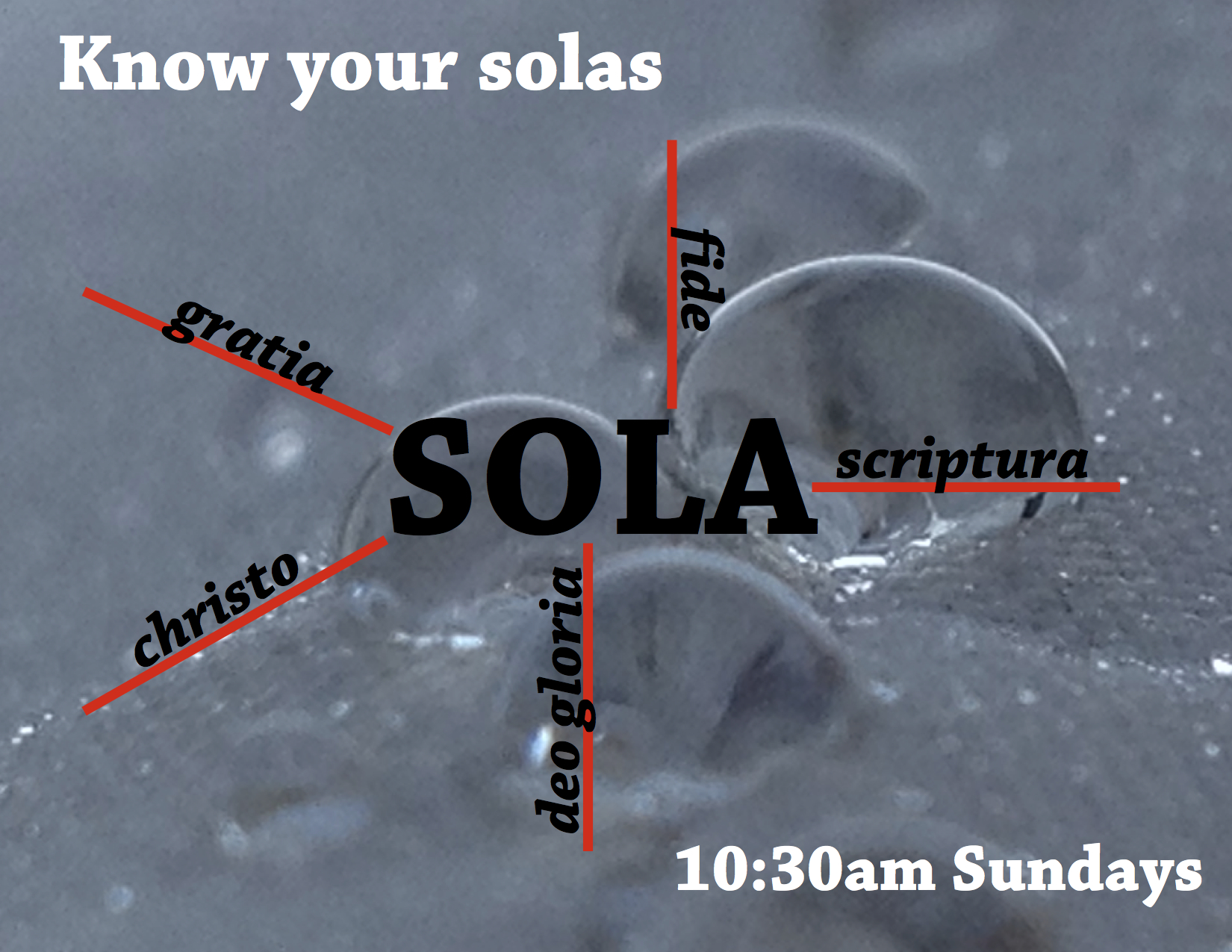
Sola

On October 31, 1517, a sea change in world history was begun. On that day Martin Luther nailed his 95 theses to the door of a church, challenging the traditions of organized religion which he believed had strayed far from the instructions in the Bible.

The Reformation had been launched.

I truly believe that we all must be students of history, partly because all of his story is His Story. When we study history, we can see how God is working out His Story.

Second, we also need to know our history because as George Santayana rightly said, “Those who do not learn from history are doomed to repeat it.”

A third reason to (re)learn the thoughts brought out during the Reformation is for doctrinal strength. It’s important to know not only what why believe but why we believe it. And there are some valuable doctrinal truths in the history of the Reformation.

Finally, I believe an important part of learning is unlearning. Sometimes we accept something just because it’s been handed down to us. That is in large part what Luther and other reformers were challenging, and calling us to unlearn tradition and relearn what the Bible has to say.

So beginning this Sunday we will be walking through the five Sola doctrinal statements the reformers taught. I am really looking forward to relearning and unlearning, and just outright learning the biblical truths of the five solas.

I hope you can join me at Calvary Assembly of God.

Here are the topics we covered in this series: