We Were Robbed!

Yesterday morning I walked into the church and noticed the office door was open. “Hmm,” I thought to myself, “I am sure that I closed that door before I left yesterday.”

Then I walked around the corner and noticed my office door standing open. “I know I closed that door,” I said. The hair on the back of my neck stood up, and I could feel all my muscles starting to tense. I walked into my office and saw the mess. I looked more closely at my office door and saw it had been jimmied open. So too had the office door.

Someone broke into the church. We had been robbed!

I made an inventory through the church, called the sheriff, and called our Board members. What else was there to do? I returned to my office, sat down in my chair, and looked around my office. Two thoughts overwhelmed me:

1.  All of the things that were taken were replaceable. I am grateful that the things that have sentimental value to me were left untouched.

2.  The words from Matthew Henry’s journal on the day he was robbed immediately came to mind:

“Let me be thankful first, because I was never robbed before; second, because, although they took my purse, they did not take my life; third, because, although they took my all, it was not much; and fourth, because it was I who was robbed, not I that robbed.”

So sitting in my office waiting for the sheriff deputy to arrive I prayed. I thanked God for His protection, and I prayed for the desperate individual who broke in. Clearly, this is someone who is at their wit’s end. Our thief is someone who needs my prayers, not my scorn.

I still feel violated. I still had a sick feeling in my stomach all day (and even now as I recall the events of yesterday). But I also remain grateful to God for His protection, and I’m continuing to pray for our thief that in His desperation He will meet this same loving God.

More Than Worship, It’s Worthship

Church has often been called a “house of worship.” But I struggle with what that means exactly. Sometimes it’s a house of singing, or a house of preaching, or a house of socializing, but not too often is the primary focus of the gathering people worship.

It seems most of the time worship is something we do at some point during the singing.

Now I will be the first to admit that the atmosphere most conducive to worship is usually created when meaningful—“worshipful”—songs are being played sung. But is that it? Shouldn’t there be something more?

The definition of worship includes:

…a condition of being worthy of honor or renown.

In fact, the Old English spelling was worthship. In other words, the greater the worth something had, the greater the honor or renown that something should be given.

In my case, the Something should have a capital “S.” The Person worthy of greatest honor and highest renown is my God and Savior Jesus Christ.

So why do I have to wait to go to a certain building to express His worth?

Why do I have to wait until the atmosphere is right?

Shouldn’t I be expressing my adoration and honor to Him always?

What does it mean to always be in a place of expressing my worthship?

I’ve been mulling over this quote from Brother Lawrence:

I know that for the right practice of it, the heart must be empty of all other things; because God will possess the heart alone; and as He cannot possess it alone, without emptying it of all besides, so neither can He act there, and do in it what He pleases, unless it be left vacant to Him.

As the Apostle Paul wrote I’m trying to capture every thought during the day and ask myself, “Is this thought taking up space in my heart that should be God’s space? Does this thought draw me closer to my Savior, or further away.” I’m trying to express His worth to me in the way I think about Him throughout the day.

Knowing God

I read a line in Craig Groeschel’s book—The Christian Atheist—this morning, and several thoughts have been swirling in my heart and mind. He wrote, “Get to know God. When you do, you will never be the same.” Maybe this resonates with you too.

To know God.

To really know Him.

Not just to know facts, or recite a history, or to know what He said. But to know HIM.

To know Him better. Better today than yesterday. To know His mind, His heart, His thoughts. Not knew (past tense) but know right now—this very moment.

What pleases Him? What does He long for? What breaks His heart? What are His plans for me?

Am I knowing Him?

Am I pleasing Him?

Am I living for Him today?

Am I walking in the path He wants me to?

Do I really know God?

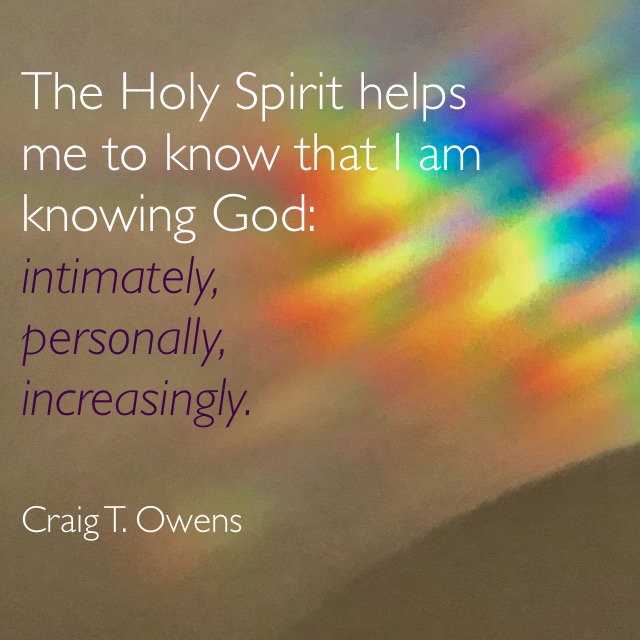
I’m thankful for the Holy Spirit who helps me know God more. He helps me develop a more intimate knowledge. I’m so grateful that the Holy Spirit helps me to know that I am knowing God—intimately, personally, increasingly.

I will not stop my pursuit of God. I cannot stop. I don’t want to stop. I must know Him more today.

No Crutches

In preparing for the continuation of our Ignite series, I’ve been reviewing some of my notes about the Holy Spirit. This quote from R. Hollis Gause has really been working on me:

“[Jesus] was not a crutch for [the disciples’] immaturity. … Jesus did not encourage a mindless dependency on His physical presence; instead, He expected them to be interpretive of His instructions about their mission.”

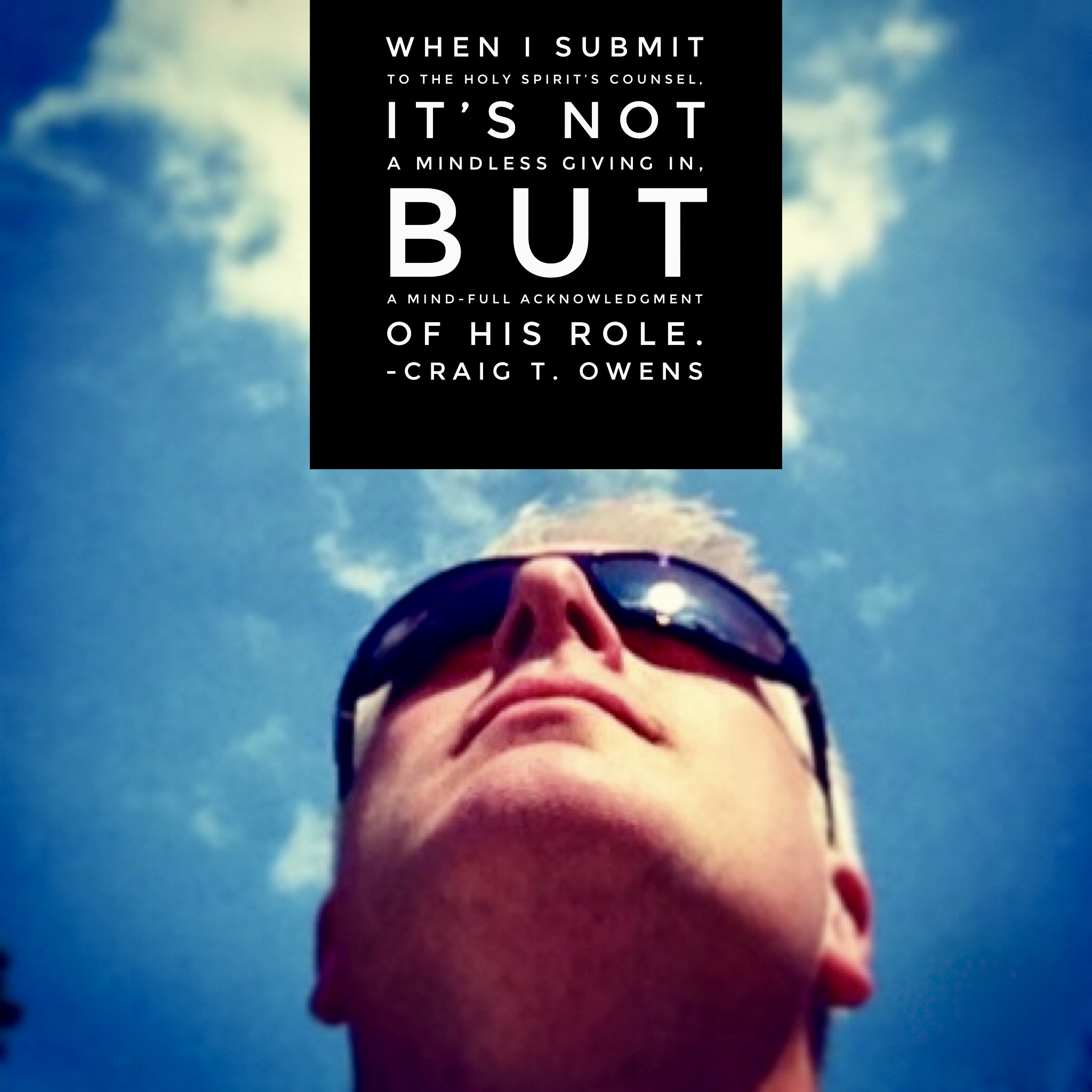
Jesus said He wasn’t leaving us orphans, but He would send us the Holy Spirit to be a constant Counselor. When I submit to the Holy Spirit’s counsel, it’s not a mindless giving in, but a mind-full acknowledgment of His role. The Holy Spirit didn’t come to be my crutch, but to be my Liberator.

The Holy Spirit prepares me to be a conduit for God’s blessings.

I cannot touch in love…

I cannot speak with power…

I cannot truly represent Christ…

if I’m operating in my own strength.

The Holy Spirit comes alongside me to

Develop agape love in my heart…

stimulate my mind with the right words…

help me behave more like Jesus…

and live mind-full of His empowerment.

To do things on my own is to live with a crutch—to live a limited life.

To live in the flow of the Holy Spirit is to live a life that is fully engaged.

That’s how I want to live every day.

You See What You’re Looking For

It’s a pretty simple concept: you only see what you want to see. For example, if you are looking for your car keys, you won’t really see anything else that you are picking up or looking behind to find your keys. Your brain is locked in on keys, so that’s all you will see.

In a well-known Bible story, Moses sends twelve men into the Promised Land to check things out. He tells them to explore the land and bring back a report. The men went to several locations, and there is no mention of who or what they saw except…

  • …in the valley of Eschol, they found grapes of extraordinary size.
  • …in Hebron, they found people of extraordinary size.

They went in looking for big things, and that’s all they saw.

With the exception of Caleb and Joshua who said, “So what? Our God is bigger than those giants,” all the other men saw defeat. In the end, all the other men saw death in the desert; only Caleb and Joshua saw God’s victory in the Promised Land.

You see what you want to see—

What do you see?

What are you looking for?

Are you looking for giants? If so, you’ll find them. And they will seem even bigger in your eyes than they really are.

Are you looking for God’s victory? If so, you’ll find Him. And His deliverance will seem even more incredible than you could have imagined!

Prayer trains your eyes to see differently. Prayer trains your brain to look for victory. Prayer keeps you alert to what God is doing.

If all you see are giants, if all you hear is bad news, if all you feel is fear, perhaps you’re looking for giants and bad news and the fearful things.

Friend, God wants you to see Him on the move. Pray!

  • Prayer changes giants to dwarfs.
  • Prayer changes defeat to victory.
  • Prayer changes gloom to sunshine.
  • Prayer changes the way you see the world.
  • Prayer changes you.

“The prayer of the morning will determine the day.” —Dietrich Bonhoeffer

Very Busy Or Too Busy

Over the last couple of weeks, I’ve been extremely busy. In some ways that’s a good thing: ministry is happening, relationships are developing, business is taking place.

But…

…there’s a danger when very busy becomes too busy.

How do I know I’ve crossed the line? I think this quote from Billy Graham sums it up:

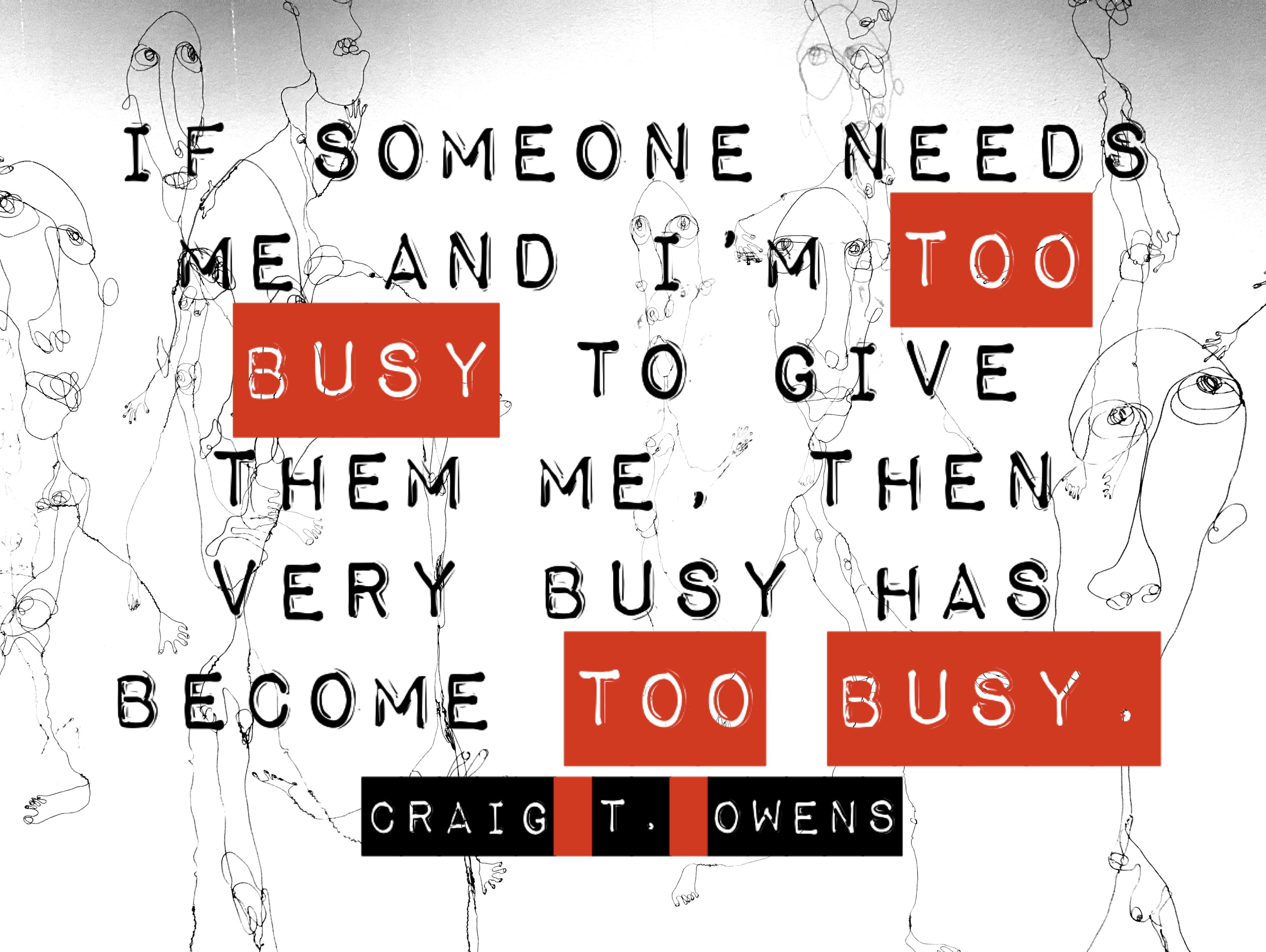
“We hurt people by being too busy. Too busy to notice their needs. Too busy to drop that note of comfort or encouragement or assurance of love. Too busy to listen when someone needs to talk. Too busy to care.”

If someone needs me and I’m too busy to give them me, then very busy has become too busy.

How do you know if you’ve gotten too busy?

Two Helpful Questions

Some people tell me that they don’t read the Bible for themselves because they don’t understand parts of what they read, or they don’t know what to do with the parts they do understand.

To which I reply, “That’s understandable.”

The Bible is filled with timeless principles given to us by an Eternal God. The principles may be timeless, but their application is not universal. For example, God’s timeless principle of, say, honoring your parents may be applied one way by someone living in the 12th century B.C. and applied completely differently by someone living today.

Same principle. Different application.

This is easy to say, but much harder to put into action. But I believe it is imperative that we continue to read God’s timeless principles in His Word and find daily application for our lives. So I’d like to suggest two questions to help you in this pursuit. They are the same two questions that people asked the day of Peter’s first sermon after the birth of the Christian church. Try these the next time you read your Bible:

  • What does this mean? (Acts 2:12)
  • What should I do? (Acts 2:37)

Don’t avoid reading the Bible. And don’t approach the Bible the way Søren Kierkegaard said some people do: “Many read the Bible the way a mouse tries to remove the cheese from a trap: trying not to get caught.”

I’m still learning too. Two things that help me immensely: (1) Pray before I read my Bible, asking the Holy Spirit to illuminate His inspired Word, and (2) Talk with other wise friends about the application questions I have.

If you have some strategies that are working for you, please share them in the comments below.

God Tests Us

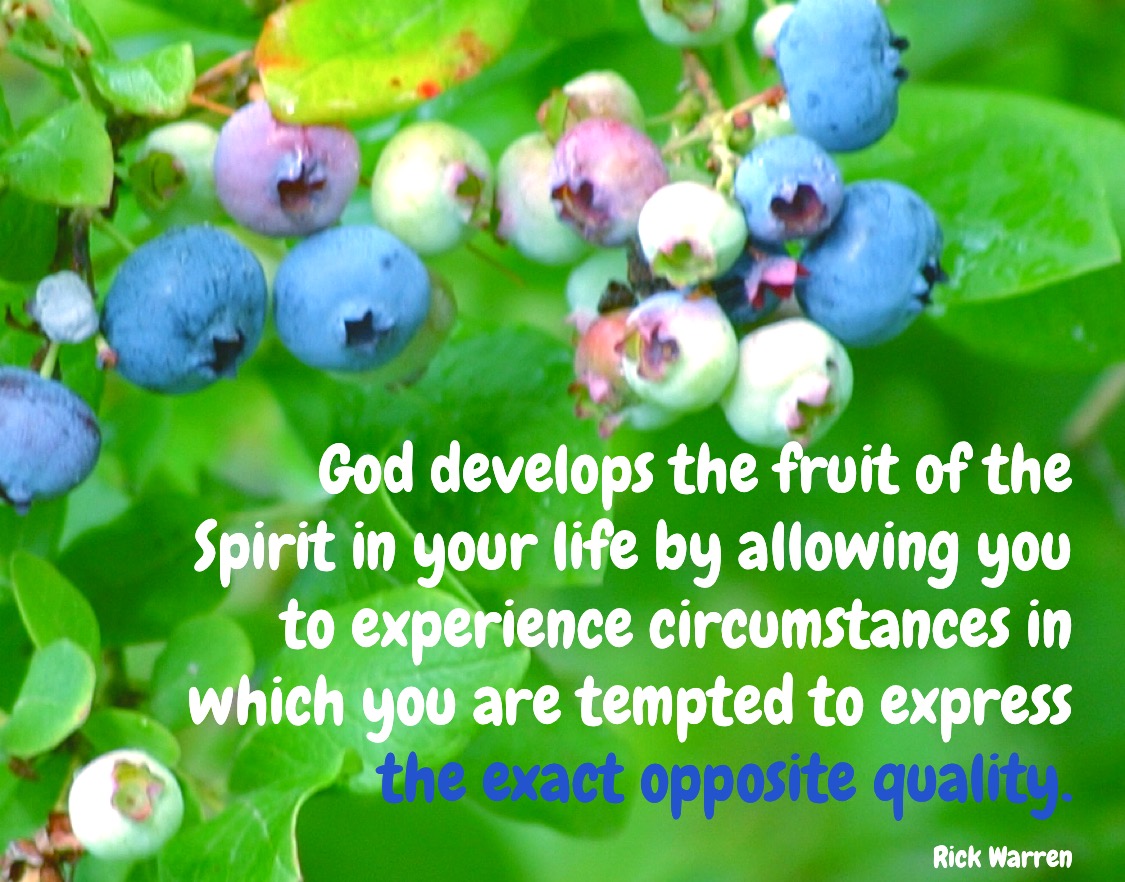
I’m challenged by this quote from Rick Warren: “God develops the fruit of the Spirit in your life by allowing you to experience circumstances in which you’re tempted to express the exact opposite quality!”

In school, your teacher had to test you to see if you knew the material. She probably didn’t want to give you the test, but she had to. It would be unkind of her to promote you to the next level of learning if you weren’t prepared for it.

God does the same thing. He tests us on what we’ve learned in order to take us to the next level of fruitfulness. Many times these tests tempt us, as Rick Warren said, to do the opposite of what we’ve learned. But if we don’t pass the test, God cannot promote us.

As the Israelites began their journey out of Egypt, twice in the first few days of their freedom the Bible says God tested them.

  • God tested their thirst to see if they would trust Him to provide.
  • God tested their hunger to see if they would still trust Him even after they were full.

God loves you so much that He wants to keep promoting you. He wants to see more and more fruitfulness coming from your life. That means He has to keep preparing you for the next test, and then administering that test. Don’t run away from His testing.

Right now you are in one of three places:

  1. The Holy Spirit is preparing you for a test;
  2. God is giving you a test; or
  3. You just completed a test.

Listen to the voice of the Holy Spirit, your Divine Tutor. He will remind you of everything you have learned and help you ace that test!

Now if you’ll excuse me, I have to get back to studying for my next test…

Bad Theology

I’m working on the next lesson in our Spiritual Self-Defense series. It’s a tough topic to address: the deity of Jesus, who was fully God and fully Man.

I know it’s very hard for a finite human mind to grasp an infinite concept like this. However in my studies I have found some really bad theology posted on the web. I realize as soon as I say, “It’s like this…” that I’ve already diminished the majesty of God coming to earth in human form, because Christ’s virgin birth, sinless life, sacrificial death and resurrection is nothing like anything we can comprehend. But still, I need to find a way to capture it and explain it to our students.

C.S. Lewis wrote about the need for good philosophy to address bad philosophy. I’m adapting his quote in this instance to say,

“Good [theology] must exist, if for no other reason, because bad [theology] needs to be answered.”

Prayerfully my good theology can answer the bad theology that I’ve been seeing.

Theology is a compound word: Theos (God) + Logos (wisdom, revelation, thought). I’ve been praying that God will give me greater revelation about Him. And I’m grateful that the Holy Spirit has given me some like analogies to use. But I’m still blown away by how unlike anything we’ve ever known was the coming of Jesus to earth. It is truly the grandest of all miracles.

Wind Or Anchor

I so appreciate my church Board!

They are by no means a bunch of “yes men” (especially since one of our Board members is a woman!), but they are definitely great teammates. When I want to dream, they dream along with me. When I’m looking for a new way to do something, they help me explore our options. When I propose that we experiment, they give me the latitude to make the attempt.

They are the wind in my sails.

Unfortunately I’ve been around too many board members who feel it is their job to play devil’s advocate, or to hold the pastor to the time-honored traditions (without any regard to their effectiveness), or to always play everything safe.

They are an anchor around a pastor’s ankle.

French novelist Andre Gide noted,

“One doesn’t discover new lands without consenting to lose sight of the shore for a very long time.”

Thanks, Calvary A/G Board, for allowing us to lose sight of the shore every once in awhile so that we can see what new lands God will help us discover. You are definitely the wind in my sails.

What about you, dear reader? You may not be on an official board, but your comments and attitudes can either be wind or an anchor to someone close to you. Which are you?