


Listen to the podcast of this post by clicking on the player below, and you can also subscribe on Apple, Spotify, or Audible.
 In one of my favorite movies—The Princess Bride—one character believe himself to be very smart. In fact, Vizzini considers Plato, Aristotle, and Socrates to be morons compared to his massive intelligence. But in one section of the movie he keeps using a singular word over and over again, until Inigo says to him, “You keep using that word. I do not think it means what you think it means!” Sometimes I wonder if this is what people want to say to Christians!
Every family has its own unique lexicon—words and phrases mean something to them that they don’t mean to others. Every industry has shorthand for its products and services. Every friend group has their own inside jokes. And we Christians are just as guilty.
- Sometimes instead of saying, “Yes” we say, “Amen.”
- Instead of calling someone, “Mr. or Mrs.” we call them, “Brother or Sister.”
- We soften some of our stronger language by saying, “I’m grieved in my spirit,” instead of saying more honestly, “I’m really ticked off!”
- And sometimes, to sound super-spiritual when we pray, we begin to speak in Old English.
Is it any wonder that people outside of our church circles sometimes look at us like we’re a bit off?
So what do we mean by calling ourselves “Christian”? This was not the preferred name for followers of Jesus in the early Church:
- Saints—60x (only 4x in Acts)
- Believers—43x (26x in Acts)
- Disciples—24x (all in Acts)
- Christian—3x
The word originates in Acts 11:19-26 (v. 19 references the persecution of 8:1). The Greek language follows the Roman pattern of adding “ian” to the name of a great leader whom others were following. King Agrippa used this word in Acts 26:28, showing us how it has gained traction.
(Check out all of the Scriptures in this post by clicking here.)
Christ is not a proper name, nor is it the surname of Jesus. Christ means the anointed One. So it’s more correct for us to say, “Jesus the Christ” (as in John 1:41).
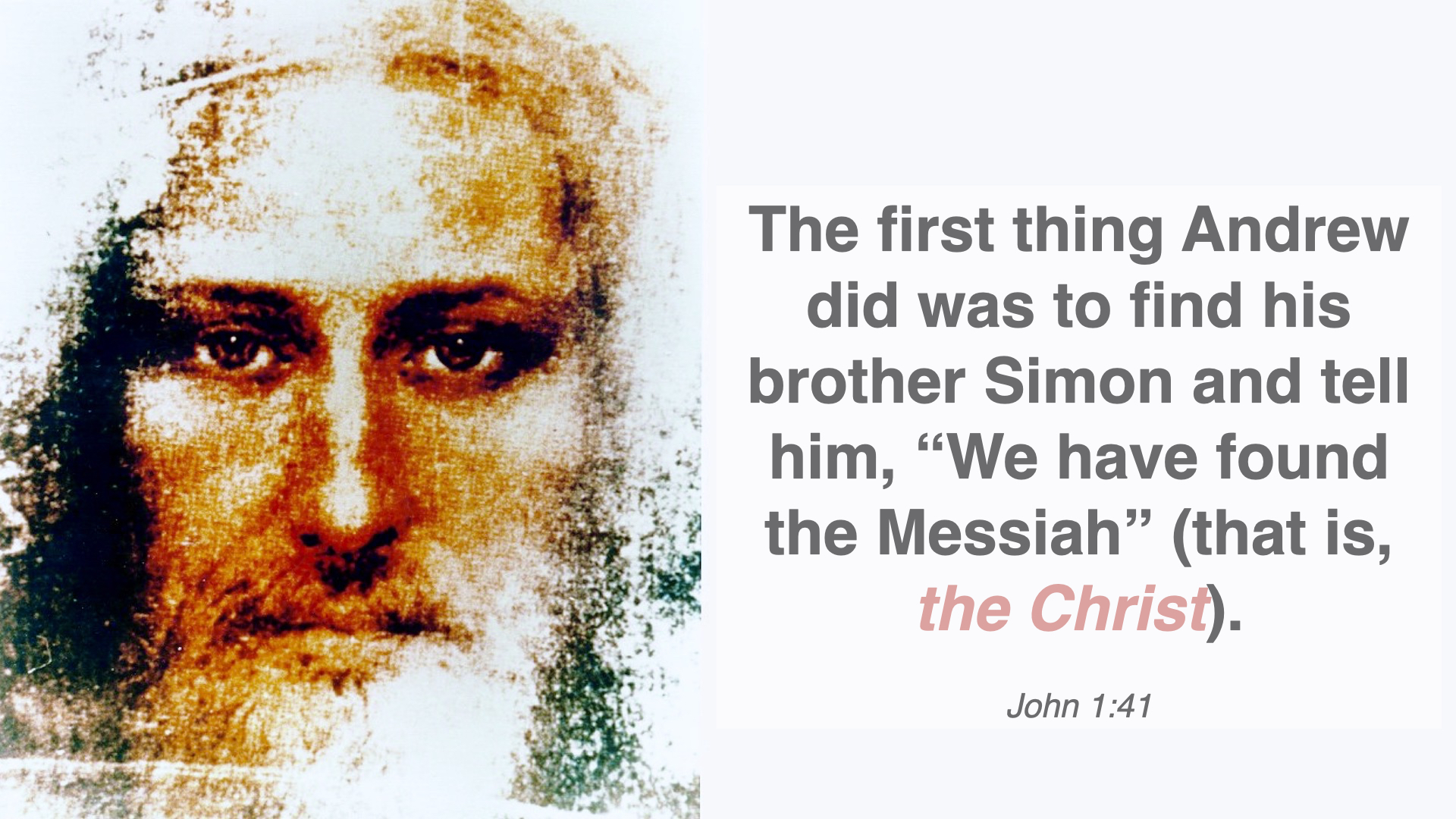 So to be a Christian is to follow the Anointed One. To believe that He died to pay the penalty for our sins, and that He rose to life again to give us His eternal life.
To be a Christian is to live like Jesus, or to live as His ambassadors (2 Corinthians 5:11-21).
To be a Christian is to continue to live like Jesus even in the face of opposition (1 Peter 4:12-16; 2:21-23; 3:13-17).
Christians are being the Church when they are intentionally living in a way that makes Jesus known as the Christ—the One and Only Anointed One.
Some excellent questions for Christians to ponder:
- What do you mean when you say, “I am a Christian”?
- Do others see and hear Jesus in what you do and say?
- Does your verbal confession and lifestyle confession compel others to come to Jesus?
Let’s make sure our lives are the best definition of what the Bible says a Christian truly is!
Check out all of the other messages in this series by clicking here.
►► Would you please prayerfully consider supporting this ministry? My Patreon supporters get behind-the-scenes access to exclusive materials. ◀︎◀︎


 Craig T. Owens