The Ministry Of God’s Word (book review)

The Ministry Of God's Word

As a pastor I am frequently in awe that God would use me to share His Word with His people. At times it can feel almost overwhelming. Reading Watchman Nee’s teaching to pastors in The Ministry Of God’s Word I feel equal parts heaviness and encouragement.

The heaviness comes from the even deeper realization that Nee brings to pastors of their awesome responsibility before God to be the messengers of His Word. Nee makes it clear that if a pastor’s heart or mind is not as tuned in as possible, the message will be diminished in its delivery.

The encouragement comes from the realization of how much the Holy Spirit wants to help a preacher get his heart, mind, spirit, memory, and even vocabulary in a place that can be used greatly by God.

Pastors, this is not an easy-to-read book. Not because of the vocabulary, but because of the deepness of the subject matter. You will find yourself confronted at every page. But as you persevere through Nee’s challenging message, you will feel God’s Spirit moving to equip you for even great ministry of God’s Word.

And I would be remiss if I didn’t say thank you to my son Harrison for giving this book to me as a gift. Thank you, son!

The Work Of A Preacher

Rev. John Venn was a key member in the Clapham Sect, a group of devout Christian reformers in England, alongside William Wilberforce. These wise words should be well attended to by all pastors—

John Venn“Were the work of a preacher indeed confined to the delivery of a moral discourse, this would not be an arduous task. But a Minister of the Gospel has much more to do. He will endeavor, under Divine Grace, to bring every individual in his congregation to live no longer to himself, but unto Him who died for us. But here the passions, prejudices, and perhaps the temporal interests of men combine to oppose his success. It is not easy to obtain any influence over the mind of another; but to obtain such an influence as to direct it contrary to the natural current of its desires and passions, is a work of the highest difficulty. Yet such is the work of a Minister…. 

“We have to convey unpleasant tidings; to persuade to what is disagreeable; to effect not only a reformation in the conduct of men, and a regulation of their passions, but, what is of still higher difficulty, a change in their good opinion of themselves.  Nay, further we have not merely to ‘wrestle against flesh and blood but against principalities and powers, against the rulers of the darkness of this world, against spiritual wickedness in high places.’ ‘Who is sufficient for these things?’ For this office the Christian Minister may in himself ‘have no resources above those of any of his congregation,’ their weaknesses are his weaknesses, he must therefore undertake his work in weakness, fear and much trembling, but knowing that it may yet be effectual, for it is in weakness that Christ’s strength is always made perfect.” —John Venn (1759-1813)

Amen!

Mere Humanism

I’ve noticed a disturbing trend among many of my pastor colleagues. I’m not sure if it’s an attempt to be “relatable” or unoffensive, but it is dead wrong.

The trend is to tell stories (even Bible stories) without using the Bible. To give people good thoughts from Scripture without actually opening the Scripture. To tell people how they should live but to never show them the passages of God’s Word on which those thoughts are based.

Are we ashamed of the Scripture? How can someone “preach” without pointing their audience to the authority for their preaching?!?

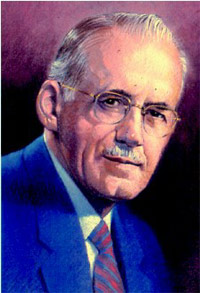
A.W. TozerA.W. Tozer warned us with these words—

“Any appeal to the public in the name of Christ that rises no higher than an invitation to tranquillity must be recognized as mere humanism with a few words of Jesus thrown in to make it appear Christian.”

Don’t just throw in some words of Christ; actually take them to His Word. This inspired Word is powerful, if we will just let people get their hands, and eyes, and hearts on it!

Boomerang

BoomerangI was very hesitant to enter the pastorate. As I look back now, I see God had been preparing me for this all my life, but I was reluctant to take on such a heavy spiritual responsibility.

When I finally submitted, I made a covenant with God: “I never want to preach a sermon where my finger is pointed at the congregation, where I am saying, ‘You people better listen to this!’ But I only want to share what You have been challenging me to do and become. I want the congregation to hear an overflow of the work being done in me.”

I recently read a paragraph from Oswald Chambers that validates that covenant I made—

“It is an easy business to preach, an appallingly easy thing to tell other people what to do; it is another thing to have God’s message turned into a boomerang—‘You have been teaching these people that they should be full of peace and of joy, but what about yourself? Are you full of peace and joy?’ The truthful witness is the one who lets his light shine in works which exhibit the disposition of Jesus; one who lives the truth as well as preaches it.

My pastor friend, don’t preach it if you’re not living it! Or another way: live it first, then preach it.

Be The Sermon

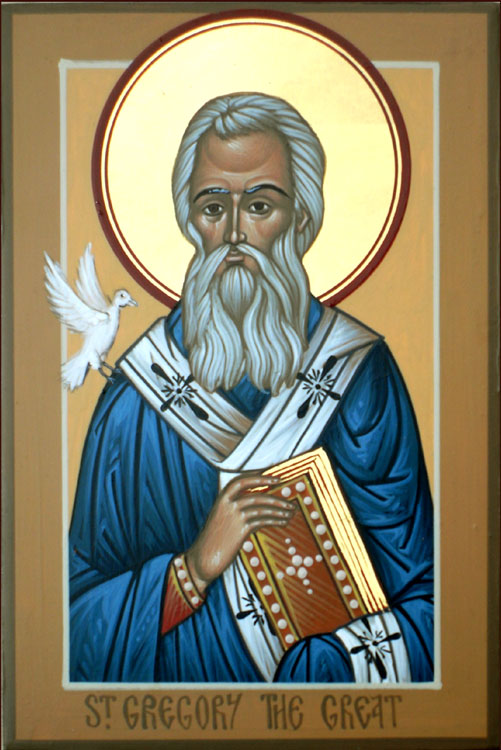
Gregory The GreatIt’s not enough to just preach a sermon, my pastor friend, we must be the sermon, too.

Heed these challenging words from Gregory The Great (ca. 540-604)—

“There are some who investigate spiritual precepts with cunning care, but what they penetrate with their understanding they trample on in their lives: all at once they teaching the things which not by practice but by study they have learnt; and what in words they preach by their manners they impugn. …

“The ruler should always be chief in action, that by his living he may point out the way to those that are put under him, and that the flock, which follows the voice and manners of the shepherd, may learn how to walk better through example than through words. For he who is required by the necessity of his position to speak the highest things is required by the same necessity to exhibit the highest things. …

Every preacher should give forth a sound more by his deeds than by his words, and rather by good living imprint footsteps for men to follow than by speaking show them the way to walk in.” 

Simplicity

Simplicity does not mean watered-down, nor does it mean dumbed-down. Simplicity means as clear as possible.

Sometimes I get so grieved when I hear a pastor trying to “simplify” the gospel message for people. That definition usually means that they are removing any of the parts which might cause people to feel uncomfortable. That is not simplicity, but it’s a sell-out!

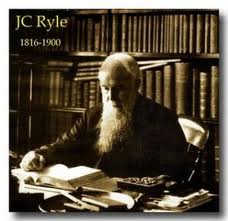
J.C. RyleHere’s how J.C. Ryle defined it—

“All the simplicity in the world can do no good, unless you preach the simple gospel of Jesus Christ so fully and clearly that everybody can understand it. If ‘Christ crucified’ has not His rightful place in your sermons, and sin is not exposed as it should be, and your people are not plainly told what they ought to believe, and be, and do—your preaching is of no use!” (emphasis added)

Pastor, by all means make the gospel clear, but make sure people do hear all of the gospel.

A Warning To The Itinerant Missionary

My cousin wrote this post mainly to himself, but it is an important reminder for everyone—missionary or pastor—who preaches the gospel.

Live DeadGuest Blogger: Dick Brogden 

Missionaries are given the immense privilege of representing God’s heart to both the nations and the church. When we return from our fields of obedience, we are invited into pulpits—grand and humble—to speak on behalf of both the lost and the Lord. We are feted and lauded, which can lead to pride. We observe shallowness and performance, which can lead to a critical spirit. The more we travel and speak, the more we must beware our own hearts. I sat down this weekend and wrote out some warnings to myself:

  • I do not deserve the pulpit; I have not “earned” it.
  • I am not better than the ones I preach to.
  • I cannot presume God’s favor or anointing.
  • I cannot live in sin and call others to holiness.
  • My life has to match my exhortations.
  • I can’t rely on old sermons. I am responsible to give God’s flock fresh bread. If a sermon is to be re-used, it must be fresh to my soul.
  • I cannot allow any whisper of entitlement into my heart. I am not owed praise, respect, attention, or any financial offering.
  • I cannot think my looks, height, posture, style, or natural ability is important, nor that natural gifts can in any way impart divine life to the hearer.
  • I cannot waste God’s time or money with half-hearted preparation, reflection, passion, or effort.The flock must see and feel that I love them, and more importantly that I love Jesus.
  • My spirit must be gentle even if my words are hard.
  • I must have true humility and lowliness. Nothing is as proud or as disgusting as false humility, whether to the individual or before the congregation.
  • I must care more about what God thinks than what man thinks and must obey His promptings and speak as His oracle.
  • If I do not ascend to the pulpit clothed and endued with the Holy Spirit, I am immediately exposed as naked and foolish before God, and it will not be long until I am exposed as a fraud before all men.
  • I must have a holy terror of speaking in my own strength or from my own wisdom. I must have a heavenly horror of speaking what is false, exaggerated, or misleading. I must be terrified of speaking one word without the covering and impetus of the Spirit.

I noted with sadness this weekend that even if all is said in the right spirit and under God’s authority, some ears remain deaf and others hear selectively. We cannot control our hearers, nor are we responsible for how they hear. We are responsible for what and how we speak. It is incumbent on us to speak the words of God in the way and in the spirit He requires. This is a fearful and awesome privilege. God help us. God watch over our hearts and lips.

** I encourage you to follow the Live Dead blog where Dick regularly posts.

God-Pleasing Sermons

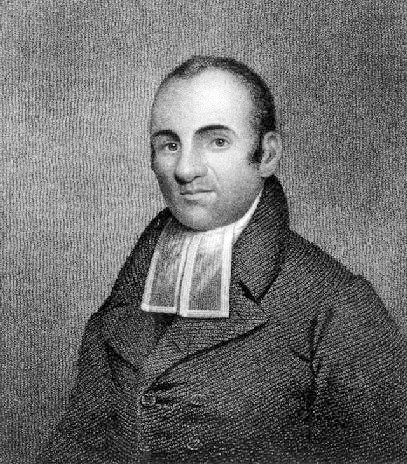
Lemuel Haynes

Lemuel Haynes

Sadly, I talk to far too many pastors who tell me their sermon topics have been selected by others. They don’t say this exactly in those words, but they talk about needing to prompt someone to do something differently, or of a parent who thinks the youth need some correction, or a board member who says the giving needs to be increased.

Sometimes it’s the opposite: pastors will say they won’t preach on a certain topic because it’s too sensitive, or it might make some people upset, or it might be offensive to some with an opposing viewpoint.

Whatever happened to preaching the Word as the Holy Spirit directs?

“A minister who watches for souls as one who expects to give account will have none to please but God. When he studies his sermons, this will not be the enquiry, ‘How shall I form my discourse so as to please and gratify the humors of men and get their applause?’ but ‘How shall I preach so as to do honor to God and meet with the approbation of my Judge?’” —Lemuel Haynes (emphasis added)

Bible-Taught Or Spirit-Taught

A.W. Tozer“We must be willing to obey if we would know the true inner meaning of the teachings of Christ and the apostles. I believe this view prevailed in every revival that ever came to the church during her long history. Indeed a revived church may be distinguished from a dead one by the attitude of its members toward the truth. The dead church holds to the shell of truth without surrendering the will to it, while the church that wills to do God’s will is immediately blessed with a visitation of spiritual powers. Theological facts are like the altar of Elijah on Carmel before the fire came, correct, properly laid out, but altogether cold. When the heart makes the ultimate surrender, the fire falls and true facts are transmuted into spiritual truth that transforms, enlightens, sanctifies. The church or the individual that is Bible taught without being Spirit taught (and there are many of them) has simply failed to see that truth lies deeper than the theological statement of it.” —A.W. Tozer

What do you think, pastor? Is your church Bible taught, or Spirit taught? Is there a difference? If so, how can you move your church into this deeper place?

Caring For Your Soul

Thomas a KempisThe spiritual man puts the care of his soul before all else; and whoever diligently attends to his own affairs is ready to keep silence about others. You will never become interior and devout unless you refrain from criticism of others, and pay attention to yourself. If you are wholly intent on God and yourself, you will be little affected by anything outside this.” —Thomas á Kempis

My dear pastor, by the very nature of our position we are constantly giving out. We are ministering to the needs of others and it is physically, spiritually, emotionally and intellectually draining.

It’s a pretty simple statement: You cannot give what you do not have. You have physical, spiritual, emotional and intellectual limits.

So some simple questions for you to ponder this weekend:

  • What are you doing to care for your own soul?
  • How are you replenishing yourself?
  • After you have emptied yourself in ministry, how are you being re-filled?

If you’d like to share some thoughts in the comments, please feel free to do so.