The Danger In Multitasking

Listen to the podcast of this post by clicking on the player below, and you can also subscribe on AppleSpotify, or Audible. 

Peter Drucker noted, “It wasn’t until the twentieth-century that we pluralized the word priority. For most of its history, the word has been singular.” 

If we have too many priorities, we can frequently find them in conflict with each other. This forces us to make an extremely difficult decision: Which priority has a higher priority?! 

My friend Greg Heeres and I recently addressed this in an episode of our leadership podcast called The Craig And Greg Show.  

Ultimately, whatever business or industry or profession we are in, we are in the people business. All of our efforts fail without good investment in people. So our overriding priority must be on the people God has placed around us.

(I wrote post earlier about this called “Am I interruptible?” which is worth your time to check out.)

Marcus Buckingham noted, 

“The human brain is simply not designed to multitask. You can get by doing multiple things at once, but you can’t do them well. Your brain is physically unable to process more than one set of instructions at a time, so while you are juggling all of those actions at once, your brain is scrambling to keep up. Through a variety of experiments measuring brain activity, scientists have discovered that the constant switching back and forth from one activity to another energizes regions of the brain that specialize in visual processing and physical coordination, while simultaneously disrupting the brain regions related to memory and learning. According to the research, ‘We are using our mental energy to concentrate on concentrating at the expense of whatever it is that we’re supposed to be concentrating on.’ Got that? 

“More simply: when we multitask we’re dumber. How much dumber? A recent study for Hewlett Packard exploring the impact of multitasking on performance revealed that the average worker’s functioning IQ drops ten points when multitasking…. (The analogy the researchers used is that a ten-point drop in IQ is equivalent to missing one night of sleep.)”Marcus Buckingham  

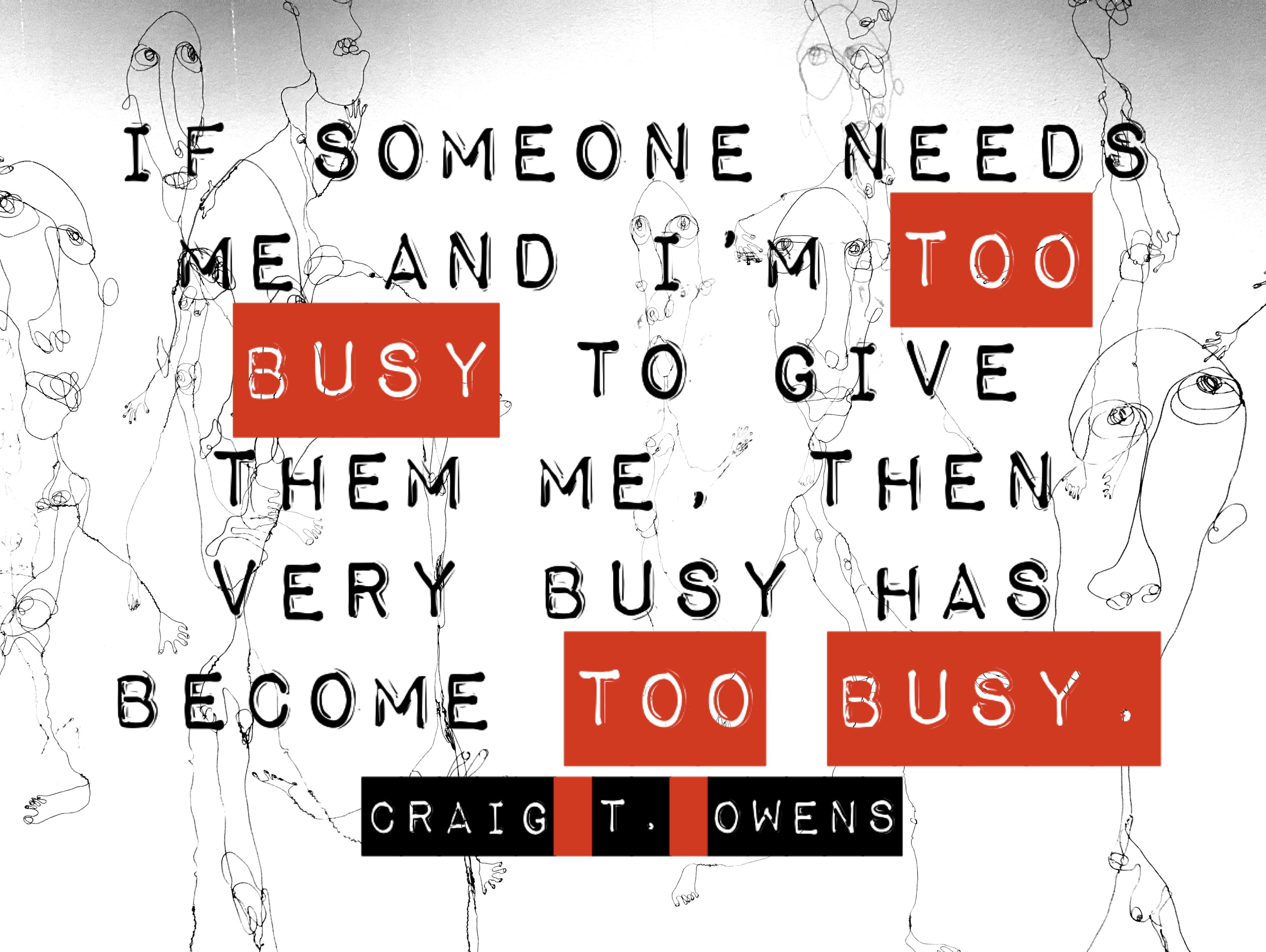
The biggest victim of attempting to multitask is your relationships. Those closest to you suffer the most. If someone needs me and I’m too busy to give them me, then very busy has become too busy and it’s time for me to evaluate who—not what—is my highest priority.

►► Would you please prayerfully consider supporting this ministry? My Patreon supporters get behind-the-scenes access to exclusive materials. ◀︎◀︎

23 Other Quotes From “15 Invaluable Laws Of Growth”

15 Invaluable Laws of GrowthJohn Maxwell is extremely well-read! It is obviously that he uses many sources to sharpen and refine the teaching principles he shares in his books. I recently finished reading 15 Invaluable Laws Of Growth, and as usual, Dr. Maxwell shared several quotes from others which I found very highlighter-worthy. Here are a few of them…

“What great accomplishments we’d have in the world if everybody had done what they intended to do.” —Frank Clark

“A mistake is simply another way of doing things.” —Warren Bennis

“You cannot change your destination overnight, but you can change your direction overnight.” —Jim Rohn

“Can there be a more insidious word? Later, as in ‘I’ll do it later.’ Or, ‘Later, I’ll have time to write that book that’s been on my mind for the past five years.’ Or, ‘I know I need to straighten out my finances… I’ll do it later.’ ‘Later’ is one of those dream-killers, one of the countless obstacles we put up to derail our chances of success. The diet that starts ‘tomorrow,’ the job hunt that happens ‘eventually,’ the pursuit of the life dream that begins ‘someday’ combine with other self-imposed roadblocks and lock us on autopilot.’ —Jennifer Reed

“No one can produce great things who is not thoroughly sincere in dealing with himself.” —James Russell Lowell

“Probably the most honest self-made man ever was the one we heard say: ‘I got to the top the hard way—fighting my own laziness and ignorance every step of the way.’ —James Thom

“It’s impossible to consistently behave in a manner inconsistent with how we see ourselves. We can do very few things in a positive way if we feel negative about ourselves.” —Zig Ziglar

“Follow effective action with quiet reflection. From the quiet reflection will come even more effective action.” —Peter Drucker

“The wise man questions himself, the fool others.” —Henri Arnold

“The successful person has the habit of doing the things that failures don’t like to do. The successful person doesn’t like doing them either, but his dislike is subordinated to the strength of his purpose.” —E. M. Gray

“Where many people go wrong in trying to reach their goals is in constantly looking for the big hit, the homerun, the magic answer that suddenly transforms their dreams into reality. The problem is that the big hit never comes without a great deal of little hits first. Success in most things comes not from some gigantic stroke of fate, but from simple, incremental progress.” —Andrew Wood

“A bad habit never goes away by itself. It’s always an undo-it-your self project.” —Abigail Van Buren

“The great composer does not set to work because he is inspired, but becomes inspired because he is working. Beethoven, Wagner, Mozart, and Bach all settled down, day after day, to the job at hand. They didn’t waste time waiting for inspiration.” —Ernest Newman

“Do not wait for a change of environment before you act. Cause a change of environment through action. You can act upon your present environment so as to cause yourself to be transferred to a better environment.” —Wallace D. Wattles

“Whatever course you decide upon, there is always someone to tell you that you are wrong. There are always difficulties arising which tempt you to believe that your critics are right. To map out a plan of action and follow it to the end requires some of the same courage which a soldier needs. Peace has its victories, but it takes brave men to win them.” —Ralph Waldo Emerson

“Someone’s opinion of you does not have to become your reality.” —Les Brown

“If you don’t design your own life plan, chances are you’ll fall into someone else’s plan. And guess what they may have planned for you? Not much.” —Jim Rohn

“An idealist believes the short run doesn’t count. A cynic believes the long run doesn’t matter. A realist believes that what is done or left undone in the short run determines the long run.” —Sydney J. Harris

“Every problem introduces a person to himself.” —John McDonnell

“Experience isn’t really the best teacher but it sure does serve as the best excuse for not trying to do the same silly thing again.” —Frank Hughes

“You will never stub your toe standing still. The faster you go, the more chance there is of stubbing your toe, but the more chance you have of getting somewhere.” —Charles F. Kettering

“Not everything that is faced can be changed. But nothing can be changed until it is faced.” —James Baldwin

“No pain, no palm; no thorns, no throne; no gall, no glory; no cross, no crown.” —William Penn

You can read my book review of 15 Invaluable Laws Of Growth and its companion book JumpStart Your Growth by clicking here.

To read quotes from John Maxwell in 15 Invaluable Laws, click here.

P.S. And watch for more quotes coming soon!

6 Quotes From “The Purpose Of Christmas”

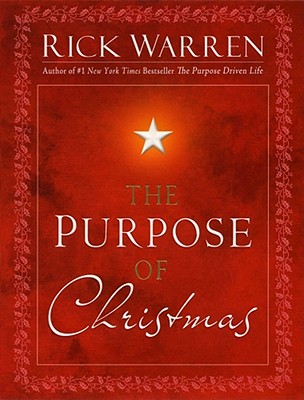
The Purpose Of ChristmasI mentioned in my book review of Rick Warren’s The Purpose Of Christmas that this might be a good book to help families recalibrate the meaning of Christmas each year. As you can see from the quotes I highlighted, this book doesn’t talk directly about Christmas trees, or gifts, or mistletoe, or carols. Rather it goes to the heart of the matter: Why did Jesus need to be born in a stable in Bethlehem? He was born for our salvation, and our reconciliation with God and our fellowman.

“Your capacity for enjoyment is evidence of God’s love for you.”

“No one wants what’s best for you more than God. No one knows better what will make you truly happy!”

“Our natural inclination is to want our own way instead of God’s way. This tendency to make wrong choices instead of right ones is called sin. The middle letter of sin is I, and whenever I place myself at the center of my life, I sin. It is any attitude or action that denies God His rightful place as first in my life.”

“Guilt is the mental price we pay for violating our God-given consciences.”

“I asked Peter Drucker, ‘How did you come to accept Jesus Christ as your Savior?’ He thought about it for a few seconds, then replied, ‘The day that I finally understood grace, I realized I was never going to get a better deal than that!’”

“Reconciliation focuses on the relationship, while resolution focuses on the problem. Always focus on reconciliation first.”