9 Quotes From “Praying Circles Around Your Children”

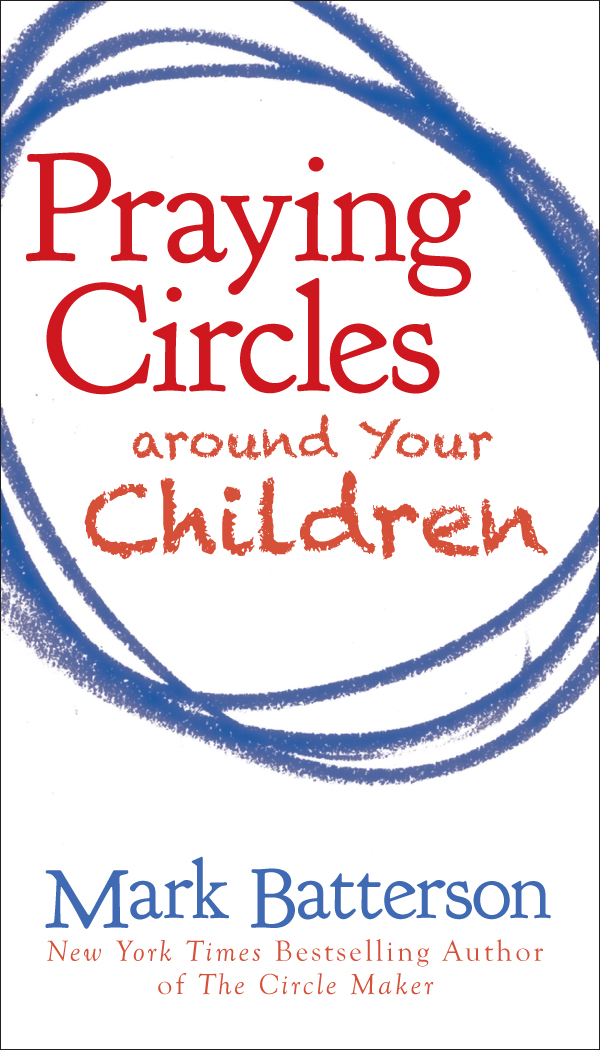
Attention parents and grandparents: You need to read Praying Circles Around Your Children! To help whet your appetite, here are nine quotes from this outstanding book by Mark Batterson (you can read my full review here) that caught my heart:

“Make sure your heavenly Father hears about your kids daily!”

“You’ll never be a perfect parent, but you can be a praying parent. Prayer is your highest privilege as a parent. …Prayer turns ordinary parents into prophets who shape the destinies of their children, grandchildren, and every generation that follows. …Your prayers for your children are the greatest legacy you can leave.” 

“We instinctively attach an ASAP to every prayer and ask God to answer as soon as possible. We need a paradigm shift. We need to start praying ALAT prayers—as long as it takes.”

“Please listen to me, parents: you are prophets to your children. Jewish philosophers did not believe the prophetic gift was reserved for a few select individuals. They believed that becoming a prophetic was the crowning point of mental and spiritual development. It was the natural by-product of spiritual development. It was the natural by-product of spiritual development. The more one grows in grace, the more prophetic one becomes. This doesn’t mean you will start predicting the future. It means you’ll start creating it. How? Through your prayers! Prayer is the way we write the future. It’s the difference between letting things happen and making things happen.” 

“One of your chief responsibilities as a parent is to be a student of your child.”

“Pray about what to pray about. …The purpose of prayer is not to outline our agenda for God; the purpose is to get into the presence of God and get God’s agenda for us.”

“One of our primary responsibilities as parents is helping our children identify their life themes. We need to help them find the sweet spot where their God-given gifts and God-ordained passions overlap.”

“Great parenting doesn’t just mean teaching your kids; it also means learning from them. Think of it as reverse mentoring.” 

“Your prayers will shape the destiny of your family for generations to come.”

Keep On Keeping On

I was challenged by the message “Grandpa George” (also known as Tom Amrozowicz) shared with our church yesterday morning. This coming from a man who is a third-generation Pentecostal, and has walked with Jesus for over 70 years. The Bible text he shared was:

O God, You have taught me from my earliest childhood, and I constantly tell others about the wonderful things You do. Now that I am old and gray, do not abandon me, O God. Let me proclaim Your power to this new generation, your mighty miracles to all who come after me. (Psalm 71:17-18)

I am also a fourth-generational Pentecostal, and I have walked with Jesus for over 40 years (I know, I’m a rookie compared to Tom!). Tom’s words and God’s Word challenged me.

O God, You have taught me from my earliest childhood. I never want to take this for granted!

I constantly tell others about the wonderful things You do. Constantly? I hope my life is always showing how I am grateful for God’s blessings, but I know I needed that reminder to also be telling others how grateful I am.

Now that I am old and gray. Gray? Yes. Old? Well, let’s just say older.

Do not abandon me, O God. I don’t believe God would abandon me, but I need to ask myself, “Am I more attentive to following Him as I was a year ago?” You might ask, “Why ‘more attentive’? Don’t you just need to be as attentive?” When I was a teenager, there were things I ate that I never gave a second thought to, but I would never consider eating those things now because I know they aren’t the healthiest diet choices. In others words, as I’ve gotten older, I’m paying more attention to my physical health. Shouldn’t I pay more attention to my spiritual health too?

Let me proclaim Your power to this new generation. I want to make sure my kids, who are fourth-generation Pentecostals, know about the power of God that can be theirs.

Let me proclaim… Your mighty miracles to all who come after me. I also want to find relevant ways to tell younger generations about all that God has done for me, and all He wants to do for them too.

So if I were to sum up what the Holy Spirit was saying to me yesterday morning, it would be this:

I need to keep on keeping on. Don’t rest on the past, but use the past as a launching pad for even greater things in the future!

Empowering The Team

In reading Leadership Is Dead, one passage particularly stood out to me:

“The wise leader understands that sharing the burden benefits the entire team over the long term. Empowering others makes tasks manageable while also allowing team members to sharpen their skills and build upon their strengths. When a leader refuses to share the load, he brings disservice to the organization because those on his team are not allowed to develop their own leadership skills, and the next generation of leaders are not developed properly for future organizational success.”

Think back to the first two kings in Israel’s history: Saul and David. Both stood out from everyone around them as a strong leader. But only one of them left behind a lasting leadership legacy.

Both Saul and David had men who were immediately attracted to them. Saul was surrounded by valiant men, while David was surrounded by society’s rejects. But clearly David was an empowering leader, and Saul was not. Want proof?

The Bible gives a lengthy list of David’s mighty men, along with quite a résumé of their heroic accomplishments. The list of Saul’s mighty men is: .

I think David was secure in the fact that God called him to lead, while Saul was constantly second-guessing.

  • This made David generous, and Saul jealous.
  • David liberated his men, and Saul contained his men.
  • David encouraged, and Saul controlled.

In the end: David left a legacy, and Saul did not.

What kind of leader do you want to be?

UPDATE: Being secure to serve is one of the main points I tackle in my book Shepherd Leadership: The Metrics That Really Matter. Check out this short clip—

Making Choices

The unusual or out-of-the-ordinary always seems to grab my attention. So when I was reading through a long, long (long!) list of names in 1 Chronicles, I stopped when I read, “Their sister was named Hazzelelponi.”

My first thought: What parent names their little girl Hazzelelponi?!?

My second thought: Why does the biblical writer mention her? First off, there are scarcely any other women mentioned in these genealogies. And then to mention such an unusual name without any other commentary seems weird.

Her name is a compound of two words: to turn toward + shadows.

The Hebrew word for shadows can have two meanings: (1) The cool, protected place; or (2) Something which is transitory or short-lived. One positive definition, and one negative definition. Since all the other times this word is used in the Bible the second definition is used, we can assume that the negative usage is meant here too.

Since I doubt that anyone makes a decision to turn to the shadowy “dark side” all at once, Hazzelelponi made small choices day after day after day.

Small choices every day to rely in things that would not last. And now her history is nothing but a single line: “Their sister was named Hazzelelponi.” No descendants, no heritage, no legacy; just a footnote because of the small choices she made.

“There is a choice you have to make in everything you do. So keep in mind that in the end, the choice you make, makes you.” – John Wooden

What choices are you making today?

A Life Well Lived

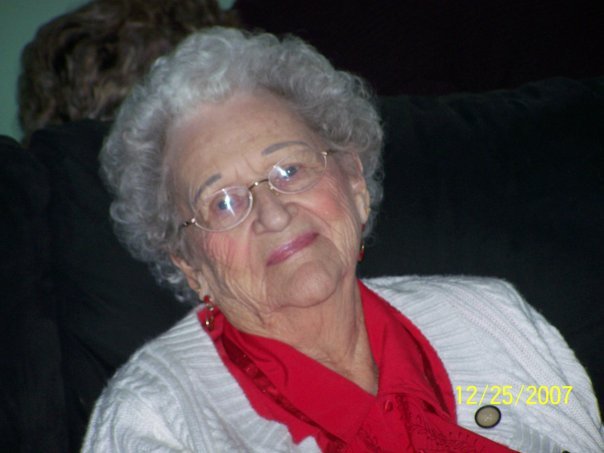
Early yesterday morning, a saint went home to be with Jesus. She was known to all of us at Calvary Assembly of God simply as Grandma. And she was the hippest Grandma we ever knew!

So full of Jesus, and radiating love through her smile. She loved to laugh, she loved to live, she loved to love. But as full of life as we thought she was here on this earth, it’s nothing compared to the life she is experiencing now in the presence of her Savior! She’s home now, and more alive than ever.

We will be celebrating her life for a long time, but we will especially focus on the blessing she was to us this week (the details are here). Please be a part of the visitation time and the homegoing celebration service at the end of this week.

We love you, Grandma! Thanks for showing us how to live so well.

Be Careful

In the final instructions before the Israelites were going to enter the Promised Land, the book of Deuteronomy uses the phrase be careful fifteen (15) times:

  • Be careful not to forget
  • Be careful to obey
  • Be careful to avoid making idols
  • Be careful to honor your leadership
  • Be careful of your thoughts

In the dictionary careful is defined as being attentive to potential danger, error, or harm. It implies paying special attention to accuracy and being discerning.

God doesn’t ask this of me to cramp my style but to put me in a place where He can bless me. And not just me: being careful leads to generational blessings. Here’s my favorite be careful verse:

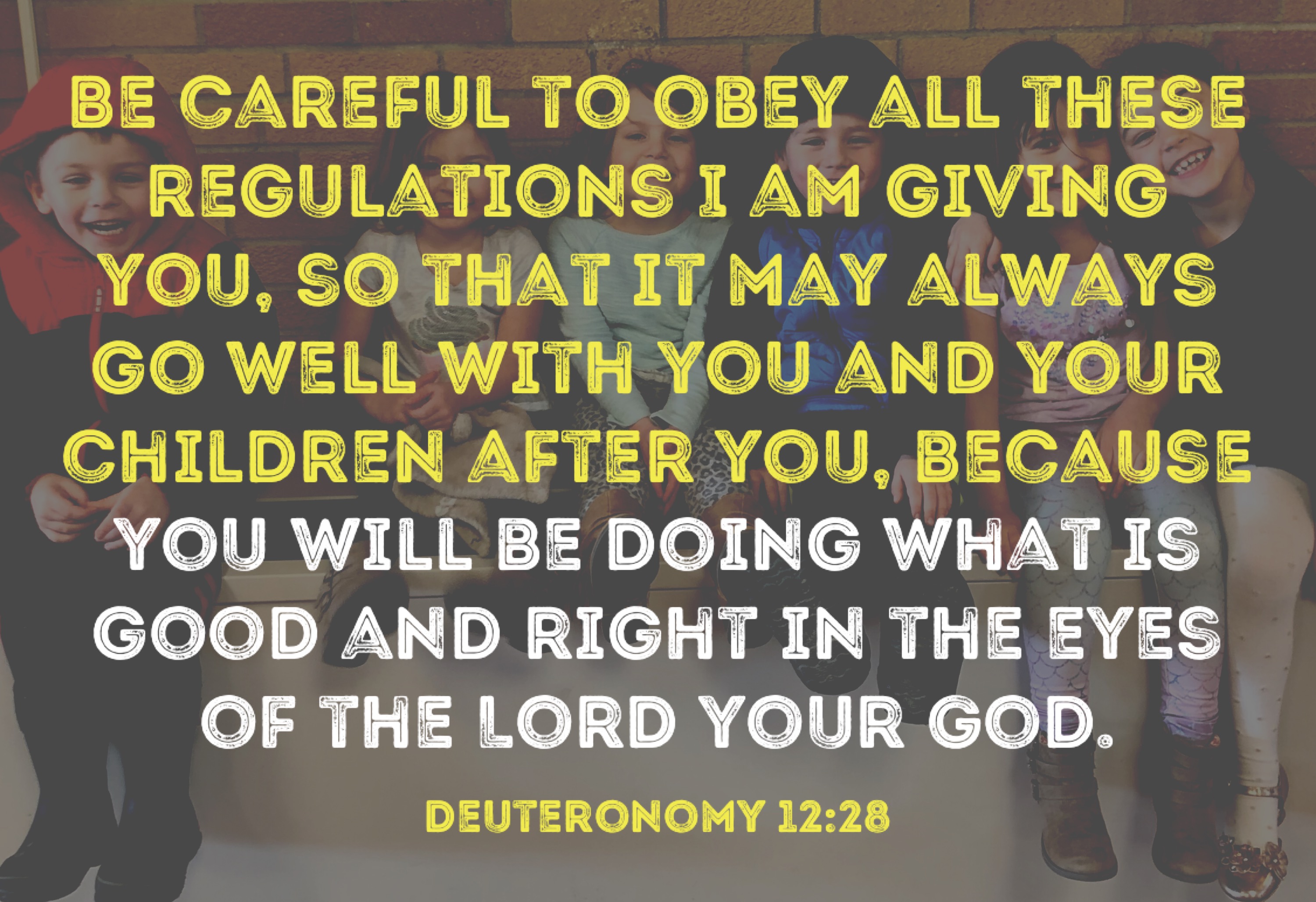
Be careful to obey all these regulations I am giving you today, so that it may always go well with you and your children after you, because you will be doing what is good and right in the eyes of the Lord your God.

Sometimes to be careful we have to slow down. We seem to want everything quickly and with as little effort as possible. Remember the cliché “Haste makes waste”?

What if you slowed down a bit today?

What if you took just a little time to be attentive to potential danger?

What if you paused long enough to discern if you were giving your best to God?

What if you took a moment to simply ask God to give you the wisdom needed to make a godly decision?

Being careful so that it may ALWAYS go well with you and your children after you….

Isn’t that worth it?

Guard These Bones

Here’s an odd one. The Israelites had been slaves in Egypt for a long, long time. God does these miraculous things, culminating in the death of every firstborn child in Egypt who’s not in a house covered by lamb’s blood. Pharaoh has finally had enough, “Quick!” he shouts, “Get out of here now! Leave this country!”

So the Israelites pack up as quickly as they can to leave before Pharaoh changes his mind. And then this odd statement appears, “Moses took the bones of Joseph with him.”

Seriously? Bones? We’re kinda in a rush here!

Well, they’re not just any bones. It’s not like they’re just loose bones lying around. They’re in a mummy case.

Yeah, and…?

They were the bones of Joseph. The one who foresaw the coming famine. The one whom Pharaoh put as second-in-command to make preparations for the famine. The one who saved the Israelites from starvation. That Joseph. Just before he died he made his family take an oath that when they left Egypt, they would take his bones with them (Genesis 50:25-26).

They took the oath. And for the next 430 years someone had to watch over the bones. Through about twelve generations, from father to son, from son to grandson, from grandson to great-grandson, the oath was passed: “Guard these bones. When we leave, the bones go with us.”

So when they left Egypt, Moses took the bones with him. But then the Israelites sinned and had to wander in the wilderness for another 40 years. Another whole generation died, and still the oath was passed: “Guard these bones.”

The Israelites finally re-entered their home land, but had to defeat their enemies that had taken possession of their land while they were in Egypt. For about 30 years the Israelites fought. And still the oath was passed: “Guard these bones.”

Finally as a postscript to Joshua’s account we see Joseph’s bones being buried in Shechem, nearly 500 years after Joseph died!

For 500 years they kept the oath; they guarded the bones.

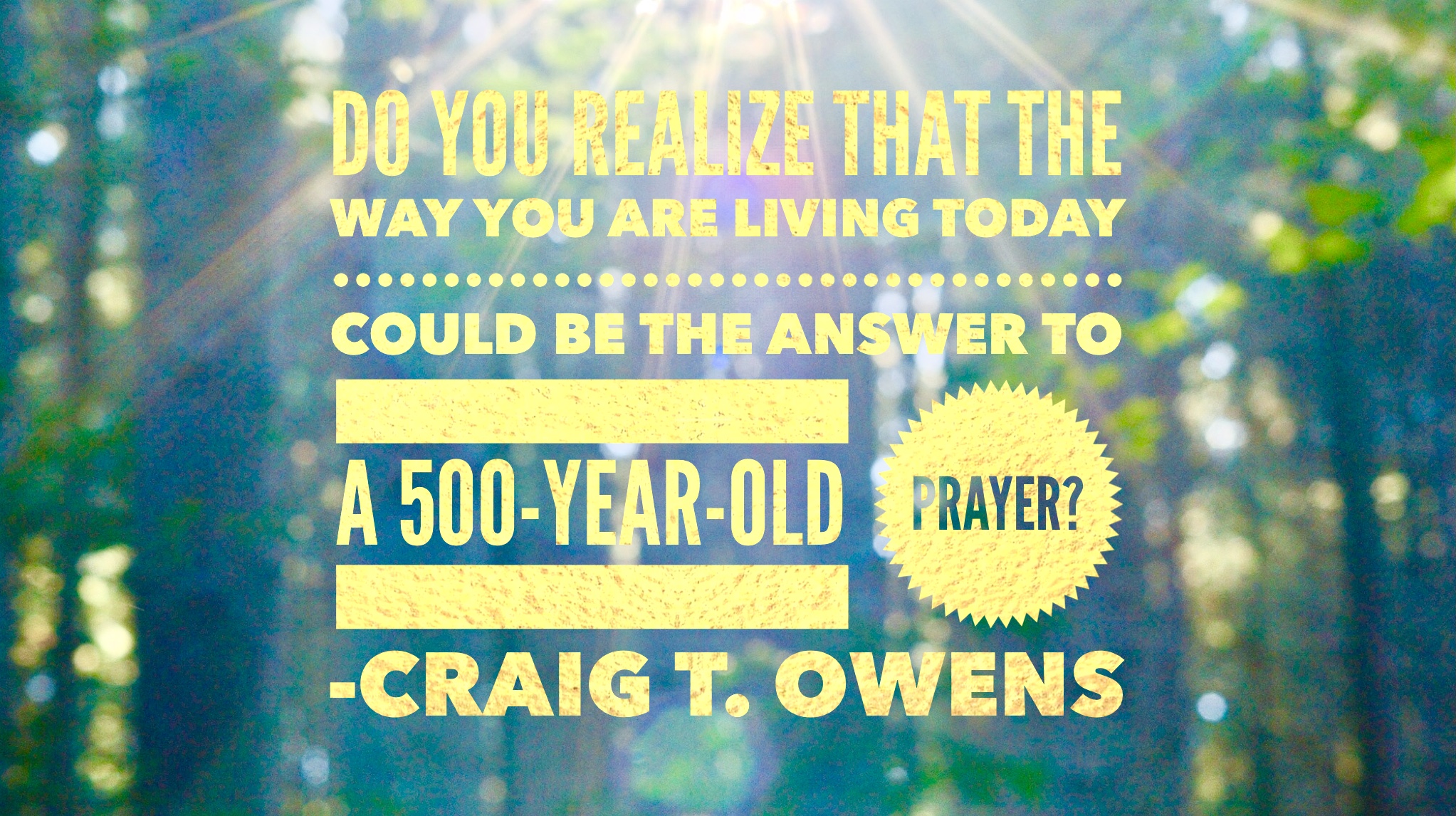
Do you realize that the way you are living today could be the answer to a 500-year-old prayer? Just like the Israelites who kept their eyes on God, you and I must live today with a purpose and with a mission. When we live godly lives, we are guarding the bones of prayers that were prayed, the bones of petitions that were made, the bones of oaths that were requested and honored.

What are you doing today to guard the bones of your ancestor’s prayers?

Digging & Drinking

On Sunday we had our annual business meeting at Calvary Assembly of God. The actual business part was minimal. The more exciting things included hearing how God had blessed us last year, and looking forward to the greater things we can do for Him this year.

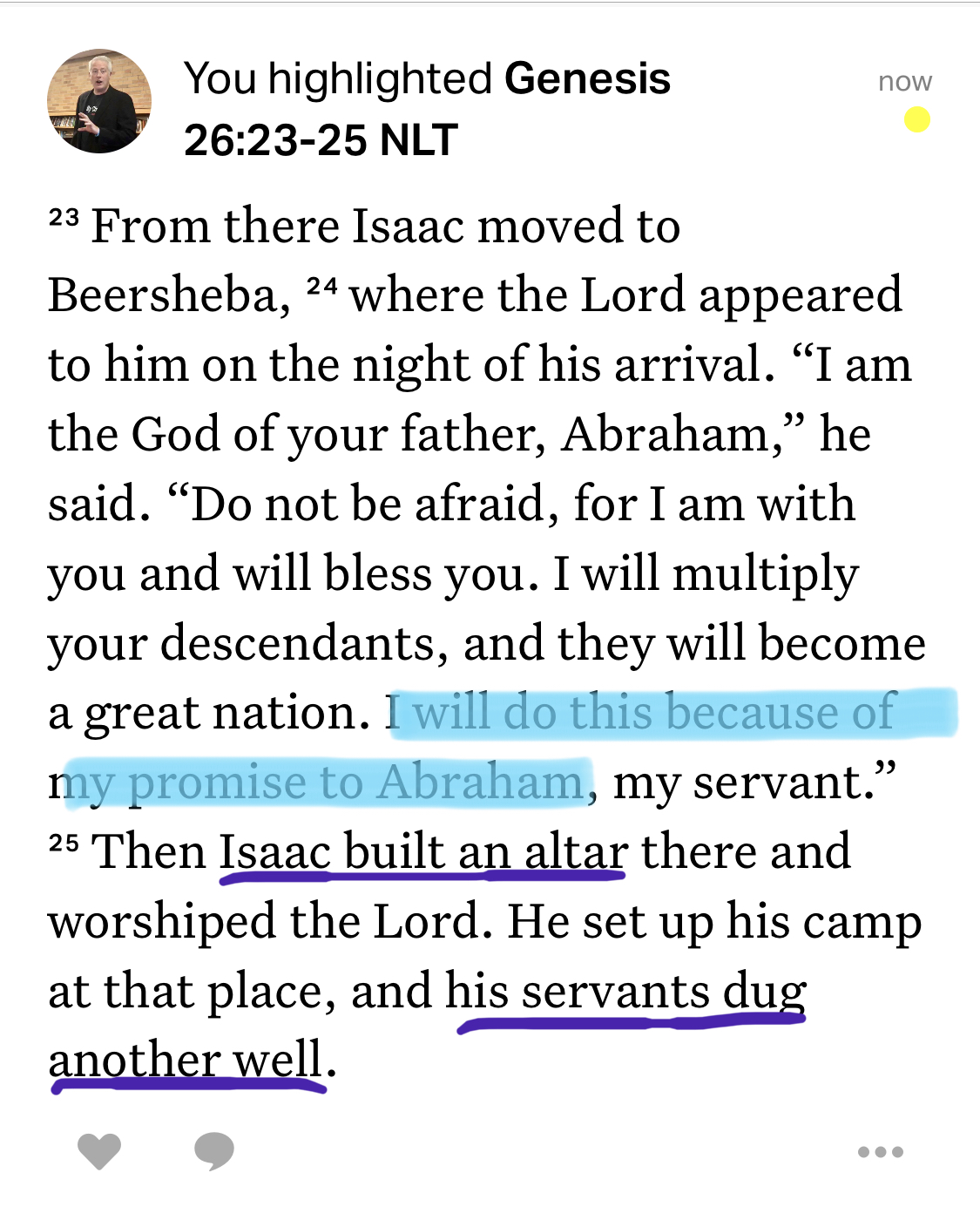
I shared a story from Genesis 26 about Isaac. This story just keeps rolling around in my mind.

Initially, God blessed Isaac just because he was Abraham’s son. God said, “Abraham obeyed me. He did everything I asked him to do, so I blessed him.” Then God challenged Isaac: “I am willing to bless you with even more if you, too, will follow Me.”

It’s interesting to note what Isaac did first. He reopened all of the old wells his father had dug, and he gave them the same name Abraham had given them…

…he honored the heritage of his father.

Honoring those who have gone before us is so important. But it’s not enough.

If Isaac was going to experience more of God’s blessings, he couldn’t be satisfied with just drinking from the old wells. Don’t get me wrong: it was good of him to reopen those wells…

…but if that’s all he did, he would have just maintained the status quo.

Isaac had to dig new wells. It didn’t start so well. The first two wells he tried to dig on his own led to quarrels with his neighbors…

…the enemy doesn’t fight against those who maintain the status quo.

…the enemy only quarrels with us when we try to dig new wells.

Isaac kept at it, and his third attempt was successful. Here’s the payoff:

…we can honor our heritage by reopening the old wells and drinking from them.

AND we can continue to dig new wells so that we can minister to more people.

It’s not EITHER-OR. It’s BOTH-AND.

I’m trying to maintain that balance…

…re-digging the old and drinking the new.

…looking back and looking forward.

…honoring our heritage and leaving a new legacy.

…digging and drinking.

Do Your Own Growing

An Irish Proverb says, “It doesn’t matter how tall your father was, you still have to do your own growing.” In other words, my genes may give me a certain predisposition, but I still have to grow on my own.

The same could be said spiritually: “It doesn’t matter how close to God your parents were, you have to approach Him yourself.”

Abraham was so close to God that he was called “friend of God.” His son Isaac had some great spiritual genes, but he still had to do his own growing.

Isaac had the perfect opportunity shortly after Abraham’s death. He and his wife Rebekah wanted to start a family, but they weren’t able to do so. Then comes this great phrase:

…Isaac prayed to the Lord on behalf of his wife…

He got it! And God heard his prayer: Rebekah became pregnant with twins.

Rebekah’s parents were also close to God. But now pregnant and far, far away from home, she was having difficulty with her pregnancy. That’s when Rebekah had her chance to do her own spiritual growing,

…Rebekah went to inquire of the Lord…

She got it too!

Not only was this good for them as individuals, but undoubtedly it strengthened their marriage as well. I have found that couples who pray stay.

  • They stay close to God
  • They stay close to each other
  • They stay more committed to their families
  • They stay in a growth pattern

Are you doing your own growing today?

If you’re still riding someone else’s coattails, it’s time to start doing your own growing.

If you’re still blaming a parent for holding you back, it’s time to start doing your own growing.

You can do it—start talking to God yourself today!

A Man Named Jonadab

What an incredible family line! Moses’ father-in-law Jethro was the ancestor of the Kenite family line, and from this family tree came a man named Recab.

The Recabite family was of immense help to the Israelites. They served as scouts for them, and they joined in the battle to defeat the Canaanites in Gaza, Ashkelon, and Ekron. Years later a Recabite named Jonadab was with King Jehu when he rid Israel of King Ahab’s evil influence of Baal worship.

Jonadab called the Recabite family to follow him in living a holy lifestyle. He set some incredibly high standards for them, but for the next 200+ years the Recabite family held to these standards. Even as the nation of Judah was carried into captivity because of their gross sin against God, the Recabite family stood solidly for God, never getting caught up in society’s pull toward sin.

Their fidelity toward God wasn’t without notice. Here’s an incredibly powerful statement: God said, “Jonadab son of Recab will never fail to have a man serve Me.”

Think about that. A family line that is always serving God for generation after generation after generation. That’s what I want. It took Jonadab making a dramatic counter-cultural stand for his faith in God and then passing that on to his family. Wow!

For the sake of never failing to have my descendants serve God, I am willing to make a stand. I am ready to live counter-culturally. I’m going to stand strong. What about you?