Groaning

I’m a list kinda guy. I love making To Do lists, and shopping lists, and even prayer lists. These seem to work well for my temperament, helping me stay on task and feel like I am accomplishing something.

But I’ve noticed a danger built-in to these lists. I can use the lists to remove all emotion from my activities. I suppose that might be a good thing for my To Do lists and shopping lists, but it’s a bad thing for my prayer lists.

Many times when Jesus was moved to touch someone in need, the Bible says that Jesus groaned. Look at this:

  • Some people brought a man who could neither hear nor speak and asked Jesus to lay a healing hand on him. He took the man off by himself, put His fingers in the man’s ears and some spit on the man’s tongue. Then Jesus looked up in prayer, groaned mightily, and commanded, “Ephphatha!—Open up!” And it happened. (Mark 7:31-35)
  • When Jesus therefore saw her weeping, and the Jews also weeping which came with her, He groaned in the spirit, and was troubled. (John 11:33)
  • Now Jesus, again sighing repeatedly and deeply disquieted, approached the tomb. (John 11:38)

I love the words of G. Morgan Campbell:

“No man can pray for the world unless the Spirit interpret to him the world’s agony, and the Spirit cannot intercede the world’s agony to any man unless that man live in the midst of the world’s agony. Not by retirement from the world, not by hiding away within a monastic institution, not by seeking to develop my own spiritual life by removing myself from the agony of the world, can I ever pray for the world; but because I live every day in the midst of its busy life, am close to it and know it, and because the Spirit of God in me leads me into the secret deepest meaning of the world’s agony and pain so that I no longer treat it as a superficial disease that can be dealt with by the nostrums of humanity, but as a great heart trouble that needs blood and sacrifice to deal with it, am I able to pray. Out of that revelation of the meaning of the world’s agony created by the Spirit in the hearts of believing men they are able to pray. The Church of God in the economy of God was created an institute of prayer.”

Are you close enough to lost and hurting humanity to hear them groan?

Are you moved by their groans?

Can you groan on their behalf? That’s how we should be praying, and then the Spirit helps us in our weakness. We do not know what we ought to pray for, but the Spirit Himself intercedes for us with groans that words cannot express (Romans 8:26).


Don’t just pray for the hurting around you; groan for them!

Backcasting

Psalm 22 is a prayer of raw desperation. I love how transparent David is with his emotions. Many people would hide this sort of thing: never daring to admit that they had doubts. But David freely admits that he’s frustrated by what is happening—or actually not happening—in his life.

I see three points of David’s desperation:

  1. God, why don’t You answer me (vv. 1-2).
  2. God, why don’t You defend my honor (vv. 6-8).
  3. God, why don’t You rescue me (vv. 11-18).

Do you think David had a right to say these things against God? Remember Jesus said them too!

Do you think David was over-reacting when he said these things? Remember Jesus said them too!

David truly, deeply, felt these things. He truly believed that God wasn’t answering him, or defending him, or rescuing him. At least, AS HE THOUGHT GOD SHOULD!

But David says something VITAL after each of his points of desperation. It’s summed up in one conjunction each time…

  • Yet (vv. 3-5).
  • Yet (vv. 9-10).
  • But (vv. 19-21).

In all of these David recalls past history. David looks to the past to help him look to the future.

He BACKCASTS so that he can have a better FORECAST!

Looking back gives David assurance of God’s faithfulness. This assurance gives David hope for the future. So now look how he responds in his present desperate situation:

  • I will declare Your name (v. 22a)
  • I will praise You (v. 22b)
  • He calls others to join him in praise (v. 23)
  • He realizes that God has not hidden His face… but He has listened to his cry for help (v. 24)
  • He decides to praise God in spite of the temporary disappointments, giving all glory to God (vv. 25-31)

This is what is called a typio-prophetic Messianic psalm: what David experienced, Jesus would both experience and fulfill. So although Jesus cried out, “My God, My God, why have You forsaken Me,” He too could backcast to forecast and get the strength He needed to persevere

Let us fix our eyes on Jesus, the Author and Perfecter of our faith, Who for the joy set before Him endured the Cross, scorning its shame, and sat down at the right hand of the throne of God. (Hebrews 12:2)

This is why I’m a big believer in journals: writing things down now will give you ammunition for future trials. Then when you are in those trials, you can backcast to get a better forecast of the hope for God’s deliverance. That will give you joy in the present, just like David. And just like Jesus!

Don’t Fake It

Listen to the podcast of this post by clicking on the player below, and you can also subscribe on AppleSpotify, or Audible.

Have you ever had someone tell you, “Fake it until you make it”? In other words, you may not feel happy, but just start smiling and soon you will feel happy. Sadly, I’ve heard this type of so-called wisdom given by Christians to other Christians. Phrases like…

  • Don’t let anyone know that you feel scared, doubtful, or angry.
  • Never let ‘em see you sweat.
  • Even if you’re down, put on a happy face.

Turns out that this is not only bad advice, but harmful advice too. A study done by Michigan State University found:

     “Pretending to smile when you’re feeling bad makes you feel worse and be less productive. … [You] can’t just fake a smile and expect to feel good about it or negative feelings intensify.”

If you’re a follower of Jesus Christ, you should never fake it. Take a quick glance through the Psalms and you’ll see raw, real emotions: anger … depression … anxiety … vengeance … sadness … envy … spite … and many others. 

Here’s the deal: You may wear a {fake} smile on the outside, but God knows the {real} emotions in your heart. You’re not fooling Him. And, as it’s been revealed in this study, you’re not fooling anyone else either.

So go ahead and vent those negative emotions when you’re alone with God. Tell Him how you really feel (He already knows, but it’s good for you to hear you say it). And then let the Holy Spirit show you how to deal with those emotions in a healthy way.

Don’t bottle it up—don’t fake-it-until-you-make-it—be real and let God heal you.

UPDATE: I talk a lot about dealing with our strong, negative emotions in my book When Sheep Bite.

►► Would you please prayerfully consider supporting this ministry? My Patreon supporters get behind-the-scenes access to exclusive materials. ◀︎◀︎

How Do You Feel About Today?

A friend’s status update on Facebook this morning read:

(Me having a chat with the day): Listen here, Day, I gotta lot of stuff to get done, so don’t get any ideas. And btw it’s going to take more than missing homework and wetted beds to stop me! Muahahahaaa!

This reminded me of a conversation the old preacher Smith Wigglesworth had with an acquaintance:

“How do you feel today, Smith?” the friend asked.

“I never ask Smith how he feels,” Wigglesworth replied. “I tell Smith how he feels.”

Great advice from both my friend and Smith Wigglesworth: Don’t wait until you feel like doing something before you do it. Tell your Day how it’s going to go—and then tell yourself how you’re going to feel about it—and then just do it!

Carpe diem! Seize the day and make it a good one!

Stuff

We’re almost done unpacking. Just 10 days after moving into our new home in Cedar Springs, we’ve just about got the unpacking done. Notice I said, “almost done.”

We’re trying to find a place for everything that we brought with us. But the closets are a bit smaller, there aren’t quite as many cupboards in the kitchen, and there’s one less bedroom and one less bathroom than our previous home. That means we still have quite a few boxes that have been moved to the garage. These are the we’ll-hang-on-to-this-for-awhile-to-see-if-we-need-it things.

After 19 years of marriage and three kids, we’ve accumulated quite a bit of stuff. And do you know what I’ve found? I don’t need or use much of the stuff I so carefully packed up and moved with me.

So I have been thinking,

  • How much stuff do I have packed away in my heart and mind that I don’t really need?
  • How many unkind words do I continue to keep packed away in case I need to pull them out?
  • How many painful memories do I keep packaged up just in case I need to feel sorry for myself?
  • How many mistakes from my past do I keep pulling out and packing up again?”

Throw off your old sinful nature and your former way of life, which is corrupted by lust and deception (Ephesians 4:22).

Let us throw off everything that hinders and the sin that so easily entangles, and let us run with perseverance the race marked out for us (Hebrews 12:1).

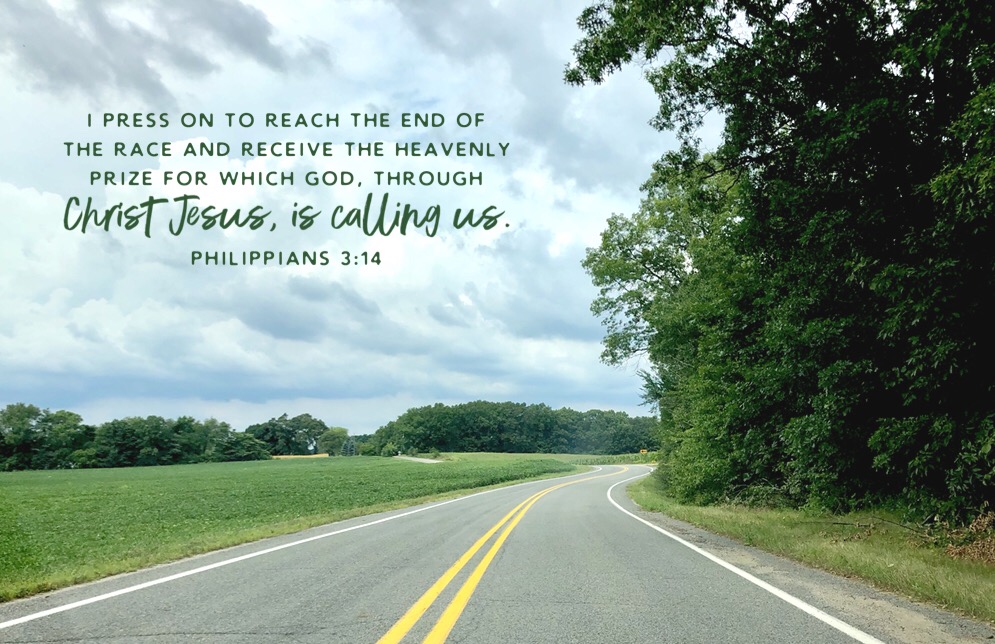
I’m not saying that I have this all together, that I have it made. But I am well on my way, reaching out for Christ, who has so wondrously reached out for me. Friends, don’t get me wrong: By no means do I count myself an expert in all of this, but I’ve got my eye on the goal, where God is beckoning us onward—to Jesus. I’m off and running, and I’m not turning back (Philippians 3:12-14).

It feels really good to get rid of the old stuff. I’m enjoying not having so much cluttering up my life, so I think I’m going to make it a regular practice to clean out the unused stuff.

Do you have any stuff you need to clear out today? I promise you: It will feel so wonderful when you do!