What Do We Mean By “Grow”?

Listen to the podcast of this post by clicking on the player below, and you can also subscribe on AppleSpotify, or Audible. 

I had a great time on the 200churches podcast with Jeff Keady. 

Jeff asked me how the challenges of the last couple of years affected the thoughts that went into writing my book Shepherd Leadership. I explained to him how my conversation with a local pastor actually created the subtitle of the book: The Metrics That Really Matter.  

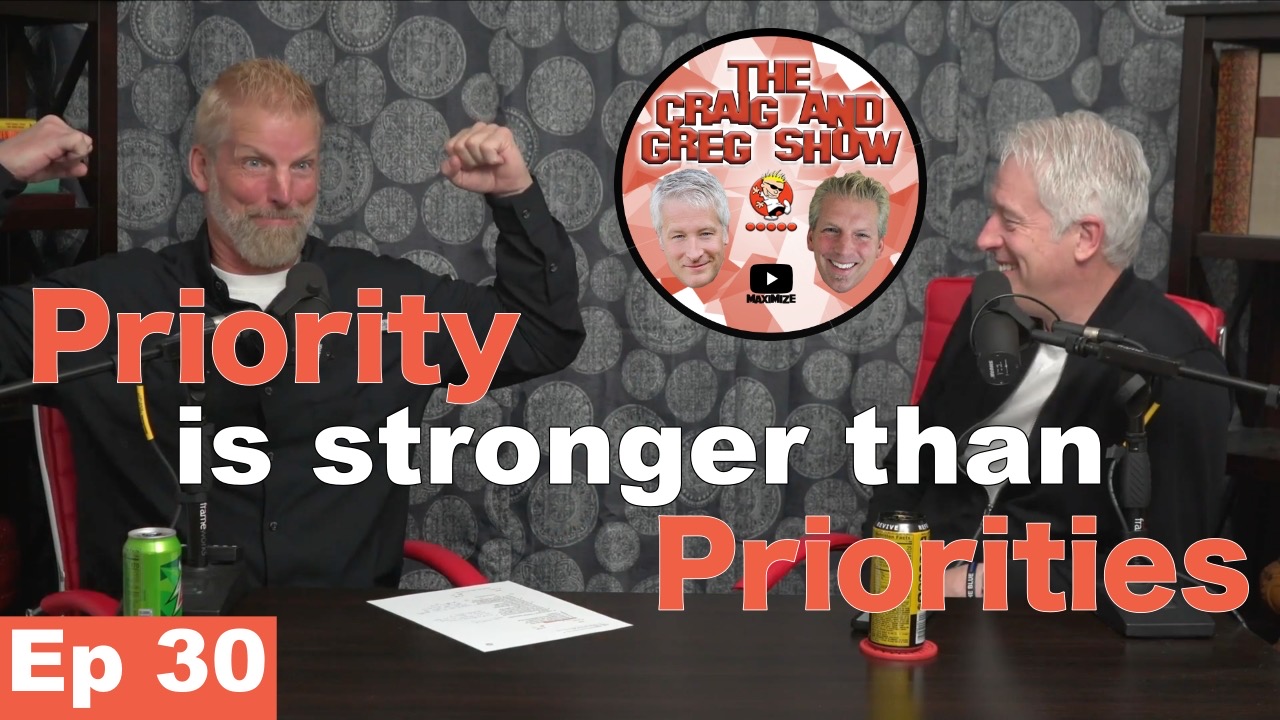
In another recent conversation on The Craig And Greg Show, I talked about a comical conversation I had with a church board about their definition of the word “grow.”

In Shepherd Leadership, I wrote, 

Growth and success may need to be redefined in your church or ministry. If you’ve been thinking that success is a steadily upward climb in attendance or donations, or a bigger facility, or more people on staff, then it would appear that the ministries of Philip, Paul, and even Jesus were highly unsuccessful. We’ve already seen that Philip went from a large revival in Samaria to one person in the desert. Paul came to the end of his life telling Timothy how many of his companions had abandoned him. And Jesus started His public ministry with twelve emerging leaders, only to see one betray Him, nine run away when He was arrested, and one deny that he even knew Him. When we come up with our plans to “grow” our ministry, or we say “success” is all about what we can count, aren’t we really just self-promoting? 

Godly shepherd leaders need to make sure that they are concentrating not on more sheep, but on greater health. Remember: the shepherd doesn’t give birth to sheep, but the shepherd creates a healthy environment for the sheep to reproduce.

I’ll be sharing more clips from this 200churches interview soon, so please stay tuned. Shepherd Leadership: The Metrics That Really Matter is available in print or ebook, and in audiobook through either Audible or Apple. 

►► Would you please prayerfully consider supporting this ministry? My Patreon supporters get behind-the-scenes access to exclusive materials. ◀︎◀︎

Links & Quotes

The seed your weakened hand is sowing
May ripen to a harvest broad,
Which yet may help, without your knowing,
To fill the granaries of God! —Margaret J. Prescott

My friend and podcast partner Greg Heeres talked about growing and learning through change. You can check out the rest of this episode of The Craig And Greg Show here.

Sometimes the prophetic language in the Bible can be a bit confusing. Like the phrase: “A time, times, and half a time.” Here is how Dr. Henry Halley unpacks this—

“It denotes the duration of the other horn of the fourth beast (Daniel 7:25). It denotes the period from Daniel to the time of the end (Daniel 12:6–7). It is used in Revelation 12:14 as identical to 42 months and to 1260 days (Revelation 11:2–3; 12:6, 14; 13:5), the period of time the Holy City was trampled, the two witnesses prophesied, the woman was in the wilderness, and the revived beast was on the throne. 

“The word ‘time,’ in the phrase ‘a time, times, and half a time’ is generally taken to mean year; the phrase thus means three and a half years, which is 42 months, or 1260 days. 

“By some, this is taken to refer to a literal three and a half years. Others, on the year-day interpretation (Numbers 14:34; Ezra 4:6), take it to be a period of 1260 years. Still others look upon the figures, not as defining time limits or periods, but as being symbolic: 7 Is the symbol of completeness, while three and a half, which is half of 7, represents incompleteness—that is, the reign of evil will be only temporary.” —Halley’s Study Bible (check out all of the biblical references in this quote by clicking here)

“Ambivalence toward the Law of God is troubling. Theologians discard the Law, and pastors either reject or neglect it. Jesus said that keeping and teaching the Law of God was a mark of Kingdom greatness (Matthew 5:17-19). Apparently that’s not a goal many of us aspire to. He also said that when the Law of God is neglected, love grows cold (Matthew 12:24). The ubiquitous lack of love in our world today is undoubtedly related to our failure to teach and live according to the Law of God. … 

“Pastors have three main resources for the work and business of ministry: The Word of God, prayer, and their personal example (Acts 6:4; 1 Peter 5:1-3). If any of these fails, their ministry will as well. Especially must pastors be seen to be men zealous for the Law of God, to obey all the counsel of the Lord in His Word and to resist the devil and overcome every temptation. Jesus did. Paul did. John said this is the way love flourishes (1 John 5:1-3). Throughout this generation, failures of obedience on the part of highly visible pastors have contributed to the Church’s becoming an object of scorn by many unbelievers, while believers have been largely silent about their failings. We must be diligent in obeying Christ if we would teach others to do so and thus fulfill our calling to the Kingdom and glory of God.” —T.M. Moore

New wide-angle X-ray scattering (WAXS) analysis dates the Shroud of Turin to the first century.

Not all viruses need to be eliminated. A study has discovered 5500 new RNA viruses on the ocean, finding “an entire phylum, the Taraviricota . . . found all over the oceans, which suggests they’re ecologically important.” The Creator knew what He was doing!

The Craig And Greg Show: Seasons Of Leadership

Listen to the audio-only version of this podcast by clicking on the player below, or scroll down to watch the video.

On this episode of “The Craig And Greg Show” we talk about: 

  • [0:17] Craig gives an important weather report 
  • [0:42] Organizations go through changes of seasons too
  • [1:43] How can leaders see a change of season approaching?
  • [2:44] Leaders need to check both their “thermometers” and “thermostats” in their organizations
  • [3:55] What is the leader senses a change of season but some teammates aren’t ready to change yet?
  • [5:26] Leaders need to talk to themselves about their seasons?
  • [6:53] What leaders can look for to help navigate their changing seasons
  • [8:10] How do leaders get their teams ready for changes?
  • [8:42] How do leaders handle change that is imposed upon them?
  • [10:00] Changing seasons can be a threat
  • [11:25] Change is inevitable, but growth is optional
  • [13:50] Every leader fears change going poorly
  • [14:27] Trying and failing is a natural part of the change process
  • [15:06] Sacred cows can be problematic when attempting to make changes
  • [17:03] How leaders lead through changing seasons is so crucial to success
  • [18:53] Our coaching huddles can help you with your season of change

Check out this episode and subscribe on YouTube so you can watch all of the upcoming episodes. You can also listen to our podcast on Spotify and Apple.

The Craig And Greg Show: Mistake Your Way To Success

Listen to the audio-only version of this podcast by clicking on the player below, or scroll down to watch the video.

On this episode of “The Craig And Greg Show” we talk about: 

  • [0:20] Craig shares an insightful quote from John Maxwell 
  • [0:45] The guys claim to have never made a mistake, and we definitely believe them…
  • [1:12] Mistakes help both individuals and teams grow 
  • [2:12] Craig shares a lesson from his wife’s classroom about it being a safe place to make mistakes 
  • [3:06] Leaders need to distinguish between success and perfection 
  • [3:50] What do our faces show when others make mistakes? 
  • [4:40] Greg explains how grace and humility from the leader will help other teammates deal with their mistakes 
  • [6:16] Sports show us how mistakes can lead to excellence 
  • [7:24] Greg’s football mistakes led to his high level of success 
  • [11:06] Leaders have to remind everyone that mistakes aren’t fatal 
  • [13:30] Thomas Edison gave us a good example about success coming from failure 
  • [15:31] When leaders share their mistakes, it’s freeing for the rest of the team
  • [17:26] Leaders need to take initiative—as the leader goes, so goes the team

Check out this episode and subscribe on YouTube so you can watch all of the upcoming episodes. You can also listen to our podcast on Spotify and Apple.

Fear Vs. Hope

Listen to the podcast of this post by clicking on the player below, and you can also subscribe on AppleSpotify, or Audible. 

How many times has fear constricted your world? 

When I look back on some of my past decisions, I can see that often my procrastination in making that decision was from a fear-based, worst-case scenario. I held back because I was afraid of the outcome from my decision. 

Also when I look back I see that even the things that didn’t go perfectly never turned out to be devastatingly bad, but something from which I could recover and learn valuable lessons. 

Now, I’m not talking about shoot-from-the-hip, never-thought-it-through actions. Those things have frequently gotten me in hot water! What I’m talking about is thinking it through, getting good counsel, praying about it, and then still holding back from making a decision. 

Fear would cause us to procrastinate, only see the negative possibilities, and maybe even become disobedient to God because we think we have to rely on our resources. On the other hand, hope wants us to see the possibilities, hear God’s voice, and then step out in confident faith. 

My friend Greg and I discussed this fear versus hope topic on an episode of our leadership podcast called The Craig And Greg Show.  

The next time you find yourself procrastinating about a decision that you have thought about, prayed about, and sought wisdom for, ask yourself: “What fear is holding me back?” Then find God’s Word of hope. God’s hope will be the just thing you need to defeat your limiting fears. 

►► Would you please prayerfully consider supporting this ministry? My Patreon supporters get behind-the-scenes access to exclusive materials. ◀︎◀︎

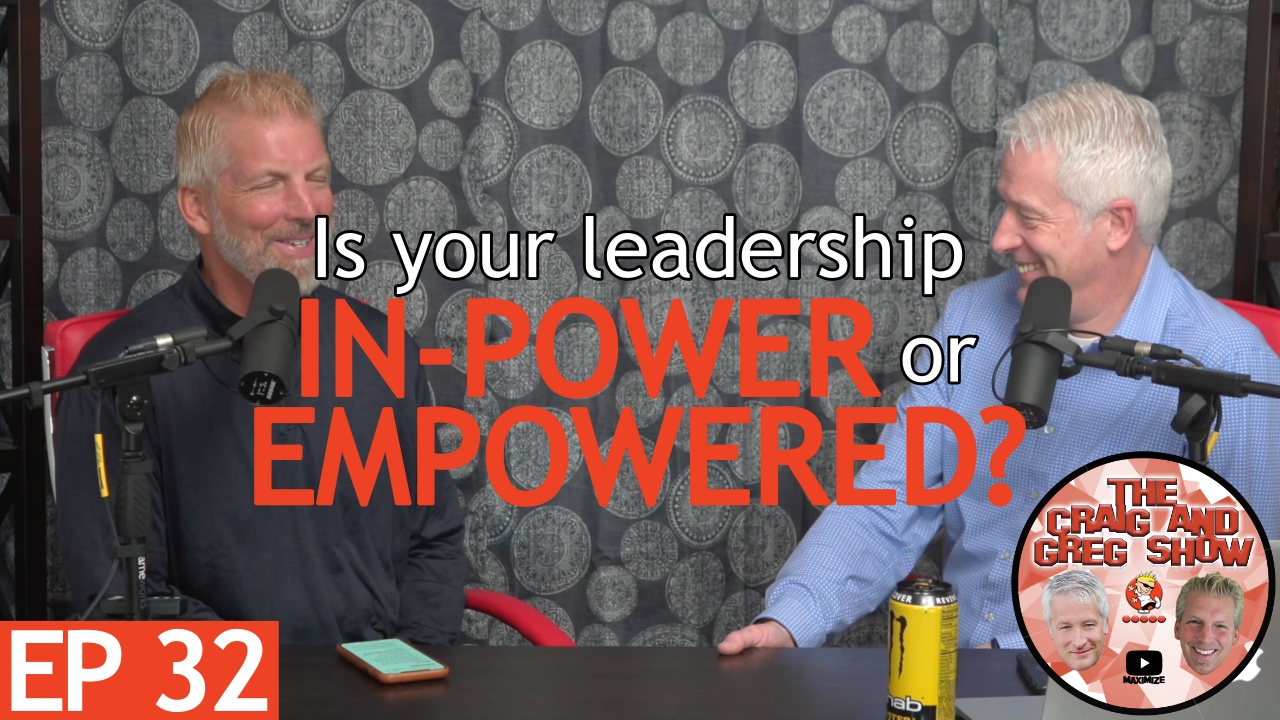
The Craig And Greg Show: In Power Or Empowered?

Listen to the audio-only version of this podcast by clicking on the player below, or scroll down to watch the video.

On this episode of “The Craig And Greg Show” we talk about: 

  • [0:23] Do you know what empowerment really means?
  • [1:52] Does your empowerment show people you trust them?
  • [4:00] Craig tells a story about how the best mentors hold up a mirror.
  • [6:15] Do you believe you’re in-power, or do you empower?
  • [7:28] The guys talk about Patrick Lencioni’s leadership books.
  • [8:23] What is a habit that holds back a leader from empowering? 
  • [10:27] Is your leadership trustworthy?
  • [12:10] Insecurity kills empowerment
  • [12:51] Getting Naked!!
  • [14:15] Are you admitting your mistakes first?
  • [14:50] Are you self-aware about what’s holding you back from empowering others? 
  • [16:34] What is the difference between delegation and empowerment?
  • [17:45] Craig and Greg challenge leaders on examining their empowerment of others.

Check out this episode and subscribe on YouTube so you can watch all of the upcoming episodes. You can also listen to our podcast on Spotify and Apple.

The Danger In Multitasking

Listen to the podcast of this post by clicking on the player below, and you can also subscribe on AppleSpotify, or Audible. 

Peter Drucker noted, “It wasn’t until the twentieth-century that we pluralized the word priority. For most of its history, the word has been singular.” 

If we have too many priorities, we can frequently find them in conflict with each other. This forces us to make an extremely difficult decision: Which priority has a higher priority?! 

My friend Greg Heeres and I recently addressed this in an episode of our leadership podcast called The Craig And Greg Show.  

Ultimately, whatever business or industry or profession we are in, we are in the people business. All of our efforts fail without good investment in people. So our overriding priority must be on the people God has placed around us.

(I wrote post earlier about this called “Am I interruptible?” which is worth your time to check out.)

Marcus Buckingham noted, 

“The human brain is simply not designed to multitask. You can get by doing multiple things at once, but you can’t do them well. Your brain is physically unable to process more than one set of instructions at a time, so while you are juggling all of those actions at once, your brain is scrambling to keep up. Through a variety of experiments measuring brain activity, scientists have discovered that the constant switching back and forth from one activity to another energizes regions of the brain that specialize in visual processing and physical coordination, while simultaneously disrupting the brain regions related to memory and learning. According to the research, ‘We are using our mental energy to concentrate on concentrating at the expense of whatever it is that we’re supposed to be concentrating on.’ Got that? 

“More simply: when we multitask we’re dumber. How much dumber? A recent study for Hewlett Packard exploring the impact of multitasking on performance revealed that the average worker’s functioning IQ drops ten points when multitasking…. (The analogy the researchers used is that a ten-point drop in IQ is equivalent to missing one night of sleep.)”Marcus Buckingham  

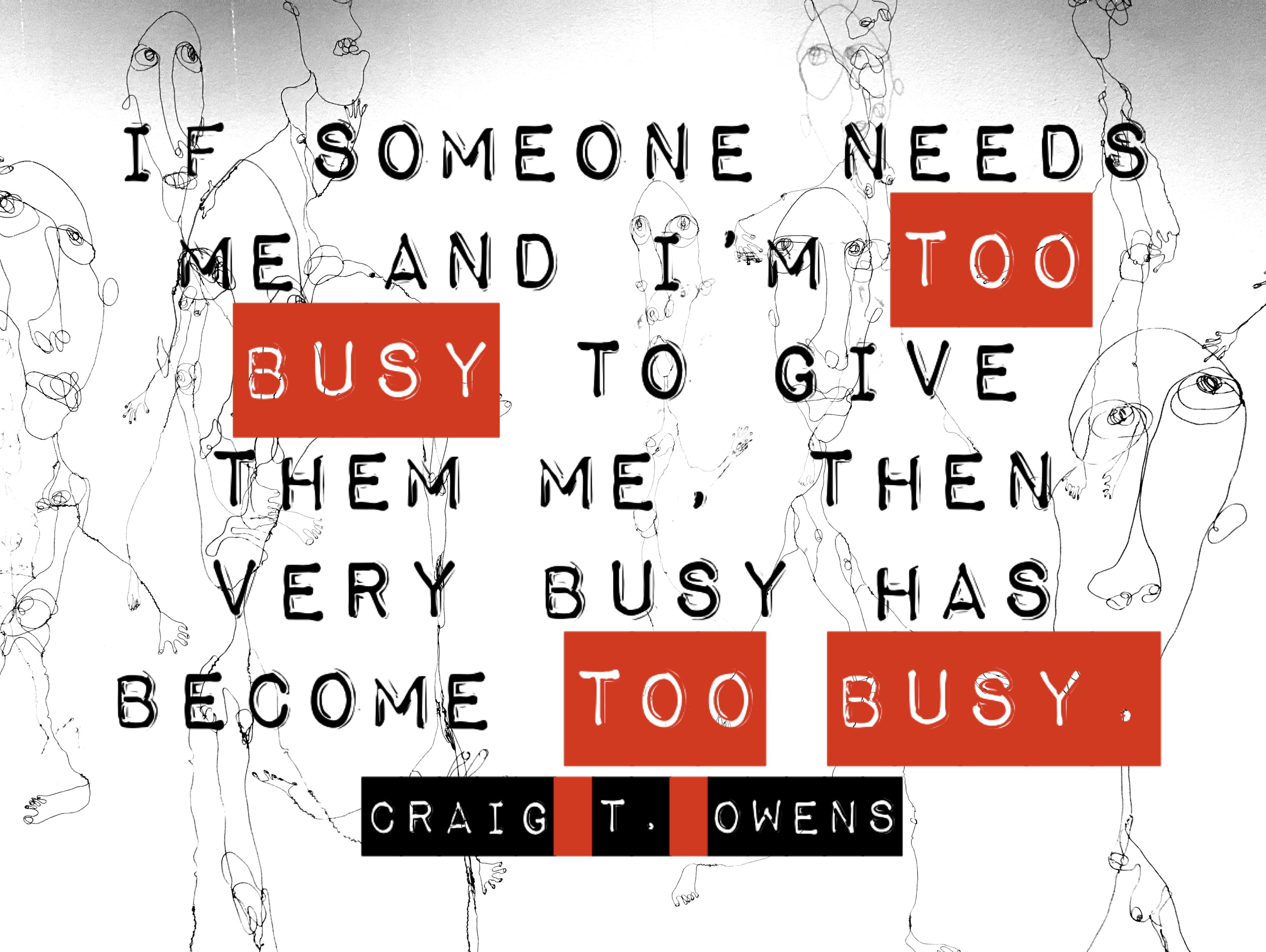
The biggest victim of attempting to multitask is your relationships. Those closest to you suffer the most. If someone needs me and I’m too busy to give them me, then very busy has become too busy and it’s time for me to evaluate who—not what—is my highest priority.

►► Would you please prayerfully consider supporting this ministry? My Patreon supporters get behind-the-scenes access to exclusive materials. ◀︎◀︎

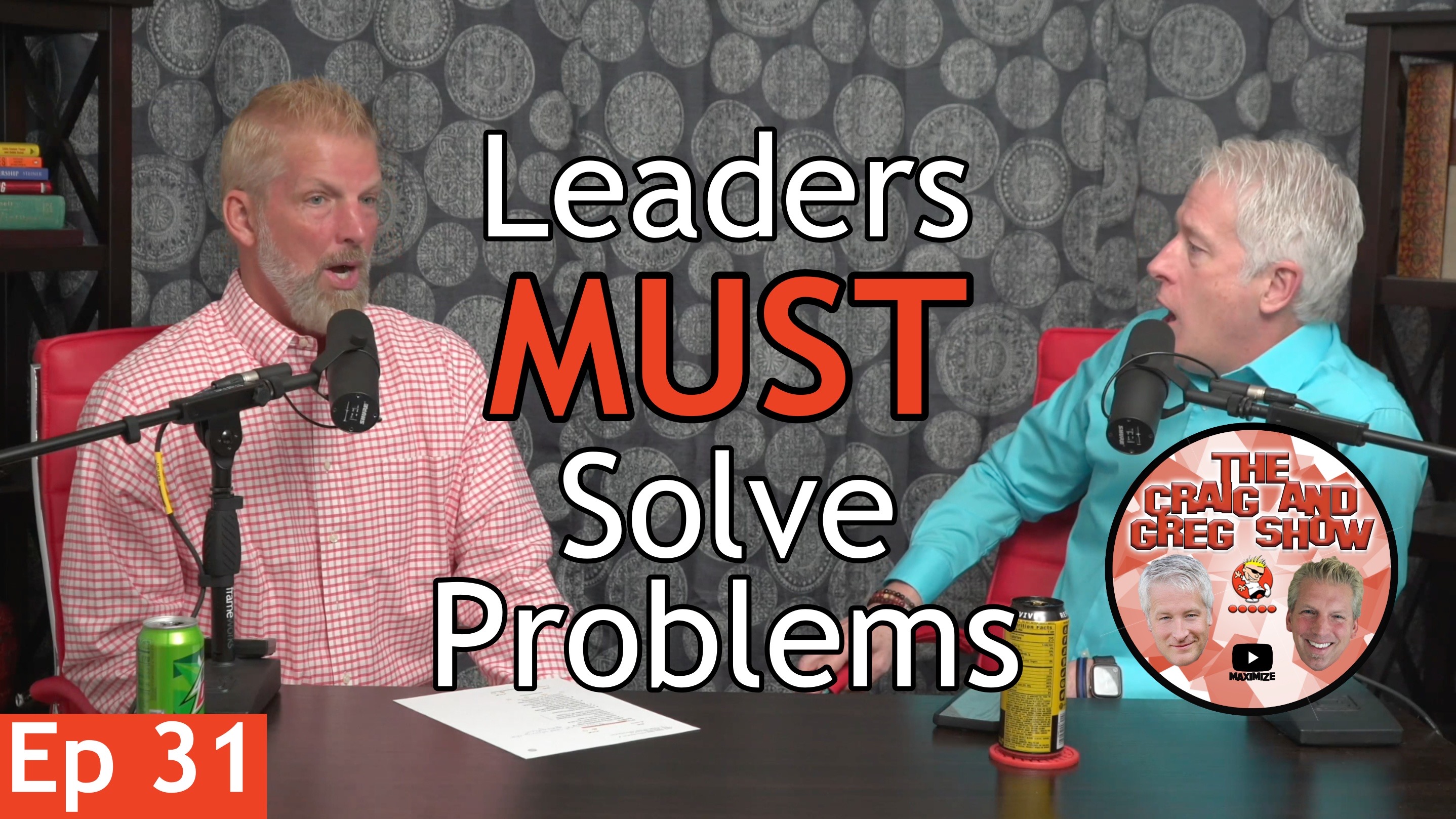
The Craig And Greg Show: The Types Of Problems Leaders Face

Listen to the audio-only version of this podcast by clicking on the player below, or scroll down to watch the video.

On this episode of “The Craig And Greg Show” we talk about: 

  • [0:54] Effective problem solving is a skill every leader should maximize
  • [1:52] Why do leaders choose to avoid problems?
  • [3:03] Greg tells a story about leadership burnout 
  • [4:46] Obvious problems are simple fixes, so don’t delay!
  • [5:57] Who can help you with your complicated problem?
  • [6:40] How should new leaders deal with problems in a transition period?
  • [8:23] What should you do about someone who’s always part of the problem?
  • [9:12] Do you have kids in your river?
  • [10:22] Are you aware of the complexities in the culture of those you lead?
  • [11:52] Leaders must address chaotic issues, no matter the cost
  • [13:16] How can leaders navigate around unchangeable facts? 
  • [14:05] Leaders should scale their response to the immediacy of the issue
  • [14:40] Is your problem obvious, complicated, chaotic, or complex?
  • [15:55] How can your changes as a leader solve problems?
  • [16:28] Do you need to move on without some people?
  • [17:20] Are you a leader of a “problem enjoyer”? 
  • [18:45] Are you asking powerful questions?
  • [20:08] How our our Coaching Huddles can help you grow

Check out this episode and subscribe on YouTube so you can watch all of the upcoming episodes. You can also listen to our podcast on Spotify and Apple.

3 Paradigm Shifts For Leaders

Listen to the podcast of this post by clicking on the player below, and you can also subscribe on AppleSpotify, or Audible. 

Why is it that so many people have a worst-case mindset as their guiding factor? 

As a leader responsible for programs, and large groups of people, and the financial well-being of organizations, I know that I frequently fell into this trap. When we began making plans for the future, I wanted to keep a “fallback plan” in place. I frequently found myself saying to our leadership team, “Even in the worst case scenario we can….” 

But then I realized how much vitality this was sapping from our team. 

If we as leaders want to infuse more energy and excitement in our teams it may take some paradigm shifts on our part. Here are three shifts that I have endeavored to implement in my life: 

  1. Shift scarcity to abundance. 
  2. Shift fear to hope. 
  3. Shift worst-case to best-case.

On a recent episode of our leadership podcast, my friend Greg Heeres and I discussed the limitations that come as a result of a leader’s limiting fears.

As a Christian, I believe the greatest Helper in these three paradigm shifts is the Holy Spirit. When I take time to pray about the big decisions for my personal life and for the organizations I lead, I find that His guidance helps me tap into God’s abundance, which gives me hope for the best-case scenarios to be realized. This hope in me quickly translates to hope and expectation in my team. 

Leaders, start with prayer and then try these three paradigm shifts. As the Holy Spirit transforms your heart and mind, I believe you will begin to see a greater energy and excitement in the organizations that you lead. 

Let’s stop asking, “What’s the worst thing that could happen?” and shift to asking, “What’s the best thing that could happen?” 

I would also encourage you to subscribe to The Craig And Greg Show on YouTube to hear more of our leadership-building conversations. 

►► Would you please prayerfully consider supporting this ministry? My Patreon supporters get behind-the-scenes access to exclusive materials. ◀︎◀︎
The Craig And Greg Show: A Leader’s Top Priority

Listen to the audio-only version of this podcast by clicking on the player below, or scroll down to watch the video.

On this episode of “The Craig And Greg Show” we talk about: 

  • [0:38] What are the origins of the word “priority” and why should priority be singular and not plural? 
  • [0:56] Is it true that multi-tasking increases efficiency? 
  • [2:52] Greg tells a story about shopping with his parents.
  • [3:55] Greg reminds us that the devil uses distraction as a tool.
  • [5:04] I talk about how leaders should set their first priority.
  • [6:32] Why is it so hard to invest in unavailable people?
  • [7:58] I explain how leaders can make time for their “have to” list.
  • [9:58] Greg loves “StrengthFinders” and how it helps leaders learn to work in their strength zone.
  • [10:52] We discuss the book No Is A Beautiful Word.
  • [12:42] How can leaders use the priority vs. priorities paradigm to create margin in their life?
  • [14:36] We throw out the “Not-To-Do List Challenge” for leaders.

Check out this episode and subscribe on YouTube so you can watch all of the upcoming episodes. You can also listen to our podcast on Spotify and Apple.