God In The Dock (book review)

Listen to the podcast of this post by clicking on the player below, and you can also subscribe on AppleSpotify, or Audible. 

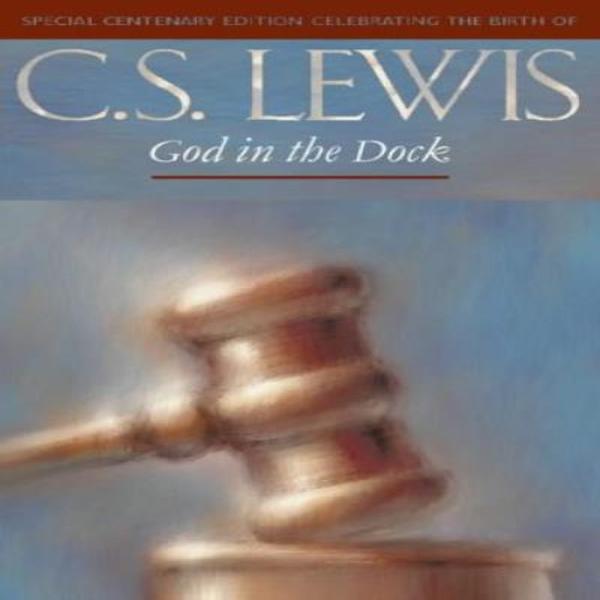
Let me give you the bottom line right at the top: God in the Dock by C.S. Lewis is a challenging book, but it is so worth your time to work your way through it! 

Sometimes I feel that Lewis is from a different planet that allows his mind to move so beyond the things the rest of us are observing. It reminds me a little of Edwin Abbott’s book Flatland where 3-dimensional Sphere is talking with 2-dimensional Square. Sphere can see so much more than Square can, but he is trying to describe it in terms that Square can grasp. 

This is why I say that God in the Dock is a challenging read. The phrase “in the dock” is how the English would describe someone who is on trial, listening to the evidence against them and presenting evidence in their own favor. Imagine that Person on trial was God! As Lewis himself notes, “The ancient man approached God (or even the gods) as the accused person approaches his judge. For the modern man the roles are reversed. He is the judge: God is in the dock.”

This book is made up of Lewis’ essays, responses to critical attacks on his other written works, conversations with atheists, and correspondence with people of all levels of society. His arguments are witty, biblical, philosophical, logical, sophisticated, and frequently other-worldly. This is why I said it is a challenge to keep up with his line of reason. But I promise you that those who persevere through this book will be the better for it.

►► Would you please prayerfully consider supporting this ministry? My Patreon supporters get behind-the-scenes access to exclusive materials. ◀︎◀︎

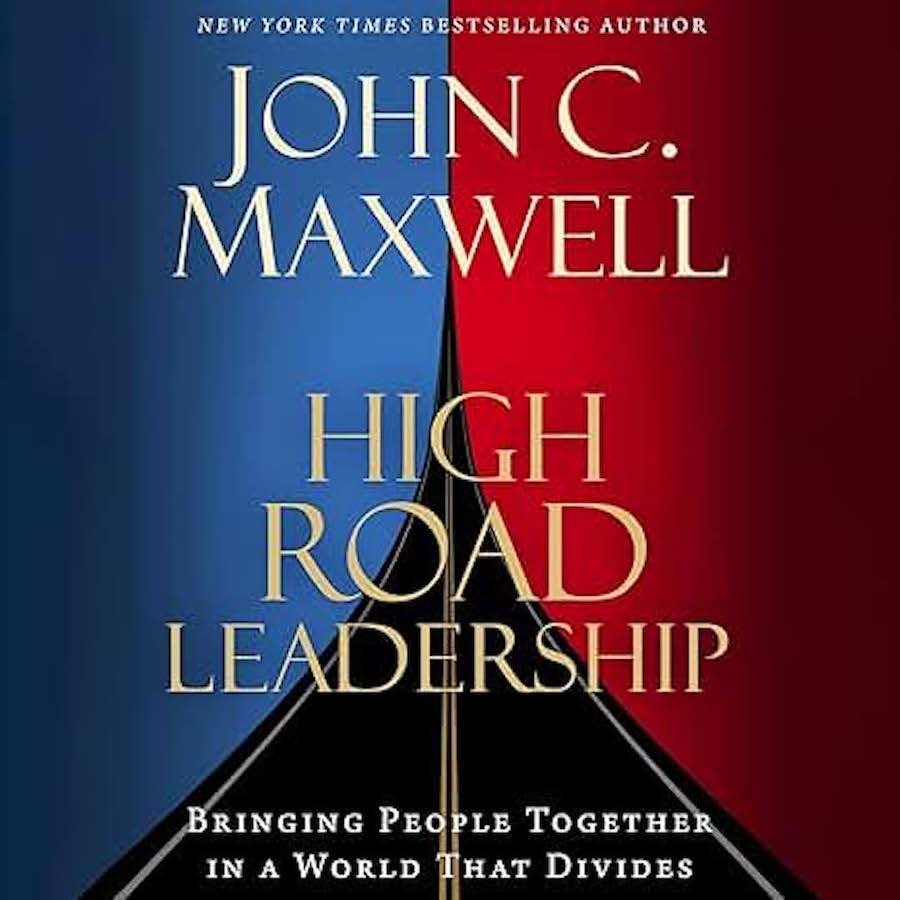
High Road Leadership (book review)

Listen to the podcast of this post by clicking on the player below, and you can also subscribe on AppleSpotify, or Audible. 

I have been a longtime fan of John Maxwell. His ability to distill so many insights into accessible action steps is a true gift. High Road Leadership is no exception to this, and it is a timely read at this cultural moment. 

I was recently talking with a friend about the stark divide in American politics today. I was recalling a time when a US President would nominate someone for a cabinet position or an opening on a judicial bench, and the vote in the Senate would be something like 89-8 in favor of the nominee. Now it is more likely that the vote will end in a 50-50 tie with the vice president stepping in to cast the tie-breaking vote. It’s become axiomatic that a senator’s vote has to be a “nay” if the president making the nomination was of a different political party.

As a pastor, I’ve even experienced people moving to a different church because someone else in the church is perceived to support something that they are against. It’s heartbreaking, to say the least! 

This is why I said that Maxwell’s book is timely in this cultural moment. 

As with all of his books, the focal point is leadership. More specifically, John Maxwell calls leaders to continue to grow in their ability to serve more people; with the emphasis on “serve.” 

High Road Leadership challenges leaders on ways to take the high road. One illustration that encapsulates the ideas in this book comes from Maxwell’s observation on the well known story of the good Samaritan. The thieves took the low road by saying to the man they robbed, “What’s yours is mine.” The leaders who passed by the man who was injured took the middle road by exempting themselves from action by saying, “What’s mine is mine.” However, the good Samaritan who helped the injured man at his own expense took the high road in saying, “What’s mine is yours.” 

High road leaders are always looking for ways to bring people together, to go above and beyond what would be culturally expected of them, to embrace those who are different, to find common ground that can unite disparate groups. 

This is the consistent example and teaching of Jesus Christ Himself, but it is an attitude and lifestyle that is routinely ignored. Everyone seems to be waiting for “them” to go first, but high road leaders always take the Christ-like initiative of going first.

High Road Leadership is a practical guide to help all of us consistently operate on the high road. If you are ready to help heal what divides us, this book will become your go-to resource. 

►► Would you please prayerfully consider supporting this ministry? My Patreon supporters get behind-the-scenes access to exclusive materials. ◀︎◀︎

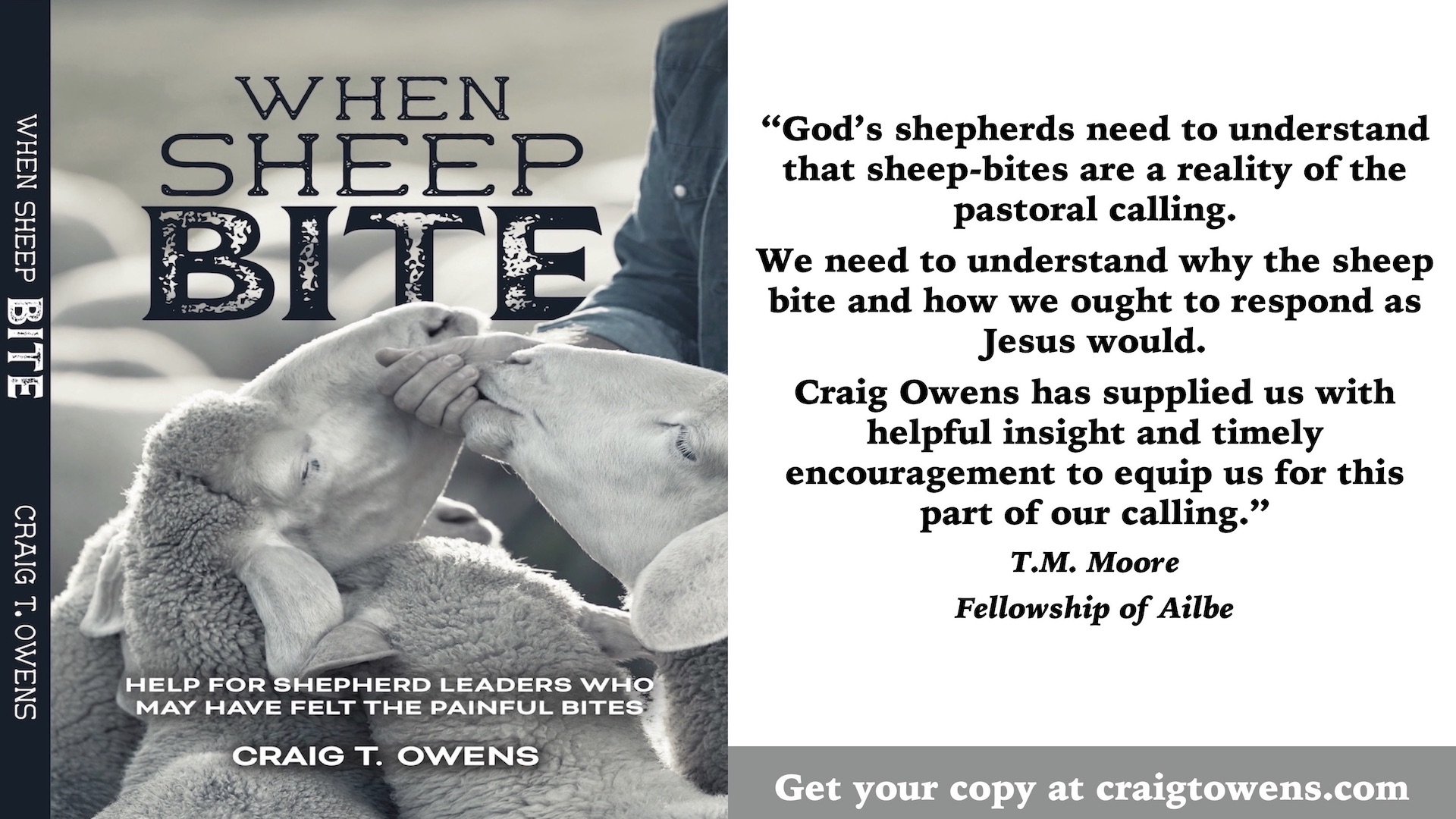
A Book Review of “When Sheep Bite”

I was honored when T.M. Moore agreed to write an endorsement for my book When Sheep Bite, but I am beyond thrilled with the book review he wrote of my book! 

Here’s how he opens his review—

     Shepherding the Lord’s flock can be challenging in the best of times. I recall a comment by John Muir, the father of the national parks movement, who served as a shepherd in Yellowstone valley for some time. He observed that the sheep were difficult to move and to keep going in a single direction. They didn’t always respond well. In fact, he wrote, “It takes a whole flock of sheep to make a single dumb animal.”

     Since we are all the Lord’s sheep, we can probably identify with that—slow to learn, hard-headed, cold-hearted, lazy, complacent, and easily irritated. Not all the time, of course, but some of it, at any rate.

     But when your calling from the Lord is to be a shepherd in the Lord’s flock, to feed and nurture His sheep, protect them from spiritual harm, guide them into a richer and fuller experience of Jesus, and help them find their proper place of service in the Kingdom of God, tending the sheep can be especially challenging.

You can read the rest of his review here. And you can also check out my interview with Moore and his co-host Rusty Rabin on the Ailbe podcast. 

If you are a pastor—or if you love your pastor—please check out When Sheep Bite.

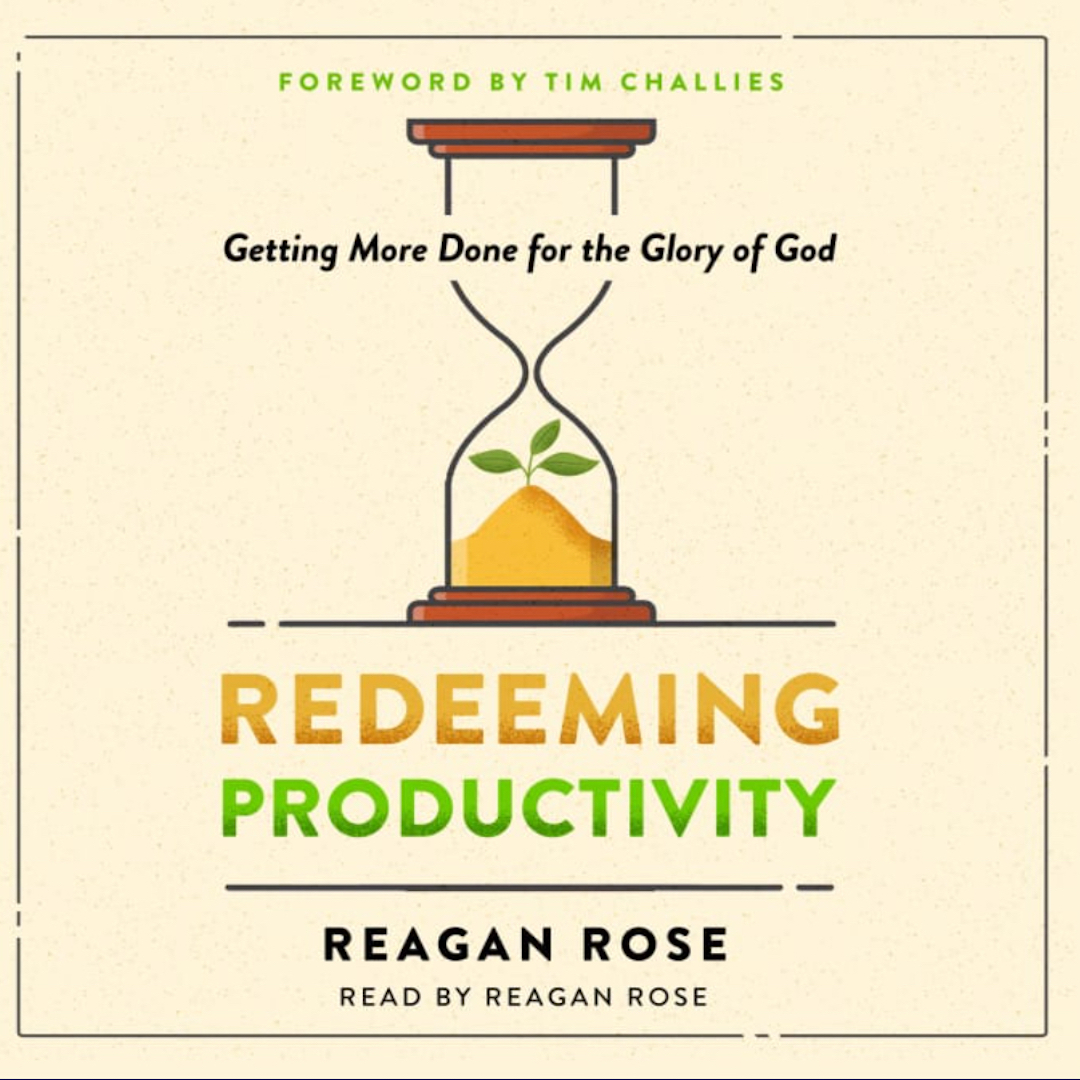
Redeeming Productivity (book review)

Listen to the podcast of this post by clicking on the player below, and you can also subscribe on AppleSpotify, or Audible. 

The other day someone messaged me on LinkedIn to ask about any projects I had in the works. After I got done rattling off several things on which I’m working, he asked, “How did you find the time to get so much done?” I love being productive, and Regan Rose’s book Redeeming Productivity is a huge help. 

I need to start off by stating that getting a lot done is not the same thing as getting the right things done right. My podcast cohost Greg and I recently talked about how too many “To Do” items can negatively impact a leader’s effectiveness. 

Redeeming Productivity is written from a biblical worldview. I really resonated with Reagan’s focus on why Christians should be productive, more so than an emphasis on what things should we be accomplishing. The “what to do” is as important as the “how to do them.” But neither of those are as important as the “why do we do what we do.” 

Reagan unpacks some powerful strategies for effectiveness and efficiency, but what I really appreciated were the principles he shared on why we are to be effective—diving deep into what the Bible say about this important topic. The subtitle of his book is: “Getting more done for the glory of God.” 

So whether you are wanting to make some changes to your productivity, or you desire to improve the current systems you already have in place, I would highly recommend Redeeming Productivity to you. The Bible calls on Christians to work at all we do with excellence, and this book will help you do just that.

(Check out The Craig and Greg Show where we discuss efficient quantity and effective quality.)

►► Would you please prayerfully consider supporting this ministry? My Patreon supporters get behind-the-scenes access to exclusive materials. ◀︎◀︎

5 Quotes From “Recruiting To Releasing”

Listen to the podcast of this post by clicking on the player below, and you can also subscribe on AppleSpotify, or Audible. 

I loved Jim Wiegand’s book Recruiting to Releasing! If you missed it, I had an opportunity to interview Pastor Jim, and I shared that video here. 

There were so many passages that I highlighted and annotated as I read this book. My Patreon supports have access to all of the quotes, but I wanted to share a handful of them with you publicly. 

Jim’s book centers on the intersection of three circles. This is the “sweet spot” where people are doing what God created them to do. In order to find your sweet spot (or help others find theirs), Jim gives us three questions. Here are those questions with a couple of supporting quotes. 

Question #1—What is your passion?

“The easiest question is the first one I always ask and sounds something like this: What are you passionate about? What thrills you when you get to do it? What makes your heart come alive when you see it? What do you love to do when you’re done doing what you have to do? If all jobs paid the same and you couldn’t fail, what would you do starting tomorrow?” 

“Paul said he was ‘compelled’ to preach the gospel and that it was a ‘pleasure’ to do so. His passion for the God of the lost and the lost themselves caused him to travel the world. Everywhere he went, he saw revival or a riot, or at times, both in the same day. Then he’d be mistaken for a Greek god, stoned and left for dead or at times beaten, imprisoned, and slated for execution. And then the next day, he got up and did it all over again. That’s not fear of failure! That’s a God-given passion to tell people the good news of Jesus Christ!”

Question #2—What is your pain?

“What bothers you? What is it you see in the world that you would change? What breaks your heart? What do you find yourself praying about more than any other thing? What subjects do people no longer want to talk to you about because you’re always talking about those things?”

“The way I figure it, if it was bothering me the way it was, I was probably the one God wanted to do something about it. You see, I’ve learned that if I do something about what bothers me, and you do something about what bothers you, and the folks around here all do something about what bothers them, well, eventually there may come a day when there won’t be anything left to bother anyone.”

Question #3—What is your proficiency?

“What are you good at? What comes naturally to you? What did you pick up quickly and easily compared to others around you? What do you do with little effort that takes others much effort?” 

I highly recommend that all ministry leaders get a copy of Recruiting to Releasing. Be sure to check out my interview with Jim Wiegand too. 

►► Would you please prayerfully consider supporting this ministry? My Patreon supporters get behind-the-scenes access to exclusive materials. ◀︎◀︎

Recruiting To Releasing

Listen to the podcast of this post by clicking on the player below, and you can also subscribe on AppleSpotify, or Audible. 

Before you recruit someone to fill that next opening in your organization, I’ve got a resource that you should definitely check out. The resource I am referring to comes from the book Recruiting to Releasing by Jim Wiegand. I had a chance to sit down with Jim to talk about this eye-opening book.

Purchase your copy of Recruiting to Releasing on Amazon here, or on Apple Books here.

If you would like to check out when Jim interviewed me about my book When Sheep Bite, check out that video here.

Here are some quotes from Jim’s book.

Here are a bunch of ways to get in touch with me and follow along with other projects on which I am involved.

►► Would you please prayerfully consider supporting this ministry? My Patreon supporters get behind-the-scenes access to exclusive materials. ◀︎◀︎

De-Sizing The Church

Listen to the podcast of this post by clicking on the player below, and you can also subscribe on AppleSpotify, or Audible. 

I’d like to tell you about a book that I think is an absolute must-read for those in church leadership. Check out my interview with Karl Vaters, the author of De-Sizing The Church, on this episode of The Podcast.

Purchase your copy of De-Sizing The Church here.

You can keep up with all that Karl is doing on his blog.

And if you would like to check out when Karl interviewed me about my book Shepherd Leadership, those videos are here.

Here are a bunch of ways to get in touch with me and follow along with other projects on which I am involved.

►► Would you please prayerfully consider supporting this ministry? My Patreon supporters get behind-the-scenes access to exclusive materials. ◀︎◀︎

5 Quotes From “Unshakable You”

John Opalewski’s short book is highly readable and easily applicable. I recommend this book to both help you get emotionally healthier and then to maintain that emotional health. You can check out my full book review here. 

Here are a few quotes that especially caught my attention—

“Maybe you are reading this book and have no issues currently with depression. Be thankful to God for your health. But understand depression is easier to prevent than it is to cure. Educating yourself while healthy minimizes your future risk.” 

“Emotional health is a choice. If you choose to ignore your emotional health, no one else will pay attention to it for you.” 

“God used words to create the universe. They have the power to create or destroy, heal or wound. … Nobody talks to you more than you talk to yourself. Verbally assaulting yourself damages your emotional health—every time. Being kind to yourself with words enhances your emotional health—every time. … Loving yourself means you gain increasing control of your self-talk.” 

“Learn to be assertive rather than aggressive or passive. Aggression includes foul language, yelling, or getting physical with people. Passivity is another word for repression. Here we stuff our anger and let it boil on the inside. An example of passivity is giving someone the silent treatment. Assertiveness, on the other hand, means standing up for yourself by expressing your needs to others with love and respect.” 

“A depressed person often complains of having no energy to deal with people. Therefore, they tend to isolate themselves, which usually compounds a person’s distress. Depression thrives in isolation. Consequently, it is critical to surround yourself with the right kind of people during your battle with this affliction.” 

I have shared another half-dozen quotes from this book with my Patreon supporters. Please become a supporter and get access to lots of exclusive content—videos, early-releases, study aids, and so much more!

Unshakable You (book review)

Mental health issues grab a lot of headlines, and they should! I believe mental health is at the foundation of all of the other aspects of our lives, so we should be paying attention to this core issue. John Opalewski helps us do this through his book Unshakable You. 

The subtitle of this book—5 Choices of Emotionally Healthy People—gives you the outline of the entire book. John skillfully shares the importance of these five choices through a combination of recounting his own story, applicable biblical principles, and pertinent scientific discoveries. John concludes each chapter with an “I choose” statement. 

  1. I choose to love myself as Jesus commanded. 
  2. I choose to manage my anger instead of it managing me. 
  3. I choose to protect myself from abusive people. 
  4. I choose to refuel emotionally. 
  5. I choose to stay alert.

This is a short book, but you should spend a lot of time reading it, processing the “I choose” statements, discussing the concepts, and finally in implementing the principles John presents. I would strongly recommend reading this book with a friend who can help you in the implementation of each of the “I choose” statements. 

P.S. I addressed many of the same points John did in my year-long series of messages A Christian’s Mental Health.

5 Quotes From “A Shepherd Looks at Psalm 23”

After I wrote the best-selling book Shepherd Leadership, I started naturally gravitating toward anything shepherd related. A Shepherd Looks at Psalm 23 was the perfect fit for me! But I think anyone will enjoy these beautiful insights on Psalm 23. Check out my full book review here. 

Here are some quotes that especially caught my eye—

“Sheep do not ‘just take care of themselves’ as some might suppose. They require, more than any other class of livestock, endless attention and meticulous care. … From early dawn until late at night this utterly selfless Shepherd is alert to the welfare of His flock. … Above all, He is very jealous of His name and high reputation as the Good Shepherd. He is the Owner who delights in His flock. For Him there is no greater reward, no deeper satisfaction, than that of seeing His sheep contented, well fed, safe, and flourishing under His care. This is indeed His very ‘life.’ He gives all He has to it. He literally lays Himself out for those who are His. He will go to no end of trouble and labor to supply them with the finest grazing, the richest pasturage, ample winter feed, and clean water. He will spare Himself no pains to provide shelter from storms, protection from ruthless enemies and the diseases and parasites to which sheep are so susceptible.” 

“A flock that is restless, discontented, always agitated and disturbed never does well. … When one startled sheep runs in fright, a dozen others will bolt with it in blind fear, not waiting to see what frightened them.” 

“In the course of time I came to realize that nothing so quieted and reassured the sheep as to see me in the field. The presence of their master and owner and protector put them at ease as nothing else could do, and this applied day and night. … When my eyes are on my Master they are not on those around me. This is the place of peace.”

“Only those intimately acquainted with sheep and their habits understand the significance of a ‘cast’ sheep or a ‘cast down’ sheep. This is an old English shepherd’s term for a sheep that has turned over on its back and cannot get up again by itself.” 

“Sheep are notorious creatures of habit. If left to themselves, they will follow the same trails until they become ruts; graze the same hills until they turn to desert wastes; pollute their own ground until it is corrupt with disease and parasites. … No other class of livestock requires more careful handling, more detail direction, than do sheep.”

My Patreon supporters had early access to these quotes, plus I have shared many more quotes from this book with these friends.

My newest book When Sheep Bite is releasing soon. You can pre-order a copy for yourself here.