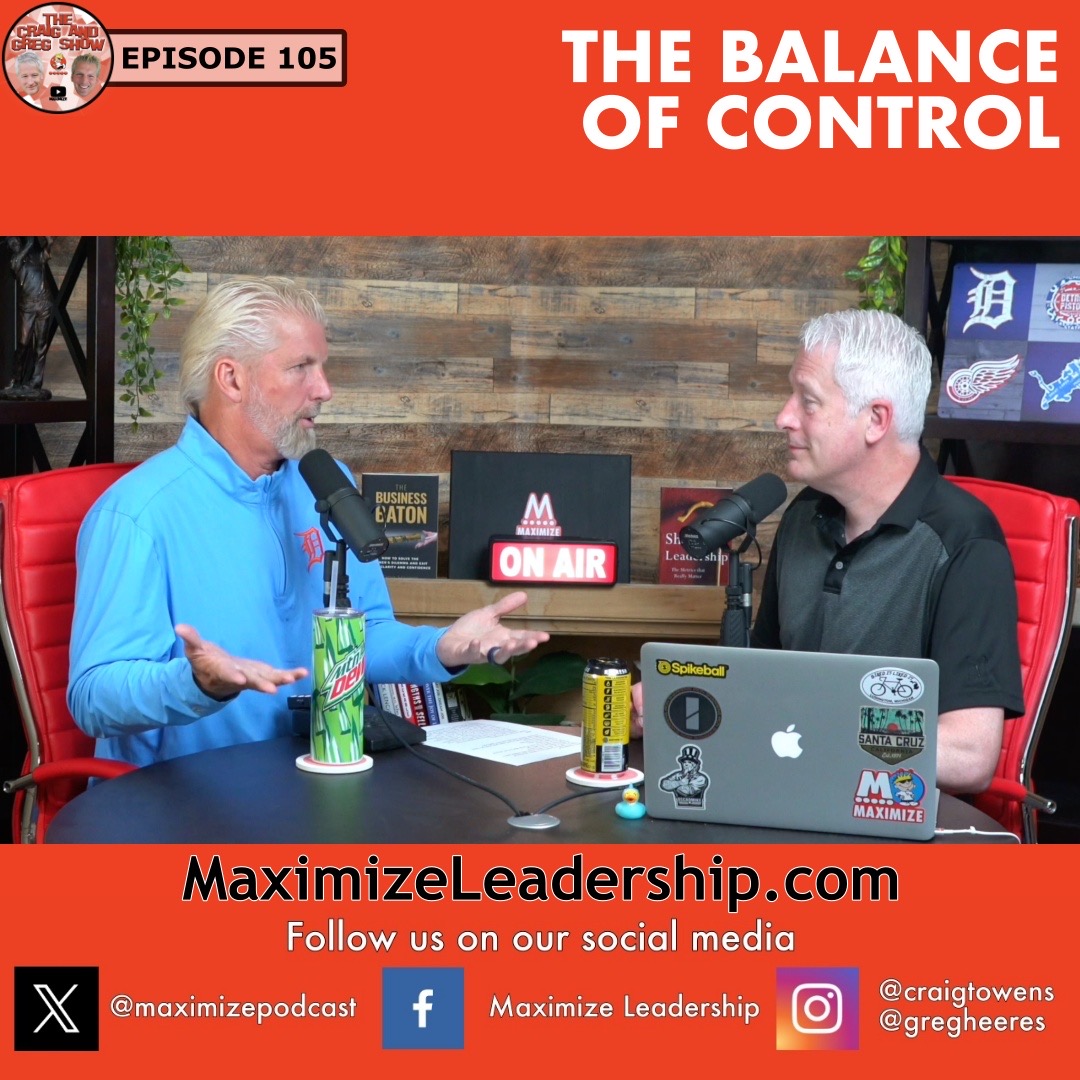
The Craig And Greg Show: The Balance Of Control

Listen to the podcast of this post by clicking on the player below, and you can also subscribe on AppleSpotify, or Audible.

Imagine your organization as a cruise ship you’re the captain of. It is your responsibility to man the helm, keeping the vessel away from danger and navigating to the correct destination. Along the way you decide that the guests’ towels need to be folded a particular way, so you step away from your post for hours to meticulously fold them to your exact specifications. You do a great job but in your absence the ship is listless, veering off course into dangerous waters. 

Of course it’s very likely you won’t find yourself in this exact situation, but the same logic can be applied to our terrestrial pursuits as well. In today’s episode, Greg and I discuss why it’s important for leaders to remain in control, but also vital that we don’t become controlling.

  • [1:00] How could a leader self-assess to make sure they are properly balanced in the way they control their organization? 
  • [3:38] Being organized is not a problem, but controlling the organization becomes the problem.
  • [4:50] I point out the differences between a productive river and a destructive flood.
  • [6:00] Controlling leaders stifle creativity and innovation.
  • [8:25] Tim Irwin’s book Derailed talks about how micro-managing has led to the collapse of many successful organizations.
  • [12:41] Over-controlling leaders are risk-adverse and untrusting of others on their team.
  • [14:13] The value of a coach is getting answers that others on your team aren’t giving you.
  • [17:12] Greg shares a quote about self-discipline as it relates to the proper balance of healthy control.
  • [18:20] Your teammates want your confidence, not your control.
  • [19:44] Leaders, it’s time for you to look in the mirror.

Check out this episode and subscribe on YouTube so you can watch all of the upcoming episodes. You can also listen to our podcast on Spotify and Apple.
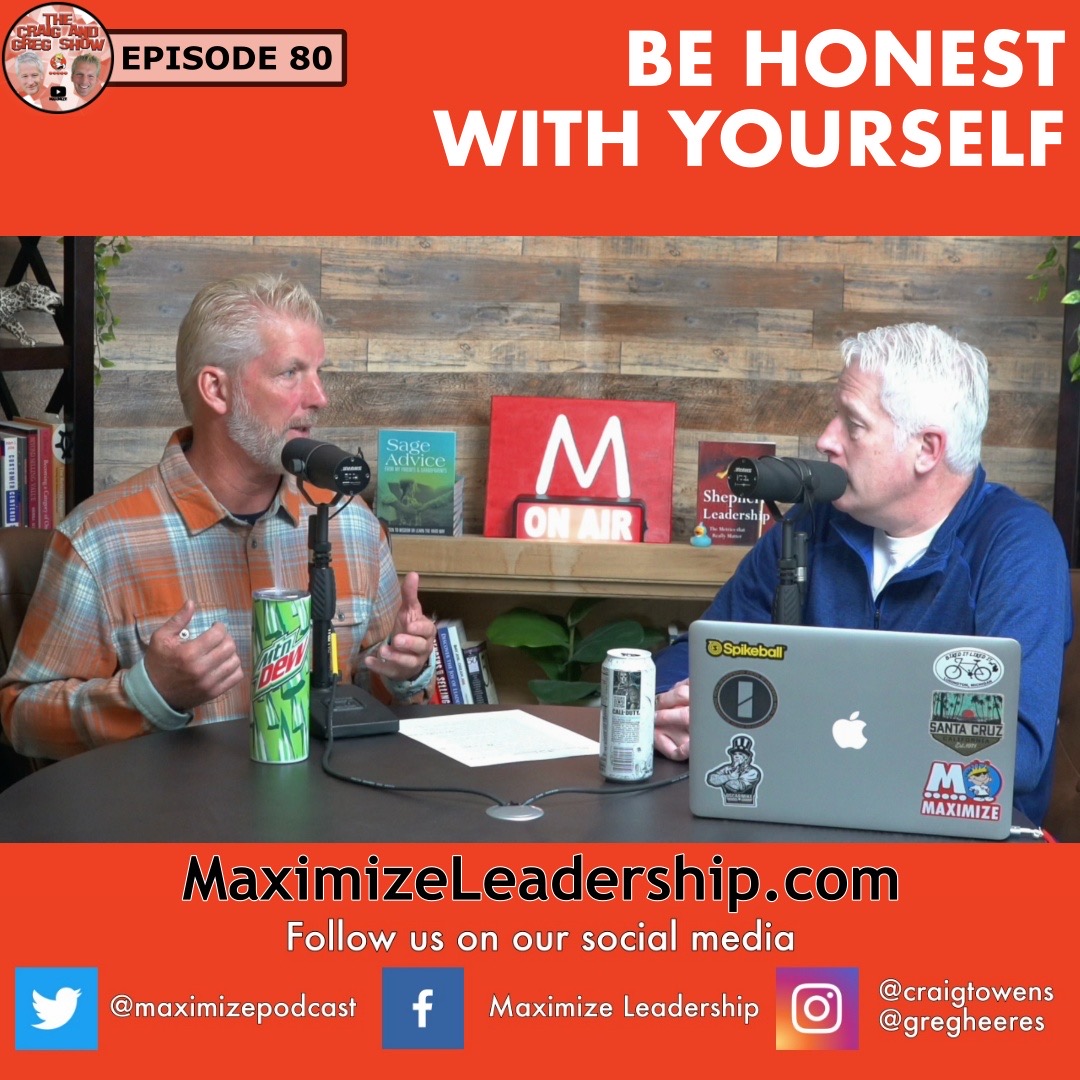
The Craig And Greg Show: Be Honest With Yourself

Listen to the audio-only version of this podcast by clicking on the player below, or scroll down to watch the video.

Honesty is a vital part of a successful organization, something that every good leader is well aware of. However, when was the last time you asked the question, “Am I being honest with myself?” In this episode, Greg and I unpack how honest self-reflection is a powerful tool to help improve your leadership.

  • [0:14] A challenging quote to kick off this episode. 
  • [1:14] My breakthrough moment regarding my own self-assessment.
  • [3:37] What’s the difference between who I think I am and who I really am?
  • [6:00] We all operate with certain assumptions about ourselves.
  • [7:37] We share some good and bad experiences with interactions we have observed from other leaders.
  • [10:27] Leaders need to hold themselves to the same standards as the rest of their team.
  • [13:47] Why do leaders hesitate to self-evaluate?
  • [15:19] How do leaders create a safe environment to self-evaluate?
  • [18:45] Greg sends us down a rabbit trail!
  • [19:53] What does leadership integrity look like?
  • [22:17] Leaders need to know what their tendencies are.

Check out this episode and subscribe on YouTube so you can watch all of the upcoming episodes. You can also listen to our podcast on Spotify and Apple.

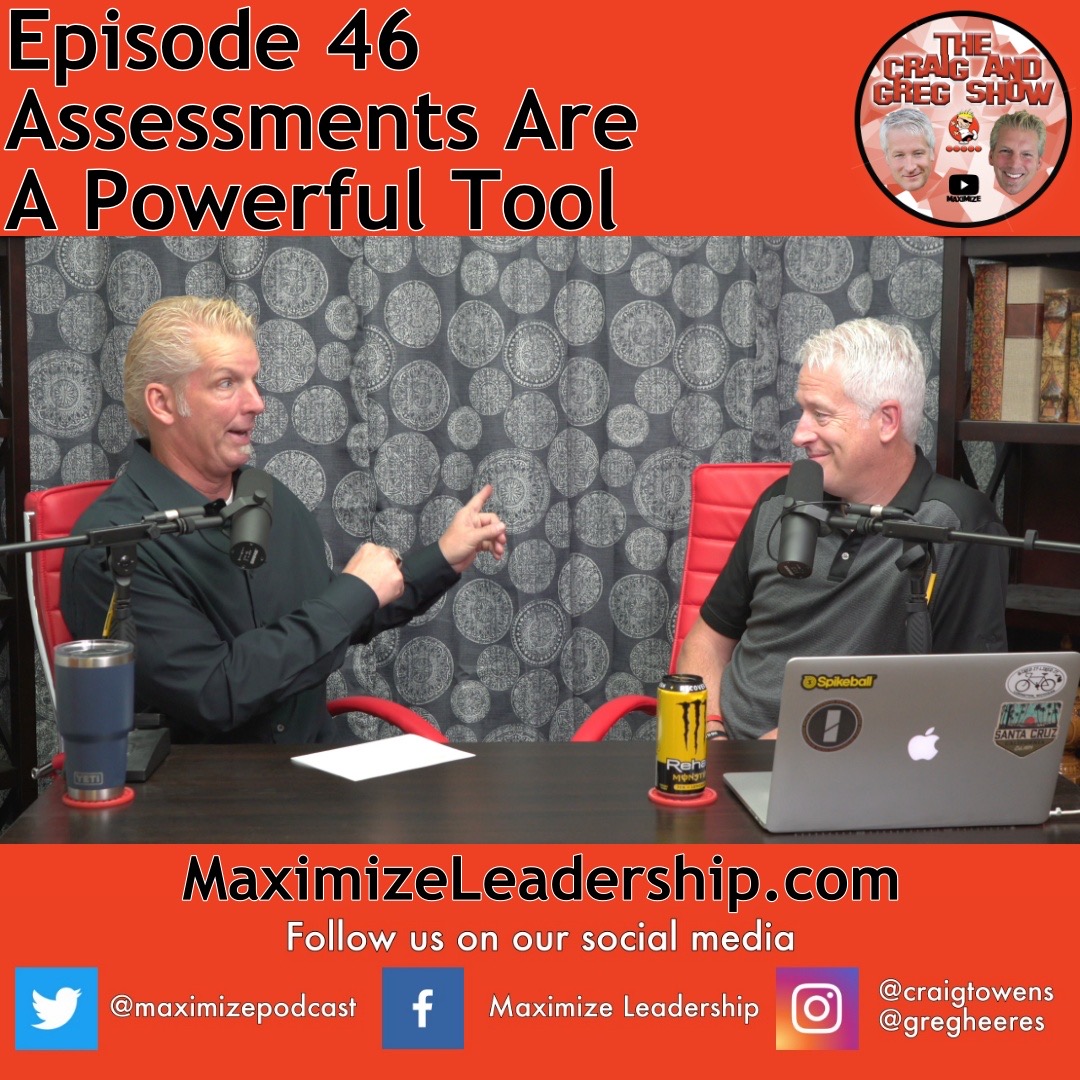
The Craig And Greg Show: Assessments Are A Powerful Tool

Listen to the audio-only version of this podcast by clicking on the player below, or scroll down to watch the video.

On this episode of “The Craig And Greg Show” we talk about: 

  • [0:38] We prefer preventative care both physically and in our leadership health
  • [1:40] When should we use assessments?
  • [3:10] Assessments can help leaders get an objective perspective on themselves and their team members
  • [4:36] We need windows of insight into ourselves first before we start working with our teammates
  • [5:40] What’s the goal of assessments?
  • [7:40] There are no “wrong answers” in assessment results
  • [9:39] How do leaders share the results of assessments with the whole team?
  • [13:31] When we have insight about our teammates, it helps us grow and understand each other
  • [15:34] Intuition and assessments work really well together
  • [17:01] What if an assessment appears to raise a warning flag?
  • [18:02] Leaders should use their assessments to setup their teammates for consistent success
  • [19:35] Assessments allow leaders to craft a complete team
  • [20:37] An outside coach can help your organization know what assessments to use and how to implement the results of any assessments

Check out this episode and subscribe on YouTube so you can watch all of the upcoming episodes. You can also listen to our podcast on Spotify and Apple.

Self-Leadership

Listen to the podcast of this post by clicking on the player below, and you can also subscribe on AppleSpotify, or Audible. 

I had a great time on the Thriving In Ministry podcast with Kyle Willis and Dace Clifton. 

Kyle asked me how I lead myself so that I can stay effective in my leadership roles. 

Effective and long-lasting leadership really does start with the leader’s self-leadership practices. I have to know myself well, so I am a big proponent of taking as many assessments as I can. These give me a window of insight into how I’m thinking and how I’m communicating. As I get to know myself better, I can get to know the sheep around me better as well. 

We all have a native way of thinking, speaking, and leading. It’s arrogant to think we can just “say it like it is” and everyone around us will immediately understand. Instead, I need to understand how my thinking and speaking “dialects” are unique to me, and that everyone on my team and every sheep in my pasture also have their own unique dialects. It’s as I get a window of insight into the way God has uniquely wired me, that I will also begin to appreciate the uniqueness of those around me. This will allow me to lovingly speak in their native dialect. 

In my book Shepherd Leadership: The Metrics That Really Matter, I discuss how leaders can create the time that is needed to get to know themselves and the flock that God has placed under their care.

I’ll be sharing more clips from this Thriving In Ministry interview soon, so please stay tuned. Shepherd Leadership: The Metrics That Really Matter is available in print or ebook, and in audiobook through either Audible or Apple.

►► Would you please prayerfully consider supporting this ministry? My Patreon supporters get behind-the-scenes access to exclusive materials. ◀︎◀︎


Love Like That (book review)

Over the years, I have gleaned so many helpful relationship lessons from Dr. Les Parrott so I was excited when I heard about Love Like That. But what Dr. Parrott taught in this book was completely unexpected—how to love like Jesus loves. 

The title of the book is taken from The Message paraphrase of a verse in the Bible: Observe how Christ loved us. His love was not cautious but extravagant. He didn’t love in order to get something from us but to give everything of Himself to us. LOVE LIKE THAT (Ephesians 5:2).

Wow! Love like Jesus? How can we do that? Let me jump to the end of the book first. If you’re like me, sometimes you think the meat of the book is in the chapters and there is little value in a conclusion or appendix, but that is definitely not the case in Love Like That. In these two valuable sections, Dr. Parrott answers the question more specifically for us: HOW can I love like Jesus? 

The five main chapters of the book identify five ways Jesus loved. Each chapter has a definition of that trait, a self-test on how you currently measure up (which you can also take online), an example of how Jesus loved like that, the hindrances that keep us from loving like that, and how to overcome those hindrances. 

This book opened my eyes—and my heart—to how I can do a much, much better job of loving like Jesus loves. The way Dr. Parrott presents this information makes it seem like something even I can do. For the sake of others in your life, please read Love Like That.

I am a Thomas Nelson book reviewer. 

Finding The Love Of Your Life (book review)

Finding The Love Of Your LifeQuite possibly one of the most important life decisions that you will make is deciding whom you will marry. Neil Clark Warren has a very needed book to help with this decision called Finding The Love Of Your Life.

The book is compromised of 10 principles to aid in the selection of a mate. Dr. Warren combines his years of experience as a psychologist with lots of data to make up these 10 easy-to-understand principles. This book was originally published nearly 20 years ago, but the results of research and surveys over that time have only served to strengthen the points that Dr. Warren makes here. Thus, telling me that his 10 principles are truly timeless.

Who should read this book? (1) Young people who are dating; and (2) their parents.

There is plenty of information in this book to get a conversation started, so I would encourage parents to read this book along with their children who are dating, and then talk about each of these principles in relationship to the person whom they are dating.

A great resource that is very readable. Go get it!

Heart Check

Seven rules for self-discovery:

1. What we want most;

2. What we think about most;

3. How we use our money;

4. What we do with our leisure time;

5. The company we enjoy;

6. Who and what we admire; and

7. What we laugh at. —A.W. Tozer

Search me thoroughly, O God, and know my heart! Try me and know my thoughts! And see if there is any wicked or hurtful way in me, and lead me in the way everlasting. (Psalm 139:23-24, Amplified Bible)

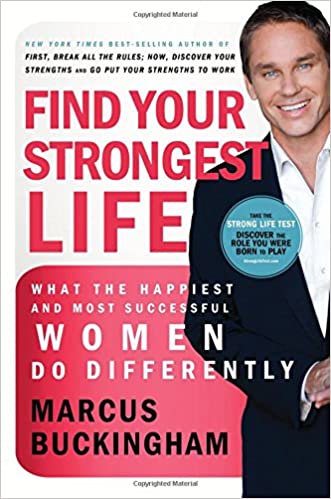
Find Your Strongest Life (book review)


You might be thinking, “Why is he reviewing this book?” After all, the subtitle of Marcus Buckingham’s latest book is “What the happiest and most successful women do differently.” Well, guess what? I absolutely loved this book! I’m excited for my wife to be able to read Find Your Strongest Life, but in the meantime, I got so much out of it.

One of the things I love about Marcus Buckingham’s books is that they read just like he sounds: a silky smooth British accent. But it’s not just about style; his books have plenty of substance too. I especially love Marcus’ focus on building on strengths, as opposed to trying to fix weaknesses.

The other thing I appreciate is how affirming Marcus is. His comfortable style feels highly personalized—sort of like he’s sitting on the other side of the coffee table from me.

Find Your Strongest Life opens with some background information on the important timing for this book. Then after taking a simple online assessment to learn your leading and supporting Life Roles, you’ll learn more about how to capture and cradle your strongest moments. Then you’ll learn how to use these strong moments to purposely imbalance your life in favor of those strong moments.

So many of Marcus’ ideas sound counter-intuitive, and yet they ring so true at the same time. From my personal experience from reading and applying the principles in his other books, I can attest that this man knows what he’s talking about. I know I found several takeaways from this book, and I’m especially excited to see how my wife and the other key women in my life are going to be able to use this book to make a stronger life for themselves.

An excellent read for anyone.