Your Part In The Battle

The story about David defeating the giant Goliath in battle is familiar to just about everyone. (If it’s not a familiar story to you, you can read it here.) I was struck by how David saw his part in this fight. Look what he said:

All those gathered here will know that it is not by sword or spear that the Lord saves; for the battle is the Lord’s.

After the fight was over, and Goliath lay dead at David’s feet, the biblical writer said the same thing:

So David triumphed over the Philistine with a sling and a stone; without a sword in his hand he struck down the Philistine and killed him.

If you are a God-follower, then your battles are really God’s battles. David recognized that it was God’s battle, but David also knew that he played a part in this too.

1.  He had to train. David had to know how to use a sling with deadly accuracy.

2.  He had to reject “good” advice. Saul advised David, “Here, wear my armor.” That sounded like good advice, but it didn’t fit for David. He had to be true to what the Spirit of God spoke to his heart, even as he rejected what seemed like good advice.

3.  He had to have faith. David truly believed that God was going to do something big—something no one else could even imagine.

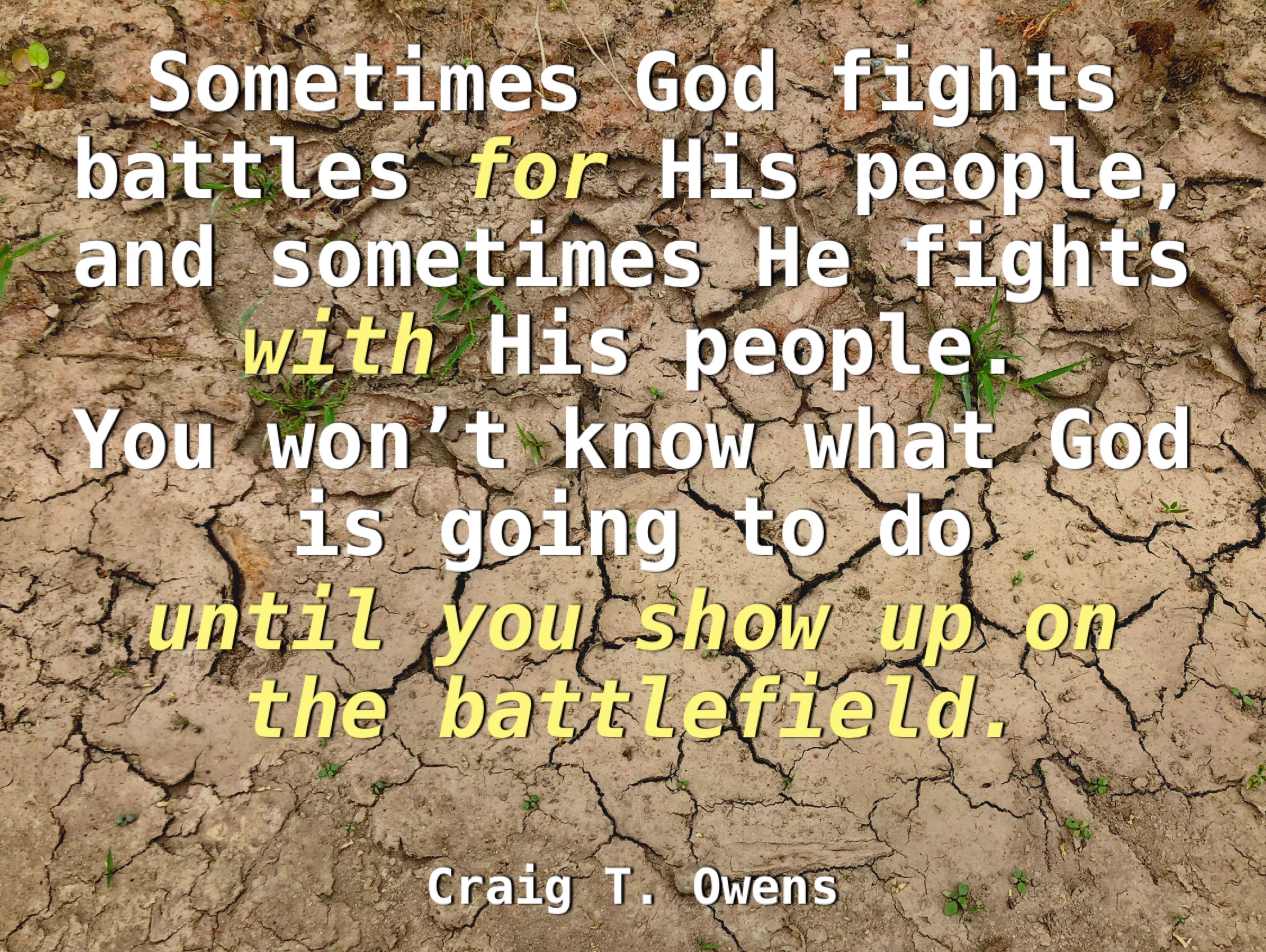
4.  He had to show up. Sometimes God fights battles for His people, and sometimes He fights with His people. David didn’t know what God was going to do in this instance until he showed up on the battlefield.

God wants you to win big battles. And if you’re following God, He will bring the victory. But you still have a very important part to play. Train hard, reject advice that is contrary to what God has told you, have faith, and then show up for the battle. These are the keys to victory.
Brave Enough

If God asks me to give $1, I can quickly and easily say, “Yes!”

If God asks me to give $10, I say, “Okay!”

If God asks me to give $100, I say, “Um, well, if You say so.”

If God asks me to give $1000, I say, “I need to pray about this ‘faith promise.’”

If God asks me to give $10,000, I say, “As soon as You bless me, I’ll be able to do this.”

This same principle holds true for anything else:

  • Used clothing? Sure. Brand new stuff? I’m not so sure.
  • Volunteer an hour? Okay! Make a commitment for an hour every week? Let me pray about it.
  • Pray for someone? No problem. Add them to my daily prayer list? Whoa!
  • Support missionaries? Yes! Become a missionary? Well….

It’s easy to obey when we think the stakes are low. But the more “zeroes” that get added to the amount, the higher the stakes seem. Am I brave enough to obey then?

This is what tripped up Saul, Israel’s first king. He was supposed to devote everything from the defeated Amalekites to God. “Devote” means a complete and irrevocable giving to God. When the stakes were low, he obeyed, but when he perceived the stakes being too high, he lost the courage to follow through:

Saul and his men spared Agag’s life and kept the best of the sheep and goats, the cattle, the fat calves, and the lambs—everything, in fact, that appealed to them. They destroyed only what was worthless or of poor quality. (1 Samuel 15:9 NLT)

He captured Agag, king of Amalek, alive. Everyone else was killed under the terms of the holy ban. Saul and the army made an exception for Agag, and for the choice sheep and cattle. They didn’t include them under the terms of the holy ban. But all the rest, which nobody wanted anyway, they destroyed as decreed by the holy ban. (1 Samuel 15:9, The Message)

Ironically, because Saul held on to what he thought was valuable, he lost something invaluable: a close relationship with God. His cowardice led to disobedience, and his disobedience led to his ultimate collapse.

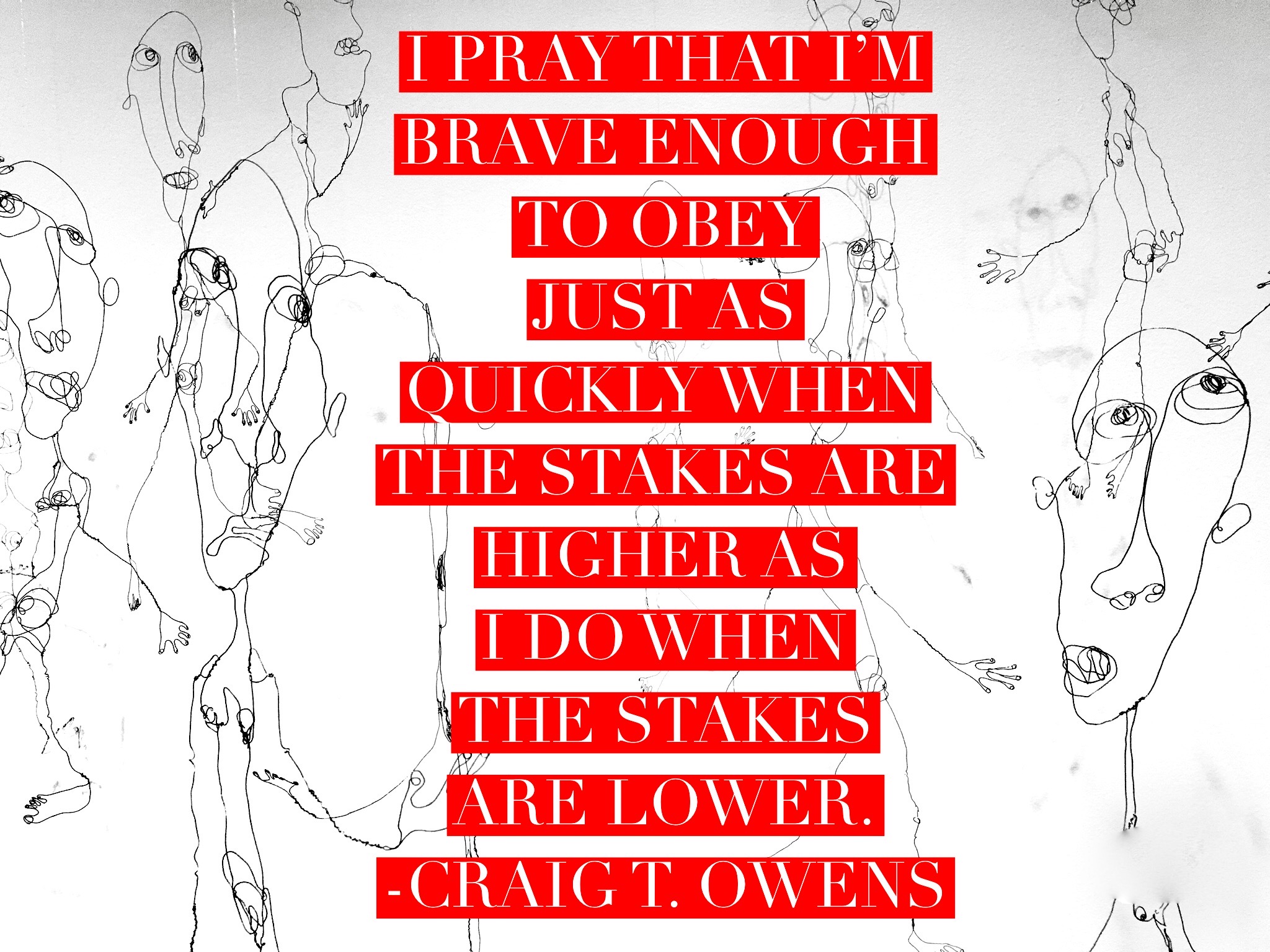
I pray that I’m brave enough to obey just as quickly when the stakes are higher as I do when the stakes are lower.

What about you? Are you brave enough?

How A Leader Should Bring Correction

Listen to the podcast of this post by clicking on the player below, and you can also subscribe on AppleSpotify, or Audible.

Bringing correction is one of the toughest jobs for those in leadership, but it’s a responsibility that cannot be delegated or ignored. In order for correction to be effective, it must not be too light or too heavy. Unfortunately, many of us have experienced far too many ineffective forms of leadership correction.

I read a great example of how to properly correct in the life of Samuel. In 1 Samuel 12, the people had gotten off track, and Samuel lovingly and effectively brought them back into line. Here’s what his example teaches us on how to correct followers:

1.  Shared history (v. 2). Samuel reminded them of what had happened in their history, and even what they had experienced together. “Newbie” leaders need to be cautious about bringing correction that violates an organization’s established culture.

2. Integrity (v. 3). Samuel’s words and lifestyle lined up. That doesn’t mean he never made a mistake, but it does mean that he was willing to acknowledge and repair his mistakes. Nothing is worse than a leader who says, “Do as I say, not as I do!”

3. Common ground (vv. 6-11). A leader needs to get everyone on the same page. Find something somewhere on which everyone can agree, and then move forward from there.

4. Just say it (vv. 12-13). Don’t beat around the bush; don’t try to bring correction through a parable; don’t soften the blow. Just say it: “This is where I believe you made a mistake.” Far too many leaders talk too much and leave their followers saying, “Huh?” If you are going to bring correction, make sure your followers know exactly what it is you are correcting.

5. Give the remedy (vv. 14-15, 20-21). Samuel pointed out the error, and he just as clearly told them how to get back on track. The remedy should be as clear and simple as possible.

6. Remove the fear (vv. 20, 22). Don’t let the corrected follower be afraid of you! Fear will never re-establish trust. Samuel couldn’t have been more clear on this. He literally said to the Israelites, “Do not be afraid.”

7. Demonstrate servant leadership (v. 23). At the close of the meeting, Samuel said he would do two things: “I will continue to pray for you, and I will continue to teach you.” In telling them this, Samuel was really saying, “Let’s walk through this together.”

If you lead your family, your church, your company, or your team, you are going to have to bring correction at some point. When you need to do this, take some time to review this list and bring correction the way Samuel did: lovingly and effectively.

P.S. You can also check out this post where the apostle Paul gives us another example of how to handle correction properly.

►► Would you please prayerfully consider supporting this ministry? My Patreon supporters get behind-the-scenes access to exclusive materials. ◀︎◀︎

UnZone

UnZone

We kicked off our Bigger Than Me series last night talking about one of my favorite Bible stories where Jonathan and his armor-bearer pick a fight with the Philistines.

What I love about this story is the contrast between Jonathan and his father Saul. King Saul was enjoying life as the king, hanging out with his friends, sitting under a pomegranate tree, far away from his enemies. Life was good for Saul, life was familiar and risk-free. Saul was living in his comfort zone.

But the comfort zone is a lousy place to stay. In the comfort zone you only tell stories, but never live an adventure. In the comfort zone, you only hear about what God has done for others. But Jonathan wasn’t willing to stay in this comfort zone.

Jonathan stepped out into The UnZone. He went into unfamiliar territory, with an unusual battle strategy, and uncertain results. Jonathan said, “Perhaps God will help us.” But he didn’t stop there. Jonathan quickly added, “I don’t know how, but I know God can come through.”

After Jonathan stepped out of his comfort zone into The UnZone, God not only gave him a victory but encouraged the entire Israelite army. This never would have happened if Jonathan had stayed in his comfort zone.

In The UnZone you don’t just tell stories, you live adventures.

In The UnZone you don’t just hear about God’s power, you experience it firsthand.

I challenged our youth group last night to step out of their comfort zones and into The UnZone. How cool it was to see all of the uncomfortable, unfamiliar, uncertain, unusual things they wrote down on their UnZone cards and tacked up on our bulletin board. I’m looking forward to seeing our bulletin board covered with these cards over the next few weeks.

What about you? What comfort zone is God calling you out of? What UnZone do you need to step into? The Apostle Paul said, “When I am weak then I am strong.” In other words, “When I step into my UnZone, I step into God’s Strength Zone.”

The UnZone is a great place to live, so step out today.

Be An Intrusive Friend

Yesterday I talked about how to defeat depression in our personal lives. Maybe you’re not battling depression yourself, but since anti-depressants are one of the most prescribed medications, there’s a good chance that someone you know is dealing with depression. Beyond medicine or counseling, one of the greatest antidotes for depression is a friend: an intrusive friend.

In 1 Kings 19 when Elijah was running scared and slipping into depression, there is an important verse at the beginning of the story—Elijah was afraid and ran for his life. When he came to Beersheba in Judah, he left his servant there (v. 3).

One of our most natural reactions when we’re battling depression is to withdraw from others. It’s natural to want to be alone, but it is one of the worst things to do. Throughout Scripture, powerful people became vulnerable to attack when they left their friends behind—Samson, David, and Peter are prime examples. Even Jesus was tempted by the devil when He was alone in the wilderness.

So if it’s natural to want to be alone when depression is raining on our souls, a true friend will have to be an intrusive friend … a tenacious friend … a persistent friend. I love the lines in the Toby Mac song “Face Of The Earth” that say—

Now Hope Road is calling
Let’s pack you up and move
‘Cause real friends are willing to intrude
So I’m gonna push you in because I wanna love you well
Let the ghosts of your past rest

If you have a friend who is starting to become distant, dropping out of activities, or spending more time alone, these may be the warning signs of depression. Don’t let him be like Elijah and leave you behind, but love him or her enough to intrude in his or her life. Your encouragement just may be the best anti-depressant he/she will ever receive.

So speak encouraging words to one another. Build up hope so you’ll all be together in this, no one left out, no one left behind. I know you’re already doing this; just keep on doing it. (1 Thessalonians 5:11, The Message)

Jonathan went to find David and encouraged him to stay strong in his faith in God. (1 Samuel 23:16, New Living Translation)

Rewards

The Lord rewards every man for his righteousness and faithfulness…. (1 Samuel 26:23)

The Lord—Not a man, not a system, not a church. They are fickle, short-sighted, limited. It is an All-Powerful, Unlimited, All-Loving God who rewards me.

Rewards—God keeps track and He pays back in-full. God doesn‘t use IOUs or promissory notes, but payment in-full.

Everyone—Not the favored ones nor the super-spiritual. Everyone… even me!

Righteousness—The one who does the right thing. There is always—in every situation and circumstance—the right thing… God‘s thing. Do I have the faith to do it?

Faithfulness—Continually clinging to God through good times and bad.

God will reward me for doing things His way. And I‘m forever grateful!

Celebrating Stones Of Remembrance

annual-business-meeting1

In 1 Samuel 7, there is a story where God defeated Israel’s enemies. After the victory, Samuel erected a stone of remembrance and said, “Thus far has the Lord helped us.” Year after year when Israelite families would journey past this monument, and children asked, “Dad, what does that big stone mean?” They could be reminded of God’s protection and provision and they could celebrate.

We setup our own stone of remembrance at church last night. We took an evening to gather together and celebrate what God did for us in 2008:

  • People became followers of Jesus Christ and began their discipleship journey, others became disciple-makers.
  • We offered our first Vacation Bible School, and made great relationships with the families in our neighborhood.
  • Our Back 2 School party provided bags and bags of school supplies to area students.
  • Light The Night was a great alternative to a dark-and-scary Halloween night.
  • The Gift told the true story about the greatest gift.
  • We were able to show the true meaning of CHRISTmas to some special families.

And that’s just the tip of the iceberg! What a joy it is to know that “thus far has the Lord helped us.” And what anticipation energizes me as I’m already looking forward to an even bigger stone of remembrance next time!

There are so many people to thank. I won’t start naming them all here (you know who you are!) so that I don’t accidentally leave some people out. But I do want to single out my wife Betsy. She is my constant companion, my best friend, my favorite playmate, my wisest counselor, my daily encouragement, and a great pastor’s wife. I couldn’t celebrate all of these stones of remembrance without you!

Are You A Trustworthy “Enemy”?

Sticks and stones may break my bones but words will never hurt me, right? Wrong—words hurt!

At times you may think, “Well, I may have deserved that one.” Perhaps you did or said something inappropriate, and the other person responded out of their anger or frustration or embarrassment. But what about when you’ve done nothing wrong? Those sharp, wounding words seem to come out of the clear blue, from someone you never would have expected to be so hateful—angry, spiteful words deliberately hurled at you like stones.

David was forced to hide in Philistine territory to get away from Israelite King Saul. This was smart on David’s part because the Philistines had been ancient enemies of the Israelites, so Saul would never cross into Philistine territory to look for David. David asked King Achish for refuge in his territory, and Achish gave him the city of Ziklag in which to settle.

There’s a cliché that says, “The enemy of my enemy is my friend.” Achish was Saul’s enemy, so David could have assumed that Achish was his friend (the enemy of David’s enemy).

But here’s the important point—David didn’t consider Saul his enemy. Saul may have thought David was his enemy, but David didn’t reciprocate. David didn’t treat Saul as an enemy, but neither did David treat Achish as a friend.

Yet the Bible records an amazing statement: Achish trusted David (1 Samuel 27:12). Neither Saul nor Achish could ever claim that David slandered them, maligned their character, or did them any harm at all.

How could David do this? How could he keep from lashing out at the one who hurled insults at him (Saul) or the one who was his ancient foe (Achish)? David asked God to help him—

Fierce men conspire against me for no offence or sin of mine, O Lord.
I have done no wrong, yet they are ready to attack me.
Arise to help me; look on my plight!
(Psalm 59:3-4)

I see three great life applications when you are wrongly attacked or slandered:

  1. Don’t treat those who criticize and slander you as an enemy.
  2. Don’t find the enemy of your enemy and call him a friend.
  3. Do acknowledge your hurts and take them to God.

You don’t have to befriend your foes, but neither do you need to lash out at those who are falsely attacking you. Let God arise to help you, and may even your enemies find you trustworthy!

Piling On!

It just wasn’t going very well for David!

His boss, Saul, was jealous of him and was trying to kill him.
He had to leave his best friend behind when he ran for his life.
And his wife.
And his Mom & Dad.
And his brothers.
And his pastor.
Then his best friend is almost killed for standing up for David.

So David runs to enemy territory. After all “the enemy of my enemy is my friend,” right?

Um, not so much! The king of Gath was Saul’s enemy, but he wasn’t too fond of David either. How does David get out of this one? He starts drooling like an idiot, clawing weird symbols on the wooden doors and acting like a madman!

David runs away from Gath to Adullam Cave, which then quickly becomes the gathering spot for every distressed, bankrupt malcontent in the country. Some following David had!

Have you ever had one of those days? You know, where nothing is going right, and everywhere you turn is simply more trouble—out of the frying pan and into the fire! The problems just seem to keep piling on!

Yet there in Adullam Cave, David pens some of the most profound words. Read them carefully, and note the progression:

I will extol the LORD at all times; His praise will always be on my lips.
My soul will boast in the LORD; let the afflicted hear and rejoice.
Glorify the LORD with me; let us exalt His name together.
(Psalm 34:1-3)

Notice how David chooses to praise God as an act of his will—I will extol the Lord… I will praise Him with my lips.

And then this act of his will gets into his soul (his emotions), and as a result, the other distressed, bankrupt malcontents begin to see something different in David. He doesn’t break down when the problems pile on; he praises God!

And then these malcontents begin to glorify the Lord with David; they begin to exalt His name together.

Friends, how you choose to respond when the problems pile on is vital. Yes, misery loves company. If you are feeling miserable, other miserable people will flock to you. Don’t use this group to have a pity party, but see it as an incredible opportunity to use your will to praise God.

Remember, feelings follow actions. You may not feel like praising God because the problems are piled on so high, but when you act the feelings will follow. David went from “I will” to “my soul” in just one verse! And the same thing will happen for you too!

A distressed, malcontented world is watching you—what will you do when your problems pile on?

The Jonathan Experience

David tried to do the right thing.

His countrymen were under attack from their archenemies. David prayed, and God told him to go rescue his countrymen. But when David called his loyal teammates together, they weren’t as enthusiastic about this plan as David was. This must have made David second-guess if he heard from God correctly, so he prayed again. Once again God confirmed, “Go fight the bad guys.”

They fought, and God gave them the victory. And the newly-rescued town hailed their deliverer as a hero. They invited him into their town and gave him the best meal, the best place to stay, and the highest honors they could give. But people are extremely fickle. They heard there was a reward out for David, and they thought the money was worth more than this hero’s presence in their town, so they conspired to turn him in.

David prayed again, asking God’s guidance. God said, “Yes, it’s true, they are going to turn you in. Time to run!”

So David ran. Ran for his life. Day after day after day after lonely day David ran through the desert, dodging the men seeking his life. As you might expect, David got tired, his men became discouraged and probably started to grumble. David thought to himself, “I’ve only tried to do the right thing. I haven’t harmed anyone, in fact, I’ve liberated oppressed people. This shouldn’t be happening to me.”

David—the almost-constant pray-er—didn’t pray. It stands out so starkly compared to his previous pattern. Whenever he was in a tough spot, or needed guidance, or even needed reassurance, David prayed. But not here in the desert, on the run, pursued by a relentless foe, surrounded by grumbling “friends.” No, he just retreated from the field of victory, from the fickle crowds, from his enemies… and from his God.

And then these great words appear in the narrative: “Jonathan went to find David.”

Jonathan, David’s covenant friend, didn’t sympathize and say, “You have every right to be upset.” He didn’t counsel David to attack his pursuing enemy. Jonathan didn’t tell David, “If I were you here’s what I would do.”

“Jonathan helped David find strength in God.”

What a friend! No pep talks … no crying on shoulders … no strategy sessions. Jonathan helped David get back to what his typical lifestyle had been—find his strength, his guidance, his encouragement in his God.

“Firm, graceful, loving, faith-building friendships can change the world.” —Craig T. Owens

I am so very blessed to have “Jonathans” in my life. They have shown up in my deserts at just the right time and helped me find strength in my God—helped me get back to my roots.

I pray you have a Jonathan or two (or three!) in your life. They are extremely rare people, so diligently nourish those relationships. And even more, I pray that you will be a Jonathan to a friend who is on the run.