Poetry Saturday—When I Survey The Wondrous Cross

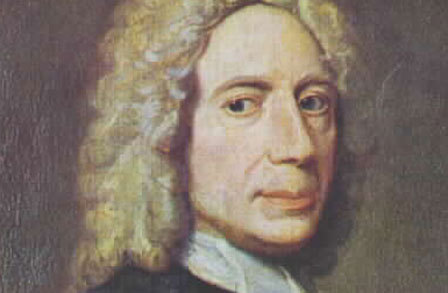
Isaac WattsWhen I survey the wondrous Cross
On which the Prince of glory died,
My richest gain I count but loss,
And pour contempt on all my pride.

Forbid it, Lord, that I should boast,
Save in the death of Christ my God!
All the vain things that charm me most,
I sacrifice them to His blood.

See from His head, His hands, His feet,
Sorrow and love flow mingled down!
Did e’er such love and sorrow meet,
Or thorns compose so rich a Crown?

Were the whole realm of nature mine,
That were a present far too small;
Love so amazing, so divine,
Demands my soul, my life, my all. —Isaac Watts


Poetry Saturday—Everything On It

Too good to share just one, here are five from a collection of Shel Silverstein poems printed after his death in the book Everything On It.

MasksMasks
She had blue skin,
And so did he.
He kept it hid
And so did she.
They searched for blue
Their whole life through,
Then passed right by—
And never knew.

Losing Pieces
Talked my head off
Worked my tail off
Cried my eyes out
Walked my feet off
Sang my heart out
So you see,
There’s really not much left of me.

I Didn’t
I didn’t do it
That’s a lie
I didn’t do it
No, not I
I didn’t do it
Hear me cry
I didn’t do it
Hope to die
I didn’t do it
I’m not that bad
But if I did
Would you be mad?

New Job
Just two hours workin’ in the candy store
And I don’t like candy anymore.

The Problem
Jim copied the answer from Nancy
Sue copied the answer from Jim
Tim copied the answer from Sue, and then
Anne copied the answer from him
And Fran copied Anne and Jan copied Fran
The answer kept passing along
And no one got caught, but the problem was—
Nancy had it wrong. —Shel Silverstein


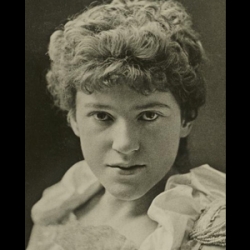
Poetry Saturday—If

Ella Wheeler Wilcox‘Twixt what thou art, and what thou wouldst be, let
No “If” arise on which to lay the blame.
Man makes a mountain of that puny word,
But, like a blade of grass before the scythe,
It falls and withers when a human will,
Stirred by creative force, sweeps toward its aim.

Thou wilt be what thou couldst be. Circumstance
Is but the toy of genius. When a soul
Burns with a god-like purpose to achieve,
All obstacles between it and its goal
Must vanish as the dew before the sun.

“If” is the motto of the dilettante
And idle dreamer; ‘tis the poor excuse
Of mediocrity. The truly great
Know not the word, or know it but to scorn,
Else had Joan of Arc a peasant died,
Uncrowned by glory and by men unsung. —Ella Wheeler Wilcox


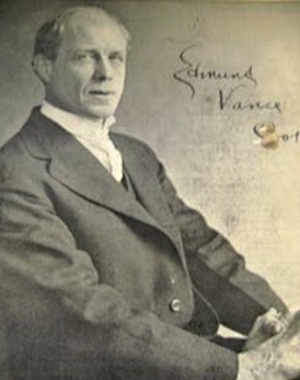
Poetry Saturday—How Did You Die?

Edmund Vance CookeDid you tackle that trouble that came your way
With a resolute heart and cheerful?
Or hide your face from the light of day
With a craven soul and fearful?
Oh, a trouble’s a ton, or a trouble’s an ounce,
Or a trouble is what you make it,
And it isn’t the fact that you’re hurt that counts,
But only how did you take it?


You are beaten to earth? Well, well, what’s that?
Come up with a smiling face.
It’s nothing against you to fall down flat,
But to lie there—that’s disgrace.
The harder you’re thrown, why the higher you bounce;
Be proud of your blackened eye!
It isn’t the fact that you’re licked that counts,
It’s how did you fight—and why?


And though you be done to the death, what then?
If you battled the best you could,
If you played your part in the world of men,
Why, the Critic will call it good.
Death comes with a crawl, or comes with a pounce,
And whether he’s slow or spry,
It isn’t the fact that you’re dead that counts,
But only how did you die? —Edmund Vance Cooke


Poetry Saturday—Work For The Day Is Coming

Annie Coghill
Work, for the Day is coming,
Day in the Word foretold,
When, ‘mid the scenes triumphant,
Longed for by saints of old,
He, who on earth a stranger
Traversed its paths of pain,
Jesus, the Prince, the Savior,
Comes evermore to reign.

Work, for the Day is coming,
Darkness will soon be gone;
Then o’er the night of weeping
Day without end shall dawn.
What now we sow in sadness
Then we shall reap in joy;
Hope will be changed to gladness,
Praise be our blest employ.

Work, for the Day is coming,
Made for the saints of light;
Off with the garments dreary,
On with the armor bright:
Soon will the strife be ended,
Soon all our toils below;
Not to the dark we’re tending,
But to the Day we go.

Work, then, the Day is coming,
No time for sighing now;
Prize for the race awaits thee,
Wreaths for the victor’s brow.
Now morning Light is breaking,
Soon will the Day appear;
Night shades appall no longer,
Jesus, our Lord, is near. —Annie Coghill

Correcting The Pantheist

C.S. Lewis at his deskI recently re-read C.S. Lewis’ book Miracles (you can read my full book review by clicking here). As you may have noticed, after reading and reviewing books on this blog, I also like to share some quotes that caught my attention. Doing this with Lewis is difficult, because in order to get the context of a particular quote, I think I would have to cite almost a full page or more. So over the next few weeks I plan to share some quotes from Miracles that require not as much context, or I will provide a bit of background to set the stage.

Democritus was a Greek philosopher who proposed the universe was made up of invisible atoms and empty space. The atoms perpetually bounced around and sometimes connected with other atoms to form our tangible universe. Erwin Schrödinger put a ‘concreteness’ or ‘definiteness’ to the atomic theories previous held. In other words, Democritus saw an almost pantheistic, indescribable vagueness about Nature, whereas Schrödinger gave it definition. Lewis says that Christians need to put Monotheistic definitions on Nature and Supernature. 

“At every point Christianity has to correct the natural expectations of the Pantheist and offer something more difficult, just as Schrödinger has to correct Democritus. At every moment he has to multiply distinctions and rule out false analogies. He has to substitute the mappings of something that has a positive, concrete, and highly articulated character for the formless generalities in which Pantheism is at home.” 

 “If God is the ultimate source of all concrete, individual things and events, then God Himself must be concrete, and individual in the highest degree. Unless the origin of all other things were itself concrete and individual, nothing else could be so; for there is no conceivable means whereby what is abstract or general could itself produce concrete reality. Bookkeeping, continued to all eternity, could never produce one farthing. Metre, of itself, could never produce a poem. Bookkeeping needs something else (namely, real money put into the account) and metre needs something else (real words, fed into it by a poet) before any income or any poem can exist. If anything is to exist at all, then the Original Thing must be, not a principal nor a generality, much less an ‘ideal’ or a ‘value,’ but an utterly concrete fact.”

For more quotes from this book, check out Miracle Or “Cheating”? and Miracles And Nature.

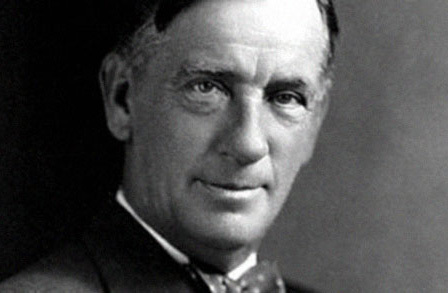
Poetry Saturday—Answering Him

Edgar A. Guest

“When shall I be a man?” he said,
As I was putting him to bed.
“How many years will have to be
Before Time makes a man of me?
And will I be a man when I
Am grown up big?” I heaved a sigh,
Because it called for careful thought
To give the answer that he sought.

And so I sat him on my knee,
And said to him: “A man you’ll be
When you have learned that honor brings
More joy than all the crowns of kings;
That it is better to be true
To all who know and trust in you
Than all the gold of earth to gain
If winning it shall leave a stain.

“When you can fight for victory sweet,
Yet bravely swallow down defeat,
And cling to hope and keep the right,
Nor use deceit instead of might;
When you are kind and brave and clean,
And fair to all and never mean;
When there is good in all you plan,
That day, my boy, you’ll be a man.

“Some of us learn this truth too late;
That years alone can’t make us great;
That many who are three-score, ten
Have fallen short of being men,
Because in selfishness they fought
And toiled without refining thought;
And whether wrong or whether right
They lived but for their own delight.

“When you have learned that you must hold
Your honor dearer far than gold;
That no ill-gotten wealth or fame
Can pay you for your tarnished name;
And when in all you say or do
Of others you’re considerate, too,
Content to do the best you can
By such a creed, you’ll be a man.” —Edgar A. Guest

Poetry Saturday—The Very Thought Of Thee

Bernard of ClairvauxJesus, the very thought of Thee
With sweetness fills the breast;
But sweeter far Thy face to see
And in Thy presence rest.

No voice can sing, no heart can frame,
Nor can the memory find
A sweeter sound than Thy blest Name,
O Savior of mankind!

O hope of every contrite heart,
O joy of all the meek,
To those who fall, how kind Thou art!
How good to those who seek!

But what to those who find? Ah, this
No tongue or pen can show;
The love of Jesus, what it is
None but His loved ones know.

Jesus, our only joy be Thou,
As Thou our prize wilt be;
Jesus, be Thou our glory now
And thru eternity. —Bernard of Clairvaux

Poetry Saturday—The Eternal Goodness

917_05_010316O Friends! with whom my feet have trod
The quiet aisles of prayer,
Glad witness to your zeal for God
And love of man I bear.

I trace your lines of argument;
Your logic linked and strong
I weigh as one who dreads dissent,
And fears a doubt as wrong.

But still my human hands are weak
To hold your iron creeds:
Against the words ye bid me speak
My heart within me pleads.

Who fathoms the Eternal Thought?
Who talks of scheme and plan?
The Lord is God! He needeth not
The poor device of man.

I walk with bare, hushed feet the ground
Ye tread with boldness shod;
I dare not fix with mete and bound
The love and power of God.

Ye praise His justice; even such
His pitying love I deem:
Ye seek a king; I fain would touch
The robe that hath no seam.

Ye see the curse which overbroods
A world of pain and loss;
I hear our Lord′s beatitudes
And prayer upon the cross. —John Greenleaf Whittier

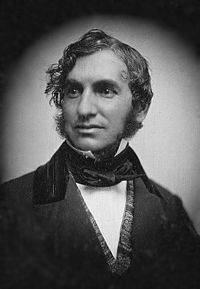
Poetry Saturday—A Psalm Of Life

LongfellowTell me not, in mournful numbers,
   Life is but an empty dream!
For the soul is dead that slumbers,
   And things are not what they seem.

Life is real! Life is earnest!
   And the grave is not its goal;
Dust thou art, to dust returnest,
   Was not spoken of the soul.

Not enjoyment, and not sorrow,
   Is our destined end or way;
But to act, that each to-morrow
   Find us farther than to-day.

Art is long, and Time is fleeting,
   And our hearts, though stout and brave,
Still, like muffled drums, are beating
   Funeral marches to the grave.

In the world’s broad field of battle,
   In the bivouac of Life,
Be not like dumb, driven cattle!
   Be a hero in the strife!

Trust no Future, howe’er pleasant!
   Let the dead Past bury its dead!
Act,— act in the living Present!
   Heart within, and God o’erhead!

Lives of great men all remind us
   We can make our lives sublime,
And, departing, leave behind us
   Footprints on the sands of time;

Footprints, that perhaps another,
   Sailing o’er life’s solemn main,
A forlorn and shipwrecked brother,
   Seeing, shall take heart again.

Let us, then, be up and doing,
   With a heart for any fate;
Still achieving, still pursuing,
   Learn to labor and to wait. —Henry Wadsworth Longfellow