Sun Stand Still (book review)

Sun Stand Still by Steven Furtick is an amazing book!

The title and content of this book is based on an audacious, faith-filled prayer that Joshua offered in the Bible, where God actually allowed the sun to stand still so the Israelites could complete their battle before it got dark. What an amazing prayer: “God, please let the sun stand still”!

Steven leads us through the steps of getting a clear vision of what God wants to accomplish, and then activating that vision through audacious faith. He talks about the hindrances most of us will face in praying a Sun Stand Still prayer, about hanging on to faith during the waiting process, and even how to think about the times the sun goes down.

Through reading this book, I was so convicted that far too many of my prayers are puny, safe prayers; certainly not like the audacious Sun Stand Still prayer that Joshua prayed. But I was also encouraged and energized to begin to change the way I pray.

This book is easy to read and process, but it’s going to be a challenge for me to change my paradigms about praying sun-stand-still prayers.

For anyone who wants to see God do supernatural things in response to audaciously faith-filled prayers, I highly recommend this book as a valuable guide.

I am a Multnomah book reviewer.

Miracle Breaths

In the midst of his despair, Job uttered this amazing truth about God:

He performs wonders that cannot be fathomed, miracles that cannot be counted. When He passes me, I cannot see Him; when He goes by, I cannot perceive Him.

The wonders of God are all around me, His miracles occurring moment by moment; breath by breath.

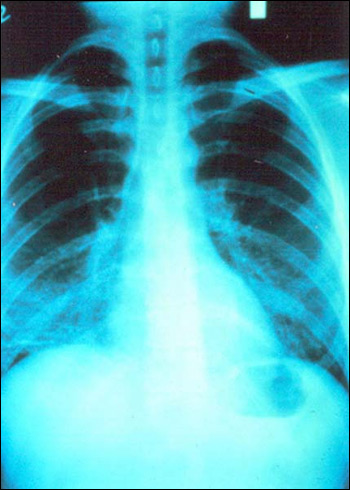
Reflect for a moment on the miracle of your next breath…

  • Your brain coordinates nerves and muscles to aid in breathing in oxygen.
  • Both atriums and ventricles in your heart squeeze in perfect rhythm to circulate blood.
  • The valves between atriums and ventricles open and shut at the precise moment to allow blood to move forward, but not backward.
  • Red blood cells supercharged with hemoglobin bind to freshly inhaled oxygen molecules.
  • More red blood cells carrying carbon dioxide move toward the lungs, and release their passengers at the perfect time and place to be exhaled from your body.
  • Your brain coordinates nerves and muscles to aid in breathing out carbon dioxide.

If I’m exercising, this whole process accelerates. If I’m sleeping, this whole process slows.

This goes on breath by breath by breath throughout your entire life, all without your conscious effort.

It’s a wonder that cannot be fathomed, a miracle that cannot be counted!

This seemingly “little” miracle keeps me alive, yet when was the last time I stopped to praise God for it? I am a man of pitiful praise. I need to be more aware of God’s miracles and wonders around me. I need to become a man of perpetual praise.

Books I Read In 2010

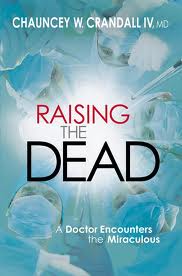
Raising The Dead (book review)

I know, I know, the title of this book sort of sounds like a horror movie, doesn’t it? But Dr. Chauncey Crandall IV’s book Raising The Dead is anything but horrific. In fact, it’s actually more like a love story.

The book opens with Dr. Crandall’s firsthand experience of praying for a patient who has been pronounced dead, and seeing with his own eyes that patient returned to life. This sets the stage for the life journey on which Dr. Crandall and his family are about to embark.

Raising The Dead traces the Crandall family’s journey of spiritual discovery as they battle cancer in the life of one of their twin sons. Throughout this story you will ride the highs as miracles appear for this family, and you will feel the heartbreak as opportunities slip away. Through it all, the Crandall family learns how to draw closer to each other, and – most importantly – closer to God. I know I joked earlier about the book’s title evoking thoughts of a movie, but in actuality, this story would make an incredibly moving film.

If you are praying for a miracle in your life, if you work with people in desperate places, or if you would simply enjoy a moving account of a family seeking so fervently after God, you will enjoy Raising The Dead.

I am a Faith Words book reviewer.

Give It Away To Have More

It seems like we never have enough. Enough time. Enough money. Enough food. Enough friends.

As weird as it sounds—the cure to have enough is to give what you have away.

Imagine a drought … famine … despair. Lakes drying up and wells running dry. The dairy cows aren’t producing as much milk as usual, and the beef cows don’t have as much meat on them as they used to. The wheat fields aren’t growing as abundantly, and the corn is dry and mealy. Men don’t work as much, their wives don’t visit as much, and the kids don’t play as much.

Now, what if you found out you were going to be fortunate enough to host a VIP at your home? How do you prepare a decent meal? How do you think this VIP is going to react to the meager meal set before him? What if someone came from a distance away and brought you 20 loaves of freshly-baked bread?

Do you know how Elisha responded in these settings? He said, “Give it to the people to eat” (2 Kings 4).

Elisha shows up at his guests’ home and says, “Put the large pot on the stove and make some stew.” The large pot?!? Don’t you know we’re in a famine? Don’t you realize that we don’t have very much to spare?

Put the large pot on the stove and make some stew, then serve it to the people to eat,” Elisha said. He didn’t ask for the food to be prepared for himself, but for others. And not just a little stew either—he said make stew in the large pot. It’s interesting to me, too, that the householders had all the ingredients for a stew, but they were trying to stretch it out and make it last longer. They were hoarding what they had.

Then a friend arrives from a distant land bringing Elisha 20 loaves of bread.

Do you know how Elisha responded to this gift? “Give it to the people to eat.” Give it to the people?!? There are over 100 people here and we only have 20 loaves! That seems a bit cruel to just whet people’s appetites with so little; why don’t we just keep it for ourselves.

But Elisha said, “Give it to the people to eat. Not only will they all eat, but there will be leftovers too.”

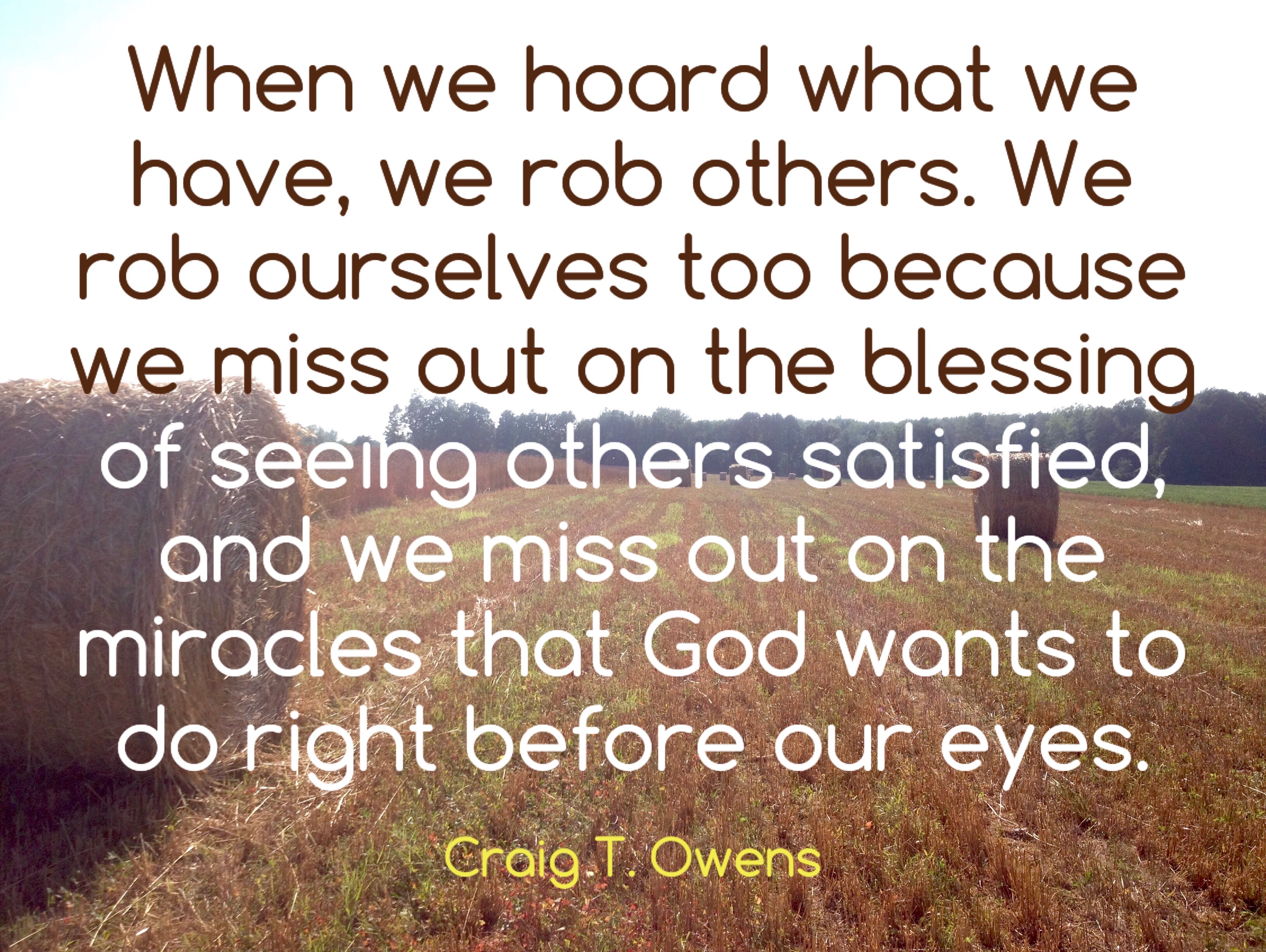
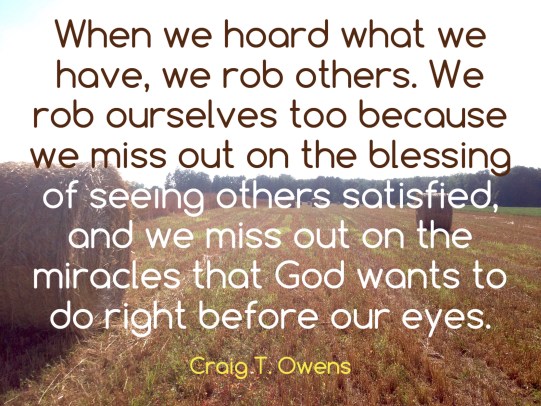
When we hoard what we have, we rob others. We rob ourselves too because we miss out on the blessing of seeing others satisfied, and we miss out on the miracles that God wants to do right before our eyes.

“Why does God bless us with abundance? So we can have enough to live on and then use the rest for all manner of good works that alleviate spiritual and physical misery. Enough for us; abundance for others.” —John Piper

So, when you think about it, don’t you really have enough time to help someone in need?

Don’t you really have enough money to alleviate someone’s suffering?

Don’t you really have enough food to satisfy someone’s hunger?

Don’t you really have enough love to make a new friend?

Don’t rob yourself by hoarding. Don’t buy into the scarcity mindset that looks away from others. The more you give away, the more you will have. Try it, it works!