Pray for peace in Jerusalem. May all who love this city prosper. O Jerusalem, may there be peace within your walls and prosperity in your palaces. For the sake of my family and friends, I will say, “May you have peace.” For the sake of the house of the Lord our God, I will seek what is best for you, O Jerusalem. (Psalm 122:6-9 NLT)
Sunday, October 7, has been designated as a day of prayer for Israel. We will be praying at Calvary Assembly of God, and I hope you and your church will join us in praying this very God-honoring prayer.
You can get more information and sign a prayer resolution by clicking here.
As for all the other events of his reign, and all he did, are they not written down in the annals of the kings of Israel [or] Judah?
This phrase is repeated again and again (almost 40 times!). To me, the question mark at the end of this key phrase is really more like this: These stories are all here for your benefit—are you reading them? are you learning from them?
“Those who do not learn from history are doomed to repeat it.” —George Santayana
But maybe we think, “Those things don’t pertain to me.” Or even, “C’mon, that’s as plain as the nose on your face! I don’t need to study that because everyone knows you shouldn’t act that way!” How about this…
These things happened to them as examples and were written down as warnings for us, on whom the fulfillment of the ages has come. So, if you think you are standing firm[if you think you know it all], be careful that you don’t fall! (1 Corinthians 10:11-12, my paraphrase)
In light of that, here are some questions that would serve us well:
Am I reading these examples?
Am I learning from them?
Am I reviewing my own personal history?
Am I learning from that?
Am I writing down my experiences (both failures and successes) so that others can learn from me?
And maybe the most important introspective question of all: When was the last time I learned something new from something old?
Listen to the podcast of this post by clicking on the player below, and you can also subscribe on Apple, Spotify, or Audible.
Does success come from hard work, or does it have another origin? We can certainly manufacture success by doing some public relations, some spin, some creative promotion. And from the outside, it can look very successful. Someone may even do such a good job manufacturing their success that they begin to believe their own press releases.
But humanly manufactured success rarely lasts.
Consider the case of a man named Adonijah. He was the heir-apparent in Israel. As the oldest living son of the famed King David, Adonijah was the odds-on favorite to be the next king. And so Adonijah began to manufacture a successful transfer of power for himself. He invited all the right people and ignored those who he knew wouldn’t go along with his plan. He set up everything just the way a prince ascending the throne should have it. His followers joined him for a party and began to raise their glasses in a toast: Long live King Adonijah!
Except God—and King David—had other plans. Just as God directed, David had his son Solomon anointed king. When the few followers that were toasting Adonijah heard this, they all bailed on him and ran away. Even Adonijah recognized that something else can trump manufactured success. Here’s what he said:
“As you know, the kingdom was mine. All Israel looked to me as their king. But things changed, and the kingdom has gone to my brother; for it has come to him from the LORD.” (1 Kings 2:15)
“Success has come to him from the Lord.” God’s success always trumps humanly manufactured success.
Manufactured success leads to pride (the kingdom was mine). And pride over-exaggerates our self-worth and obscures reality (all Israel looked to me as their king). God’s success comes to the humble who recognize His lordship and their place in His Kingdom. God’s success lasts.
Although Adonijah eventually recognized this, he didn’t learn from it. In the next scene, he is again trying to manufacture a way to ascend to the throne. And this time he not only loses his position but his life as well.
Here’s what Jesus says: For whoever exalts himself will be humbled [manufactured success], and whoever humbles himself will be exalted [God’s success].
As the Israelites were attempting to settle in the Promised Land, there is a repeated phrase, “They could not drive out the ites.” (The “ites” are people like Canaanites, Hivites, Jebusites, etc.) God told them that they should completely clear the land of the ites, but they didn’t. Instead, they just subjected them to forced labor.
Oops! These small ites eventually became the downfall of Israel. The ites continued to practice their pagan worship observances, and eventually enticed the people of Israel to join them. As a result, Israel was humiliated, defeated, and carried off into captivity.
Can I make a parallel to our lives?
The Promised Land is a Christ-follower’s life in Christ. The ites are our sinful tendencies.
I know the ites are there, but it seems so difficult to remove them: the Bible uses the phrase they were determined to live in that land. So the ites are allowed to coexist, and I determine to use my willpower to make sure they stay contained.
After awhile the ites have behaved themselves. They seem harmless enough. In fact, I’ve gotten so strong, so mature, in my Christian faith, I know I’ll never give in to the pull of the ites again. I can relax a little bit now.
But the ites wait. They bide their time. They find just a crack to slowly worm their way in. Then when I am at a vulnerable time, they strike. The slave becomes the master. The ites retake possession of my life.
Willpower will not work. Only complete elimination will work.
God will help you if you will let Him.
What ites are you trying to hold down by sheer willpower?
What ites do you tolerate now that you didn’t tolerate earlier in your faith walk?
Do you think you are immune to some ites now that you are more mature?
These are all warning markers—danger!—in our history books, written down so that we don’t repeat their mistakes. Our positions in the story are parallel—they at the beginning, we at the end—and we are just as capable of messing it up as they were. Don’t be so naive and self-confident. You’re not exempt. You could fall flat on your face as easily as anyone else. Forget about [willpower]; it’s useless. Cultivate [God-power].
A slight case of the ites is a serious thing! Don’t let it continue!
Just before Joshua’s farewell address to the Israelites, he makes one final comment to sum up the whole campaign that secured Israel’s borders—
Not one of all the Lord’s good promises to the house of Israel failed; every one was fulfilled.
Every one.
You can trust God! You can stand on His promises. They will not fail; they will all be fulfilled.
Dr. Robert Lockyear estimates that there are 7,457 promises of God in the Bible!
Which one are you standing on today? Get into God’s Word, and let His promises get into you. Write them down. Memorize them. Repeat them again and again. Believe that not one of all the Lord’s good promises will fail.
Here are a few you can stand on:
He forgets your forgiven sins.
He will give you abundant life now, and eternal life later.
Nothing can separate you from His love.
All things are working together for the good for those who love God.
He will never leave or forsake you.
He will continue to develop the best in you.
He will never place you in a situation where you cannot stand.
“We take away from this most precious promise, and, by refusing to take it in its fullness lose the fullness of its application and power. Then we limit God’s power to keep: we look at our frailty more than His omnipotence. Where is the line to be drawn, beyond which He is not ‘able’? Why should we pare down the promises of God to the level of what we have hitherto experienced of what God is ‘able to do,’ or even what we have thought He might be able to do for us? Why not receive God’s promises, nothing doubting, just as they stand?” —Frances Ridley Havergal
Listen to the podcast of this post by clicking on the player below, and you can also subscribe on Apple, Spotify, or Audible.
Disclaimer: My aggregate soap opera viewing time for my entire life is about 52 minutes, but I still think I know what I’m talking about <grin!>.
Soap operas are usually pretty predictable. If you’ve watched them for even a short time it’s not hard to figure out who’s who and what’s what. In fact, the plot lines are typically so predictable that you can stop watching a particular soap opera for months—or even years—and when you tune in again it will only take a day or so to once again know who’s who and what’s what.
One of the main reasons for this is the simplicity of the plot lines. There are three types of characters: good guys, bad guys, and wishy-washyguys that are swayed by the good guys or bad guys.
We applaud when the good guys win and the bad guys get what’s coming to them. We groan when the good guys get unfairly treated and the bad guys seem to get away with their badness. If we could give advice to the soap opera characters it would be pretty straightforward: “If you’re a good guy, we’ll cheer for you!”
But here’s the problem: it’s becoming harder and harder to tell the difference between the good guys and bad guys. It seems like more of them fall into the wishy-washy category. Over time, the characters have become mostly good but can be swayed to take revenge or cut corners. Or they’re mostly bad but still have a soft place in their heart to help the little orphan child.
There are very few really good guys left.
There’s a drift from good to mostly good. But mostly good is only one step away from mostly bad. And only one more step from mostly bad to just-plain-bad.
I’ve been reading through the soap opera history of the kings of Israel and Judah. Like our modern soap operas there are three types of kings: (a) the good kings did what was right in God’s eyes; (b) the bad kings did what was evil in the God’s eyes; and (c) the wishy-washy kings usually did what was right but had a “however” attached to their reign.
Unfortunately, most of the good kings tended to drift from good to mostly good, and eventually to mostly bad. The drift continued each generation toward mostly bad until God was hard-pressed to find any king who wasn’t bad. How sad: God’s blessing was right there for any good king to claim, but they kept drifting away!
Drifting happens so easily, which is why we have to be so diligent.
You’re blessed when you stay on course, walking steadily on the road revealed by GOD. You’re blessed when you follow His directions, doing your best to find Him. That’s right—you don’t go off on your own; you walk straight along the road He set. You, GOD, prescribed the right way to live; now You expect us to live it. Oh, that my steps might be steady, keeping to the course You set; then I’d never have any regrets in comparing my life with Your counsel. I thank You for speaking straight from Your heart; I learn the pattern of Your righteous ways. (Psalm 119:1-7, The Message paraphrase)
Just like those soap opera characters or soap opera kings, we can get some pretty straightforward advice from the Bible: “If you stay on course, walk straight along the road God set for you, He will bless your life.”
Don’t drift.
Don’t settle for mostly good.
Don’t assume you’re doing right in God’s eyes; KNOW that you’re doing right in God’s eyesby following His Word.
Gustave Dore’s painting of Deborah’s song of triumph
Do you remember the old Enjoli perfume commercial? It was a classic! What a woman—she could make breakfast, pass out the kisses, and still get to work before nine in the morning. She could work 9-5, bring home the bacon, fry it up in a pan, and never let her man forget he was a man.
Wow! What a woman!
I was reading Judges 4-5 in the Bible this morning and was reminded of this commercial when I read about Deborah—the Bible’s version of the Enjoli woman.
Deborah was a devoted wife, a first-class mother, and a full-time prophetess. People from all over Israel came to her for godly advice for their domestic problems. There were national problems too—King Jabin and his general Sisera, with his 900 iron chariots, held an iron grip over all of Israel. Things were so bad that the Israelites stayed off the main roads, and life in their villages as they knew it ceased. Until Israel’s Enjoli woman came along.
Village life in Israel ceased,
ceased until I, Deborah, arose,
arose a mother in Israel. (Judges 5:7)
Wow! What a woman!
Deborah sent a message to a warlord named Barak, “God commands you to gather an army and head into the hills of Mount Tabor. God will lure Sisera into the Kishon River valley and He Himself will fight Sisera’s armies ahead of you.”
Barak is a man who has enough clout with just two tribes of Israel, that at one call 10,000 warriors join him. Barak is a man who has just been told that God Himself is going to fight Sisera alongside Barak’s forces.
But Barak is a coward!
A man with everything going for him says to Deborah, “Only if you go with me, I will go; but if you don’t go with me, I won’t go.”
All of Israel is forever grateful for that Enjoli woman who went with the army, and led them in an incredible victory.
Wow! What a woman!
I am praying that God will raise up more godly women who will boldly speak God’s word to fearful people today.



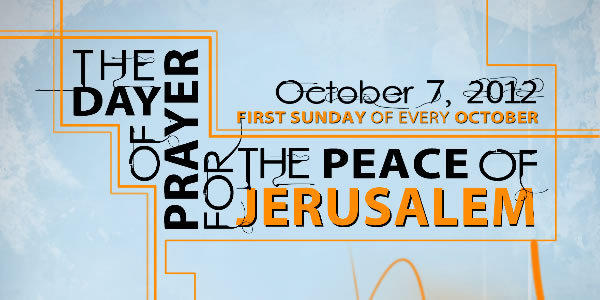 In addition to praying for the elections in the United States, the Bible also encourages us to pray for the peace of Israel—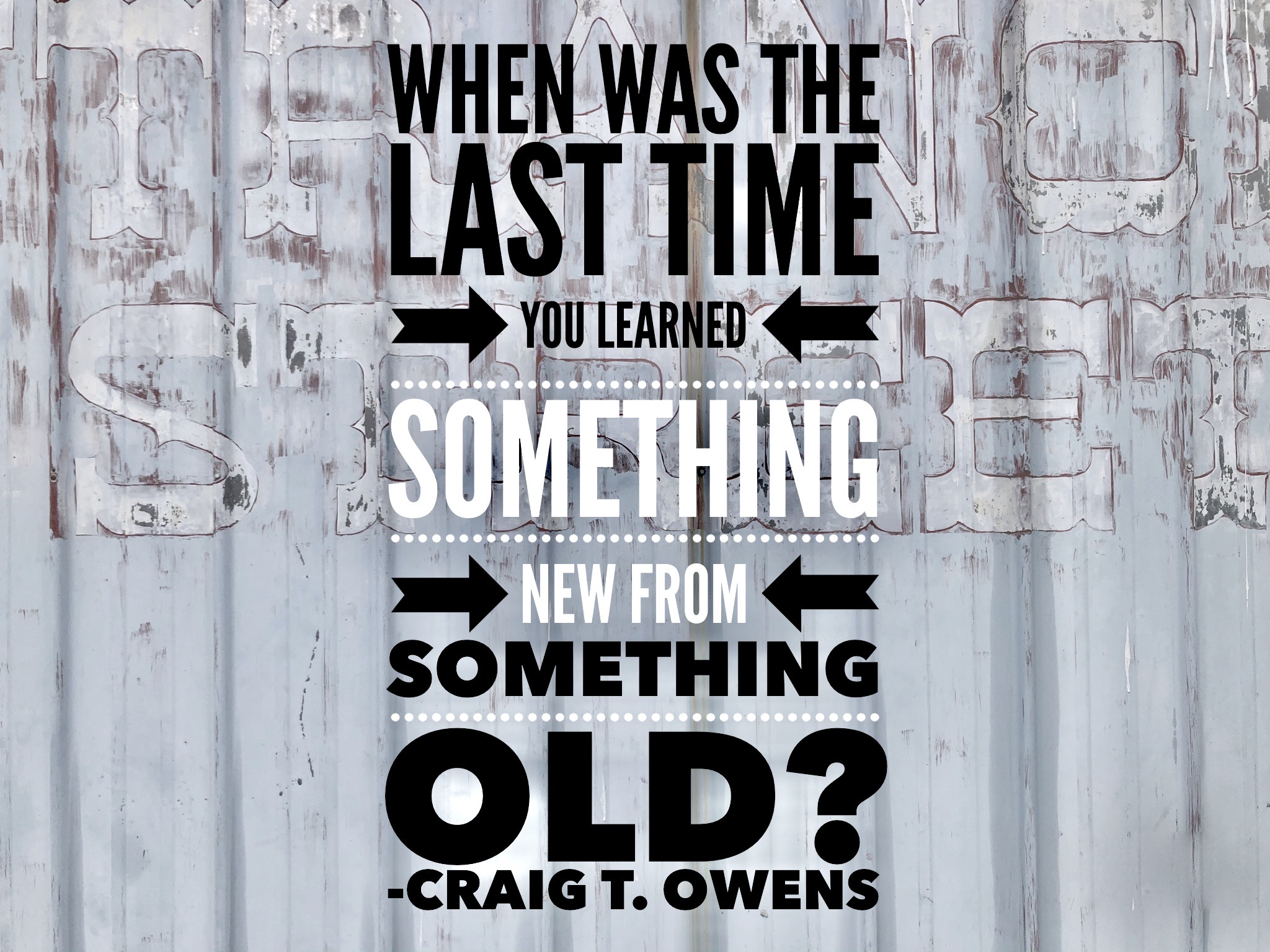




 Craig T. Owens