Sidelined (book review)

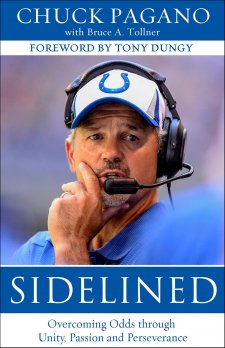
SidelinedEvery once in awhile I come across a book that is hard to put down. Sidelined by Chuck Pagano, the head coach of the NFL’s Indianapolis Colts, is just such a book.

Before I lose anyone who says, “Football? Not interested,” let me assure you that this is not a football book. This is a great story of near-tragedy and triumph that happens to have a football coach as its main character. This is a book about family, and faith, and teamwork, and pulling together, and overcoming. It’s a love story with a happy ending. It’s a great book!

In a nutshell, Chuck Pagano is hired as the head coach of the Colts, the first time in his career he has gotten a shot at being a head coach. Just a couple of games into his very first season, he is diagnosed with leukemia and sees his coaching responsibilities immediately halted. He enters into a life-and-death struggle with cancer, and ultimately beats it. But the real triumph of the story is the way his diagnosis pulled together a whole city, and even other NFL cities, to raise awareness of this dreaded disease.

Sidelined doesn’t really have an ending, because Coach Pagano’s career is still ongoing, and so is the fight against leukemia. After reading this book, I’m not only cheering for Coach, but I’m also cheering on those in the fight of their lives against cancer as well as those searching for a cure for this disease.

I am a Thomas Nelson book reviewer.

Links & Quotes

link quote

Some good reading (and watching) from today…

[INFOGRAPHIC] Look how devastating sex trafficking is! What you can you do to stop this horror?

At the current rate, with the mass exodus which is being witnessed by the world, the number of Christians left in the Middle East will be slim to none.” Read about Jewish and Christian extinction in Iraq.

Yeah, this isn’t suspicious at all (he said sarcastically): IRS destroys the hard drive that contained the potentially incriminating emails.

[VIDEO] John Maxwell encourages us to enrich others’ lives.

[VIDEO] This is so sweet! The way this Dad goes all out for his daughter with mitochondrial disease is the essence of true fatherhood.

“Do we have to wonder why our kids today lack values? Should we wonder why their ethics are so fuzzy that three-fourths of them cheat on tests to get through college? They are fuzzy because we’ve been fuzzy. Thanks, Derek, for your clarity. Your team will be better adults for your example.” Read this story Tim Elmore relates about a coach who lost a title but won huge credibility.

A challenge to purity: 12 Questions To Ask Before You Watch Game Of Thrones.

A Few More “Generation iY” Thoughts

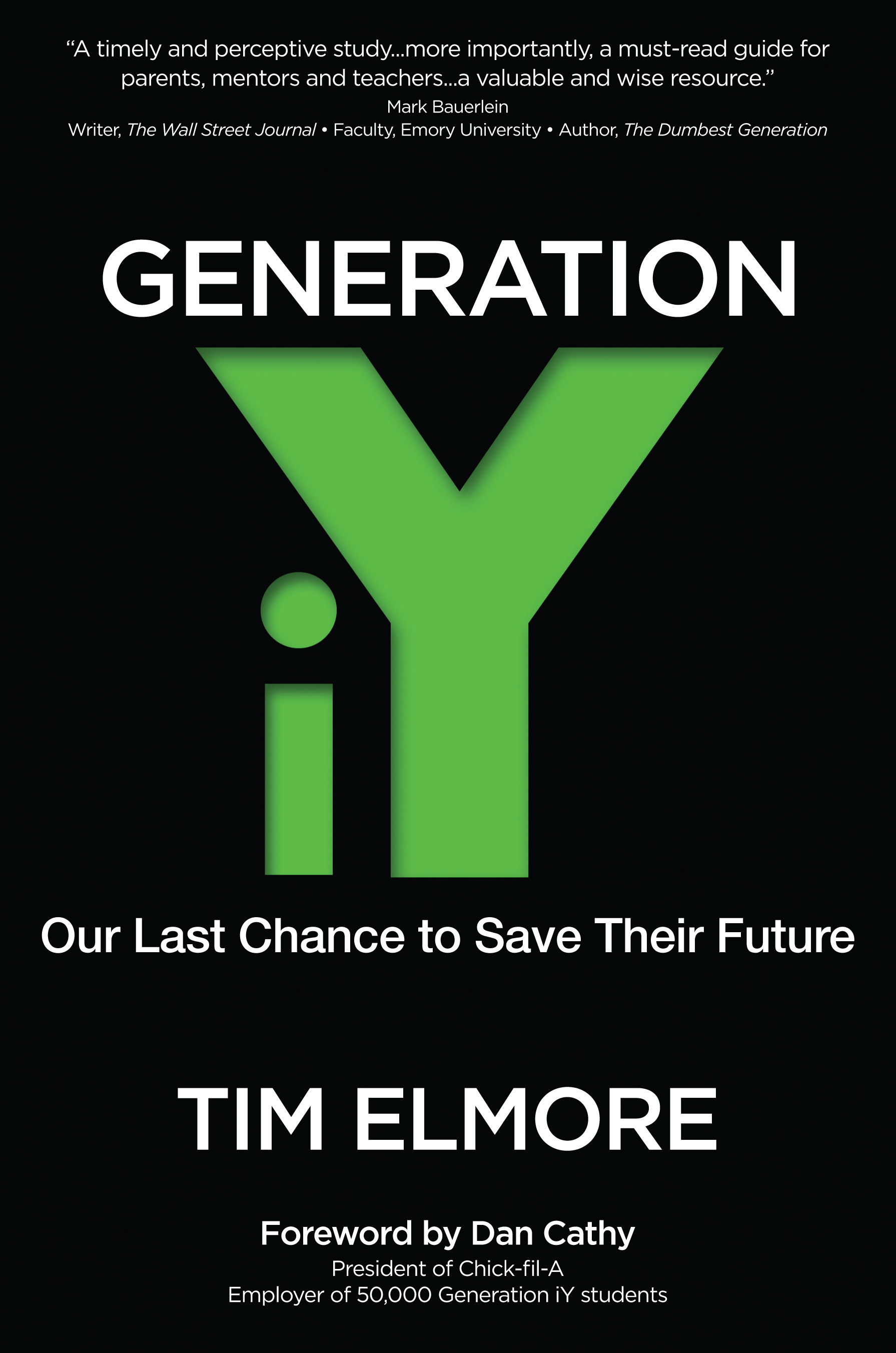
Generation iYIn a recently-released last chapter to his ground-breaking book Generation iY, Tim Elmore added material that made me realize more than ever that this book is a must read for anyone who works with youth. You can read my book review by clicking here, and you can read some other quotes I shared from this chapter by clicking here.

Just a few additional thoughts Dr. Elmore shared in this chapter that I wanted to pass along to you—

“We did a better job preventing, presuming and protecting then we did preparing.” 

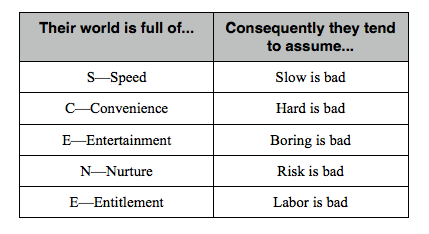
Gen iY assumptions

“Examine the right-hand column for a moment. Notice the words slow, hard, boring, risk and labor. Are those not the very ingredients that build a mature adult? When a task is hard and it moves slowly, it builds patience and work ethic in me. When things are boring, it forces my mind to be creative on its own. When I have to take risks, I learn that failure is not final or fatal, and that it’s only when I risk failure that I feel the satisfaction of true success. And when I learn to embrace labor, using my strengths to add value to others, I learned the value of service.”

“Wherever you see a lacking virtue, there’s likely an activity you can do to build it, just as one would lift weights to improve physical muscle strength. … We can no longer assume those emotional muscles will develop naturally in kids. We must initiate a plan to build them. Will likely need to discuss this issue over with them, and agree to balance the virtual with the genuine; the screen with the real. In short: 

  • More time interacting with the real people. 
  • More time outside in active movement. 
  • More time working and waiting on answers. 
  • More time initiating and less time reacting.” 

“It’s important to strike a balance between utilizing the conveniences of modern technology and building the life skills that require no technology.”


Generation iY (one more chapter)

Generation iYThree years ago I posted this—

I’m going to make a statement about Dr. Tim Elmore’s book Generation iY that I rarely make: This book is a MUST READ for parents and anyone who works with youth!

Yes, a must read. The subtitle of this book is not over-dramatized, but really is an understated truth: Our last chance to save their future.

Recently Tim Elmore released in ebook format a final chapter to Generation iY. After reading this I was just as convinced that anyone who works with our youth must read this book (read my full book review by clicking here). Here are a few quotes from this chapter.

“Historical trends suggest that every time there is a population explosion among the youth (between 15-29 years old), violence follows. Sociologist Gunnar Heinson reported that countries are vulnerable when the youth population is 30 percent or higher.” 

“Our assessment of 8,500 high school and college students clearly reveals a drop in:

  • Resilience—we removed the ability to bounce back after a failure.
  • Empathy—we have pushed them toward self-expansion.
  • Work ethic—their short attention spans make the daily grind a turn-off.
  • Stamina—sticking with the task when the novelty’s going is difficult.
  • Ambition—the internal drive to succeed is replaced by external stimuli.
  • Self-awareness—few adults have been honest about their blind spots.”

“Condoleezza Rice and Joel Klein released a report recently saying that the state of our youth is now an issue of national security. Seventy-five percent of America’s youth are not even fit for the military due to obesity, criminal records or failure to graduate high school.”

  1. As technology goes up, empathy goes down. We can find a direct parallel between screen time and the lack of empathy in adolescence. It makes sense, doesn’t it? A text that says ‘I am having a bad day’ doesn’t elicit the same empathy as being face to face with a person in tears, in the midst of a crisis. It seems virtual, so our empathy is virtual. Kids often laugh at what they cried about a decade ago.
  2. As information expands, attention spans diminish. Resilience, patience, and attention spans have dropped thanks to today’s quick, convenient, and saturated world. When overwhelmed, we surrender readily. Herbert Simon said it best: “A wealth of information creates a poverty of attention.”
  3. As options broaden, long-term commitment shrinks.
  4. As life speeds up, patience and personal discipline drop.
  5. As external stimulation increases, internal motivation decreases. Experiments among students show that external rewards actually reduce internal drive and ambition. Kids work for the reward, not the satisfaction of the work. The external (and possibly artificial and superficial) reduces incentive and, consequently, self-sufficiency.
  6. As consequences for failure diminish, so does the value of success.
  7. As virtual connections climb, emotional intelligence declines.
  8. As free content swells, so does our sense of entitlement.


Artificial Maturity—How To NOT Break Up With Your Girlfriend

Artificial Maturity—How To NOT Get A Job

10 Quotes From “Artificial Maturity”

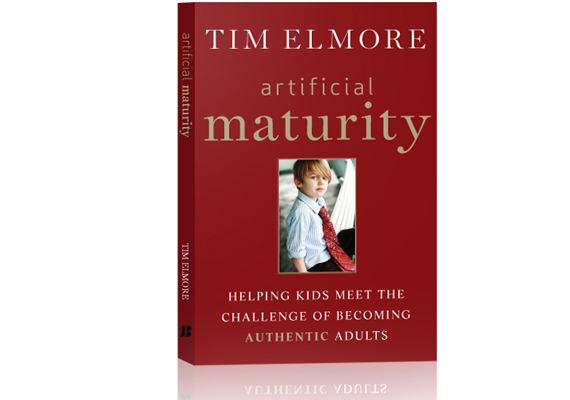
The other day when I posted my review of Artificial Maturity by Dr. Tim Elmore, I said that for anyone working with children, tweens, teens, or young adults this book is a must-read. I don’t say that about very many books, but it is definitely true of this one (you can read my full review here).

Let me share with you ten of my favorite quotes from this book. Unless otherwise noted, all of the quotes are from Dr. Elmore…

“In short, the artificial maturity dilemma can be described this way: (1) Children are overexposed to information, far earlier than they’re ready. (2) Children are underexposed to real-life experiences far later than they’re ready.”

“Steps to take to build authentic maturity:

  1. Provide autonomy and responsibility simultaneously.
  2. Provide information and accountability simultaneously.
  3. Provide experiences to accompany their technology-savvy lifestyles.
  4. Provide community service opportunities to balance their self-service time.”

“For the most part, adults have failed to build true ‘life skills’ in kids. We haven’t helped them self-regulate and make decisions about concerns that matter. Students’ busy schedules often aren’t all that meaningful, and young people spiral downward into despair over relatively trivial issues. Their days are full of artificial activities with artificial consequences, resulting in artificial maturity. The stress is real, but it is often over things that don’t really matter, and it isn’t building mature people.”

“We must be parents, not pals. We must be coaches, not coddlers. And we must lead them, not just lecture them.”

“Analysts say there are increasing signs that a lack of independence fuels stress, anxiety, and depression among young people. …Kids’ early lives today are too full of information and structure, and too empty of innocence and the freedom to play and explore. But by adolescence, it’s almost the opposite. It’s as though they experience a flip-flop. Their lives are too full of freedom, and too empty of accountability.”

“This appears to be a paradoxical trend—[adolescents] expressing a decline in readiness to actually ‘be’ adults that is proportionate to their desire to leave home. …They want to be consumers but not necessarily contributors. …Our job is to prepare the child for the path, not the path for the child.”

“The fact is, kids—all kids—need adults to lead them well. In our mad obsession to remain cool and on the cutting edge of everything, adults have surrendered what may be their most important responsibility: to provide role models to the next generation. We might win at the game of being liked, but we lose at the game of leading well.”

“For our teens, we’ve defined nurturance largely in terms of the things we can do for them, the stuff we can buy them, and the experiences and opportunities we can provide. In reality, what most teens need is neither more stuff, nor more lessons, nor do most teens even need more tender, loving care or quality time. While young children need a great deal of parental nurturance in the form or direct assistance geared toward meeting their needs, adolescents need something different. Unlike children, teens’ bodies and brains most need us to nurture and develop capacities to function on their own in this world. This means expecting things of them, not just giving things to them.” —Drs. Joseph & Claudia Worrell

“Five parental decisions:

  • Decide that you will build a bridge of relationship that can bear the weight of hard truth.
  • Decide that it’s more important for you to have their respect than for them to like you.
  • Decide that it’s more important for you to pass on essential values than to just have fun.
  • Decide that it’s more important for them to be ready for the future than to be comfortable.
  • Decide to pass on the principles (values) you wish you’d known earlier in life.”

“As adults, we have done a poor job in getting this generation of kids ready for life. If they flounder, it is because we’ve focused on preparing the path for the children instead of the children for the path. I believe in this next generation. These kids are great, and they’re capable of much more than we’ve expected. We have not led them well. We’ve allowed them to mature artificially by default. We’re protected them instead of preparing them for life as adults. It’s time we get them ready to lead the way into the future.”

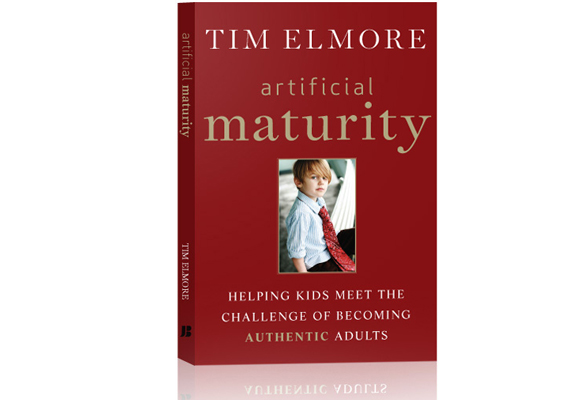
Artificial Maturity (book review)

When I posted my review of Tim Elmore’s previous book Generation iY, I said that book earned a rare “must read” rating from me. Whether you read that book or not, Artificial Maturity has earned the coveted must-read rating again!

If Generation iY described who this current youth generation is, Artificial Maturity describes how to help these youth achieve genuine maturity. Here’s how Dr. Elmore sets the stage for this book from the very first page:

“…I believe in this generation like none before. I believe they have the potential to be the greatest generation—a population Warren Bennis calls the “Crucible Generation.” He and many others believe these young people may just be the ones who transform society globally and restore democracy and goodwill.

I believe this with one caveat. I predict all this is possible if we, the adults, will rethink the way we parent, lead, teach, coach, pastor, and manage them. It’s up to us what kinds of adults our kids will become. So far, many of them are a part of a leaderless generation. The adults have done more protecting than preparing. Some moms and dads want to be pals rather than parents. And many adults are just overwhelmed with the notion of leading kids today—and they surrender their role as leaders.”

So this is not a book that tells you how to change kids, but how we as adults must change.

With persuasive evidence, scientific studies, personal observations, and years of hands-on experience, Dr. Elmore so accurately details how we as parents have contributed to our kids becoming artificially mature. In other words, they know lots of things, but they don’t know how to effectively apply that knowledge to be productive at work, school, and in relationships. 

I, too, share Dr. Elmore’s optimism about this generation. But if I want to see my kids—and other young people with whom I interact—excel and mature, I have to look at myself in the mirror. This generation can’t succeed if we continue to parent, and teach, and pastor, and manage as we have been doing.

I cannot urge pastors, youth pastors, parents, teachers, principals, coaches, and employers to read Artificial Maturity right away! This generation needs us to help them soar!

I am a Jossey-Bass book reviewer.

UPDATE: Read some of my favorite quotes from Artificial Maturity by clicking here.

Life Lessons From College Football

Tebow & Meyer

Football is hands-down my favorite sport. I love watching coaches strategizing with their teams, and players executing so precisely the plays they have practiced over and over again. I love the emotional highs and lows I feel after great plays for and against my team.

Over the past couple of years, I have thoroughly enjoyed watching three premier college quarterbacks that are not only great players but great men too: Colt McCoy at Texas, Sam Bradford at Oklahoma, and Tim Tebow at Florida.

Saturday, in his game against Mississippi State, Tim Tebow had a rough outing. Twice he was intercepted. And if that wasn’t bad enough, both of the interceptions were returned for touchdowns. Ouch!

But then after the game, his coach Urban Meyer made an amazing statement. When asked about the interceptions he said, “I put Tim in a bad position. He shouldn’t have had to make those throws.”

This really got me thinking about the coaching I do with my own kids. Do I put them in a position where they can be successful? Do I put them in places where their strengths can come into play? Do I try my best to keep them out of positions where their weaknesses could overwhelm their strengths?

Obviously, Urban Meyer did not throw those interceptions; Tim Tebow did. But Coach Meyer took responsibility, saying, “As a coach, it’s my job to put my players in a place to be successful.” This is what I’m striving for: not yelling at my kids for their “interceptions” but looking first at my coaching skills. I want to set up my kids to be winners.