Gettin’ Messy

In any culture where it exists, leprosy makes its victim an outcast. People might feel bad for the afflicted, but they quickly look away. No one invites the leper to dinner, few even go to visit the leper. Shunned, closeted away, quickly forgotten.

In every culture where it exists today, pain and suffering are treated almost like leprosy. We’ll talk about the problem, pray for the victims, form organizations to address the problem, and even give money to address the issue. But few people do more.

We feel safe at a distance.

We feel sanitized if we don’t have to touch the hurting.

We feel we’ve done our part if we throw a few dollars at it.

But not Jesus. He handled the hurting … literally.

A man with leprosy came and knelt in front of Jesus. He said, “Lord, You have the power to make me well, if only You wanted to.” Jesus put His hand on the man and said, “I want to! Now you are well.” At once the man’s leprosy disappeared.

Jesus put His hand on the man. He didn’t just pray. He didn’t give money. He didn’t organize a rally to address the problem of leprosy. He touched a hurting man.

He got messy.

He conveyed love to a hurting man like nothing else could have.

Robert Shuller wisely noted, “Being a Christian is offering yourself to Him. Your mind for Christ to think through; your heart for Christ to love through; your lips for Christ to speak through; your hands for Christ to touch through.”

What about it? Are you ready to convey the love of Christ by touching—literally—people’s problems? Nothing says “I love you” like the human touch.

A Slight Case Of The “Ites”

As the Israelites were attempting to settle in the Promised Land, there is a repeated phrase, “They could not drive out the ites.” (The “ites” are people like Canaanites, Hivites, Jebusites, etc.) God told them that they should completely clear the land of the ites, but they didn’t. Instead, they just subjected them to forced labor.

Oops! These small ites eventually became the downfall of Israel. The ites continued to practice their pagan worship observances, and eventually enticed the people of Israel to join them. As a result, Israel was humiliated, defeated, and carried off into captivity.

Can I make a parallel to our lives?

The Promised Land is a Christ-follower’s life in Christ. The ites are our sinful tendencies.

I know the ites are there, but it seems so difficult to remove them: the Bible uses the phrase they were determined to live in that land. So the ites are allowed to coexist, and I determine to use my willpower to make sure they stay contained.

After awhile the ites have behaved themselves. They seem harmless enough. In fact, I’ve gotten so strong, so mature, in my Christian faith, I know I’ll never give in to the pull of the ites again. I can relax a little bit now.

But the ites wait. They bide their time. They find just a crack to slowly worm their way in. Then when I am at a vulnerable time, they strike. The slave becomes the master. The ites retake possession of my life.

Willpower will not work. Only complete elimination will work.

God will help you if you will let Him.

  • What ites are you trying to hold down by sheer willpower?
  • What ites do you tolerate now that you didn’t tolerate earlier in your faith walk?
  • Do you think you are immune to some ites now that you are more mature?

The Bible’s warning is loud and clear:

These are all warning markers—danger!—in our history books, written down so that we don’t repeat their mistakes. Our positions in the story are parallel—they at the beginning, we at the end—and we are just as capable of messing it up as they were. Don’t be so naive and self-confident. You’re not exempt. You could fall flat on your face as easily as anyone else. Forget about [willpower]; it’s useless. Cultivate [God-power].

A slight case of the ites is a serious thing! Don’t let it continue!

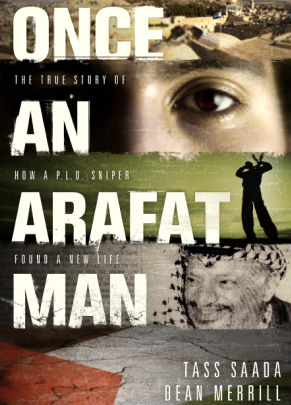
Once An Arafat Man (book review)

Tass Saada’s story reads like a screenplay for an upcoming movie! Once An Arafat Man is such a page-turner, that I could hardly put it down.

In a nutshell, Tass’s story is this: He was born in the Gaza Strip, but his family had to relocate to Saudi Arabia due to the turbulence in Gaza. The Saudi government, like many Arabic governments, talked about supporting the Palestinians, but they were more concerned about self-preservation; as a result, it was just talk and very little action. Tass became a disgruntled, disillusioned young man. As a  teenager, he had a chance to meet Yasser Arafat in Qatar and was enthralled with this dynamic Palestinian leader. So mesmerized, in fact, that Tass ran away from home to join Fatah with Arafat.

Once he was accepted into the Palestinian Liberation Organization (PLO), Tass was trained as a sniper. His mission: assassinate Jewish targets. He even served as Arafat’s personal chauffeur. But once again the unstable political and military conditions caused Fatah to pull out of Jordan and eventually Tass ended up fleeing to the United States of America.

Once in the US, he didn’t want to be forced to leave, so he married an American woman to get his green card. While working on his career, something Tass never expected happened: he became a Christian. As his friend Charlie was sharing with him from the Bible, Tass wrote:

Before I knew it, I was on my knees. I didn’t consciously decide to kneel; it just happened. I lost all awareness that Charlie was even in the room. A light came into my field of vision–a talking light….

The light said in an audible voice, “I am the way and the truth and the life. No one comes to the Father except through Me….”

In this indescribable moment, I knew something else: the triune God existed—Father, Son, and Holy Spirit. I knew that God loved me. “Oh, Jesus, come into my life!” I blurted out. “Forgive me and be my Lord and Savior!” I felt as if a heavy load went flying off my shoulders. A sense of peace and joy rushed into my heart. The presence of God was so real it seemed I could almost reach out and touch it.

Thus began a new journey for Tass, one of reconciliation. His wife and children eventually accepted Jesus Christ as their personal Savior too. But Tass’s family back in Qatar is a different story: they denounced him as an infidel

Tass felt compelled to take the good news of Jesus back to his family and to the very leader he used to work for: Yassar Arafat. The story of how God opened doors of opportunity, and provided supernatural protection, and allowed for reconciliation to occur is amazing.

Read this book. You will be blessed by this incredible story!

I’m a Tyndale book reviewer.

Serious Fun

I believe of all people, Christ-followers should be able to do the most serious of work, but those who are in love with Jesus ought to be able to have the most fun too, as they enjoy the fullness of that relationship.

We proved this yesterday.

My loving congregation donated food for us to bless some needy people with Thanksgiving groceries. We then contacted our local elementary school to ask if they could recommend a couple of needy families to us. They did, but “needy” might be a major understatement. It was a joy to be able to deliver all of the Thanksgiving fixin’s to them, but heart-breaking to see the conditions in which they were living. I pray that this simple act of compassion will help open a door for further ministry opportunities.

Then we met with our Impact youth group for some serious fun (pictures are here). We had a carnival-like atmosphere with wild-and-messy games going on everywhere. I loved seeing our students dive into (sometimes literally) these fun events. It wasn’t just the students: Betsy challenged me to a pie-eating contest. And let’s just say, apparently I have a bigger mouth than she does!

It’s great to address the serious conditions that surround us, and we should do so with love and hope. And it’s just as wonderful to have some fun. I believe that people who get stuck on either extreme are missing out on the fullness of a Christ-centered life.

I hope you have a seriously fun Thanksgiving celebration. And not just on Thursday this week, but all year long.

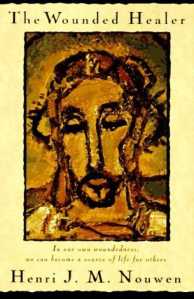
The Wounded Healer (book review)

Wounded Healer, The

“For the minister is called to recognize the sufferings of his time in his own heart and make that recognition the starting point of his service. Whether he tries to enter into a dislocated world, relate to a convulsive generation, or speak to a dying man, his service will not be perceived as authentic unless it comes from a heart wounded by the suffering about which he speaks” (from the introduction).

Henri Nouwen was a man ahead of his time. Although this book was written in the early 1970s, it sounds so applicable for today. The Wounded Healer challenged me as a Christian leader to step into the pain-filled lives as others in a more authentic way. Nouwen argues that healers must first be personally acquainted with the same type of pain that other wounded people are experiencing.

Isaiah 53 says that Christ “was wounded for our transgressions, He was bruised for our guilt and iniquities; the chastisement [needful to obtain] peace and well-being for us was upon Him, and with the stripes [that wounded] Him we are healed and made whole.” Because Jesus was wounded in the same way we are wounded, He knows how to help (see Hebrews 2:18).

One closing quote from Nouwen: “If there is any posture that disturbs a suffering man or woman, it is aloofness. … No one can help anyone without becoming involved, without entering with his whole person into the painful situations, without taking the risk of become hurt, wounded or even destroyed in the process. The beginning and the end of Christian leadership is to give your life for others.”

This book reconfirmed my desire to—like Jesus—be a wounded healer for others.

Limbo

According to the dictionary, limbo has some unusual definitions:

  • a region on the border of hell or heaven;
  • an intermediate, transitional, or midway state or place;
  • a place or state of imprisonment or confinement.

Have you ever felt you were in limbo? I have, and it does sometimes feel like a place of imprisonment. As a follower of Jesus Christ, I’ve been wondering why I should ever be in limbo. And I have come to the conclusion that it’s because I’m in such a hurry to arrive someplace.

We get so anxious to get somewhere—anywhere—and while we are between two points we feel the transitional state very acutely, and it often feels like a prison.

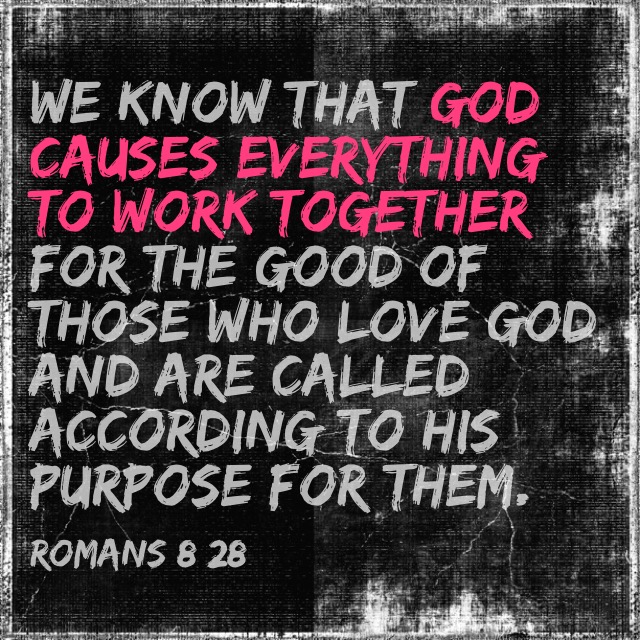
But I think God is more interested in our development process than He is in our destination. There is Bible verse quoted often when people are in limbo: “And we know that in all things God works for the good of those who love Him…” (Romans 8:28). But the verb tense here is not a destination verb but a process verb. It’s better stated, “And we know that in all things God is working for the good of those who love Him.”

Look at the differences—

  • “I really thought I was supposed to get that job” [destination focus] versus “Here’s what God taught me while I was pursuing that job” [process focus].
  • “What am I supposed to do next, God?” [destination focus] versus “What are you teaching me while I wait on You?” [process focus]
  • “Why did it turn out this way?” [destination focus] versus “Here’s how I am growing through this time” [process focus]

Limbo isn’t fun (or as one of my friends said on Facebook this morning, “A life in limbo sucks!”). But it is in the limbo times—the times of process—that we learn the most about all of the good that God is working in us and through us.

If you feel like you’re in limbo today, take your eyes off a destination, and look at the process. Believe me, this is a lesson I am learning right now—big time! What limbo lessons have you learned—or should I say, what limbo lessons are you learning right now?