Learning To See Creatively (book review)

Learning To See CreativelyI thoroughly enjoy photography. Looking at the way a photographer creatively captures his image has always fascinated me, and I’ll never forget the thrill of the first time I developed my own roll of film from my 35mm SLR camera. I’m still learning this art, and Bryan Peterson’s book Learning To See Creatively is a wonderful textbook to help me grow.

Although, it’s really more than just a textbook. The way Bryan walks the reader through the process of seeing the shot, setting up the shot, and processing the shot feels like I was taking a class with him, allowing me to look through his viewfinder with him. This book is chockfull of pictures that are detailed in their account of which lens he used, at what settings, and what point of attraction caught his attention.

God has given us an amazing camera in the eyes He created for us. Learning To See Creatively allows us to capture the way we are seeing the world to share with those around us. What a gift this is! Anyone interested in upping their photographic game will enjoy this book.

I am a Random House book reviewer.

9 More Quotes From “Keep Your Love On!”

Keep Your Love OnKeep Your Love On! is an outstanding resource for anyone who wants to repair or strengthen a relationship. As I said in my book review, I think pastors and marriage counselors should definitely get a copy of this book. Here are a few more quotes.

“If you want to preserve relationships, then you must learn to respond instead of react to fear and pain. Responding does not come naturally. You can react without thinking, but you cannot respond without training your mind to think, your will to choose, and your body to obey. … Powerful people are not slaves to their instincts. Powerful people can respond with love in the face of pain and fear. This ‘response-ability’ is essential to building healthy relationships.”

“If you were raised with a powerless, fear-driven mindset based on the belief that you can control people and they can control you, then you will naturally perceive God as a controlling Punisher. You will take the laws of the Old Testament—all the verses and stories about wrath, judgment, and the fear of the Lord—and conclude, ‘See, God wants to control us, and we need to be controlled.’ … The problem is that the Bible doesn’t show us a God Who is pursuing the goal of distance between Himself and a bunch of scary sinners. Instead, the Bible reveals a God Who is relentlessly closing that distance and paying the ultimate price to repair the disconnection we created in our relationship.”

“Fear and love are enemies. They come from two opposing kingdoms. Fear comes from the devil, who would like nothing more than to keep you permanently disconnected and isolated. Love comes from God, Who is always working to heal and restore your connection with Him and other people and bring you into healthy, life-giving relationships. … When Paul told Timothy that the spirit of love is also the spirit of power and a sound mind, he implied that its opposite, the spirit of fear, is the spirit of powerlessness and a weak, divided mind. When you grow up partnering with the spirit of fear, as most of us do, you learn to simply hand over your brain and your power, letting fear take control. But as soon as you decide to partner with the spirit of love, you have to think and make powerful choices.”

“Do you want to win the battle between fear and love in your relationships? You can start by making these two fundamental commitments: (1) It’s my job to control myself. I do not get to control other people. (2) My number-one goal and priority in relationships is building and protecting connection.”

“Each display of love, no matter how seemingly small, is a powerful act of spiritual warfare that removes anxiety from the environment, replaces it with freedom and safety, and invites each person to bring his or her best self forward in the relationship.”

“True honor is the practice of two powerful people putting one another before themselves, empowering one another, working together to meet one another’s needs, and adjusting as necessary in order to move together toward the shared goal of the relationship.”

“In order for us to practice self-control, we must have a goal. We must have something we are saying ‘Yes’ to, which necessarily comes with things that we must say ‘No’ to. … When we find ourselves with more freedom than self-control, then that freedom erodes the quality of our life and friendships. Self-control is what allows us to manage increasing levels of freedom in our life and relationships.”

“When you put a person in the position of God, you set him or her up for failure. … Mysterious as it is, making ourselves accountable to God and putting ourselves under His authority is the only way we can become powerful and learn to govern ourselves. … When two people are consistently pursuing a connection with the Perfect One, that connection will set the pace for their connection with each other. They will be learning to love from Love Himself, which can only bring the best into their relationship.”

“The faster you can get to the question, ‘What do you need?’ the faster you can start doing something about it. Unfortunately, because many people are not used to being listened to, they don’t know what they need, or how to communicate it. They think they have to present a solid case for someone to help them, agree with them, or change for them.”

You can read the the first batch of quotes I shared here.

My book review is posted here.

Diary Of A Jackwagon (book review)

Diary of a JackwagonI’m a huge Tim Hawkins fan! He proves time and time again that you don’t have to be crass to be funny, but that intelligent insights are perhaps a bigger laugh than the base stuff. So I was really looking forward to reading Diary Of A Jackwagon.

This book, Tim explains, is like his personal journal of observations. So you get a little insight into his craft. Indeed it was fascinating to read some of the seed thoughts that became a bit in his public comedic routine.

When J.C. Ryle was writing a biography on George Whitefield, he noted that there was a huge difference between hearing a sermon and reading a sermon. I felt the same about this book. Tim Hawkins uses his voice inflections, facial expressions, singing and musical abilities, and body contortions to create a full comedic experience for the viewer. Unfortunately, this doesn’t translate over very well to the reader. So if you already know who Tim Hawkins is, please read this book and enjoy. However, if you’ve not had the pleasure of seeing Tim’s comedy routine, please pull up some YouTube videos before reading this book. Trust me: it will be much more enjoyable this way.

I am a Thomas Nelson book reviewer.

9 Quotes From “Keep Your Love On!”

Keep Your Love OnPastors and counselors should definitely add Keep Your Love On! to their bookshelf. This book by Danny Silk is a goldmine of helps for repairing, restoring and strengthening relationships. You can read my full book review by clicking here. Below are a few quotes from this book.

“Most people haven’t learned to build their relationships on the premise, ‘I choose you.’ Their premise for relationships is, ‘You choose me.’ … However, if all our relationships are based solely on our natural impulse to return liking for liking, then we are going to have problems. Liking is a conditional state—it changes. Making ‘You choose me’ the foundation of a relationship dooms it to change, and probably collapse, the minute one person’s liking happens to turn south.” 

“A healthy, lasting relationship can only be built between two people who choose one another and take full responsibility for that choice. This choice must be based on who they are, what they want, and what they are committed to doing as individuals. … In order to be able to make and keep commitments like this—commitments to enduring, intimate relationships—you need to be a certain kind of person. You need to be a powerful person. Powerful people take responsibility for their lives and choices. Powerful people choose who they want to be with, what they are going to pursue in life, and how they are going to go after it.”

“Often the first thing that reveals a powerless mindset is powerless language. Frequent use of the phrase is ‘I can’t’ and ‘I have to’ is a hallmark of a powerless person. … Powerless people also throw in ‘I’ll try’ to absolve them if they do not come through on a commitment or promise.”

“Powerless people approach relationships as consumers. They are always looking for other people who have resources of love, happiness, joy, and comfort to offer in a relationship to share with them, because they don’t have any.”

“Powerless people often blame the messes they make on other people. The reason their life, marriage, child, finances, job, or whatever is the way it is has nothing to do with their choices. Someone else—their parents, their spouse, their teachers, society—created the life they’re living. They don’t have the power to create their own lives.” 

“The classic relational dynamic created by powerless people is called triangulation. When you believe that other people are scary, unsafe, and more powerful than you, and when you believe that you need to get them to meet your needs, then you have three possible roles you get to play in relationships: the victim, the bad guy, or the rescuer. If you’re the victim, you’re looking for a rescuer to make you feel safe and happy. If you’re the bad guy, you are using control and intimidation to protect yourself or get someone to meet your needs. If you’re a rescuer, you’re taking responsibility for someone else’s life in an attempt to feel powerful. Powerless people will switch in and out of these roles in relational interactions.”

“In order to stay in relationship, powerless people make an agreement to exercise mutual control over each other. The unspoken pact between them is, ‘It’s my job to make you happy, and your job to make me happy. And the best way to get you to work on my life is to act miserable. The more miserable I am, the more you will have to try to make me feel better.’ Powerless people use various tactics, such as getting upset, withdrawing, nagging, ridiculing, pouting, crying, or getting angry, to pressure, manipulate, and punish one another into keeping this pact. … A relational bond built on mutual control simply cannot produce anything remotely like safety, love, or trust. It can only produce more fear, pain, distrust, punishment, and misery.” 

“Powerful does not mean dominating. In fact, a controlling, dominating person is the very opposite of a powerful person. Powerful people do not try to control other people. They know it doesn’t work, and that it’s not their job. Their job is to control themselves. As a result, they are able to consciously and deliberately create the environment in which they want to live. They don’t try to get people to respect them; they create a respectful environment by showing respect. They deliberately set the standard for how they expect to be treated by the way they treat others. As they consistently act in responsible, respectful, and loving ways, it becomes clear that the only people who can get close to them are those who know how to show respect, be responsible, and love well. Life does not happen to powerful people. Powerful people are happening—they are happening all the time.”

“What is the goal in your close relationships? Are you trying to create a safe connection or a safe distance? Are you building a skill set to move away from or control the distance between you and your husband, wife, friend, child, etc.? Or are you building a skill set to move toward them and keep your love on no matter what?”

Stay tuned: more quotes from Keep Your Love On! coming soon…

Keep Your Love On! (book review)

Keep Your Love OnJust when I thought I’d heard almost every relationship-building concept, Danny Silk comes along with a totally innovative approach in Keep Your Love On!

Danny points out that most people try to develop a safe distance between other people, to keep themselves from getting hurt. As a result they have become powerless in their relationships—powerless to make any changes that would move them closer to one another.

But God designed us for connection: Connection with Him and with each other. These types of connections can only come from powerful people. Danny says that powerful people are not those who impose their will on others, but people who first of all take personal responsibility for who they are. Then powerful people can establish healthy boundaries that will help others move from powerlessness to power. Healthy, long-lasting, fulfilling relationships come when both people are powerful people.

All throughout the book, Danny Silk give sound, biblical direction, combined with his personal experiences counseling other people. He is even vulnerable enough to tell us how he learned these valuable lessons by moving away from powerlessness in his own marriage.

This is an outstanding book for anyone who want to strengthen or repair relationships in their lives, or for anyone who wants to be a catalyst for change in the lives of people close to them. Pastors and counselors should definitely add this book to their library.

“Quality love relationships do not happen by accident. Real love is built the old-fashioned way—through hard work. And if you learn to manage the very best of who you are, the all-elusive intimacy experience we crave will be well within your grasp.” —Danny Silk

I am a Red Arrow Media book reviewer.

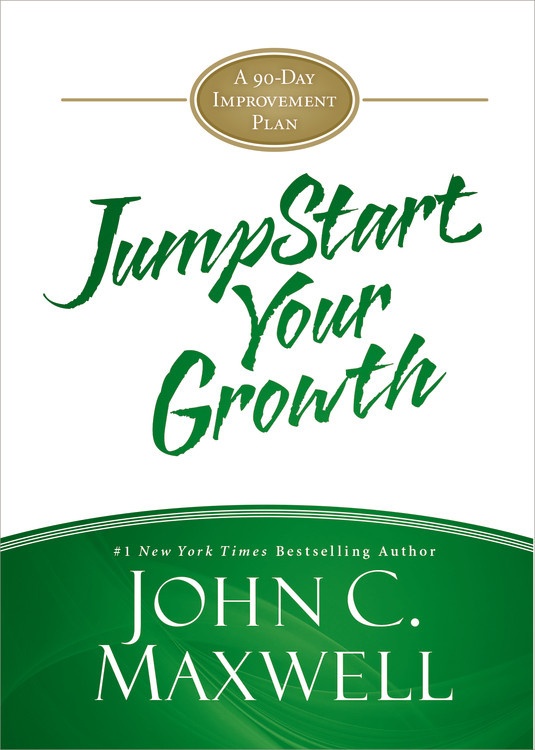
12 Quotes From “JumpStart Your Growth”

JumpStart Your GrowthJumpStart Your Growth is a companion book to The 15 Invaluable Laws Of Growth by John Maxwell. Check out my review of both of these books by clicking here. These are some of the quotes I appreciated from JumpStart.

“The time comes when you need to stop waiting for the man you want to become and start being the man you want to be.” —Bruce Springsteen

“Growing involves admitting you don’t have the answers, and it requires that you get over any fear you may have of making mistakes or looking foolish. And I found that I had to get started if I wanted to find the best way. That is the price of admission if you want to improve.” —John Maxwell

“If you want to get from where you are to where you want to be, you have to start by becoming aware of the choices that lead you away from your desired destination.” —Darren Hardy

“No factor is more important in people’s psychological development and motivation than the value judgments they make about themselves. Every aspect of their lives is impacted by the way they see themselves.” —Nathaniel Branden

“You need to learn to become your own encourager. Every time you do a good job, don’t just let it pass; give yourself a compliment. Every time you choose discipline over indulgence, don’t tell yourself that you should have anyway; recognize how much you are helping yourself. Every time you make a mistake, don’t bring up everything that’s wrong with yourself; tell yourself that you’re paying the price for growth and that you will learn to do better next time. Every positive thing you can say to yourself will help.” —John Maxwell 

“Act as if what you do makes a difference. It does.” —William James

“If there is an area in your life that seems overwhelming to you—health, work, family, or something else—try chipping away at it a little bit every day instead of trying to tackle it all at once. … Discipline is a morale builder. Boost yours by taking small steps that will take you in a positive direction.” —John Maxwell 

“At the end of each day, you should play back the tapes of your performance. The results should either applaud you or prod you.” —Jim Rohn

“There are two primary choices in life: to accept conditions as they exist, or to accept the responsibility for changing them.” —Denis Waitley 

“Rarely does a haphazard approach to anything succeed, and if it does, it’s not repeatable.” —John Maxwell

“Train yourself to fight for positive changes. Remember that your choices will lead to either the pain of self-discipline or the pain of regret.” —John Maxwell

“You can’t improve and avoid change at the same time.” —John Maxwell

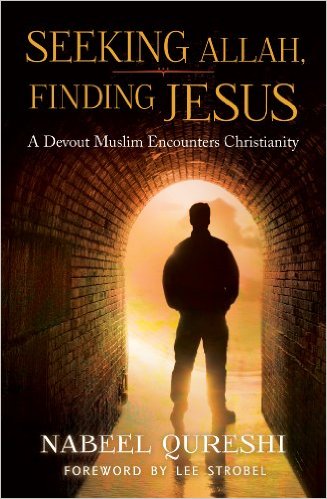
13 Quotes From “Seeking Allah, Finding Jesus”

Seeking Allah Finding JesusIf you want to know about Islam from an insider’s perspective, Seeking Allah, Finding Jesus by Nabeel Qureshi is simply a phenomenal book! Check out my book review by clicking here. Below are just a few of the quotes I found quite educational.

“There is much division in Islam. The best determination of whether a man is Muslim is if he exclusively declares that Allah is God and Mohammad is Allah’s messenger. Beyond this point, there is great diversity in Islam.”

“There is no book of sharia. We must derive the law from a hierarchy of sources using a process of jurisprudence called fiqh. The first and greatest source is the Quran. Nothing can supersede the Quran because it is the word of Allah. But the Koran is not comprehensive. As Muslims, there is much we must do and believe that is not found in the Quran. For this, we go to the second source, hadith. The hadith elaborate and clarify what is found in the Quran, but they never contradict. There is no contradiction in Islam. If a hadith is found in any way to contradict the Quran, then it is inauthentic and must be disregarded. If no hadith can be found to clarify an issue, then we must turn to the third source of sharia: the ulema, Muslim scholars who are wise and experienced in Islam.”

“Muftis from different schools of thought have different precedents and therefore provide different fatwas. Each denomination differs on what hadith they consider accurate. Since the hadith are the second rung of sharia, these differences of opinion have real consequences. Many of the differences between the ways Sunnis and Shias practice Islam are over this very matter. Their books of hadith are disparate. This difference, combined with the Shia position regarding the authority of imams, results in a significantly different view of sharia. … Most Muslims do not know these things. They know Islam to the extent that they practice it, and these are matters for the learned.”

“Christians believe Jesus is God incarnate, and this is a necessary belief for orthodox Christianity. Muslims believe that Jesus is no more than a prophet, and to consider Him God incarnate would be blasphemy and would cause one to be condemned to hell eternally, according to the Quran.”

“Regarding Jesus, there are two issues on which Muslims particularly disagree with Christians: that Jesus died on the Cross and that Jesus claimed to be God. The Quran specifically denies both of these beliefs.” 

“Sahih Bukhari…is the most trustworthy book of hadith, compiled by Imam Bukhari. The hadith were not collected into the books until a long time after Mohammad’s death. Many false hadith had been fabricated, and it was difficult to determine which ones were accurate. Imam Bukhari sifted through five hundred thousand hadith and pick out the five thousand most accurate.”

“The earliest historical records show that Mohammad launched offensive military campaigns and used violence at times to accomplish his purposes. He used the term jihad in both spiritual and physical contexts, but the physical jihad is the one Mohammad strongly emphasizes. The peaceful practice of Islam hinges on later, often Western, interpretations of Mohammad’s teachings, whereas the more violent variations of Islam are deeply rooted in orthodoxy and history.”

“The Bible and the Quran were nothing alike. Not in the slightest. … Mohammad dictated the contents of the Quran to his scribes over a period of twenty-three years. Only after his death was the Quran collected into a book. Verses that had been dictated years or decades apart are frequently found side-by-side in the Quran, often with no obvious connection. The result is that Muslims placed relatively little weight on surrounding passages when trying to interpret sections of the Quran.”

“Almost everything Muslims know about Mohammad comes to them orally, rarely from primary sources. Unlike Christians learning about Jesus from the Bible, the Quran has very little to say about Mohammad.”

“Mohammad’s first biography, Sirat Rasul Allah by Ibn Ishaq, comes down to our date only through the transmission of a later biographer, Ibn Hisham. In his introduction, Ibn Hisham explains that he altered the story of Mohammad’s life. ‘Things which it is disgraceful to discuss, matters which would distressed certain people, and such reports as [my teacher] (sic) told me he could not accept as trustworthy—all these things I have omitted.’”

“According to the hadith, Mohammad named four men as the best teachers of the Quran. The first one was Abdullah ibn Mas’ud, whome Mohammad distinguished as the foremost expert of the Quran. The last one was Ubay ibn Ka’b, whom Sahih Bukhari identifies as the best reciter of the Quran. These were the men that Mohammad hand selected as the best teachers of the Quran, but as I studied the early sources, I found that they did not agree with the final Quran, which has been passed down as today’s version. They did not even agree with each other. … Ubay is known to have had 116 chapters in his Quran, two more than Zaid’s edition. Ibn Mas’ud had only 111 chapters in his Quran, insisting that the additional chapters in Zaid’s Quran and Ubay’s Quran were just prayers, not Quranic recitation.”

“In Islam, there is only one unforgivable sin, shirk, the belief that someone other than Allah is God. Shirk is specifically discussed in the context of Jesus in 5:72. He who believes Jesus is God, ‘Allah has forbidden Heaven for him, and his abode will be the Hellfire.’”

“All suffering is worth it to follow Jesus. He is amazing.”

Seeking Allah, Finding Jesus (book review)

Seeking Allah Finding JesusI have a family member who works in predominately Muslim areas of the world. I recently asked him how I could learn more about Muslims and the Islamic belief system, and he highly recommended Seeking Allah, Finding Jesus by Nabeel Quereshi. I am so glad he did!

This book is told in the narrative style of an autobiography, as Nabeel walks us through his devout Muslim upbringing, and the conversations and confrontations that got him thinking about his religion in contrast to Christianity. The book has a “documentary” feel to it, as Nabeel takes us inside his home, school and mosque to let us see his life portrayed almost in real-time. Many of the conversations include Arabic phrases, which Nabeel footnotes at the beginning of the book, and then continues to use without the footnoted translation later, allowing the reader to become more immersed in his world.

Nabeel states his three main purposes for his book:

  1. To tear down walls by giving non-Muslim readers an insider’s perspective into a Muslim’s heart and mind. The mystical beauty of Islam that enchants billions cannot be grasped by merely sharing facts. But it is my prayer that by entering my world, you will come to understand your Muslim neighbor, so you can love him as yourself.
  2. To equip you with facts and knowledge, showing the strength of the case for the gospel in contrast with the case for Islam.
  3. To portray the immense inner struggle of Muslims grappling with the gospel, including sacrifices and doubts.

In my mind, he accomplished all three of these purposes beautifully. In addition, I discovered a whole new way to pray for my Muslim friends, as well as feeling like I may now carry on a more intelligent conversation with them about their cherished beliefs.

I too highly recommend this book to anyone who wants to learn more about what Muslims believe.

18 Quotes From Wise People In “15 Invaluable Laws Of Growth”

15 Invaluable Laws of GrowthJohn Maxwell always shares great quotes in his books! This is the hallmark of a true servant leader, who doesn’t hoard what he reads or hears, nor is he concerned about getting all the credit. Here are some of the quotes I enjoyed from Maxwell’s book The 15 Invaluable Laws Of Growth.

“Character is a quality that embodies many important traits such as integrity, courage, perseverance, confidence, and wisdom. Unlike your fingerprints that you were born with and can’t change, character is something that you create within yourself and must take responsibility for changing.” —Jim Rohn

“I’ve concluded that while nobody plans to mess up their life, the problem is that a few of us plan not to. That is, we don’t put the necessary safeguards in place to ensure a happy ending.” —Andy Stanley

“I bless you, prison—I bless you for being in my life—for there lying on rotting prison straw, I learned the object of life is not prospering as I had grown up believing, but the maturing of the soul.” —Alexander Solzhenitsyn

“Character cannot be summoned at the moment of crisis if it has been squandered by years of compromise and rationalization. The only testing ground for the heroic is the mundane. The only preparation for that one profound decision which can change a life, or even a nation, is those hundreds of half-conscious, self-defining, seemingly insignificant decisions made in private. Habit is the daily battle ground of character.” —Senator Dan Coats

“If you plan on being anything less than you are capable of being, you will probably be unhappy all the days of your life.” —Abraham Maslow

“It’s never too late to be what you might have been.” —George Elliot

“A sign of wisdom and maturity is when you come to terms with the realization that your decisions cause your rewards and consequences. You are responsible for your life, and your ultimate success depends on the choices you make.” —Denis Waitley

“When we are no longer able to change a situation, we are challenged to change ourselves.” —Viktor Frankl

“The great secret of success is to go through life as a man who never gets used up.” —Albert Schweitzer

“All meaningful and lasting change starts first in your imagination and then works its way out.” —Albert Einstein

“It’s better to look uninformed than to be uninformed.” —Richard Thalheimer

“When average people ask themselves, ‘Can I do this?’ they base it on the circumstances they see. … An abundant thinker asks different questions. An abundant thinker asks, ‘How can I?’ This simple twist of semantics changes everything. It forces your mind to create a solution.” —Brian Klimmer

“It is not wise, or even possible, to divorce private behavior from public leadership…. By its very nature, true leadership carries with it the burden of being an example.” —Gordon B. Hinckley

“Never confuse the giftedness of a person with the person. Their gifts allow them to do amazing things but the person may be flawed, which will eventually cause harm.” —Fred Smith

“Great things happen whenever we stop seeing ourselves as God’s gift to others, and begin seeing others as God’s gift to us.” —James S. Vuocolo

“Your doubts are not the product of accurate thinking, but habitual thinking. Years ago you excepted flawed conclusions as correct, begin to live your life as if those warped ideas about your potential were true, and ceased the bold experiment in living that brought you many breakthrough behaviors as a child.” —Price Pritchett

“If you send a rocket to the moon, about 90 percent of the time it’s off course—it ‘fails’ its way to the moon by continually making mistakes and correcting them.” —Price Pritchett

“Self-fulfillment thinks of how something serves me. Self-development thinks of how something helps me to serve others. With self-fulfillment, feeling good is the product. With self-development, feeling good is the by-product.” —Fred Smith

I have shared a lot of other content from this book:

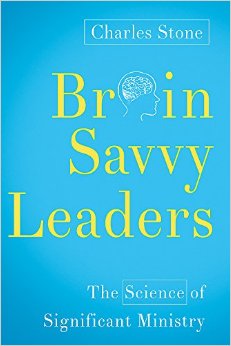
5 Quotes On Problem Solving From “Brain-Savvy Leaders”

Brain-Savvy LeadersCharles Stone’s book Brain-Savvy Leaders is chockfull of helpful information! When you understand more how your brain works, you can leverage its power more efficiently. Here are some quotes he shared about problem solving.

“Only in the mystery of the incarnate Word does the mystery of man take on light.” —Pope Paul VI 

“As a part of the C-system, the prefrontal cortex processes bits of information one after the other (serial) instead of several at the same time (parallel). … When we try to process too much information at once, the prefrontal cortex’s serial processing nature can result in mental processing bottlenecks that in turn can lead to unfinished thoughts and tasks. … When we attempt many mental tasks at once, our thinking degrades, accuracy drops, we focus on the urgent instead of the important, we forget things, and the quality of future decisions gets muddied.”

Coffee, caffeinated drinks (but not too many), exercise, and novelty can increase the amount of these neurotransmitters and get us into a more productive and focused state.”

“Charlan Nemeth, a psychology professor at the University of California-Berkeley, performed a creativity study in 2003. She divided 265 female students into groups of five and asked them to generate as many ideas as possible on how to decrease traffic congestion in the San Francisco Bay area. Each team received one of three conditions and was given twenty minutes to complete the task. Either they used the traditional ‘no criticism’ brainstorming technique, or they generated as many ideas as possible but could debate and criticize each one, or they received no instructions. The ‘debate and criticize’ teams generated 20 percent more ideas than the other two groups. … Debate…adds the element of surprise that engages the brain.”

“When trying to solve problems, encourage your team to imagine themselves a year from now instead of imagining themselves tomorrow. Studies show that this time perspective fosters more creativity.”

You can read my book review of Brain-Savvy Leaders by clicking here.

I have also shared other quotes from this book on learning, brain health, and emotional health.