5 Quotes On Battle From “The Book Of Man”

I really enjoyed reading The Book Of Man by William J. Bennett (you can read my book review here). The topics were very broad, so I’ll be sharing some of my favorite quotes on the different sections in this book over the next few days.

Here are five quotes about battle…

“War is an ugly thing, but not the ugliest of things. The decayed and degraded state of moral and patriotic feeling which thinks that nothing is worth war is much worse. A man who has nothing for which he is willing to fight, nothing which is more important than his own personal safety, is a miserable creature and has no chance of being free unless made and kept so by the exertions of better men than himself.” —John Stuart Mill 

“No person was ever honored for what he received. Honor has been the reward for what he gave.” —Calvin Coolidge

Whom neither shape of danger can dismay, 

Nor thought of tender happiness betray; 

Who, not content that former worth stand fast, 

Looks forward, persevering to the last, 

From well to better, daily self-surpast: 

Who, whether praise of him must walk the earth 

For ever, and to noble deeds give birth, 

Or he must fall, to sleep without his fame, 

And leave a dead unprofitable name— 

Finds comfort in himself and in his cause; 

And, while the mortal mist is gathering, draws 

His breath in confidence of Heaven’s applause: 

This is the happy Warrior; this is He 

That every Man in arms should wish to be. —William Wordsworth

“Thus choosing to die resisting, rather than to live submitting, they fled only from dishonor, but met danger face to face, and after one brief moment, while at the summit of their fortune, escaped, not from their fear, but from their glory.” —Pericles

“So that in the nature of man, we find three principal causes of quarrel. First, competition; secondly, diffidence; thirdly, glory. The first maketh men invade for gain; the second, for safety; and the third, for reputation. The first use violence, to make themselves masters of other men’s persons, wives, children, and cattle; the second, to defend them; the third, for trifles, as a word, a smile, a different opinion, and any other sign of undervalue, either direct in their persons or by reflection in their kindred, their friends, their nation, their profession, or their name.” —Thomas Hobbes
Money And The Church

Unfortunately, far too many financial scandals have tainted the church, and therefore any pastor who mentions tithes or offerings or missions support is usually viewed skeptically.

So sad! Especially because it should NEVER be this way!

The Apostle Paul gives an excellent teaching on financial gifts for church ministry in 2 Corinthians 8-9. I love this example he gives about the Christians in the impoverished area of Macedonia—

Out of the most severe trial, their overflowing joy and their extreme poverty welled up in rich generosity. (2 Corinthians 8:3)

Severe trial … extreme poverty rich generosity…. Want to see this in a modern-day setting? Check out this video:

Wow!! If the homeless can give like that, why can’t we?

Here are some principles Paul lists about giving:

  • Give because God compels you, not because a man compels you (2 Corinthians 8:3-4)
  • Give yourself to God before you give your income (8:5)
  • Give excellently (8:7)
  • Give sincerely (8:8)
  • Give like Jesus gave (8:9)
  • Give what you say you’re going to give, and do it quickly (8:10-15)
  • Give where there is proper accountability and proven credibility (8:16-24)
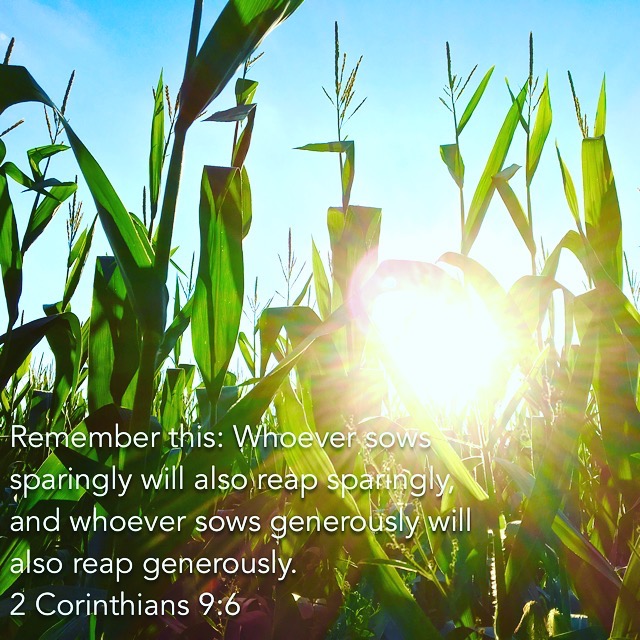
  • Give generously (9:1-6)
  • Give cheerfully (9:7)
  • Give where God is glorified (9:8-15)

Giving according to these principles removes the taint of anything shady, and puts the focus on God.

Busted!

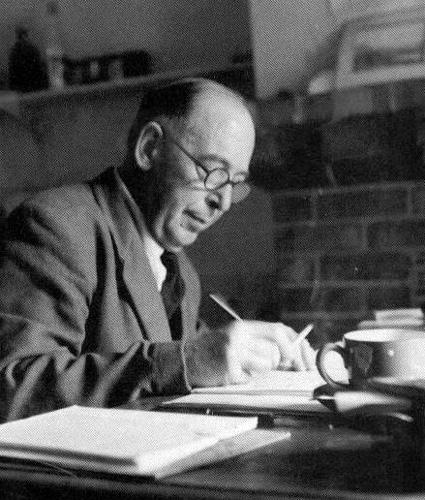
C.S. Lewis nails me with this quote from Letters To Malcolm

“Well, let’s now at any rate come clean. Prayer is irksome. An excuse to omit it is never unwelcome. When it is over, this casts a feeling of relief and holiday over the rest of the day. We are reluctant to begin. We are delighted to finish. While we are at prayer, but not while we are reading a novel or solving a crossword puzzle, any trifle is enough to distract us….

Now the disquieting thing is not simply that we skimp and begrudge the duty of prayer. The really disquieting thing is it should be numbered among duties at all. For we believe that we were created ‘to glorify God and enjoy Him forever.’ And if the few, the very few, minutes we now spend on intercourse with God are a burden to us rather than a delight, what then?… 

The painful effort which prayer involves is not proof that we are doing something we were not created to do. 

If we were perfected, prayer would not be a duty, it would be a delight. Someday, please God, it will be.”

I don’t know about you, but this convicts me.

I want to be delighted for my prayer times. When I think that the Creator of the universe wants me to spend time with Him in prayer, how could this not be a delight?!

Waiting For Your Dream

Listen to the podcast of this post by clicking on the player below, and you can also subscribe on AppleSpotify, or Audible.

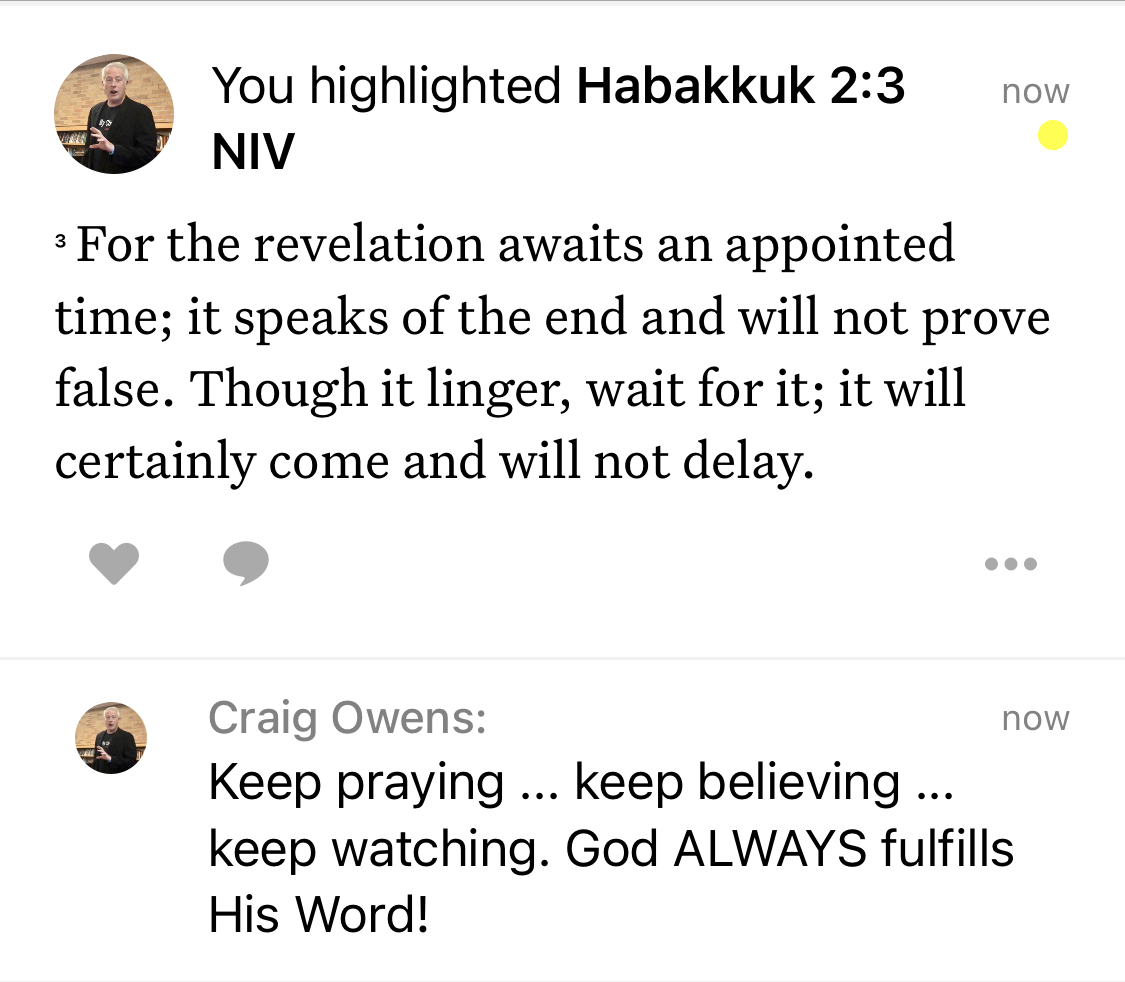
Some time ago, when my wife Betsy and I were waiting for God to bring about something we believed He had promised us, Betsy taped this verse to our bathroom mirror—

At the time I have decided, My words will come true. You can trust what I say about the future. It may take a long time, but keep on waiting—it will happen! (Habakkuk 2:3)

Keep on waiting.

You might be able to relate to that statement. Perhaps you say, “I am waiting. And waiting, and waiting, and WAITING…!”

But let me ask you something: What are you doing while you’re waiting?

Did you know that the Hebrew word for “waiting” here can also mean to ambush? That means you need to be doing everything you can do now to capture God’s promised dream when it arrives. As John Wooden used to say, “When opportunity comes, it’s too late to prepare.”

What do you need to do to ambush and capture your dream?

  • Learn a skill?
  • Take a class?
  • Get a degree?
  • Forgive someone?
  • Get out of debt?
  • Find a partner?
  • Volunteer your time?
  • Improve your waiting skills?

How do you improve your waiting skills? Check out this well-known verse—

But they that wait upon the Lord shall renew their strength…. (Isaiah 40:31)

Wait upon the Lord.

This is not a passive activity. This doesn’t mean to put your feet up, take it easy, and just lounge around until God finally decides to show up.

This word for “wait” has a different definition.

Have you ever dined at a really nice restaurant? In those high-priced restaurants, one of the things that makes the dining experience so nice is the staff who serves you. They anticipate your every need, they seem to be there just when you need them. They’re not late in arriving, nor are they rushing you along. They are WAITING on you!

This is what Isaiah is saying: When we wait on the Lord we are actively serving Him. We are trying to anticipate what He wants us to do. We’re not late and we’re not rushing Him along. We just want to give Him our very best service.

So if you are waiting (and waiting, and waiting!), make sure you’re making good use of your waiting time. Serve God with all you’ve got, and then make sure you’re ready to ambush your dream when God brings it to you in His perfect timing. God said it:

“Keep on waiting—it will happen!” 

►► Would you please prayerfully consider supporting this ministry? My Patreon supporters get behind-the-scenes access to exclusive materials. ◀︎◀︎

Keep On Keeping On

I was challenged by the message “Grandpa George” (also known as Tom Amrozowicz) shared with our church yesterday morning. This coming from a man who is a third-generation Pentecostal, and has walked with Jesus for over 70 years. The Bible text he shared was:

O God, You have taught me from my earliest childhood, and I constantly tell others about the wonderful things You do. Now that I am old and gray, do not abandon me, O God. Let me proclaim Your power to this new generation, your mighty miracles to all who come after me. (Psalm 71:17-18)

I am also a fourth-generational Pentecostal, and I have walked with Jesus for over 40 years (I know, I’m a rookie compared to Tom!). Tom’s words and God’s Word challenged me.

O God, You have taught me from my earliest childhood. I never want to take this for granted!

I constantly tell others about the wonderful things You do. Constantly? I hope my life is always showing how I am grateful for God’s blessings, but I know I needed that reminder to also be telling others how grateful I am.

Now that I am old and gray. Gray? Yes. Old? Well, let’s just say older.

Do not abandon me, O God. I don’t believe God would abandon me, but I need to ask myself, “Am I more attentive to following Him as I was a year ago?” You might ask, “Why ‘more attentive’? Don’t you just need to be as attentive?” When I was a teenager, there were things I ate that I never gave a second thought to, but I would never consider eating those things now because I know they aren’t the healthiest diet choices. In others words, as I’ve gotten older, I’m paying more attention to my physical health. Shouldn’t I pay more attention to my spiritual health too?

Let me proclaim Your power to this new generation. I want to make sure my kids, who are fourth-generation Pentecostals, know about the power of God that can be theirs.

Let me proclaim… Your mighty miracles to all who come after me. I also want to find relevant ways to tell younger generations about all that God has done for me, and all He wants to do for them too.

So if I were to sum up what the Holy Spirit was saying to me yesterday morning, it would be this:

I need to keep on keeping on. Don’t rest on the past, but use the past as a launching pad for even greater things in the future!

Artificial Maturity—How To NOT Move From College To Career

Artificial Maturity is a must-read book by Dr. Tim Elmore for parents, pastors, youth pastors, teachers, coaches, and managers—anyone who works with youth. You can read my full review of this invaluable book by clicking here.

Are You An Encourager?

Check out these words of the Apostle Paul—

When we arrived in Macedonia, there was no rest for us. We faced conflict from every direction, with battles on the outside and fear on the inside. But God, who encourages those who are discouraged, encouraged us by the arrival of Titus. (2 Corinthians 7:5-6)

Paul wasn’t doing so well! No rest … conflicts every direction he turned … battles … fear … discouragement …

But did you see how God encouraged Paul?

By the arrival of Titus

God encouraged Paul through Titus. Not through an angel, or a sign in the heavens, or anything dramatic. But through a friend showing up.

God wants to encourage you through others…

are you allowing those encouraging friends into your life?

God wants to encourage others through you…

are you allowing Him to use you to do that?

People are almost always the means of God’s ministry to the world. May you and I always be ready, available, and obedient.

The Book Of Man (book review)

“The purpose of this book is to explore and explain what it means to be a man,” writes William Bennett in the introduction of The Book Of Man: Readings on the Path to Manhood. It seems like an ambitious goal, but this book actually does a wonderful job in achieving that lofty goal.

If you’ve read any of the other compilations that William Bennett has pulled together (such as The Book Of Virtues), you will have a good idea of the layout of this book. In case you haven’t experienced any of Bennett’s other collections, the idea is to pull together some of the wisest words ever spoken or written on a singular topic. In so doing, the reader will get to look at that topic through the eyes of so many different people, that it will give a much fuller view of the topic.

In this book, the topic is men. What does it mean to be a man? To be a Dad? To be a husband? To be a soldier or an employer/employee? To be tough and yet loving? To be thoughtful and yet a man of action? The Book Of Man is divided into six sections:

  • Man in war
  • Man at work
  • Man in play, sports, and leisure
  • Man in the polis
  • Man with woman and children
  • Man in prayer and reflection

In each section you will find the wit and wisdom of men living and dead; of those in the modern world and the ancient; of those from Western cultures and Eastern; of those who have “been there, done that.” This is not necessarily compiled to be read from cover-to-cover (although that’s the way I enjoyed reading it), but to go to the various sections as you are learning and growing in that area. I also love the comprehensive index at the end of the book, as a way to search for a particular author or topic.

As with William Bennett’s other books, this is a great book to read aloud with others. I would especially recommend Dads reading passages with their sons, as a great tool in helping our young men learn what it means to be a true man.

I am a Thomas Nelson book reviewer.

UPDATE: I am sharing some of my favorite quotes from The Book Of Man. You can read them here, and here, and here, and here, and here, and here.

Your Personal Spiritual Trainer

If you are a Christian, you have a personal trainer for your spiritual workouts. He is the Holy Spirit.

We should never think of the Holy Spirit as showing up just in the New Testament. He is living and active all throughout Scripture. Yesterday we saw Him in the gimel section of our P119 Spiritual Workout (that’s verses 17-24 of Psalm 119).

A personal trainer who has our best interests in mind will always set a healthy pace for us: neither letting us loaf nor working us too hard that it does permanent damage. But that pace is almost always painful because it is stretching us into a new dimension of fitness. This is just as true—if not truer—in the spiritual realm.

Take a look at the Hebrew letter gimel. Do you see a silhouette of runner? The Jews did, and they gave this definition to gimel: a richer man running after a poorer man in order to bless him. Isn’t that a great picture of what God does for us?! The Holy Spirit wants to help us “keep pace” with what God is blessing. That’s why He makes the laws and statutes and decrees of Scripture come alive so that we can keep pace with all that God has for us.

Now remember that blessing has two components. One part is the rich rewards we receive, and the other part is the loving correction. Both rewards and loving correction are blessings because they both keep us on pace with God’s plan for our lives.

The Holy Spirit sets a pace for us to follow as He reveals God’s Word to us. It’s a bit painful to stretch and grow, but God will reward us as we obediently follow the Spirit’s leading. If we choose not to keep pace, we may be alright for a while. But eventually, we’ll start to fall short, or even get on a wrong path. Here the blessing of God is to lovingly rebuke and correct us, in the attempt to get us back on pace with Him.

And when we get back on pace with God’s plan for us, His richest rewards can continue to flow into our lives!

If you’re not allowing the Holy Spirit to be your Personal Spiritual Trainer, I suggest you invite Him to take that role in your life today. No one is more concerned about your spiritual growth and spiritual vitality than He is, and He alone can help you get to the place of optimal spiritual health. 

If you have missed any of the messages in our P119 series, you can access them all by clicking here.

6 Quotes From “When Work & Family Collide”

When Work & Family Collide is a timely message in our busy, go-go-go world. It’s hard to keep everyone in our lives happy when we are so busy. As author Andy Stanley says,  “The issue is never ‘Am I cheating?’ The issue is always ‘Where am I cheating?’” You can read my complete book review by clicking here.

These are six of my favorite quotes from this book:

“Let me take some pressure off. Your problem is not discipline. Your problem is not organization. Your problem is not that you have yet to stumble upon the perfect schedule. And your problem is not that the folks at home demand too much of your time. The problem is this: there’s not enough time to get everything done that you’re convinced—or others have convinced you—needs to get done.”

“Over time, our families learn that the only way to get our attention is to create a crisis. And let’s face it; it’s amazing how much time we can steal from work when our kids are in crisis. …Instead of allowing the most recent crisis to force the issue, why not be governed by the greater purpose? Why not ‘cheat’ by design?”

“Whereas work is task focused, the family is relationship focused. One is about doing, while the other is about loving. …You do your job. You love your family. It’s when we reverse the order that the tension escalates and the tug of war begins.”

“[Your family] wants to feel like your priority. It’s not enough for them to be your priority. They must feel like it.”

“Whenever you compromise the interests of a family member in order to fill gaps somewhere else you shuffle your priorities. Loyalty that was intended for a loved one gets displaced and given to someone else. However small, it increases the emotional load he or she must carry. It may not seem like a big deal. But it sends the message: You’re important… but right now someone else is more important.

“It’s up to us to monitor the emotional weight being carried by each of our family members. Through honest, and sometimes awkward, communication we can learn to monitor the hearts of our loved ones.”