6 Quotes From “The Global War On Christians”

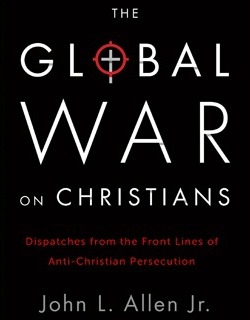
The Global War On ChristiansYesterday I shared some eye-opening statistics from The Global War On Christians by Jeff L. Allen, Jr. Below are some of the quotes which especially stood out to me. If you want to read my full review of this book, please click here.

“Spectacular outbreaks of violence are often produced by less intense incidents, such as believers being harassed on the streets, slurred in the media, shunned in the workplace, and hassled as they gather to worship. The usual cycle is for complaints to be made about these incidents, which are then ignored or dismissed. That failure to act usually serves to emboldened the perpetrators, who then may become more likely to move on to even more lethal assaults, in effect testing the limits of official tolerance.”

“The bottom line is that the global war on Christians will never be won as long as the myth persists that nobody’s really responsible for it.”

“Perpetuating the idea that Islam is by far the primary threat facing Christians in the early twenty-first century also stokes the idea of a ‘clash of civilizations’ between the two faiths, adding fuel to the fire of those who long for a new holy war. That doesn’t do justice to the complex reality of the situation, as there are examples of both conflict and coexistence, and for every virulent and dangerous current in the Islamic world there are also movements and individuals devoted to peace.” 

“Politically correct silence does no one any good, and arguably insults the dignity of those who run risks to life and limb on a daily basis to keep the faith alive.”

“Politics distorts perceptions of the global war on Christians in another sense. Ideological bias tempts observers in the West to see only part of the picture. Those on the political left may celebrate martyrs to corporate greed or to right-wing the police states, but fear to speak out about the suffering of Christians behind the lines of the Islamic world. Conservatives may be reluctant to condemn the situation facing Christians in the state of Israel or in regimes that are presently in fashion on the right has allies in the ‘war on terror.’ Either way, the result is a reductive reasoning of the true score of anti-Christian persecution, and a double standard when it comes to engaging its protagonists. If we want to see the global war on Christians clearly, we have to stop looking at it through the funhouse mirror of secular politics.”

“Historically, waves of persecution have fueled major advances for Christianity. … Today, it’s no accident that zones where persecution of Christians is the most intense… are also the places where Christianity is growing the most dramatically.”

Mansfield’s Book Of Manly Men (book review)

Mansfield's Book Of Manly MenIn my experience, men today aren’t allowed to be true men, manly men. I’m sure there are a lot of reasons why (but that’s another subject for another time), but for those men who are yearning to be the manly men that God has created them to be, Mansfield’s Book Of Manly Men by Stephen Mansfield will make you jump up and growl!

Men are wired by God in a unique way that makes them, well, men. When men embrace their God-implanted uniqueness they become manly men (which is another way of saying God-honoring men) who are better husbands, fathers, friends, and citizens. Stephen Mansfield quickly outlines his four maxims for manly men, and then shares a list of manly qualities to which all manly men should strive.

Each of these manly qualities are introduced by the life story of a manly man from history’s pages. Mansfield presents these men in all their manliness, including both their strengths and weaknesses; there are no perfect men, but there are many real men from which Mansfield allows us to learn. These manly qualities also come with some real in-your-face challenges of how to assess the growth of that quality in a man’s life.

In the foreword, written by retired Lt. General William G. Boykin (himself a true manly man), is this challenge: “This book is a must read for every American male. We must restore the understanding of what it means to be a manly man. The nation’s future depends on getting back to the fundamentals of being men of courage and values.” I couldn’t have said it any better!

I am a Thomas Nelson book reviewer.

From Azusa To Africa To The Nations (book review)

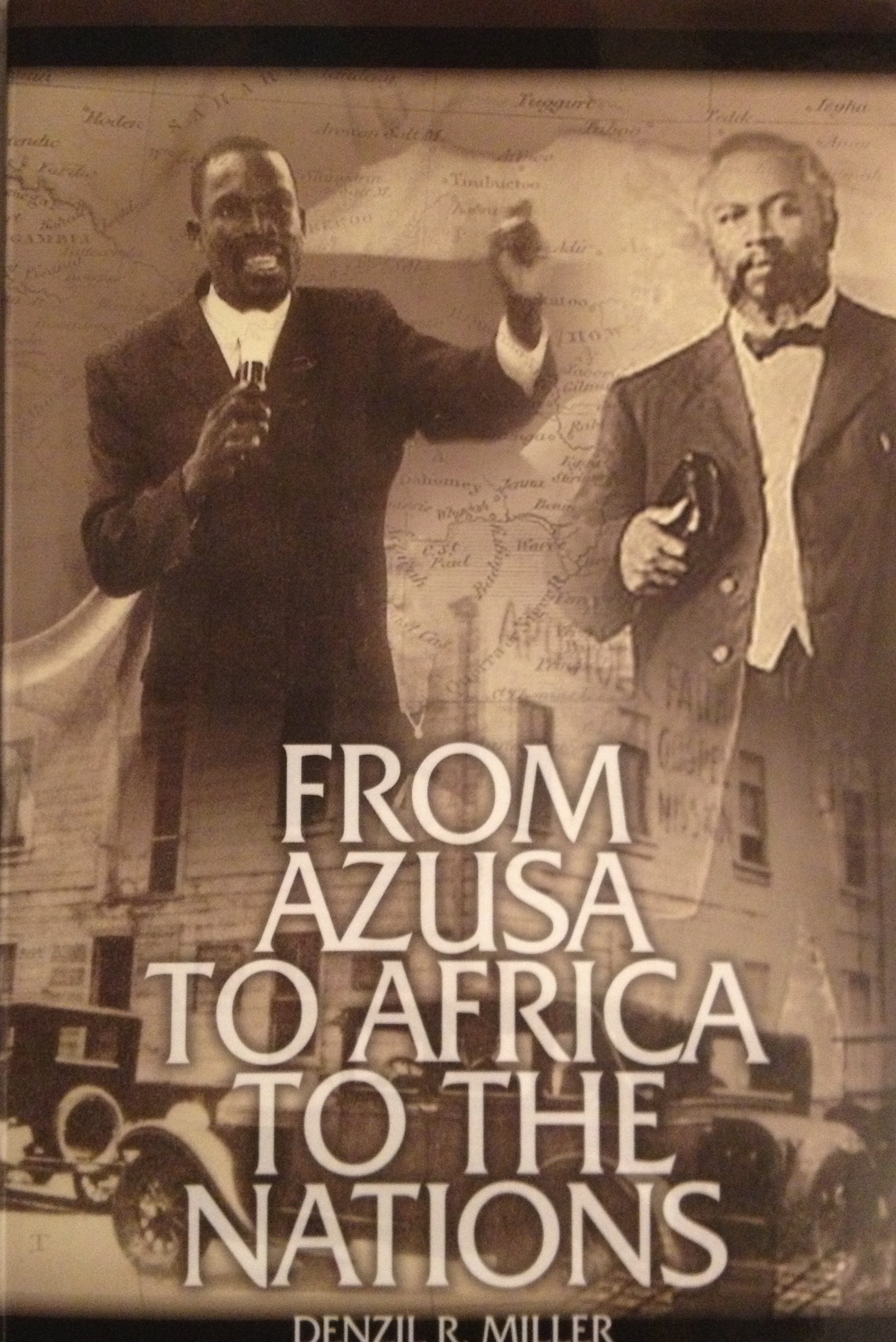
AzusaMost people are familiar with George Santayana’s powerful reminder: “Those who do not learn from history are doomed to repeat it.” This is why I love reading books of history. Denzil R. Miller has given us a powerful lesson of the history of the Pentecostal church in From Azusa To Africa To The Nations.

Denzil, a missionary in Africa, had a very specific motivation for writing this book: To remind African Christians how the full gospel message came to them, and how they should be responding to it. But I found that this book is a great reminder for all who call themselves Pentecostal.

From Azusa re-tells the story of the Pentecostal reawakening in the early days of the 1900s in a small church in Los Angeles pastored by William Seymour. From that small church, a worldwide revival to the fullness of the operation of the Holy Spirit began. It was a call to return to biblical roots; a call back to the message of Jesus, “You will receive power to be My witnesses after the Holy Spirit comes upon you” (Acts 1:8).

Denzil Miller aims to call the African churches back to their Pentecostal roots, but this is a call for all Pentecostals, regardless of the continent on which they live. This is a short, but powerful book, that I encourage you to check out.

Sola

On October 31, 1517, a sea change in world history was begun. On that day Martin Luther nailed his 95 theses to the door of a church, challenging the traditions of organized religion which he believed had strayed far from the instructions in the Bible.

The Reformation had been launched.

I truly believe that we all must be students of history, partly because all of his story is His Story. When we study history, we can see how God is working out His Story.

Second, we also need to know our history because as George Santayana rightly said, “Those who do not learn from history are doomed to repeat it.”

A third reason to (re)learn the thoughts brought out during the Reformation is for doctrinal strength. It’s important to know not only what why believe but why we believe it. And there are some valuable doctrinal truths in the history of the Reformation.

Finally, I believe an important part of learning is unlearning. Sometimes we accept something just because it’s been handed down to us. That is in large part what Luther and other reformers were challenging, and calling us to unlearn tradition and relearn what the Bible has to say.

So beginning this Sunday we will be walking through the five Sola doctrinal statements the reformers taught. I am really looking forward to relearning and unlearning, and just outright learning the biblical truths of the five solas.

I hope you can join me at Calvary Assembly of God.

Here are the topics we covered in this series: