Listen to the podcast of this post by clicking on the player below, and you can also subscribe on Apple, Spotify, or Audible.
Christians should always be striving for a win-win in our relationships. If we try to “win” at the expense of other saints, we all end up losing. So it boils down to this: It’s either a win-win or it’s a lose-lose—there are no other options in God’s Kingdom.
If you would like to watch the full sermon that this clip came from, you can find it here.
You may also be interested in these related posts:
Listen to the podcast of this post by clicking on the player below, and you can also subscribe on Apple, Spotify, or Audible.
Have you ever heard this little saying: “To live above with saints we love, oh, that will be glory. But to live below with saints we know, well, that’s a different story”? I’ve found that it’s sometimes true!
We love Psalm 133:1-3 when the saints are all together. What a great “selling point” to invite someone to be a part of the Christian community! But Psalm 41:7-9 is kind of embarrassing as David talks about former friends who have hurt him deeply.
But being bitten by a fellow sheep is a reality we all have experienced, and, sadly, we will probably have to deal with again in the future. There is a natural way we tend to react when we’ve been bitten, but there is also a supernatural response that the Bible consistently calls us to. This is the God-glorifying way we all need to strive for.
In Acts 23, Paul is standing before the Sanhedrin. He opens his remarks by simply saying he has a clear conscience before God, and the high priest immediately orders that Paul be smacked on the mouth! That seems like a bit of an over-reaction on the part of the high priest, but maybe it was a bit of show of force to let Paul know who was really in charge. Paul responded with an immediate—and natural—reaction when he says, “God will slap you!”
Paul is an old man by this time. He’s been through shipwrecks, beatings, imprisonments, gone without food, traveled more miles than he can count, and preached more sermons than he can remember. His body was giving out on him, and his eyesight was especially weak. Clearly, Paul didn’t realize to whom we was addressing his remarks. But when he became aware, he immediately owned up to his mistake. Paul offered no excuses or justifications, just a quick, simple, sincere apology.
When you have been bitten (slapped) by another sheep, you should ask:
Could I have provoked them by something I said or did?
Could I have hurt them by something I didn’t say or do?
David prayed a great prayer in Psalm 139:23. But this prayer is only effective if we are willing to accept that we may have been the agitator that led to the bite. In the last words that Job speaks in the Book of Job, he is very introspective. Check out all of the “If I have” statements throughout Job 31.
In Psalm 26:2, David invites the Holy Spirit to check him three times!
test me = scrutinize me
try me = assay me
examine me = refine me in the fire
When we are bitten, we should be open to the possiblity that God is using this bite to get my attention—to make me aware of a fault in my life or something that’s been in a blind spot.
So we should consider the following:
Has this kind of bite happened more than once? From different sheep?
Has a spiritually wise person attempted to address this with me before?
Do I ever admit that I’m at fault, or is it always the other person’s fault?
Do I find myself making a list of why they should apologize to me?
When was the last time I apologized to someone else?
If the Holy Spirit reveals something in us, He will also empower us to make the change and make amends. The natural response is to place all the blame on others. The supernatural response to pray Psalm 26:2 before responding.
If we react only the natural way, it is a lose-lose for us and for the whole pasture. But if we learn to respond in a supernatural way, it becomes a win-win for everyone. Listen to the wise words of King Solomon—
He who heeds instruction and correction is not only himself in the way of life but also is a way of life for others. And he who neglects or refuses reproof not only himself goes astray but also causes to err and is a path toward ruin for others. (Proverbs 10:17 AMPC)
Let’s all strive for the supernatural response that is a win-win for the whole Kingdom of God!
Please follow along with all of the messages in this series by clicking here.
P.S. If you are a pastor, you may want to check out my book When Sheep Bite.
Listen to the podcast of this post by clicking on the player below, and you can also subscribe on Apple or Spotify.
Why do disagreements have to become so, well, disagreeable?
Is it possible to disagree agreeably?
It’s not easy, but I think it’s possible.
When I was younger I couldn’t stand the idea of “losing” an argument: I always had to be right. I think I’ve matured a bit (at least, I hope I have), and I no longer feel the same way. So here are a few lessons I’ve learned:
(1)Remember the person I’m disagreeing with is my brother or sister. God has created both of us, so that makes us siblings.
(2) Always go for win-win.Don’t look out only for your own interests, but take an interest in others, too (Philippians 2:4).
(3)Choose your battles wisely. You can’t make everything an issue worth dying over. Thomas Jefferson wisely said, “In matters of principle, stand like a rock; in matters of taste, swim with the current.”
(4) Redefine the “win.” What does it mean to win? Is it to put someone else in their place? That doesn’t seem very healthy. Perhaps a “win” is when values or principles are agreed to, although the way they are applied may be very different from person to person.
(5) Leave the baggage behind. Don’t bring previous hurts into a new situation. Don’t assume this new person will act like someone else from your past.
We’re all different people, so we’re going to have disagreements. The key: let’s find a way to disagree agreeably.
If you have other thoughts about how to disagree agreeably, I would love it if you would share them in the comments.
Listen to the podcast of this post by clicking on the player below, and you can also subscribe on Apple, Spotify, or Audible.
Reciprocity is a big word that simply means: You will get what you give.
Hear me correctly. I’m not saying give more just to get more. It doesn’t work that way because that’s not true reciprocity; that’s just plain selfishness.
Reciprocity is giving to others just because you have it in your power—and in your heart—to give, and it will “bounce back” to you.
Reciprocity is from your heart. God makes sure you get the return blessings.
And, by the way, if you have something you could give but you don’t give it, your “bounce back” becomes a world that is smaller and smaller, with greater scarcity.
Reciprocity is win-win. Selfishness is lose-lose.
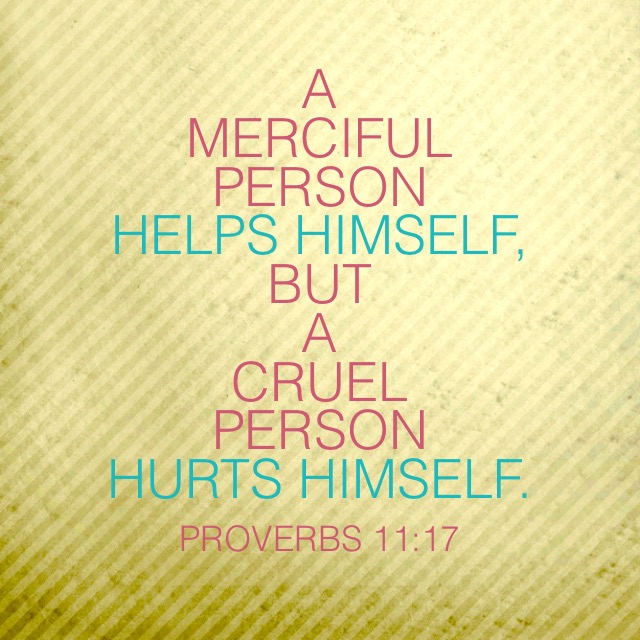
When you’re kind to others, you help yourself; when you are cruel to others, you hurt yourself. (Proverbs 11:17)
The world of the generous gets larger and larger; the world of the stingy gets smaller and smaller. (Proverbs 11:24)
The one who blesses others is abundantly blessed; those who help others are helped. (Proverbs 11:25)
Have you ever been involved in high-level negotiations? The stakes are high. The potential for reward is great, but the chances of crashing-and-burning are also great. Everyone is on their A-game both mentally and emotionally. No one wants to misstep or misspeak.
Sounds like a hostage negotiator, or a government official brokering a treaty, or a business leader finalizing a multi-million dollar business deal, right?
Actually, these high-level, high-stress, high risk-or-reward negotiations happen almost every day. And you’re involved. Whenever you have a conversation with someone where you’re opening your heart to them—or they’re opening up to you—you’ve stepped into a place where wonderful or tragic things can happen.
Think about how your blood pressure rises when you hear…
…your spouse say, “We need to talk.”
…your boss intercoms you and says, “Will you come into my office.”
…your friend says, “This isn’t very easy for me to tell you this, but….”
…your coworker says, “You need to sit down for this.”
Here’s a scene from the Bible: Abraham’s beloved wife Sarah has died, and he wants to bury her somewhere special. The problem is, Abraham doesn’t own any land. So for the first time since leaving Ur, he has to negotiate the purchase of land. The Hittites know Abraham is a powerful man. They don’t want to give anything away for free, but neither do they want to anger him. Abraham is a wealthy man. He can probably pay any price for the land, but he doesn’t want to be seen as a sucker.
Let the negotiations begin. Multiple times throughout their conversation a phrase is repeated:
“Listen to me.”
In the Hebrew language, there is nothing unique or noteworthy about these words. But the fact that the phrase is repeated so frequently in so few verses is interesting. In fact, this phrase is only used one other time in all of Genesis.
Both parties are saying, “I realize that one misspoken word here could be hurtful. This is a difficult, touchy subject, but I want it to be a win-win. So don’t just listen to my words, hear my heart.”
Here’s my takeaway for my emotionally-charged conversations:
Take a deep breath and ask God for help.
Go slowly.
Make sure I’m in the right place emotionally to listen to them.
Listen to the other person’s heart, not just their words.
Be committed to finding a win-win.
Go slowly.
Keep this in mind the next time you hear one of those blood-pressure-elevating opening phrases. When you hear those phrases, you have just entered into high-level negotiations. You can successfully broker a win-win for everyone if you’ll just hear their heart.








 Craig T. Owens