I was reading Proverbs 10 the other day, and a recurring theme seemed to show up in this chapter. Since you’re reading this blog, I know you are highly intelligent, so I’m sure you can spot the theme as well as I can…
If you have good sense, you will listen and obey; if all you do is talk, you will destroy yourself.
If you have good sense, it will show when you speak….
If you have good sense, you will learn all you can, but foolish talk will soon destroy you.
You will say the wrong thing if you talk too much—so be sensible and watch what you say.
Honest people speak sensibly, but deceitful liars will be silenced.
If you obey the Lord, you will always know the right thing to say….
I’d say the theme was pretty obvious, wouldn’t you?
But one question still remains: What are YOU going to do with this?
Lake Superior State University releases a list of banished words each year (the list for 2011 is here). These are words that have gotten over-used and lost their meaning. I can’t say that I agree with the entire list, but it’s pretty accurate.
I ran a few of the banished words through a Google search on my blog, and here’s my scorecard:
Viral … 0
Epic … 1
Fail … a few times, but not as LSSU bans it
Wow Factor … 0
A-ha Moment … 0
BFF … 0
Man Up … 0
Not too bad!
Now I just need to make sure I’m doing the same careful evaluation of my everyday vocabulary to make sure I don’t sound too “churchy.”
Researchers say the average American male speaks 6073 words per day, and the average American female speaks 8805 words per day. That’s a lot of words! Can you remember everything you said today?
Can you at least remember the gist of your major conversations?
Hmmm…
Here’s what Jesus said:
But I tell you, on the day of judgment men will have to give account for every idle (inoperative, nonworking) word they speak. (Matthew 12:36)
The dictionary defines idle as “something of no real worth, importance, or significance.” And the Greek dictionary says idle in this verse means “free from labor; barren.”
So I’m taking a little time to reflect…
Are all my words worthwhile?
Are they important?
Are they significant?
Did all my words do some good to someone?
If I can’t say “Yes,” it’s time to change my vocabulary, or maybe I just need to speak fewer words.
Listen to the podcast of this post by clicking on the player below, and you can also subscribe on Apple, Spotify, or Audible.
I love this short story in Judges 13. There’s this woman, who for whatever reason, cannot have a baby. The Bible doesn’t say whether she had multiple miscarriages or just simply couldn’t get pregnant. Perhaps her husband’s body wasn’t “cooperating” in the process. In any case, this is a couple who desperately wants a child to carry on their family line, but they have been frustrated.
And then an amazing thing happens!
There must have been countless couples who were childless, but an angel from God shows up to this barren woman and says, “You are going to have a baby boy!” This thrilled (and probably somewhat dazed) mother-to-be runs to tell her husband Manoah what has just happened.
We know from the Book of Hebrews that the definition of faith is being sure of what we hope for and certain of what we do not see. But how do we express this faith? … this hope? … this certainty in unseen things?
It starts with our everyday vocabulary choices.
Look at Manoah’s vocabulary. When he hears this news from his wife, he doesn’t say, “Yeah, right!” Instead, he prays this incredible faith-filled prayer:
“O Lord, I beg You, let the man of God You sent to us come again to teach us how to bring up the boy who is to be born.”
Not: “I need more proof.” Or even: “A child.” But: “Theboy that is to be born.”
God answers this prayer and the angel appears again. Once again Manoah’s faith-filled vocabulary is on full display for us:
“When Your words are fulfilled, what is to be the rule for the boy’s life and work?”
Not: “If.” Or even: “I hope.” But: “When Your words are fulfilled.”
What a great example from Manoah!
Is there something for which you are waiting on God? Do you feel like He’s given you an assurance in your heart for this? Then change your vocabulary—let it be faith-filled vocabulary.
Change your Ifs to Whens to show that you are confident of what you hope for and certain of what you do not see.
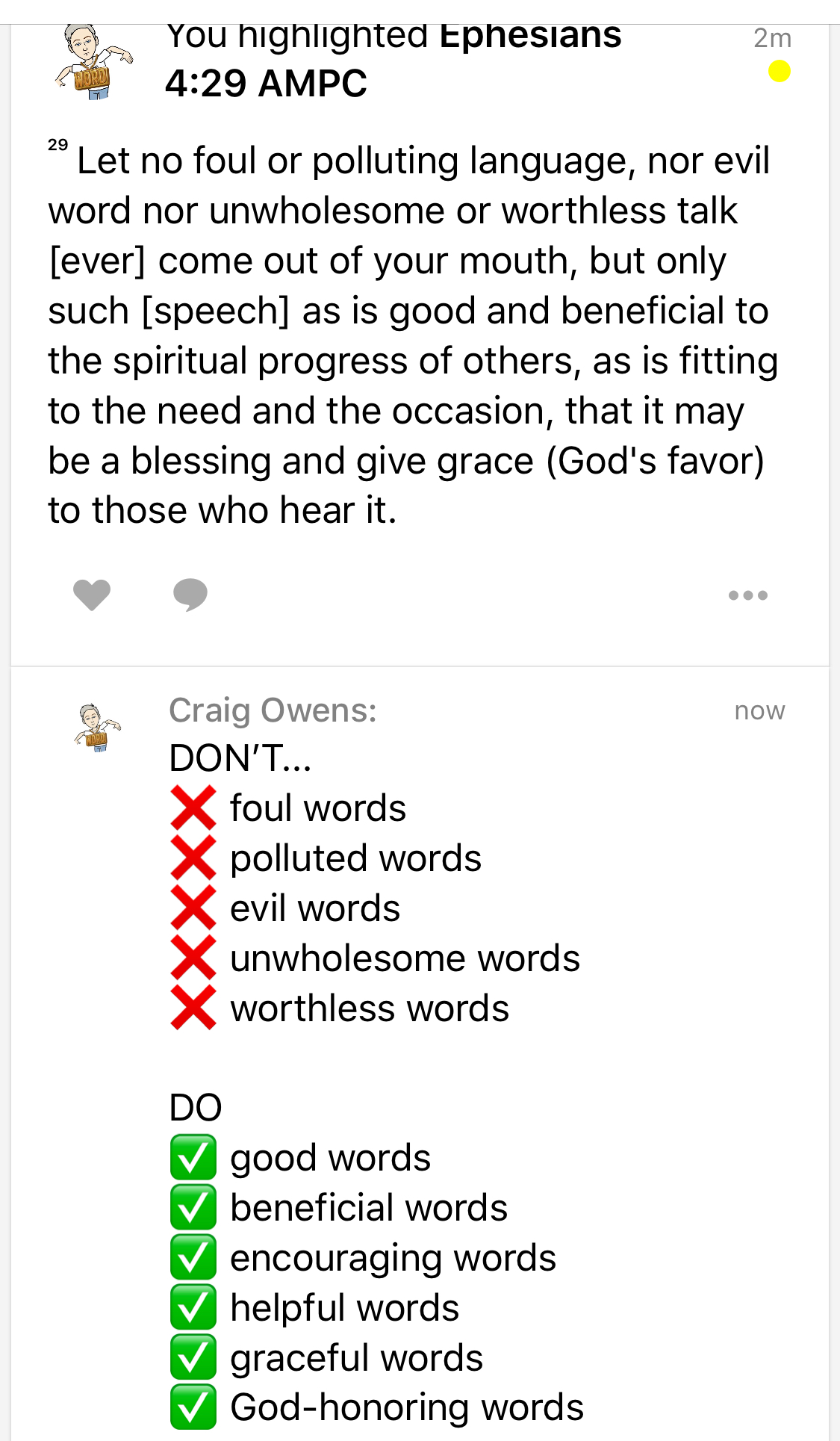
Let no foul or polluting language, nor evil word nor unwholesome or worthless talk ever come out of your mouth, but only such speech as is good and beneficial to the spiritual progress of others, as is fitting to the need and the occasion, that it may be a blessing and give grace (God’s favor) to those who hear it. (Ephesians 4:29 AMP)
…does my texting, blogging, Facebooking, and Tweeting line up?
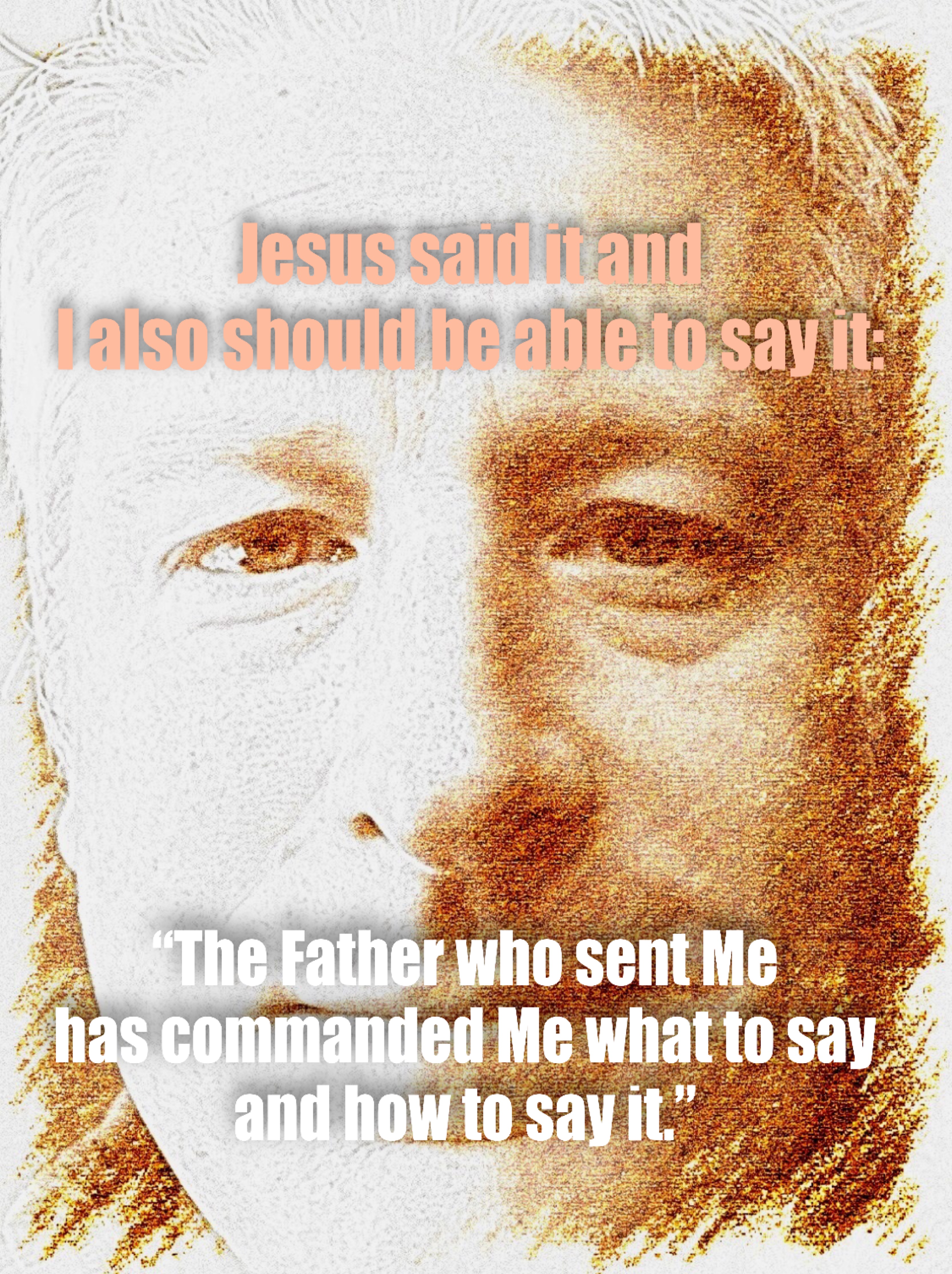
I don’t speak on My own authority. The Father who sent Me has commanded Me what to say and how to say it.
Everything Jesus said was directed by His Father. Yes, everything.
Want to try it today? First, we have to spend more time in God’s presence to hear His words. Then here’s a simple gauge to use (as given to us by James). Are my words…
The day has been a good one so far: There’s been a lot of traffic through the store, all of the employees showed up for their shifts on time, and the manager is feeling great. Then because of one complaint from a finicky customer, the whole day seems to crumble.
The day has been a good one so far: You got up on time, found the right outfit to wear, got to school on time, smiled at your classmates, and got right down to business. Then a teacher points out a mistake you made yesterday, and your whole afternoon becomes gloomy.
Usually that’s all it takes. Just one complaint, one correction, one unkind word, one angry look, one unfriendly email. Just one, and it’s hard to remember any of the good stuff which happened earlier. Just one, and the rest of the day seems so hard to bear.
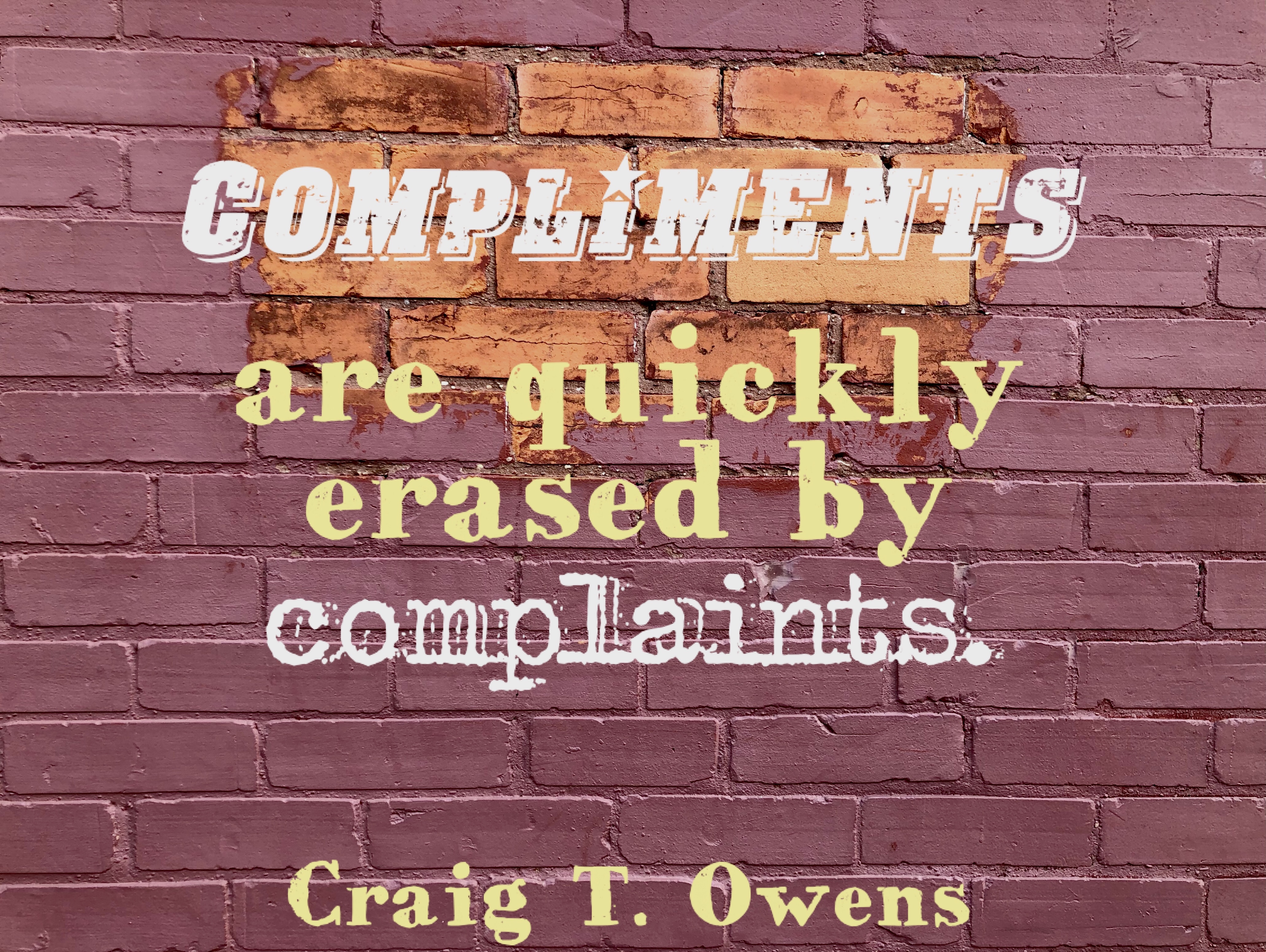
That’s because good words are biodegradable. Kind words break down faster than unkind words. Compliments are quickly erased by complaints.
“One of the commodities in life that most people can’t get enough of is compliments. The ego is never so intact that one can’t find a hole in which to plug a little praise. But, compliments by their very nature are highly biodegradable and tend to dissolve in hours or days after we receive them—which is why we can always use another.” —Phyllis Theroux
Here’s how you can help today. It might take a couple of extra minutes, but the results are so worth it! Give three compliments today.
Tell the barista at your coffee shop how much you appreciate her smile every morning.
Mention to the building custodian how nice he keeps the office looking.
Say “thanks” to the band for playing one of your favorite songs.
Compliment your kids for doing their homework without you having to ask them.
Thank your school teacher for her informative lesson.
Tell your supervisor you appreciate their extra effort.
It’s not hard to find something to compliment about anyone. Your compliment may be just the antidote they need to counteract a complaint that has gotten them down. And when you treat others this way, you can be sure that compliments will be coming your way too!
All throughout the first four books of the New Testament—Matthew, Mark, Luke, and John—there are lots of “red letters” (words spoken by Jesus). But as each of these gospel writers begins to recount the arrest and sham trial of Jesus, I’m struck by how many “black letters” there are. This fulfilled an Old Testament prophesy—
He was oppressed and treated harshly, yet He never said a word. He was led like a lamb to the slaughter. And as a sheep is silent before the shearers, He did not open His mouth (Isaiah 53:7).
The chief priests and the Sanhedrin brought out a string of witnesses to falsely accuse Jesus, but even then these witnesses couldn’t get their stories to jive, so Jesus remained silent. In exasperation the chief priest Caiaphas lashed out at Jesus, “Aren’t You going to answer these charges? Don’t You hear what they’re saying about You? Why won’t You defend Yourself?”
So here’s how Jesus responded to His accusers: But Jesusremainedsilent (Matthew 26:63). His silence resonated louder than any words could have!
How could Jesus do this? How could He stand silently when all of these nasty things were being said about Him?
He looked back—”…He had done no violence, nor was any deceit in His mouth…” (Isaiah 53:9). All four Gospels record Jesus saying, “You heard Me speaking in public all the time. My life has been on display for You. If I had said or done anything wrong, you could have arrested Me earlier, but the facts are: I haven’t said or done anything sinful.”
He looked forward—”…Because of the joy awaiting Him, He endured the Cross, disregarding its shame…” (Hebrews 12:2). He knew that one wrong word could undo all of the good words which He previously spoke, so He looked forward to the joy that would come after this was over.
I just went through a period of my life where people threw incredibly hurtful lies at me, but what was that compared to the horrific abuse heaped upon Jesus? If He could remain silent, how much more should I?
While I was in the midst of this difficult time, a prayerful friend handed me a notecard which I have kept close to me. Perhaps these words will be helpful to you, too—
May kindness be the response in you
where such a response is not expected.
May gentleness have the power
to overrule an offense and the power to heal. (David Teems)
May this Good Friday be a time of reflection in what Jesus didn’t say. And may I, along with you, learn this power of silence when falsely accused.
Listen to the podcast of this post by clicking on the player below, and you can also subscribe on Apple, Spotify, or Audible.
Have you ever been “cursed out” by someone? I mean had a stream of four-letter obscenities hurled at you? What happens inside you? Isn’t your natural reaction to strike back? To begin to a counter-attack with a few choice four-letter words of your own?
It’s natural to feel this way; it’s a very human response.
On the other hand, have you ever been “blessed out” by someone? Had someone shower you with niceties and accolades and compliments? What happens inside you this time? Isn’t your natural reaction the complete opposite? Don’t you want to say, “Well, I think you’re pretty special, too”?
It’s natural to feel this way; it’s a very human response.
But Jesus commanded us to do something counter-cultural, something which requires a spiritual response: “Bless those who curse you” (Luke 6:28). Paul amplified this thought: “Bless those who persecute you; bless and do not curse” (Romans 12:14).
These words curse and bless are challenging for me. Curse means to hope for someone’s downfall; bless means to say good words to or about someone. Cursing can be done internally or verbally; blessing has to be done verbally. Eugene Peterson captures the essence of this in his paraphrase of Romans 12:14: “Bless your enemies; no cursing under your breath.”
If my natural response is to match curse for curse, obscenity for obscenity, then to respond in a Christ-like fashion is going to take a change of character. To respond with the right four-letter words, I have to do the opposite of my natural response.
In the Old Testament, the Hebrew word for bless carried the understanding that it all hinged on God—He is the focal point. All of the definitions of this word involve a close relationship with God: (a) bless God; (b) bless men in the name of God; (c) ask for divine favor for persons or things created by God; or (d) salute someone because we know God has saluted us.
In the New Testament, the Greek word for bless makes it clear that this has to be done verbally, out loud. It is impossible to bless under your breath. In the Greek, bless is the compound word eulogeo = eu- (good) + –logos (words): saying good words out loud.
Only God is good, so only a closer relationship with our good God will help us say good words to others. Especially to those who curse us.
The right four-letter words to use—the un-natural words to use—are: Good words.
I’m challenging myself today to bless others, especially those who curse me. I only want to say good to and about others today. I’m attempting to live out Ephesians 4:29—
Do not let any unwholesome talk come out of your mouths, but only what is helpful for building others up (New International Version)
Let no foul or polluting language, nor evil word nor unwholesome or worthless talk ever come out of your mouth, but only such speech as is good and beneficial to the spiritual progress of others (Amplified Bible)
Watch the way you talk. Let nothing foul or dirty come out of your mouth. Say only what helps, each word a gift (The Message)
When you talk, do not say harmful things, but say what people need—words that will help others become stronger (New Century Version).
So let me ask you: How will you say the right four-letter words to others today?



 I was reading Proverbs 10 the other day, and a recurring theme seemed to show up in this chapter. Since you’re reading this blog, I know you are highly intelligent, so I’m sure you can spot the theme as well as I can…





 Craig T. Owens