


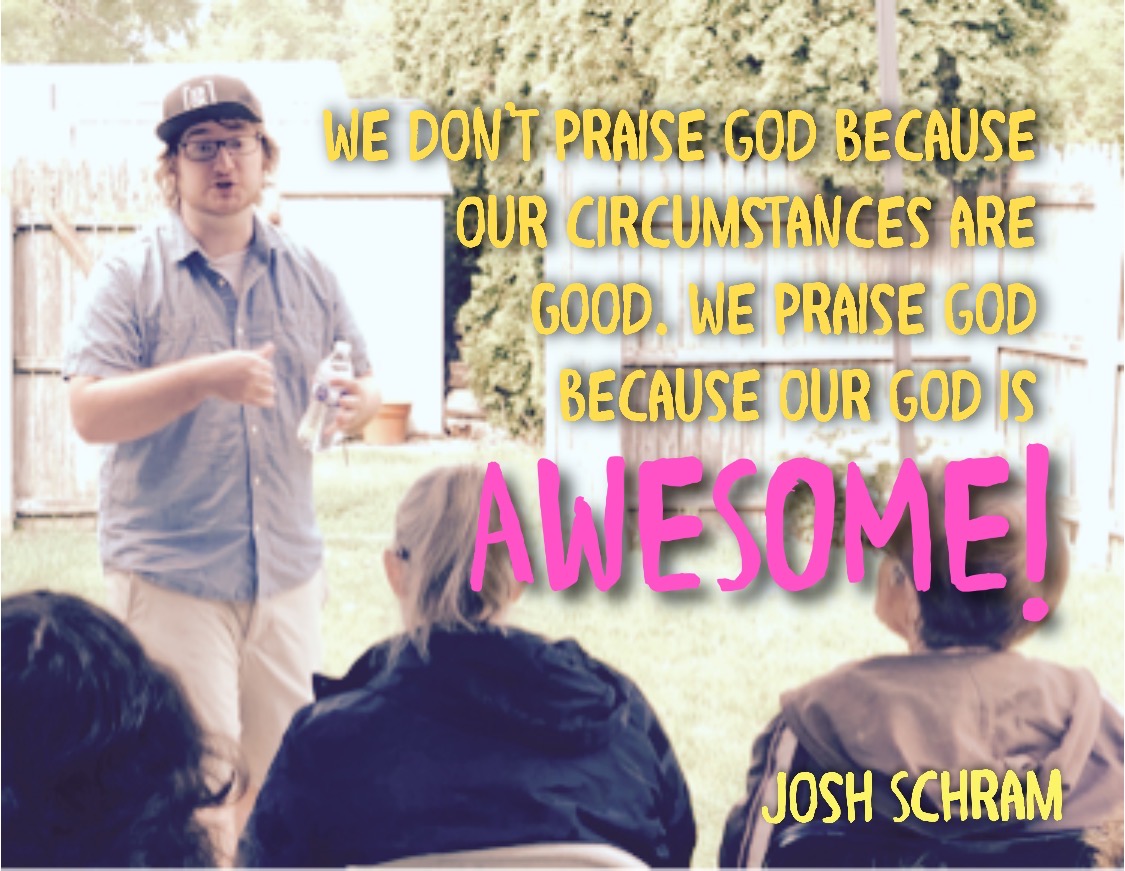
 As my friend Josh Schram led us through Psalm 66 in our Selah series, I was reminded how our worship of God—especially in our trials—can leave a godly legacy that crosses generations and continents.
There are three Selahs in this psalm. Remember that Selah is a call to pause to consider the impact of what the inspired biblical text just said to us. The Selahs in this psalm are surrounded by praise to God, as well as the impact of that praise.
“We don’t praise God because our circumstances are good. We praise God because our God is awesome!” —Josh Schram
Psalm 66 could be briefly outlined like this:
- We say to God, “How awesome are Your deeds!”
- Selah—pause to ponder how awesome God is.
- We say to others, “Come and see the awesome things God has done!”
- Selah—pause to let our worship of God impact others.
- Others join with us in saying, “God is worthy to be praised!”
- Selah—pause and rejoice as their praise to God reverberates.
- Now we can say to an even larger audience, “Come and listen to the awesome things God has done!”
Notice that our praise of God—despite the circumstances we’re in—makes all of the other steps possible.
“Come and see my life of praise” (v. 3) precedes the opportunity to say, “Come and listen to my testimony” (v. 5). In other words, we live out our love for God and earn the right to speak out to others about our love for God.
Look at the same pattern in Paul and Silas:
- They are thrown in prison on sham charges and they still are about to sing through their physical pain, “How awesome is our God!”
- God sends an earthquake that breaks off their shackles and opens the prison doors.
- The jailer asks how he also can have this kind of relationship with Jesus.
- Paul and Silas have the opportunity to say to him and his family, “Come and listen.”
- The jailer and his family accept Jesus as their Savior.
But it’s not just this jailer. Luke wrote that the other prisoners were also listening to Paul and Silas sing about their awesome God. Through the jailer and perhaps some of these prisoners, a church was started in Philippi.
Later on, Paul would write to this church about their partnership in ministry, and he would write to the Corinthian church about the amazing missions generosity of the Philippian church (see Philippians 1:3-5; 2 Corinthians 8:1-2). That’s what I mean about leaving a godly legacy that crosses generations and continents.
God is worthy to be praised! Let others hear you saying, “God is awesome” even in the midst of your painful trials, and you, too, will earn the opportunity to say to them, “Come and listen as I tell you how awesome it is to be in a relationship with God through His Son Jesus!” You can be a part of this godly legacy in your community.
If you’ve missed any of the messages in our Selah series, you can find the full list of messages by clicking here.


 Craig T. Owens