Thoughts From C.S. Lewis

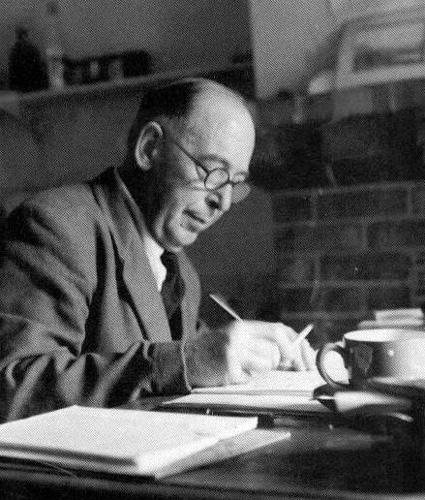
I’ve been re-reading some of my notes that I made on a collection of essays from C.S. Lewis. He is one of my favorite authors, always helping me to see the spiritual realm in a whole new light.

These are just a few quotes that have me thinking…

“A live body is not one that never gets hurt, but one that can to some extent repair itself. In the same way a Christian is not a man who never goes wrong, but a man who is enabled to repent and pick himself up and begin over again after each stumble—because the Christ-life is inside him, repairing him all the time, enabling him to repeat (in some degree) the kind of voluntary death which Christ Himself carried out.”

“There are two ways in which the human machine goes wrong. One is when human individuals drift apart from one another, or else collide with one another and do one another damage. The other is when things go wrong inside the individual—when the different parts of him either drift apart or interfere with one another.”

“Those cautions which the tempter whispers in our ears are all plausible…. That is the truth in the temptation. The lie consists in the suggestion that our best protection is a prudent regard for the safety of our pocket, our habitual indulgences, and our ambitions.”

“When a man is getting better he understands more and more clearly the evil that is still left in him. When a man is getting worse he understands his own badness less and less. … Good people know about both good and evil: bad people do not know about either.”

If you haven’t read C.S. Lewis for yourself, he writes in so many different genres that you can find something for almost any taste: science fiction, children’s fairy tales, theology, apologetics, and on and on. He was truly gifted by God to see our world in a different light, and you will be greatly enriched by reading as much as you can from this master author.

Thursdays With Oswald—Seeing Sin As Sin

This is a weekly series with things I’m reading and pondering from Oswald Chambers. You can read the original seed thought here, or type “Thursdays With Oswald” in the search box to read more entries.

Seeing Sin As Sin

     Knowledge of what sin is is in inverse ratio to its presence; only as sin goes do you realize what it is; when it is present you do not realize what it is because the nature of sin is that it destroys the capacity to know you sin. …

     To ‘crucify’ means to put to death, not counteract, not sit on, not whitewash, but kill. If I do not put to death the things in me which are not of God, they will put to death the things that are of God.

From Biblical Ethics

Romans 7 tells me that there are two forces at work in my life: God and sin. This is a battle to the death! So, if I think I am standing firm, that’s the exact time to watch out (see 1 Corinthians 10:12).

God never turns away the one who prays to Him, “Be merciful to me, a sinner.” But He turns a deaf ear to the one that claims, “I’m alright.”

May I always be VERY sensitive to even the hint of sin in my heart.

Yet

God’s mercy is AMAZING! Charles Spurgeon said:

“There is nothing little in God; His mercy is like Himself—it is infinite. You cannot measure it. His mercy is so great that it forgives great sins to great sinners, after great lengths of time, and then gives great favors and great privileges, and raises us up to great enjoyments in the great heaven of the great God.”

In the Bible, Daniel called on God’s mercy:

We do not make requests of You because we are righteous, but because of Your great mercy. O Lord, listen! O Lord, forgive! O Lord, hear and act! For Your sake, O my God, do not delay, because Your city and Your people bear Your Name. (Daniel 9:18, 19)

Mercy, simply put, is not getting the punishment we deserve. I am so grateful for God’s mercy which is new every morning. I need it.

But mercy is not something to be treated lightly. Mercy requires something of its recipient. In the verses preceding Daniel’s prayer, notice the use of the word YET:

  • All this disaster has come upon us, YET we have not sought the favor of the Lord our God by turning from our sins and giving attention to Your truth (v. 13).
  • The Lord our God is righteous in everything He does; YET we have not obeyed Him (v. 14).

If we receive God’s gift of mercy and YET do not change, we repudiate that mercy. In other words, it’s a slap in the face of God to not receive the penalty for our sins, and YET continue to live the same way.

My friend, if you have received God’s mercy gift turn from your old ways, give attention to His truth, and obey Him. This is the only way to show proper appreciation to our just God for His incredible mercy.

Loyalty

Listen to the podcast of this post by clicking on the player below, and you can also subscribe on AppleSpotify, or Audible.

How would you define loyalty? All of the dictionary definitions have to do with faithfulness. It’s almost implied that there is a blindness (at worst), or a dogged persistence (at best), to remain loyal to a person or to an idea. The thinking goes, “If I’m loyal to someone, like it or not, I become their Yes-man.”

But I think…

Loyalty is not telling people what they want to hear, but what they need to hear.

For an example, take the prophet Nathan in the Bible. We don’t know how old he is when he steps on the scene, or even where he came from. There isn’t a clue as to his tribal ancestry or even his father’s name.

King David wanted to build a temple for the ark of the covenant of the Lord, and he asked Nathan about this. Nathan immediately said, “Yes!” (kinda reinforces that idea of loyalty = Yes-man, doesn’t it?) But wait! That night, God speaks to Nathan and says, “Tell David he’s not the one to build the temple for Me.” So Nathan returns to David and loyally tells him no.

Later on, David steals another man’s wife and contrives a plan to have that man murdered on the battlefield. David thinks he’s gotten away with it until Nathan, the loyal friend, shows up to confront David with his sin. Nathan didn’t want to see David fail, but he wanted to give him a chance to confess and repent.

Near the end of David’s life, one of David’s sons, Adonijah, wanted to take the throne for himself. Many of the officials in David’s palace jumped on the bandwagon, but loyal Nathan did not. In fact, Nathan even got word to the King about Adonijah’s plans. As a result, David asked Nathan to anoint his son Solomon as king.

During David’s life, Nathan wrote David’s biography. If Nathan was just a mindless Yes-man, he could have easily left out the messy parts of David’s life. But the loyal friend wanted to show future readers that we all mess up, but God forgives and restores us when we repent.

Nathan’s name means the gift God gave or a giver. Both meanings fit this loyal man.

David was so blessed by Nathan’s loyalty that he named one of his own sons after the prophet.

Loyal friends give their friends the gift of life. They don’t let friends go down a destructive path. They don’t join with others when they attack. They remain constant, always-there, friends.

What a blessing to be called a loyal friend! And what an even greater blessing to have “Nathans” in our own lives!

►► Would you please prayerfully consider supporting this ministry? My Patreon supporters get behind-the-scenes access to exclusive materials. ◀︎◀︎

Lamenting Over The Fallen

How The Mighty Have Fallen! Long before Jim Collins entitled his latest book with this phrase, David said this when King Saul and Prince Jonathan were killed in battle. In fact, he said it not once, but three times in just eight verses.

It is understandable that David would lament the death of his friend Jonathan. They were covenant brothers, they shared the same heartbeat for God and for Israel, and they stood by each other through thick and thin.

But Saul? Why would David lament the death of Saul? This is the man who was jealous of David. So jealous that he did everything he could to trip David up. Including trying to kill him. Saul chased David from his home, from his family, from his wife, even from his country.

Why would David lament Saul’s death? Wouldn’t it be more appropriate to rejoice over it?

But David still saw Saul as “the Lord’s anointed.” David recognized the good in Saul. He called him…

  • the glory of Israel
  • a successful warrior
  • gracious
  • lovable
  • strong
  • Israel’s provider

When David heard Saul had been killed, he lamented, Oh, how the mighty have fallen!

When I see the mighty, God-anointed leader fall, do I lament?

I may shake my head, I may feel vindicated, I may be disgusted, but I don’t know that I have ever lamented or grieved when one of these mighty brothers has fallen. Or if I have, my lament has been short-circuited by other less appropriate emotions.

Despite their sin, they are still God’s anointed.

Who am I to sit in judgment? Who am I to do anything but lament their fall?

Lord, forgive me! Father, help me to see Your anointed ones in the proper perspective: as Your anointed. Holy Spirit, remind me of the tragedy of even one mighty one who falls. May my response be one of lament, and mercy, and prayer.

The Immunization Of Tears

The Israelites had such a predictable pattern —

Loving God

Slipping away from Him

Sin

Oppressed by an enemy

Remorse & repentance

God’s deliverance

Return to loving God

Repeat


In the book of Judges there is a repeated phrase: But when they cried out to the Lord, He raised up for them a deliverer.

Perhaps is they cried in God’s presence more often, they cycle could have been broken.

It’s the same for us — instead of using tears as a cure, how about using them as an immunization? How about crying in God’s presence before sin has cruelly oppressed us?

I think if I shed tears over my “little” sins more frequently, it would keep me from much deeper hurts.

The Bible says, “A broken and contrite heart, O Lord, You will not ignore.” Holy Spirit, break my heart over the smallest of sins so I may quickly repent and return before I am enslaved by my sins.

I believe tears call God to our help, but how much better if they are used to immunize us against sin!

No Casualties

The Israelites had just returned from a huge military victory over the Midianites and the military commanders brought this report to Moses:

Your servants have counted the soldiers under our command, and not one is missing.

When God is with the soldiers, they have zero causalities. Zero.

Throughout the Bible, the only time casualties are mentioned is: (1) when the battle is of their own undertaking, or (2) the people have sinned and God allows an enemy to attack them.

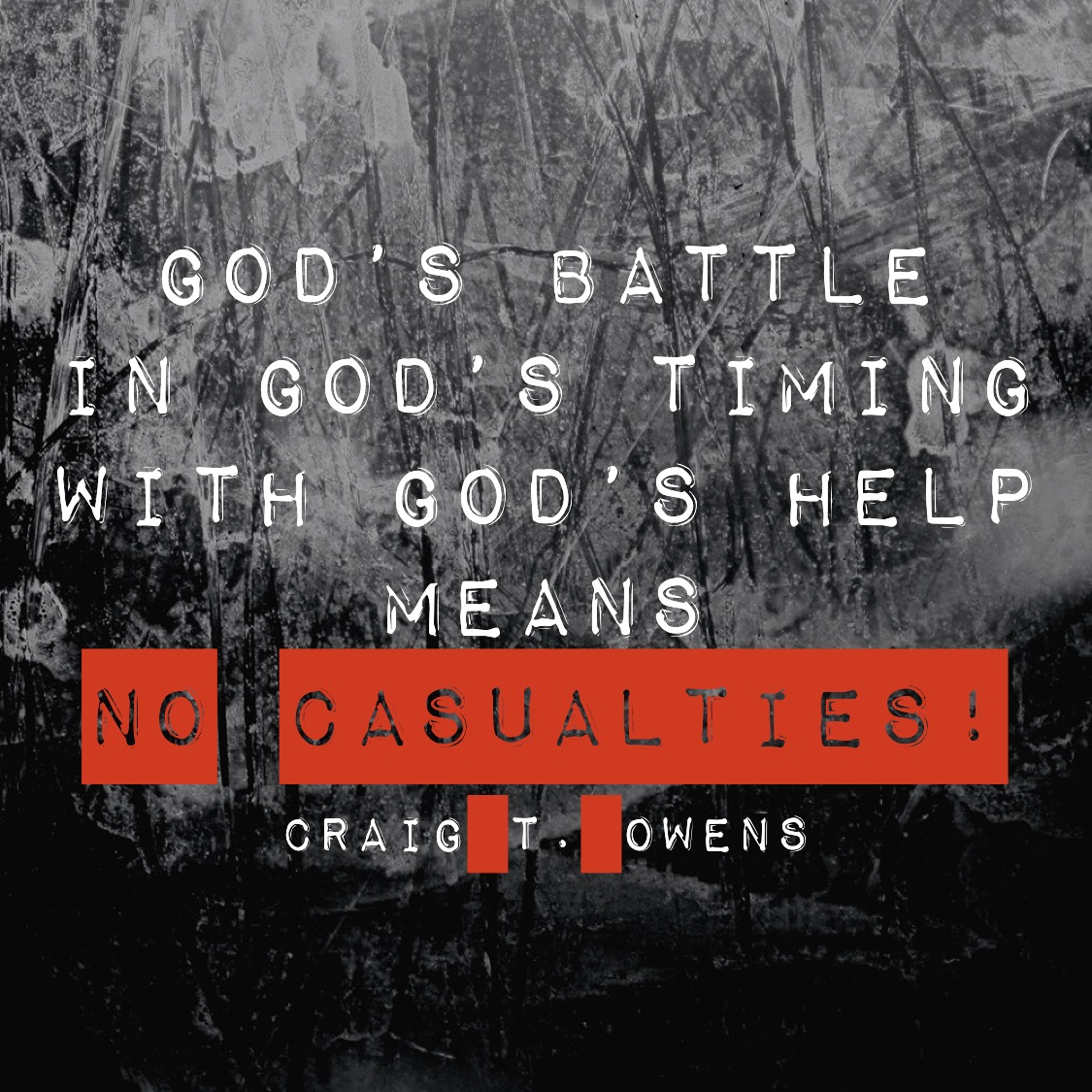
God’s battle

in God’s timing

with God’s help

= No casualties!

If you are in a battle that you started, or if you are in a battle because you walked away from God, your best defense is to run to God in repentance.

But if God brought you to this fight, don’t run. Stand firm. He will bring you the victory with no casualties.

Do It

Here’s what God said to His people through the prophet Ezekiel, “I will judge you according to your conduct.” God says the same thing in the New Testament too.

It’s not what I believe. It’s not what I discuss. It’s not what I intend to do. It’s not what I know is right and wrong. It’s what I do.

I have to give an account of my conduct. I have to answer to God for how I lived out my beliefs. I have to show God what I did with what I believe about Him. I have to put into practice what’s in my heart.

Do I believe God is God? Do I have idols?

Do I believe God is holy? Do I sin?

Do I believe God forgives? Do I repent?

Do I believe God looks after orphans and widows? Do I?

Do I believe God is my Provider? Do I steal?

Do I believe He is Lord? Do I give Him control of everything?

Do I believe I should do something for the hungry, thirsty, naked, sick, and imprisoned? Do I do something?

This is what God judges: belief put into action. Not just beliefs, but godly actions motivated by those godly beliefs.

Faith without works is just wishful dreaming. Works without faith is just religious posturing. Works with faith is God-glorifying!

Don’t just believe it… do it.

Cheap Trade-Off

During the reign of King Rehoboam in Judah, God’s judgment fell on the land. Because of their sin against Him, God allowed Shishak, the king of Egypt, to plunder Jerusalem. Shishak carried off all of the valuable furnishings of the temple in Jerusalem.

To replace what had been plundered Rehoboam commissioned the casting of shields made of bronze (1 Kings 14:27). Whenever the king went to the temple, all the guards would carry these shiny shields with them, but then immediately after the king left the temple the guards returned their shields to the armory.

It looked good, but it was all a cheat … an imitation … a cheap trade-off.

Looking back a few chapters we read that not only did Rehoboam’s father, King Solomon, make the original shields out of gold, but he made almost everything out of gold. In fact, the Bible says, “Nothing was made of silver, because silver was considered of little value in Solomon’s days.” If silver was of little value, can you imagine how cheap bronze was?!

The temple is plundered. The gold shields—along with anything else of value—are gone, but there is no outcry from Rehoboam or the people, no repentance for their crimes against God, no anger at their sin that allowed Shishak’s raid.

Instead, Rehoboam wanted to try to keep up appearances.

He made bronze shields to look like the stolen gold shields.
He made his trip to the temple a spectacle of pomp and circumstance.
He hid the bronze shields away after he left the temple.

Isn’t this how many people deal with the plundering of their lives? I know I have at times. It seemed so much easier to try to cover up what was lost because of my sin, than to simply admit I sinned, repent of that sin, and ask for God’s merciful forgiveness.

Sure, Rehoboam still looked like he had his act together. But he knew—every time he was on this way to the temple and saw those bronze shields—that he was living a lie. He accepted a cheap trade-off for the real deal.

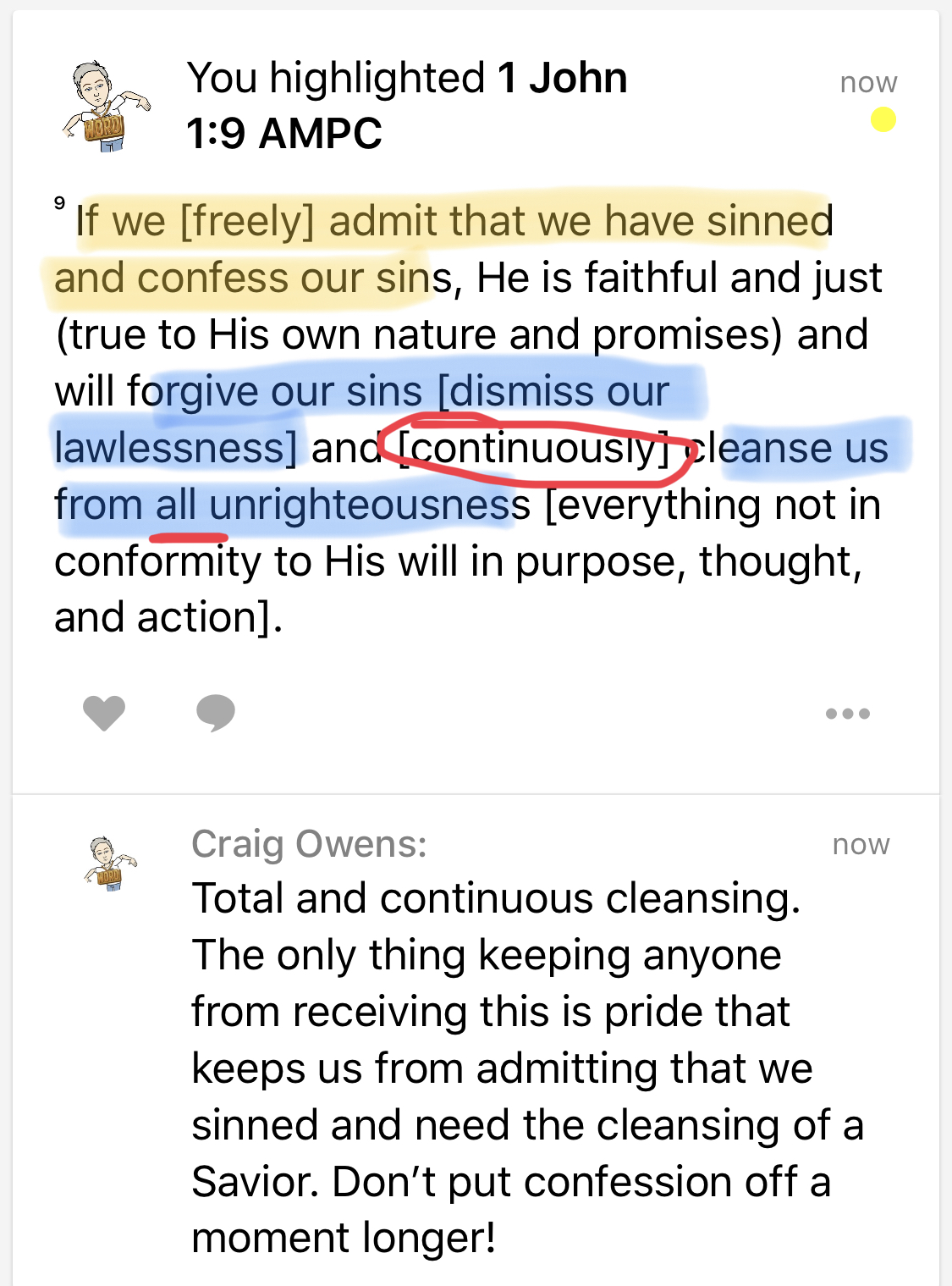
I am so grateful that, “If we confess our sins, He is faithful and just and will forgive us our sins and purify us from all unrighteousness” (1 John 1:9).

I’m not going to settle for cheap trade-offs anymore. How about you?