On Saturday night I was in the hospital with a family as their loved one took his final breath. It’s not the first time I’ve been in a room with someone as their life here ends. And I’m certain it won’t be the last time. I feel blessed to be able to do this.
Before you think I sound morbid, hear me out on this.
I feel blessed to have had some valuable training for this. Long before I became a pastor (a “doctor” of the spirit) I was studying to be a medical doctor (a doctor of the body). I’m so grateful that I received enough training to be prepared for these settings.
I feel blessed to be there for the grieving family. When the emotions are so raw and the pain so deep, I’m grateful that God places me in a position to truly be a minister to hurting people.
I feel blessed to be reminded of the shortness and preciousness of life. It reminds me that life is fragile and short. It reminds me to hug more often, express love more frequently, and not take any time with my loved ones for granted.
Being in the hospital room as someone passes from this life is not an easy thing. But I wouldn’t trade the blessing of being a pastor for anything.
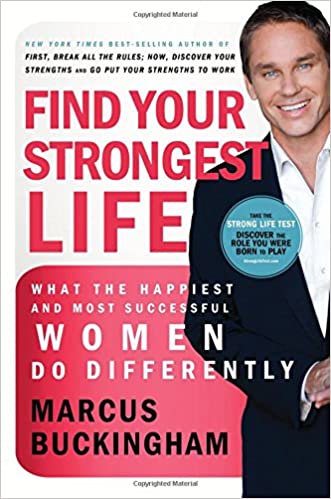
You might be thinking, “Why is he reviewing this book?” After all, the subtitle of Marcus Buckingham’s latest book is “What the happiest and most successful women do differently.” Well, guess what? I absolutely loved this book! I’m excited for my wife to be able to read Find Your Strongest Life, but in the meantime, I got so much out of it.
One of the things I love about Marcus Buckingham’s books is that they read just like he sounds: a silky smooth British accent. But it’s not just about style; his books have plenty of substance too. I especially love Marcus’ focus on building on strengths, as opposed to trying to fix weaknesses.
The other thing I appreciate is how affirming Marcus is. His comfortable style feels highly personalized—sort of like he’s sitting on the other side of the coffee table from me.
Find Your Strongest Life opens with some background information on the important timing for this book. Then after taking a simple online assessment to learn your leading and supporting Life Roles, you’ll learn more about how to capture and cradle your strongest moments. Then you’ll learn how to use these strong moments to purposely imbalance your life in favor of those strong moments.
So many of Marcus’ ideas sound counter-intuitive, and yet they ring so true at the same time. From my personal experience from reading and applying the principles in his other books, I can attest that this man knows what he’s talking about. I know I found several takeaways from this book, and I’m especially excited to see how my wife and the other key women in my life are going to be able to use this book to make a stronger life for themselves.
The apostles returned to Jesus from their ministry tour and told Him all they had done and taught. Then Jesus said, “Let’s go off by ourselves to a quiet place and rest awhile.” He said this because there were so many people coming and going that Jesus and His apostles didn’t even have time to eat. So they left by boat for a quiet place, where they could be alone. (Mark 6:30-32 NLT)
Sometimes dinner is more than dinner. It’s not just food for our physical bodies; it can be so much more.
The apostles returned from their first ministry assignment. They were so excited to come back and tell Jesus how incredible their time had been. They breathlessly rushed into the house where Jesus was waiting for them. “Master,” Peter started, “You should have seen how Andrew…” and he was cut short by a new visitor.
Next James tried, “Whoa, it was so cool when we…” and yet another distraction.
Time and time again their stories and questions and concerns were interrupted by the busyness of life and ministry. In fact, it got so chaotic that the disciples couldn’t even eat their food, except in quick gulps between visitors.
Finally, Jesus said, “Guys, let’s get out of here. I really want to hear about your ministry. I want to debrief a little with you. And, frankly, we’re all hungry and could use a quiet dinner. Let’s go someplace to hang out together.” Now that’s more than a dinner!
Check out the advantages of simply eating together:
Families who eat dinner together eat healthier.
Families who eat dinner together have higher communication skills.
Children in families who eat dinner together perform better academically.
Children in families who eat dinner together are less likely to try cigarettes, illegal drugs, or alcohol.
I love our family mealtimes—it is one of the best times to catch up on what’s happening with everyone. Last night we were joined at dinner by a young couple from our church. After dinner, the kids were off playing and Betsy and I could have a quiet conversation just with our friends. We talked about the newlyweds’ adjustment to marriage, what makes a good church, education, career, china patterns, and the way God speaks to us. We laughed and dreamed and talked about dreams. It was fantastic!
Turn off the TV. Make a healthy dinner. Set aside time to eat with family and friends. Jesus gave us a great example: “C’mon, friends, I really want to spend some quiet time with you.”
My folks came to our home for dinner after our Sunday church service. It’s always great to have them around.
Aside from the good fellowship and great food, I noticed something else: there were a lot of dishes to be cleaned. Not only was the dishwasher filled and run twice, but there were other dishes that had to be washed by hand. At first, I began to grumble about all of the extra work to do, but then I thought, “Dirty dishes are a good thing.”
Lots of dirty dishes means that lots of people graced our home.
Lots of dirty laundry means that my kids are running around and enjoying life.
Lots of trips to the grocery store means that friends and family are coming over to hang out with us.
Lots of studying means that I have lots of opportunities to invest in others.
There are so many things that I could choose to grumble about, but instead, I’m choosing to focus on the blessings. I’d much rather have dishes to clean, clothes to wash, errands to run, and hours to study than the alternative, wouldn’t you?
Look on the bright side this week: turn those grumbling opportunities into opportunities to give thanks.
Here are a few definitions of investing from the dictionary:
To commit (money or capital) in order to gain a financial return
To devote for future advantage or benefit
To devote morally or psychologically, as to a purpose
To endow with authority or power
Commit … devote … endow. These are not half-hearted words. For an investment to be successful (that is, for it to give a good return on investment), the investor must be fully involved. No half-measures will do.
I try to always remember this when I’m accepting or making an appointment to meet with someone. This is a person with great worth, and I want to invest my time, energy, emotions, and knowledge into someone that is going to yield a great return for the Kingdom of God.
I know that with some people it’ll just be a spending appointment. That’s okay. Sometimes you have to spend a little before there is an investment opportunity. But what I love is identifying those people who have an attitude to grow. In those people, I willingly and wholeheartedly make an investing appointment.
By the way, all of these definitions for invest come from the same root word. The original meaning was “the clothing of someone else.” In other words, I must be willing to take all that I have to complete someone else if I want the investment to be successful.
I’m grateful for the people who have invested in me. The return on their investment is showing up in the investments I have the privilege of making now. I’m blessed to be pouring all of me into some great leaders-in-training.
Before you schedule that next appointment, ask yourself, “Am I just going to be spending my time, or is this someone in whom I can invest.” Be careful about only putting spending appointments on your calendar. And when you do have a chance for an investingappointment, be sure you go all in.
It’s named “fast” food because it is supposedly prepared quicker than you could fix it yourself at home. It’s also called “fast” because so many of us order it from our cars in the drive-thru lane, and then inhale our food as we speed down the road to our next appointment.
But have you noticed how fast people eat their fast food even when they sit down in the restaurant?
Have you noticed how fast we eat the food we prepare at home? Usually, it takes less time to eat it than it took to prepare it!
Have you noticed how fast we “eat” life?
The other day I took a break from my study time to eat a healthy breakfast bar. I munched on it while I continued to type notes on my computer. A couple minutes later I looked next to me and saw the empty wrapper but honestly couldn’t remember what flavor I just ate! What’s the point of flavor if I’m not even going to enjoy it?
The Psalmist said, “Taste and see that the Lord is good.”
Taste: That implies that I slow down to actually notice the taste.
How many blessings from the Creator do I treat as fast food every day?
I “see” yet don’t perceive the incredible pallet of colors in the flowers and trees and sunset.
I “hear” yet don’t appreciate the robin’s early morning song.
I “smell” yet don’t savor the newly-blossomed flowers on the bush outside my front door.
I “taste” yet don’t marvel at the golden beauty of the nectar-turned-to-honey for my tea.
I “touch” yet I’m unmoved by the silky black fur of my cat.
It’s time to slow down … savor … relish … bask … enjoy … marvel… appreciate … and then truly praise God for His incredible goodness.
Some ideas for us to try:
When you talk with your spouse or children today, look deep into their eyes. What color are they? I mean, really look. Don’t settle for saying “blue” or “green” or “brown.” Look at them like an artist would. “Crystal blue: like the color of my favorite lake early in the morning.”
When you sit down to eat, take a bite, put your fork down, chew slowly, try to identify each flavor. Take a drink before taking your next bite, so that each bite of food is like the first bite.
If you’re eating with others, don’t rush away from the table after the meal is eaten. Talk, ask questions, listen, learn something new.
Walk outside. Close your eyes and listen attentively. How many sounds can you hear? The birds singing, the bee buzzing, the leaves rustling, children laughing, sprinklers sprinkling, mowers mowing. Appreciate the sounds.
S-l-o-w d-o-w-n. Taste—savor and appreciate—all of the Creator’s blessings around you. If you don’t, you’ll eat without tasting. Don’t let your life become a fast food life.
I keep getting these annoying messages on Twitter that say something like, “I got over 500 new followers on Twitter, and you can too!!” Then I get these sorts of emails, “We can increase the traffic to your blog 300% per day!”
What would make them think I want more? Maybe it’s because almost everything in our lives is about more.
After high school, go to college to get more education.
After college, climb the corporate ladder to get more money or more recognition.
After you start working, take more vacations and enjoy more perks.
Lately, I’ve become focused on better. I think better is better than more.
More is about width, better is about depth.
More is an exhausting pursuit, better is a satisfying pursuit.
More is about quantity, better is about quality.
So here’s my challenge, trade more for better—
Instead of looking for more friends, make your current friendships better.
Instead of getting more followers on Twitter, make better followers.
Instead of getting more education, get a better education.
Instead of trying to read more books, read better books.
Instead of spending more time with a lot of people, spend better time with a few people.
In what areas of your life can better be better than more?
The other day a friend of mine wrote on Facebook that he was shopping with his daughter. He half-jokingly added, “I think that is her love language!” I say half-jokingly because I think the time with Daddy was speaking volumes to his daughter.
Spending time shopping with Dad was filling her love tank!
Have you ever felt like one of your relationships was in a rut? Or maybe even in a rut with ends in it (also known as a grave!)? Do you ever feel like the other person just doesn’t get you? Have you ever been frustrated that the other person doesn’t understand all that you are doing for him/her?
My guess is that you are speaking different love languages.
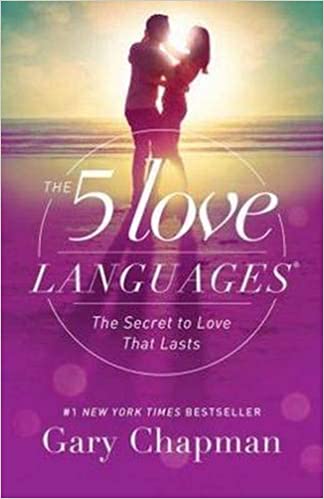
Dr. Gary Chapman wrote an amazing book called The Five Love Languages. In his book, he lays out five “languages” that we use to communicate our love to one another:
Words of affirmation
Quality time
Gifts
Acts of service
Physical touch
When you and I communicate, we naturally communicate in a way that is most comfortable to us. We communicate in our primary love language. But if the other person in the relationship has a different love language, no matter how much you love them, you are simply not getting through effectively. You are leaving the other person with a near-empty love tank.
I would suggest you start by taking a brief love language assessment (download the free PDF here → 5 Love Languages assessment) to determine YOUR OWN love language first. This is the language you will feel most comfortable using. Second, you need to learn the love languages of OTHERS CLOSE TO YOU so you can change your love dialect.
In the great love chapter in the Bible, the apostle Paul says this, “When I was a child, I spoke and thought and reasoned as a child. But when I grew up, I put away childish things” (v. 11, New Living Translation). Our love—and the way we express it to others—should always be growing up. If you are trying to communicate your love to someone special in the same ways (the same “languages”) you’ve always used, there’s a good chance your love is being viewed as childish.
As you mature in your expressions of love — as you speak the other person’s love language — you will begin to fill their love tank. Guess what happens next? Out of a full love tank, the other person is motivated to begin to speak your love language, to fill your tank. It can become so much fun to love with a full tank! Because when the other person’s love tank is full, almost any love language will work for them—wow, what a blast!
UPDATE… my friend Greg Heeres and I host a leadership podcast on YouTube. Recently, we discussed the value of leaders learning and speaking the love languages of their teammates.
…but it requires some serious in-the-mirror introspection to answer.
Honestly:
…when times are tough,
…when it’s inconvenient for you,
…when it’s out of your comfort zone,
…when you’ve had a hard day yourself,
…can others count on you to come through?
It really boils down to this:
…are you a lifter or a leaner?
“There are two kinds of people on earth today;
Just two kinds of people, no more, I say.
Not the sinner and saint, for it’s well understood
That the good are half-bad and the bad half-good.
Not the rich and the poor, for to rate a man’s wealth,
You must first know the state of his conscience and health.
Not the humble and the proud, for in life’s little span,
Who puts on vain airs, is not counted a man.
Not the happy and sad, for the swift flying years
Bring each man his laughter and each man his tears.
No; the two kinds of people on earth I mean,
Are the people who lift and the people who lean.
Wherever you go, you will find the earth’s masses,
Are always divided in just these two classes.
And oddly enough, you will find too, I ween,
There’s only one lifter to twenty who lean.
In which class are you? Are you easing the load,
Of overtaxed lifters, who toil down the road?
Or are you a leaner, who lets others share
Your portion of labor, and worry and care?”
—Ella Wheeler Wilcox, Which Are You?